A Seoul court weighs bribery claims against a police investigator and a wealthy businessman in a case testing trust in South Korea’s justice system
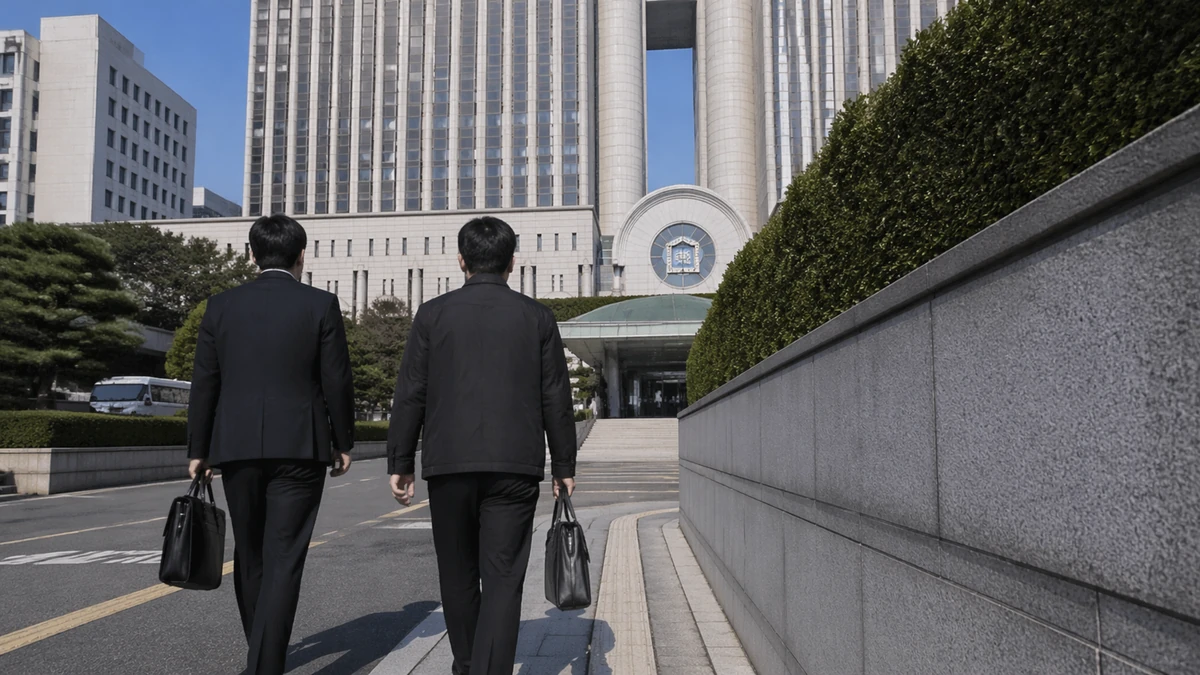
A courtroom hearing with stakes far beyond two defendants
A South Korean court is set to decide whether to jail, pending further investigation, a serving police investigator and a wealthy businessman in a bribery case that has quickly become a national test of public trust. The hearing, scheduled for April 22 at the Seoul Southern District Court, centers on allegations that money and personal influence were used to derail or soften a fraud investigation — a charge that, if proven, would strike at the heart of how ordinary South Koreans expect the legal system to work.
The two men appearing before the court represent institutions and social forces that carry unusual weight in South Korea: law enforcement, wealth and celebrity-adjacent influence. One is a current police official, identified by his surname Song, a former investigative team leader at the Gangnam Police Station in Seoul. Prosecutors accuse him of accepting bribes and leaking confidential official information. The other is a businessman identified by his surname Lee, described in local reports as a man of substantial means. He is accused of offering the bribe in an attempt to halt or influence an investigation and also faces allegations related to South Korea’s capital markets law.
The backdrop has only heightened the public attention. Authorities are examining whether the alleged solicitation was connected to a fraud case involving Lee’s wife, who is reportedly a well-known influencer. In the United States, a story involving a wealthy financier, a police detective and a social media personality might immediately raise questions about insider access, celebrity treatment and whether justice works differently for people with money. In South Korea, where distrust of elite privilege has repeatedly fueled public anger and major political scandals, those concerns can be even more intense.
At this stage, the legal proceeding is not a trial and does not determine guilt or innocence. It is a pretrial detention review, a common court process in South Korea in which a judge decides whether suspects should be formally detained while prosecutors continue their investigation. The judge is expected to weigh not only whether the allegations appear sufficiently supported, but also whether there is a risk of flight, witness tampering or destruction of evidence.
Still, the symbolism is already unavoidable. The case is no longer just about whether one officer took money or whether one businessman tried to influence an investigation. It has become a public referendum on a broader question: Can the South Korean justice system convincingly show that status, money and connections do not buy exceptions?
Why this case has resonated so strongly in South Korea
Cases involving bribery are hardly unique to South Korea, and neither are public complaints that the wealthy receive more favorable treatment than ordinary citizens. But this case has touched a particularly sensitive nerve because it sits at the intersection of several anxieties that have shaped modern Korean public life.
First, one of the central suspects is a police officer who held real authority over frontline investigations. In South Korea, the police are often the first point of contact in the criminal justice system, much as local police departments are in the United States. That means the integrity of an investigator matters not only for one case, but for the legitimacy of the process itself. If citizens believe an investigator can be swayed by money or personal requests, confidence in the entire chain of justice begins to erode.
Second, the allegations involve what Korean audiences would immediately recognize as a combustible mix of wealth and fame. The businessman’s wife is described as a prominent influencer — a term that in South Korea often implies not just internet popularity, but a hybrid of celebrity, commerce and social reach. Influencers there can wield enormous power in beauty, fashion, investment and lifestyle markets, especially on platforms where their private lives and business ventures blur together. To many readers in the United States, the closest comparison may be a social media star whose brand partnerships, curated personal image and business ties make her both a celebrity and a commercial engine.
When a fraud investigation allegedly tied to that world then intersects with a wealthy spouse and a police official, many South Koreans do not see an isolated criminal complaint. They see a familiar fear taking shape: that money, connections and visibility may bend institutions that are supposed to be neutral.
Third, the specific charges are the kind that directly challenge procedural fairness. Taking bribes is one thing. Leaking official secrets is another. In practical terms, disclosure of confidential investigative information can give suspects or interested parties a roadmap — telling them what authorities know, where the case is headed and how they might align their statements or hide evidence. That is why the accusation matters beyond its legal technicalities. It suggests not simply corruption, but a possible manipulation of the playing field itself.
In recent years, South Korea has repeatedly wrestled with the public perception that the law can feel uneven depending on who is involved. The country has seen headline-grabbing controversies involving political figures, conglomerate families, celebrities and powerful institutions. Whether or not those cases ended in convictions, they reinforced a corrosive idea: that there may be one standard for ordinary people and another for those with influence. This latest hearing lands squarely in that atmosphere.
Understanding the Korean legal process behind the hearing
For readers outside South Korea, the mechanics of the court proceeding can sound more dramatic than they are. The hearing at Seoul Southern District Court is what South Korean law calls a review before issuing an arrest warrant. It is not equivalent to a U.S. jury trial, nor is it exactly the same as an American bail hearing. Instead, a judge examines whether prosecutors have presented enough basis for detention while the investigation continues.
In practice, the court is likely to focus on three major issues.
The first is whether the core allegations appear credible enough at this stage. For Song, that means whether prosecutors have shown persuasive indications that money was in fact delivered to him and that it was tied to his official duties, rather than a private financial exchange or personal acquaintance. Bribery cases often turn on intent and purpose. A gift, a loan, a favor and a bribe can appear similar on the surface, but the legal meaning changes dramatically depending on whether there was an expectation of official action in return.
The second issue is the allegation that official secrets were leaked. Investigations depend on confidentiality, especially in their early stages. If protected information moved from police channels to outside interested parties, the court will likely ask what kind of information was shared, whether it was truly confidential and whether the disclosure was deliberate. That analysis matters because leaking investigative details can damage a case even before any formal obstruction is proved.
The third issue is whether detention is necessary. South Korean judges generally consider factors similar to those used in other legal systems: the risk a suspect will flee, interfere with witnesses or destroy evidence. In a case involving a police official and a wealthy businessman, prosecutors may argue that both men have resources, relationships and institutional knowledge that could complicate the investigation if they remain free. Defense lawyers, in turn, will likely argue that detention is unnecessary and that the facts can be contested without incarceration.
The hearing’s result could come quickly, possibly later the same day. But whatever the ruling, Americans should be cautious about reading it as a final verdict. A detention decision is an important procedural step, not a judgment on ultimate guilt.
Gangnam, influence and the social meaning of elite access
The reference to Gangnam is not incidental. International audiences know the district largely because of the 2012 global pop hit “Gangnam Style,” but in South Korea the neighborhood has long symbolized something bigger: concentrated wealth, social ambition and access. It is home to luxury shopping, upscale real estate, private academies and some of the country’s most visible displays of status.
That does not mean corruption is somehow inherent to Gangnam, but the district occupies a distinct place in the Korean imagination. A police investigator from a Gangnam station working a case linked to a wealthy family and an influencer inevitably invites scrutiny because it places the allegations in one of the country’s most socially loaded settings.
For American readers, imagine if a case in Manhattan’s Upper East Side or Beverly Hills involved a detective, a hedge fund-style businessman and a social media celebrity. The legal questions would be the same, but the social symbolism would amplify everything. People would not just ask whether a crime happened. They would ask whether the entire environment — prestige, money and networking — made the alleged misconduct more possible.
South Koreans are acutely sensitive to those dynamics because of the country’s intensely competitive social order. Educational opportunity, professional advancement and family status are often perceived as being tightly connected to networks and resources. That can make allegations of preferential treatment especially explosive. If ordinary citizens already feel they are competing in a system tilted toward the well-connected, a bribery case involving police and affluent suspects becomes more than scandalous. It becomes validating in the worst possible way.
That helps explain why the case has moved beyond legal reporting into the broader social conversation. It touches familiar frustrations about fairness in housing, jobs, education and the courts. In that sense, the alleged wrongdoing resonates not because most people know the defendants personally, but because many believe they understand the social structure that might make such allegations plausible.
The influencer angle and the digital-age politics of reputation
The involvement of a well-known influencer, even indirectly, has given the story unusual momentum. In South Korea, as in the United States, influencers are no longer marginal internet personalities. Many operate as full-fledged brands, with endorsement deals, product lines, investor ties and devoted online followings. Their power lies not just in fame, but in intimacy: followers feel they know them, trust them and participate in their daily lives.
That intimacy can become volatile when legal trouble enters the picture. A traditional celebrity scandal may unfold through entertainment media and official statements. An influencer scandal often moves faster and more emotionally because the audience has consumed years of lifestyle content that blends aspiration with authenticity. The result is a particular kind of public backlash, one driven not just by allegations of wrongdoing but by a sense of betrayal.
In this case, the influencer connection also sharpens a deeper public concern: whether digital-era celebrity and old-fashioned wealth can together exert pressure on institutions. South Koreans have watched social media personalities become major commercial actors in everything from cosmetics and diet products to finance and real estate speculation. That visibility makes any criminal allegation more than a private matter. It raises questions about how curated public personas, economic influence and behind-the-scenes relationships intersect.
American readers have seen variations of this pattern before. Cases involving internet personalities, crypto promoters or celebrity entrepreneurs often trigger the same public questions: Were fans misled? Did fame shield warning signs? Were regulators or investigators slower to act because of status? South Korea’s version of that debate is shaped by its own media culture, but the underlying concern is familiar across democracies shaped by social media.
In the current case, the influencer herself is not the officer accused of taking a bribe. But her reported connection to the underlying fraud matter is part of why the story has traveled so widely. It transforms what might otherwise have remained a niche court item into a narrative about money, image and the perceived vulnerabilities of law enforcement in the digital age.
What the accusations say about policing and institutional trust
Even if the allegations are ultimately narrowed, disputed or partially unproven, the reputational damage to law enforcement is already significant. Police agencies in democratic societies depend on more than legal authority; they depend on public consent and baseline credibility. When an investigator is accused of selling access or leaking confidential information, the injury extends far beyond the case file.
That is especially true in South Korea, where policing and prosecution have been subjects of ongoing institutional debate. In recent years, the country has pushed through reforms affecting the relationship between prosecutors and police, including adjustments to investigative authority. Those changes were intended in part to modernize the system and distribute power differently. But any effort to build confidence in institutions becomes harder when corruption allegations surface inside the agencies expected to enforce the rules.
One reason the case has drawn such serious coverage is that it invites scrutiny of systems, not just individuals. If a team-level investigator could allegedly be approached by outside parties seeking help, people will ask what internal safeguards existed. Were contacts with interested outsiders monitored? Were case assignments and reporting lines transparent enough? Was access to sensitive information logged and auditable? Did supervisors have a meaningful way to detect irregular patterns?
These may sound like administrative questions, but they are central to whether the public sees corruption as a one-off lapse or a symptom of something more structural. In the United States, similar concerns arise when police officers are accused of tipping off suspects or accepting benefits from people under investigation. The public response often hinges not only on punishment, but on whether departments can show how the breach happened and what concrete controls will prevent a repeat.
That same challenge now faces South Korean police. If authorities hope to reassure the public, they will need to demonstrate two things at once: that insiders are investigated without favoritism, and that institutional weaknesses are being addressed rather than papered over. Calls for “strict punishment” may satisfy a moment of anger, but they do little by themselves to rebuild trust.
The broader democratic question: Can fairness survive suspicion?
The immediate legal question before the court is narrow: Should the two men be detained while the investigation continues? The broader social question is much harder and far more enduring. What happens to a democracy when citizens begin to assume that fairness itself is negotiable?
South Korea is a vibrant democracy with a highly engaged public, an aggressive press and a political culture shaped by repeated struggles over transparency and accountability. That history has produced real institutional resilience. At the same time, it has also produced a public that is quick to detect hypocrisy, especially when the powerful appear to receive special handling.
That sensitivity can be healthy. Democracies need watchdogs, skeptical journalists and citizens who refuse to accept impunity. But it also reflects accumulated fatigue. When people hear allegations that a criminal investigation may have been softened through bribes and personal requests, many no longer react with surprise. They react with weary recognition. That is the danger for any justice system: not only corruption itself, but the public expectation that corruption is always plausible.
The South Korean article summary that underlies this case captured that mood with unusual clarity. The deepest damage is not only what happens when fairness collapses, but what happens when people come to believe fairness can be traded. That distinction matters. A society can survive isolated misconduct. It struggles much more when cynicism becomes common sense.
The Seoul court’s ruling, expected soon after the hearing, will not settle those larger anxieties. If detention is granted, the public may see it as evidence that the system is taking the allegations seriously. If detention is denied, critics may worry that elite suspects remain advantaged. Either way, the burden on investigators and the police organization will remain heavy. They will need to persuade the public not simply that this case is being handled, but that the system itself is capable of withstanding pressure from money, celebrity and personal connections.
For Americans watching from afar, this is a distinctly Korean story in its legal details and social context. Yet its core themes are universal. In every democracy, citizens ask whether institutions serve the public equally or bend toward the influential. In every media ecosystem, fame can complicate accountability. And in every justice system, trust is easier to lose than to restore.
That is why this hearing matters beyond Seoul and beyond South Korea’s legal beat. It offers a close-up view of a question that resonates from East Asia to the United States: When wealth, visibility and state power collide, can the rule of law still look convincingly blind?
Comments
Post a Comment