
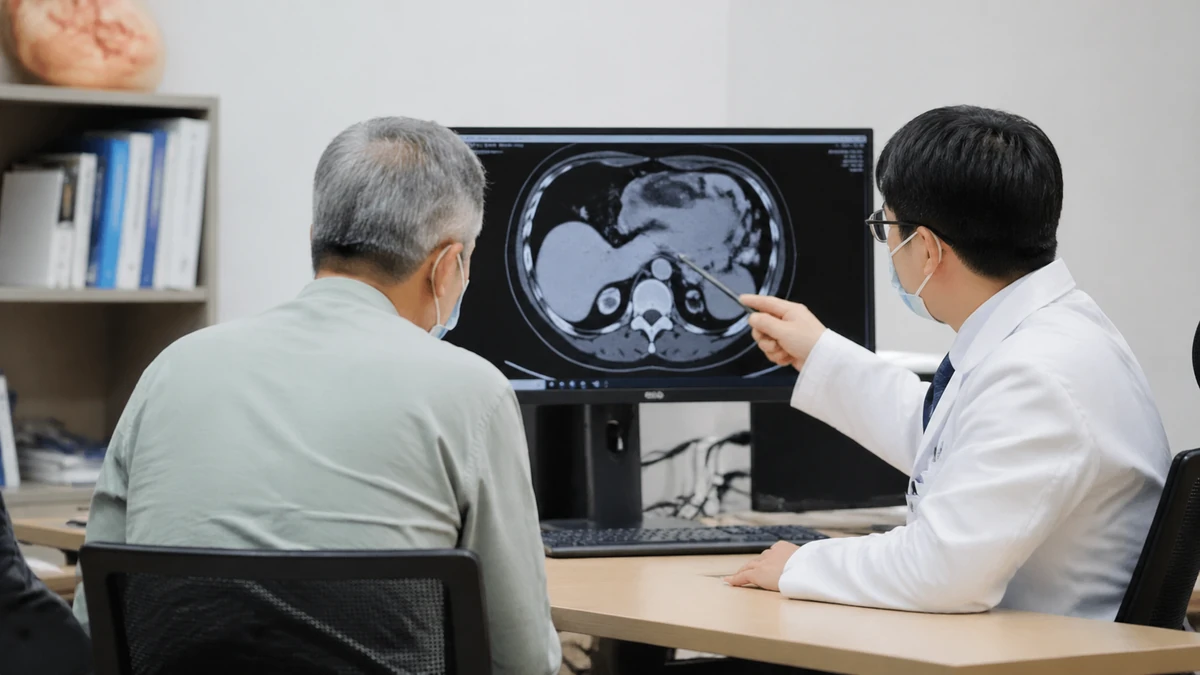
A warning after the good news
For many cancer patients, the biggest emotional milestone is hearing that surgery went well. Families exhale. Friends celebrate. Life, at least in theory, is supposed to begin returning to normal. But doctors in South Korea are urging stomach cancer survivors not to confuse a successful operation with the end of the story.
That message, highlighted this week by physicians in Korea, is both simple and consequential: The first two years after stomach cancer surgery are the most important period for watching for recurrence, and patients should also be alert to the possibility of an entirely new cancer developing elsewhere in the body.
According to information cited by Yonhap News Agency, about 7 in 10 cases of stomach cancer recurrence occur within two years after surgery. The warning came from Dr. Kang Seok-in, a gastroenterology professor at Inje University Ilsan Paik Hospital, who described that window as a medical “golden time” for close follow-up. In Korean medical and news coverage, the phrase “golden time” is commonly used to mean a critical period when fast, careful action can make the biggest difference. Americans may recognize the same basic idea from phrases often used around stroke care, trauma response or the first months after a major diagnosis: there is a period when vigilance matters more than ever.
The caution stands alongside a more encouraging reality. South Korea has made major gains in stomach cancer treatment, with five-year survival rates rising to 78%, according to the figures referenced in the report. That is a significant marker of progress. It reflects better screening, more refined surgical techniques, improved recovery care and a health system that has spent decades confronting a disease that remains unusually prominent in Korea compared with many Western countries.
Still, improved survival does not mean the risk is gone. The Korean report noted that recurrence rates after stomach cancer surgery have been reported in the range of roughly 11% to 46%, a wide span that reflects how much outcomes can vary depending on the stage of disease, the patient’s health, the exact type of tumor and the treatment plan used.
For American readers, the central point is familiar even if the disease profile is not. Cancer care in 2025 is increasingly about survivorship, not just treatment. The better medicine becomes at helping patients live longer, the more important it is to manage what happens after the initial crisis seems to pass.
Why stomach cancer remains a major story in Korea
Stomach cancer, also called gastric cancer, does not command the same everyday attention in the United States as breast, lung, prostate or colorectal cancer. In South Korea, however, it has long been one of the country’s most closely watched cancers. That is partly because it has been relatively common there, and partly because Korea has built a robust national screening culture around major diseases.
Several factors help explain why stomach cancer occupies a larger place in Korean public health discussions. Diet has often been part of the conversation, including long-standing consumption of salty, fermented and preserved foods, though experts generally stress that cancer risk is shaped by many factors, not one culinary tradition alone. Infection with Helicobacter pylori, a bacterium linked to stomach inflammation and cancer risk, also plays a role. Family history, smoking and other lifestyle and medical factors can contribute as well.
South Korea’s health system has invested heavily in screening and early detection, and that has made a real difference. Many Koreans are familiar with routine upper endoscopy, a test in which a flexible tube with a camera is used to examine the digestive tract. For Americans, the closer cultural equivalent might be the normalization of mammograms or colonoscopies as routine preventive care for certain age groups. In Korea, stomach screening has become common enough that it has helped catch some cancers earlier, when surgery is more likely to succeed.
That helps explain why the survival numbers have improved. But it also explains why Korean doctors are increasingly focused on the next phase: what happens after treatment. In a country with more long-term survivors, recurrence monitoring becomes a central part of cancer care, not a side note.
This is an important shift in perspective. Years ago, the main question in many cancer stories was whether a patient could survive surgery or make it through treatment. Today, in Korea as in the United States, a growing number of patients are living long enough that the questions become more complex: How often should they be checked? What symptoms should prompt concern? How can they protect their long-term health? And how do they live with uncertainty without becoming consumed by it?
The first two years: a high-stakes stretch
The Korean doctors’ warning centers on timing. If roughly 70% of recurrences happen within two years after surgery, that first 24-month period becomes the phase when follow-up matters most. The report does not suggest that risk disappears after two years. It does mean that the earliest post-surgical period is the time when patients and clinicians should be especially attentive.
That can be counterintuitive. The months after surgery are often when patients are working hardest to rebuild a normal routine. They may be regaining weight, returning to work, adjusting to changes in digestion and trying to put the experience behind them. From the outside, recovery can look like closure. From a medical standpoint, though, it may be the very time when observation needs to be most disciplined.
In practical terms, that usually means keeping scheduled follow-up appointments, discussing any new symptoms promptly and understanding that post-treatment surveillance is part of treatment, not something separate from it. Patients who feel physically better may be tempted to postpone a visit or dismiss subtle changes. Families, relieved that the operation is over, may also lower their guard. The Korean message is that this is exactly when people should resist that instinct.
That does not mean patients should live in a state of panic for two years. It means they should treat those years as active recovery, not passive waiting. In American medicine, doctors sometimes talk about a “survivorship care plan,” a roadmap for what comes next after treatment. The Korean warning points toward the same concept: surgery is one chapter, and vigilant follow-up is the next.
The specific schedule for scans, endoscopy, lab work or clinic visits can vary by patient, hospital and treatment history, and no single timetable fits everyone. But the broad principle is easy to understand. When recurrence risk is concentrated early, the calendar matters. Missing care during that window may mean missing the best chance to catch a problem sooner.
Psychologically, this may be the hardest stage. Patients often want certainty: either tell me I am sick or tell me I am safe. Cancer surveillance rarely works that way. Instead, it asks people to live in the gray zone between treatment and reassurance. That emotional burden can be exhausting, especially for families who thought the hardest part was already over.
Still, the Korean physicians’ message reframes the issue in a constructive way. The point is not to create fear. The point is to identify the period when attention is most useful. In other words, the “golden time” is not only about danger. It is also about opportunity.
Recurrence is not the same as a second cancer
One of the most useful parts of the Korean report is its emphasis on a distinction many patients may not fully understand: recurrence is not the same thing as a second primary cancer.
Recurrence means the original cancer has returned after treatment. That could happen in the area where the tumor first appeared or in another part of the body if cancer cells had spread. A second primary cancer, by contrast, is a newly developed cancer that begins in a different organ or tissue and is separate from the original stomach cancer.
That distinction may sound technical, but it matters in everyday life. Patients and relatives often interpret any new health problem after cancer through a single lens: “The cancer is back.” Sometimes that is true. Sometimes it is not. A new cancer developing elsewhere is a different medical event, even if it occurs in someone with a prior cancer history.
Doctors in Korea are stressing that survivors of stomach cancer may face elevated risks not only from recurrence but also from these second cancers. That broadens the purpose of follow-up care. A checkup after stomach cancer is not just an exercise in looking backward at the original disease. It is also a way of looking forward at a wider landscape of health risks.
For American readers, there is a parallel in the growing field of survivorship medicine. Increasingly, oncologists in the United States talk about the long arc of life after cancer: monitoring for recurrence, screening for secondary malignancies, managing treatment side effects and addressing nutrition, mental health and quality of life. The Korean discussion fits squarely within that modern approach.
It also underscores why symptoms should not be self-diagnosed. Patients may assume a new problem is either “nothing” or “definitely the old cancer again.” Both assumptions can be risky. A persistent symptom needs evaluation precisely because the explanation may not be obvious.
At a family level, this distinction is also important because it changes how people think about support. Loved ones may believe the main task after surgery is helping the patient regain strength. That remains important. But support also includes encouraging follow-up appointments, helping track medical schedules and understanding that long-term cancer care can involve more than one type of risk.
What this means for patients and families
For patients recovering from stomach cancer surgery, the Korean guidance is a reminder that healing involves more than surgical scars. Life after treatment can include changes in appetite, digestion, stamina and mental health. Some patients eat smaller meals. Others deal with weight loss, reflux, fatigue or anxiety before routine scans. These challenges are part of survivorship, and they can make follow-up feel burdensome just when it is most necessary.
That is where families often become a crucial safety net. In both Korea and the United States, serious illness is rarely managed by the patient alone. A spouse may keep track of appointments. An adult child may notice subtle weight loss or unusual fatigue. A friend may be the person who says, “You should call your doctor about that.” Those small interventions can matter more than people realize.
The Korean report effectively argues for a broader view of recovery. A successful surgery should absolutely be celebrated. But celebration should not crowd out structure. Patients benefit from knowing their follow-up plan, understanding which symptoms deserve prompt attention and recognizing that surveillance is not a sign of failed treatment. It is part of successful treatment.
That is an especially important message in cultures, including American culture, that prize the emotional milestone of “beating” cancer. The language of victory can be empowering, but it can also create pressure to move on too quickly, as though ongoing monitoring signals weakness or pessimism. In reality, disciplined follow-up is a form of strength. It is a way of protecting the future that treatment made possible.
There is also a practical lesson here for anyone navigating medical information online. Cancer survivors are often inundated with advice, some credible and some dubious, about what foods to eat, what supplements to take or what warning signs to watch for. The Korean doctors’ message cuts through that noise with a simpler and more evidence-based principle: Keep the follow-up system intact, especially during the first two years.
That means maintaining communication with care teams, asking clear questions and not letting the relief of finishing treatment turn into disengagement from care. It also means recognizing that surveillance is a normal part of the cancer journey, not a sign that something has already gone wrong.
A larger lesson about modern cancer care
The significance of the Korean report extends beyond stomach cancer and beyond Korea. It reflects a larger transformation in cancer medicine worldwide. As outcomes improve, the hardest challenge is no longer only how to treat the disease at diagnosis. It is also how to care for people who survive it.
That may sound like a high-class problem, but in medicine it is a profound one. Better surgery, better screening and better supportive care have created a growing population of survivors who need tailored long-term management. They are not simply former patients. They are people living in a medically distinct stage of life, one in which recurrence risk, secondary cancers, treatment side effects and emotional stress all need attention.
In that sense, the Korean emphasis on the first two years after stomach cancer surgery is part of a global conversation about what good outcomes really mean. A rising survival rate is a major achievement, but it is not the final metric. Health systems are increasingly judged by whether they help patients live well after treatment, not just whether they help them survive it.
That broader perspective is especially relevant in the United States, where cancer care can be fragmented across multiple providers and insurance systems. Korean medicine, for all its own pressures and constraints, often presents follow-up care in a more standardized and publicly visible way. American patients reading this story may see in it a useful prompt: Ask your doctor not only whether treatment worked, but what the surveillance plan is for the months and years ahead.
It is also a reminder that medical progress can create new responsibilities. When more patients survive, more patients need long-term guidance. When surgery becomes more successful, the period after surgery becomes more important. When doctors know that risk is concentrated in a certain window, that knowledge only helps if patients and families act on it.
The Korean report does not offer a miracle or a breakthrough cure. In some ways, it offers something more practical: a timeline, a framework and a warning against complacency. For survivors of stomach cancer, that may be exactly the kind of information that matters most.
The message, ultimately, is one American readers will recognize even outside the world of oncology. A crisis may have a dramatic beginning, but recovery is usually quieter and longer. It happens in ordinary time: on calendars, in waiting rooms, over regular meals, between one appointment and the next. South Korean doctors are saying that for stomach cancer survivors, those ordinary months after surgery are anything but routine. They may be the most important stretch of all.


0 Comments