An AI Leak Report in South Korea Raises a Bigger Question: Who Really Controls Generative AI Inside Companies?
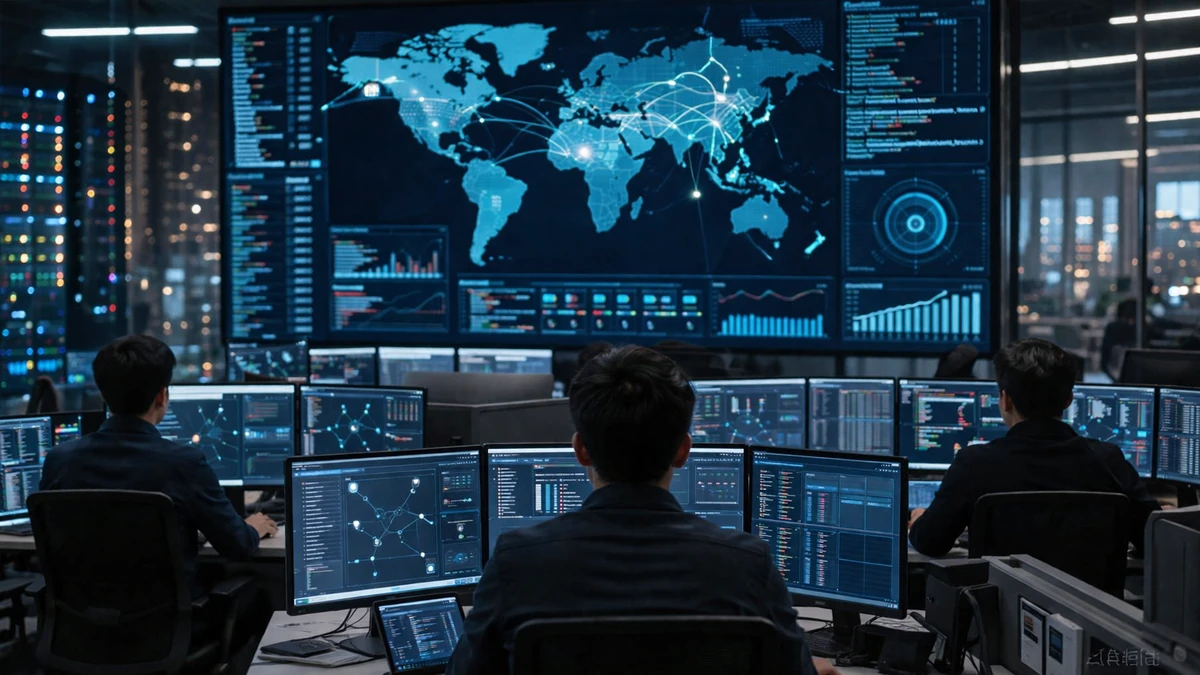
A reported AI leak is setting off alarms far beyond one company
A report out of South Korea about an alleged leak involving Anthropic’s “Mytos” has landed with particular force in the country’s technology and cybersecurity circles, not simply because of the brand name attached to it, but because of what the episode appears to symbolize. Even with many facts still unconfirmed in public, the story has become a warning flare for businesses and government agencies that have moved quickly to adopt generative artificial intelligence without building equally mature systems to control it.
The most striking line circulating in coverage is the claim that a leaked model could do the work of “100 hackers.” That phrase sounds like headline shorthand, and it should be treated cautiously. In cybersecurity, slogans can outrun evidence. But beneath the dramatic wording is a more grounded concern that American readers will recognize from years of debate around dual-use technologies: a powerful tool does not have to become a superweapon overnight to change the balance between defenders and attackers. If it reduces the time, skill or cost required to run phishing campaigns, probe systems, generate malware variations or analyze large quantities of stolen material, that alone can alter the threat landscape.
That is why the South Korean discussion is worth paying attention to outside Korea as well. The core issue is not whether one specific model is uniquely dangerous. It is whether companies that are plugging generative AI into customer service, software development, internal search, security workflows and office automation understand that they are no longer just protecting documents, passwords and servers. They are protecting a web of prompts, model settings, training data pathways, APIs, vector databases, plugins, internal evaluation rules and access permissions. If one part of that chain breaks, the damage may not stay contained.
For U.S. readers, a useful comparison is the way American companies once treated cloud migration as mainly an infrastructure decision, only to discover it was also a governance decision. Generative AI is now following a similar pattern. Executives may ask whether to deploy it. Security teams increasingly ask a different question: who can reach it, what can they do with it, what connected systems can it touch, and how quickly can unusual behavior be detected and shut down?
That broader governance problem is what the Korean debate is really about. The leak report may involve a foreign AI company, but the anxiety it has generated in Seoul speaks to a local reality: South Korea is one of the world’s fastest adopters of digital services, cloud tools and enterprise software, and that speed can leave weak seams between innovation and oversight.
What is known, and what remains uncertain
One reason the story deserves careful treatment is that the public record, at least from the summary available so far, appears limited. What can be said with confidence is that South Korean media reported a leak tied to Anthropic’s “Mytos,” and that the report intensified concern within the security industry. What remains less clear is what exactly, if anything, was exposed: model weights, internal prompts, operational playbooks, evaluation tools, safety guardrails, deployment documents or some combination of those assets.
That distinction matters. In public conversation, “AI leak” can mean very different things. To a general audience, it may sound like a single file containing a chatbot brain was stolen and instantly weaponized. In practice, AI systems are sprawling operational stacks. A leak might involve highly sensitive technical assets, but it could also involve system prompts, red-team test results, internal guidance on how the model handles restricted topics or tooling that helps developers route user requests. Any of those could be damaging without necessarily amounting to the complete exfiltration of a frontier model.
That is why analysts in Korea are emphasizing structure over sensationalism. The important lesson, they argue, is not to assume the worst specific scenario without evidence, but to use the report as a stress test for how generative AI is being managed across industries. If an organization has connected AI to internal knowledge search, coding assistance, customer interactions and security operations, then even a partial exposure can have ripple effects. A model does not exist in isolation. It sits inside an ecosystem of permissions, datasets and software dependencies.
There is a familiar pattern here for American readers who have watched major cyber incidents over the past decade. Sometimes the first headlines overstate a breach. Sometimes they understate it. In both cases, the larger story often turns out to be less about a single dramatic point of failure and more about mundane weaknesses that had been ignored: overbroad access rights, poor log retention, weak vendor oversight, orphaned credentials or temporary workarounds that became permanent. Generative AI adds new layers, but it does not erase those old security truths.
That is also why separating confirmed facts from interpretation is so important. Security professionals often raise risk levels before all evidence is in because waiting for full confirmation can be costly. That is rational. But executives and policymakers must avoid two equal and opposite mistakes: freezing all AI projects out of fear, or assuming a reported problem is someone else’s issue because the vendor is external and the technology is new. The middle ground is harder but more useful: identify the structural exposure, test the controls and treat AI systems as critical assets rather than novelty features.
Why access control may matter more than the model itself
One of the sharpest points in the South Korean discussion is that the most important question in an AI-related leak may not be which model was involved, but who had access to what. That is an idea American companies are also confronting as they move from pilot projects to enterprise deployment. A generative AI product can involve internal research teams, outside contractors, cloud operators, benchmark evaluators, application developers and third-party integration partners, all operating with different levels of visibility and permission. Once access is granted, it is often not narrowed quickly enough.
That creates a serious governance gap. Even if core model weights never leave the system, attackers or malicious insiders may still gain access to operationally sensitive information. System prompts can reveal how guardrails are structured. Internal evaluation guidelines can show what behaviors the company is worried about. Test datasets can hint at intended use cases and edge cases. Fine-tuning procedures may expose how the model was adapted for certain domains. Restrictions on outputs can be reverse engineered if someone understands how those controls were written and tested.
From a defender’s standpoint, this is especially difficult because malicious activity may resemble ordinary use. A burst of API calls might not just be heavy usage; it could be reconnaissance designed to map the model’s boundaries. Repeated prompt patterns may not be experimentation; they may be efforts to extract hidden instructions or identify bypass conditions. Access from multiple accounts could be legitimate collaboration, or it could be a coordinated attempt to evade monitoring thresholds. Traditional security tools built around simple login records or file downloads are often not enough to interpret that behavior.
That challenge is not unique to Korea. In the United States, companies are grappling with similar questions as workers use AI assistants for coding, writing, research and internal knowledge retrieval. The problem is that generative AI systems blur lines that corporations used to treat separately. A chatbot can also be a search engine, a code tool, a customer support layer and an interface to internal databases. That means the security model has to cover not just one application, but a mesh of business functions tied together by prompts, connectors and permissions.
The South Korean analysis points to a practical conclusion: old information-security frameworks may not be enough if they are simply laid on top of generative AI without modification. Documents, models, prompts, data stores and deployment pipelines may need to be treated as distinct assets with separate controls. That is a more granular approach than many organizations currently use, but the logic is easy to understand. If an AI system can touch many parts of the business, the business cannot afford to treat it like just another software add-on.
The meaning behind the phrase “the work of 100 hackers”
The “100 hackers” phrase has obvious click appeal, but security professionals tend to read it less literally than the public might. The concern is not that a leaked model instantly becomes an autonomous cybercriminal army. Real-world attacks still require infrastructure, targeting, stolen credentials, lateral movement, evasion techniques and exfiltration methods. No serious security team should assume that one model, by itself, can replace a full attack operation.
What the phrase captures, in rough form, is a productivity argument. Generative AI can lower the barriers for tasks that previously took more time, expertise or labor. It can draft convincing phishing emails in multiple languages. It can help rewrite malware snippets to evade basic signatures. It can summarize technical documentation quickly for inexperienced operators. It can assist with vulnerability research, at least in early stages. It can produce socially engineered messages that sound more natural and targeted than the clumsy scams many users learned to spot a decade ago.
American readers have already seen versions of this in domestic debates over AI-enabled fraud. Banks, retailers and law enforcement agencies in the United States have warned that generative tools can improve phishing, business email compromise and impersonation attempts. Deepfakes get more public attention, but plain text may be just as dangerous because so much cybercrime still begins with a message crafted to sound trustworthy. If AI improves the polish and volume of those messages, then “more attacks from less skilled operators” becomes a realistic concern.
That appears to be a central fear in Korea as well. South Korean companies already deal with familiar forms of digital crime, including smishing, credential stuffing, supply-chain attacks and business-email fraud. Adding generative AI to that environment may not fundamentally change the nature of the threats, but it can change their scale and speed. A mediocre operator equipped with better automation can become more dangerous simply by trying more often, in more languages, with messages that feel more plausible.
There is an important counterpoint, though, and the Korean discussion recognizes it. Defenders are also using AI. Security teams increasingly rely on automation to classify logs, prioritize vulnerabilities, analyze suspicious emails and spot anomalous behavior. The race is not between AI and non-AI. It is between organizations that can update their operating rules quickly and those that cannot. Attackers are often nimble. Enterprises, especially large ones, move more slowly because every change requires review, approval and coordination across departments.
That mismatch is one reason this story resonates. The real risk may not be that AI suddenly makes crime effortless. It may be that adversaries can adapt AI tools faster than large institutions can tighten their controls. Anyone who has watched the history of ransomware in the United States will recognize the pattern: the technology matters, but so do the response timelines, governance habits and institutional bottlenecks around it.
Why South Korean companies may feel this pressure especially acutely
South Korea is often described as one of the most digitally connected societies in the world, and the label is not just marketing. The country has long embraced high-speed connectivity, mobile-first services, platform ecosystems and rapid consumer uptake of new technology. In business, that often translates into a willingness to experiment early with automation, cloud tools and AI-enabled services. It is one reason Korea regularly appears near the front of global conversations about tech adoption.
That same strength can become a vulnerability when governance lags behind deployment. According to the Korean summary, one weak point is reliance on external models and outside providers. Many companies do not build their own foundational systems from scratch. Instead, they rely on external APIs, cloud-hosted models or vendor solutions layered into existing products. That approach is practical, especially for firms that want AI capabilities without the enormous cost of building frontier models. But it also means responsibility is fragmented across vendors, cloud operators, internal development teams and security partners.
For American readers, the parallel is easy to grasp: it resembles the software supply chain problem. When many critical functions are outsourced or connected through third parties, visibility declines and accountability can blur. If something goes wrong, response can slow because no single team fully owns the incident from end to end. That is especially problematic in AI, where the boundary between vendor responsibility and customer responsibility is still being negotiated in real time.
A second vulnerability described in the Korean discussion is the culture of convenience that often surrounds fast-moving proof-of-concept projects. Organizations eager to test generative AI may use shared API keys, broad administrator privileges, long-retained test data and third-party plugins that were never designed for sensitive production environments. Temporary exceptions made in the name of speed have a habit of becoming permanent. Anyone who has spent time in an enterprise IT environment in the U.S. will recognize this immediately. Shadow IT did not disappear in the AI era; it became more sophisticated.
The risk is especially high when AI is connected to internal knowledge bases, customer service operations or source-code assistance. Those systems often touch sensitive information by default. If permissions are set too broadly for convenience, the blast radius expands. A leaked credential or misconfigured integration can suddenly expose far more than a single app. It can reveal company knowledge, customer records, development practices or internal instructions that help explain how defenses are built.
A third weakness raised in the South Korean analysis is the fragmentation of logs and accountability. AI-related systems are often jointly managed by data teams, platform engineers, service planners and security groups. But when an incident occurs, it may be unclear who stores which logs, who has the authority to declare a pattern suspicious and who can disable access immediately. That organizational ambiguity matters as much as any technical gap. In many high-profile breaches in the United States, delays were not caused by an inability to detect suspicious activity in theory, but by uncertainty over who had the mandate to act in practice.
This helps explain why Korean analysts argue that local companies cannot dismiss the report as a foreign vendor’s problem. Korea’s market is simultaneously undergoing cloud transition, broader SaaS adoption and rapid experimentation with generative AI. When technology adoption accelerates across multiple fronts at once, small control failures can become large operational risks. The conversation therefore shifts from “Should we adopt generative AI?” to “How do we govern it before it governs our risk exposure?”
What companies and governments should take from this moment
The strongest lesson from the South Korean debate is not panic. It is discipline. Generative AI should now be treated less like a flashy software feature and more like a critical operational environment that needs explicit asset mapping, access design and incident response planning. That sounds technical, but the concept is familiar to anyone who has watched companies mature after prior waves of digital disruption. Once a tool becomes embedded in core business processes, it can no longer be managed casually.
For companies, that starts with a basic but often neglected step: inventory. Leaders need to know where generative AI is being used, what data it touches, which vendors are involved, what prompts and policies are embedded in the system and which employees or contractors have administrative authority. Many organizations believe they know the answer and then discover AI features have proliferated across departments through pilot tools, browser extensions, embedded software functions and vendor products that quietly added AI capabilities.
The next step is to move beyond broad access categories. Not everyone who works on an AI system should have visibility into all of its components. Model settings, system prompts, evaluation datasets, deployment pipelines and usage logs should be segmented wherever possible. In plain terms, a person who can test an application should not automatically be able to inspect everything that governs the model’s behavior. This is standard least-privilege thinking, but AI environments often develop faster than least-privilege controls.
Monitoring also has to become more sophisticated. It is not enough to log successful logins. Organizations need to understand prompt repetition, unusual query volumes, odd shifts in geographic usage, access to different model versions and patterns suggesting the extraction of hidden rules rather than normal business activity. That may require security teams to work more closely with data and platform teams than they traditionally have. AI logs can be noisy and hard to interpret, but that complexity is not a reason to ignore them. It is a reason to design for them.
Governments and regulators also have a role, though not necessarily by trying to micromanage model development. A more practical public-sector focus would be on disclosure expectations, procurement standards, vendor accountability and baseline controls for sectors handling sensitive information. In the United States, debates over AI regulation often get stuck between grand visions and political theater. The Korean discussion points to something more concrete: operational governance. That may be less glamorous than existential AI rhetoric, but it is where many real risks live.
There is also a public communication lesson here. News consumers should resist the temptation to flatten every AI incident into either apocalypse or hype. A reported leak involving a prominent company may or may not turn out to be as severe as first described. But even if the worst-case scenario is not borne out, the structural warning can still be valid. In cybersecurity, near misses and partial exposures often reveal the same weaknesses that later produce full-scale crises. The prudent response is neither denial nor exaggeration. It is inspection.
For South Korea, that inspection comes at an important moment. The country has the technical talent, industrial base and digital infrastructure to remain a major player in the AI era. But as with the United States, success will depend not only on how quickly companies deploy new systems, but on how seriously they treat the less glamorous work of control, accountability and resilience. If the report surrounding Anthropic’s “Mytos” prompts Korean firms to revisit who has access, how logs are interpreted and where responsibility sits in a crisis, it may end up serving as a useful warning regardless of what further facts emerge.
And for the rest of the world, including American businesses racing to adopt similar tools, the message is straightforward. The central challenge of generative AI is no longer merely whether it is powerful. It is whether institutions using it are mature enough to control that power once it becomes woven into everyday operations. That is not just a Korean question. It is rapidly becoming a global one.
Comments
Post a Comment