An Australian Permit Signals Something Bigger: The Global Race to Rebuild Steel Supply Chains for a Low-Carbon Era
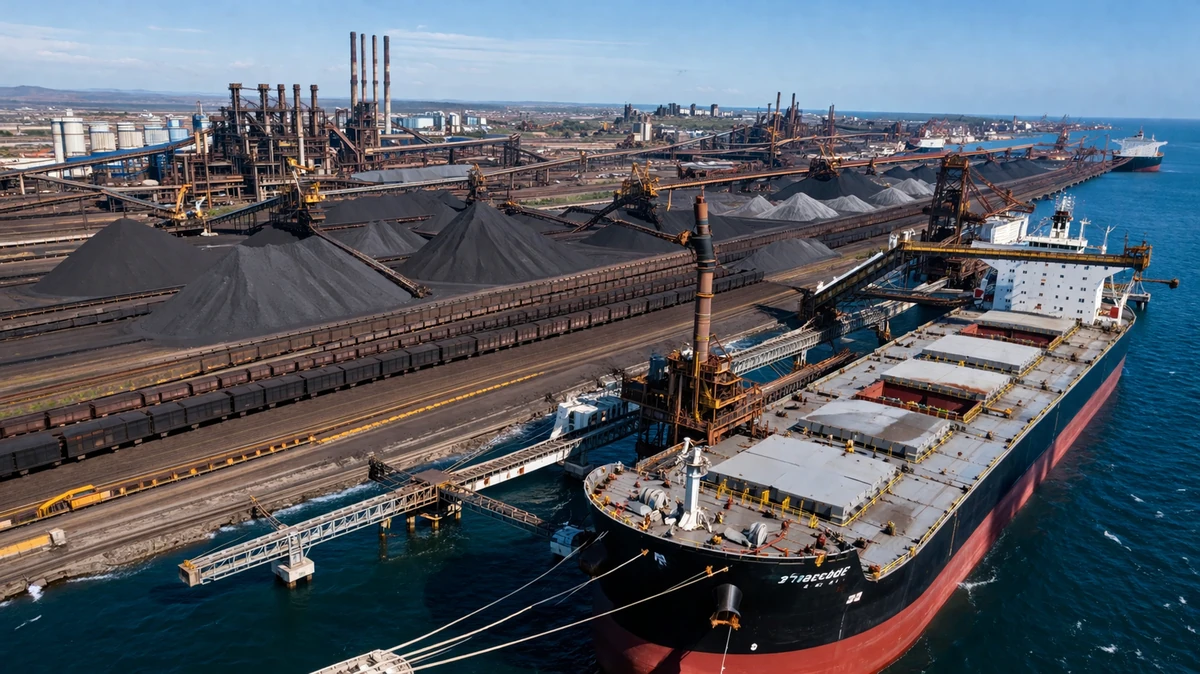
A permit in Western Australia, and a warning for the global steel business
At first glance, the news looked routine: The government of Western Australia has approved a POSCO project to build a low-carbon steel raw materials plant, with the decision dated April 9, 2026. In the language of business briefs, it could have been filed as a single overseas investment, one more industrial project in a resource-rich corner of the world better known to many Americans for iron ore, LNG and vast mining operations than for climate strategy.
But that reading misses the real significance. What Western Australia approved is not just a factory. It is a piece of an emerging industrial map in which steelmakers are no longer competing only on who can make steel most cheaply. They are increasingly competing on who can secure cleaner raw materials, lower the carbon intensity of every step in production, and guarantee reliable supply to automakers, builders and manufacturers under growing pressure to clean up their own emissions.
That matters because steel remains one of the foundations of modern life. It goes into cars, appliances, bridges, shipbuilding, machinery and high-rise construction. Yet it is also one of the hardest industries to decarbonize. Global crude steel production still hovers around roughly 1.8 billion to 1.9 billion metric tons a year, and the steel sector is responsible for an estimated 7% to 9% of global energy-related carbon dioxide emissions. In other words, when governments and companies talk about climate goals, steel is not a side issue. It is central to whether those goals are realistic.
For South Korea, the Australian approval lands at a particularly important moment. Korean steelmakers, including POSCO, are facing a world in which carbon rules are no longer abstract pledges from climate summits. They are becoming line items in export costs. Europe’s Carbon Border Adjustment Mechanism, or CBAM, is the clearest example. Put simply for an American audience, think of CBAM as a carbon tariff system: If a foreign producer sends emissions-heavy goods into the European market, that producer may have to pay for the carbon associated with making them. The dirtier the production process, the weaker the exporter’s price advantage.
That changes the calculation for a company like POSCO. It is not enough to have an efficient blast furnace or strong customer relationships. The next phase of competition is about controlling cleaner feedstock before ore even reaches a traditional steel mill. The Western Australia project shows that the battle is moving upstream, into mines, processing hubs, ports and energy systems. The question is no longer only how steel is made inside a mill. It is which materials are used, where they are processed, how far they travel and what kind of power supports the chain.
That is why this Australian permit is better understood as a supply-chain story, not a construction story. It points to a future in which steelmakers that master low-carbon sourcing may gain a decisive edge over those still organized around yesterday’s assumptions.
Why Western Australia matters so much
Western Australia occupies a position in the steel economy that is hard to overstate. The state is already one of the world’s most important iron ore hubs, and Australia as a whole is among the top iron ore exporters on the planet. For South Korea, Australia is not just a friendly trading partner. It is a strategic source of the iron ore that feeds the country’s steel industry. Depending on the year, Australian ore has accounted for roughly 60% to 70% of South Korea’s imports, making it a cornerstone of Korean industrial planning.
That gives Western Australia a status that is closer to an extension of Korea’s production base than a distant investment location. If you are a Korean steelmaker, proximity to ore deposits in Western Australia is not a nice bonus. It is a way to lock in access to the raw material layer of the business at a time when supply resilience has become almost as important as price.
But resources are only part of the attraction. Western Australia also offers the kind of combination that industrial strategists look for when they are trying to redesign supply chains from the ground up: abundant land for large industrial sites, strong export port infrastructure, major shipping access to Asia, and large-scale potential for solar and wind power. Those conditions matter because low-carbon steel inputs are energy-intensive, and future production models may be tied not only to ore quality but also to electricity, gas, hydrogen and other supporting infrastructure.
Americans may be familiar with a similar logic from the way semiconductor plants cluster around power, water, logistics and public incentives rather than a single factory building. Steel is moving in a similar direction. The critical unit of competition is no longer just the mill itself. It is the surrounding ecosystem.
Policy has also shifted in Australia. For years, the country built enormous wealth by exporting raw materials, often shipping minerals abroad for others to process into higher-value products. Increasingly, however, Australia has been trying to capture more of that value at home. That debate has played out in lithium, nickel, rare earths and battery materials. Iron ore is now part of the same conversation. The goal is straightforward: Don’t just dig it up and ship it out. Process more domestically, create jobs locally, and position Australia as a higher-value player in the energy transition.
Seen in that light, the approval of the POSCO project aligns with a broader industrial policy shift in Western Australia. It is not simply about welcoming foreign capital. It is about anchoring a bigger role for the state in the next generation of metals processing, especially as Asian customers seek cleaner industrial inputs.
The hidden battleground comes before the steel mill
Public discussion about cleaner steel often centers on eye-catching technologies inside the plant gate. Hydrogen-based steelmaking gets headlines. So does the expansion of electric arc furnaces, which can melt scrap and other iron inputs with lower emissions than a traditional blast furnace-basic oxygen furnace route. Those technologies are important, but they can obscure a less visible truth: A steelmaker’s carbon future depends heavily on what happens before ore reaches the furnace.
Not all iron ore is equal. The ore’s iron content, impurity levels and the form in which it is prepared all affect how efficiently it can be reduced and turned into metallic iron. Higher-grade, lower-impurity materials are especially important for lower-emissions pathways such as direct reduced iron, or DRI. DRI can be combined with electric arc furnaces to produce steel with significantly lower emissions than the conventional blast furnace route, especially if powered by natural gas at first and eventually by green hydrogen and low-carbon electricity.
Here is the key point for non-specialists: You cannot simply declare that you will make green steel one day and assume the rest of the system will cooperate. Cleaner steelmaking depends on cleaner and more suitable inputs. Without the right pellets, hot briquetted iron and other processed raw materials, many low-carbon pathways remain more aspiration than reality.
That is what makes a low-carbon steel raw materials plant strategically important. It acts as an intermediate layer between the mine and the mill. It can improve ore quality, prepare materials for DRI or other lower-emissions processes, and reduce inefficiencies that would otherwise show up as higher energy use and higher carbon output later in the chain.
Traditional blast furnace-basic oxygen furnace production is carbon intensive, often emitting around 1.8 to 2.2 metric tons of carbon dioxide per metric ton of crude steel, depending on the operation and inputs. The industry has squeezed many efficiencies out of that system over decades, but its basic chemistry still relies heavily on coal-derived coke. Lower-emissions alternatives exist, but they require a reordering of supply and infrastructure. That is why the Western Australia project is more than a processing facility. It is a bet on the raw-material architecture needed to support a future beyond the blast furnace.
In that sense, POSCO’s move is notable because it suggests the company is working on execution, not just rhetoric. Across heavy industry, there is a gap between announcing carbon-neutral ambitions and building the intermediate assets needed to make them feasible. The Australian project suggests POSCO is trying to close that gap.
Why POSCO is making this move now
POSCO has for years promoted a long-term transition strategy that includes carbon neutrality by 2050 and a shift toward hydrogen-based steelmaking. Like nearly every major steelmaker, however, it faces an uncomfortable reality: The old system still works economically, while the new one remains expensive, technically challenging and dependent on infrastructure that is not yet fully in place.
For a company built on large blast furnace operations, the transition problem has several parts at once. There is the cost of new equipment. There is the price and availability of hydrogen. There is the question of electricity rates and grid reliability. And there is the need to secure large volumes of higher-grade, lower-impurity raw materials that can support direct reduction and other cleaner processes. Solving only one of those problems does not solve the whole equation.
This is where the Western Australia plant could offer three strategic benefits.
First, it can improve long-term access to higher-quality, lower-carbon raw materials. That may help POSCO avoid a future in which multiple steelmakers are chasing a limited pool of suitable inputs for DRI and similar pathways.
Second, local processing near the ore source may improve logistics and process efficiency. Rather than shipping raw ore long distances and carrying out more processing later, a company may be able to move a more optimized intermediate material through the chain. In a business where transport costs, energy use and process yields all matter, that can make a meaningful difference.
Third, if the project is eventually tied to Australian renewable energy or other lower-carbon power sources, POSCO could strengthen its position in measuring and reducing life-cycle emissions. That is increasingly important not only for regulators but also for customers. In manufacturing today, emissions accounting extends well beyond the factory itself. Multinational buyers increasingly ask suppliers to document emissions throughout the value chain.
That trend is especially visible in the auto sector. European carmakers have been pressing suppliers for Scope 3 emissions data, the category that covers indirect emissions across the broader supply chain. Some automakers have begun setting targets for using more low-carbon steel in vehicles. The same pressure is spreading, in different forms, to shipbuilding, appliances, electronics and construction materials.
To an American reader, this may sound similar to the way big retailers changed agriculture and packaging by demanding traceability and sustainability metrics from suppliers. Once the buyer changes the rules, the supplier has to adapt. Steel is moving in that direction. For POSCO, then, the Australian project is not simply defensive, a way to avoid carbon costs. It is also offensive, a way to stay relevant in premium markets where customers will increasingly pay attention to embodied emissions.
Europe’s carbon rules are changing the math for Asian exporters
The EU’s Carbon Border Adjustment Mechanism has become one of the most consequential policy changes in global heavy industry, even for companies far from Europe. The mechanics can be technical, but the practical effect is easy to understand: carbon intensity is turning into a trade factor.
For decades, many export industries competed above all on scale, labor costs, technology and logistics. Environmental performance mattered, but often in a secondary or reputational sense. CBAM changes that by attaching a cost to the carbon embedded in imported goods. If the policy is enforced as intended, exporters of emissions-heavy steel will face a disadvantage in the European market. And because Europe remains a major rule-setting economic bloc, its standards often influence behavior well beyond its borders.
South Korea is particularly exposed because it is deeply integrated into global manufacturing supply chains. Korean steel is not just sold as a commodity. It flows into cars, ships, appliances and machinery sold around the world. If a Korean steelmaker cannot demonstrate a lower-carbon pathway, the consequences may ripple through sectors where Korea has long been globally competitive.
That is why upstream raw material decisions matter now. Once carbon accounting becomes embedded in trade and procurement systems, it is harder to improvise. A company cannot wait until the last minute and suddenly become a low-carbon supplier. It must build the chain years in advance, from ore to processing to transport to final steelmaking.
This is a lesson American manufacturers are also learning in other sectors. The Inflation Reduction Act created incentives and sourcing requirements that have pushed automakers and battery makers to rethink minerals, refining and component sourcing, not just final assembly. In effect, climate policy is becoming industrial policy. Europe is doing something similar for steel through carbon pricing and border rules. The POSCO approval in Australia should be read against that backdrop.
There is another factor here as well: reputation with customers and investors. A steelmaker that can show a credible road map toward lower-carbon materials may have an advantage in contract negotiations, financing and long-term partnerships. In capital-intensive industries, credibility matters. Customers want confidence that a supplier will still meet environmental and trade requirements years from now, not just next quarter.
That helps explain why a permit in Western Australia can resonate far beyond mining circles. It reflects how climate regulation, trade policy and resource strategy are converging into a new framework for industrial competition.
Australia’s upside: More value at home, and a bigger role in the energy transition
From Australia’s perspective, the project offers clear strategic upside. For years, the country has captured enormous value from raw material exports, especially iron ore shipped to Asia. But much of the higher-value processing and manufacturing has occurred elsewhere. That has long raised a basic question in Australian policy circles: Why remain primarily a quarry when the world is moving toward cleaner industrial systems that may reward processing, technology and energy integration more than simple extraction?
Low-carbon steel inputs create one possible answer. Australia has ore. It has renewable energy potential. It has port infrastructure. And it has growing political interest in using the energy transition to build domestic industry, not just support foreign buyers. This is the same basic playbook behind the push into battery minerals, hydrogen and other “green materials” value chains.
Western Australia, in particular, has reason to think big. It already sits at the center of the iron ore trade. If it can add more local upgrading and low-carbon processing, it may strengthen its status as a hub for Asian industrial supply chains in a decarbonizing world. That would not only increase export value. It could also create construction jobs, engineering demand, operations roles, port activity and supporting services over the long term.
State governments often like projects like this for exactly that reason. Even in countries with strong climate politics, local officials tend to support industrial investments that promise employment, tax revenue and regional development. The energy transition is easier to sell politically when it looks like factories, infrastructure and paychecks rather than only restrictions and costs.
There is also a geopolitical dimension. As countries try to reduce strategic dependence on a narrow set of suppliers, trusted partners become more valuable. Australia’s role as a stable resource exporter to U.S. allies in Asia and Europe could become even more important if low-carbon materials turn into a strategic industrial input, not just a commercial one.
That may be why the Western Australia approval should be viewed as part of a broader effort to reposition the state — and Australia more generally — from a raw ore exporter to a processor of cleaner industrial materials. The project may still be led by a Korean company, but the industrial logic serves Australian ambitions too.
The obstacles are real, and approval is only the beginning
Still, a government permit does not guarantee commercial success. The economics of low-carbon steel inputs remain uncertain, and several variables could determine whether projects like this scale smoothly or struggle.
One major challenge is energy cost. Cleaner steel pathways depend heavily on electricity, and eventually on hydrogen. If renewable power, transmission and storage infrastructure do not expand fast enough, costs can remain high. Hydrogen, in particular, is still far from cheap at the scale the steel industry would need. Companies may talk about hydrogen-based steelmaking as the long-term destination, but for now, the business case often depends on transition fuels, subsidies or a premium market willing to pay more for cleaner material.
Another variable is ore quality. Not every deposit can be economically processed into the kind of premium input needed for lower-emissions steelmaking. If upgrading costs rise too much, or if output quality falls short of what direct reduction processes require, the economics can weaken quickly.
Infrastructure is another question. Large industrial projects need more than permits and headline investment figures. They need power connections, water, transport links, labor, engineering capacity and sometimes new port handling arrangements. Delays in any of those areas can push up costs.
There is also market risk. Steel customers say they want lower-carbon products, but many still resist paying significantly more. That tension is familiar across climate-related industries. Corporate buyers may set ambitious targets, but procurement departments still focus intensely on price. Until carbon costs are more consistently priced into trade or regulation, companies making early low-carbon investments may face a difficult balancing act.
And then there is geopolitics. Steel supply chains span countries with different climate rules, subsidy regimes and trade interests. A project that looks compelling under one policy environment may look less attractive if trade disputes, tariffs or domestic political changes alter the landscape.
All of that means the Western Australia approval is best understood as a meaningful step, not a finished achievement. It signals intent. It strengthens optionality. It creates a platform. But the real test will come later, when the company must translate permit language into construction, supply agreements, operating performance and customer demand.
What this signals for the future of steel
Even with those uncertainties, the broader message is difficult to miss. Heavy industry is entering a phase in which supply chains themselves are becoming the site of climate competition. Steelmakers that once focused on furnace efficiency and shipping scale now have to think like systems designers. They must coordinate mining, beneficiation, transport, energy sourcing, process technology and emissions accounting as one integrated strategy.
That is a major shift, and it helps explain why a single approval in Western Australia has drawn attention. It captures a wider transition now underway across industrial economies: climate pressure is moving upstream, into raw materials and intermediate processing, where future winners may be decided long before steel reaches the final customer.
For South Korea, that has particular urgency. The country built much of its industrial strength on export competitiveness, manufacturing speed and world-class production systems. Those strengths still matter, but they may not be enough if carbon intensity becomes a decisive factor in trade. POSCO’s move suggests at least one Korean champion understands that the transition cannot happen only at home inside existing mills. Part of the answer lies abroad, near resource bases and cleaner energy opportunities.
For Australia, the project reinforces a different point: countries rich in natural resources may have a chance to move up the value chain if they can combine minerals, infrastructure and decarbonization policy effectively. In the 20th century, wealth often flowed to those who controlled extraction or large-scale manufacturing. In the low-carbon 21st century, it may increasingly flow to those who can link resources to cleaner processing and trusted supply.
For American readers, there is a lesson here too. The same forces reshaping battery supply chains, semiconductors and critical minerals are now reshaping steel. Climate policy, trade rules and industrial strategy are no longer separate conversations. They are becoming one conversation.
That is why this story is bigger than a permit, bigger than one Korean company, and bigger than one Australian state. It is a preview of how foundational materials will be contested in the next decade. The companies and countries that secure lower-carbon supply chains early may not just reduce emissions. They may rewrite the competitive order of global industry.
In that sense, Western Australia’s approval does not merely clear the way for a plant. It marks another step in the quiet reorganization of the steel world — a shift from the old question of who can make the most steel at the lowest immediate cost to the new question of who can deliver it with the lowest carbon, the strongest resilience and the greatest long-term credibility.
Comments
Post a Comment