Busan bets on ‘aging in place’ with a new care model aimed at keeping seniors and people with disabilities at home
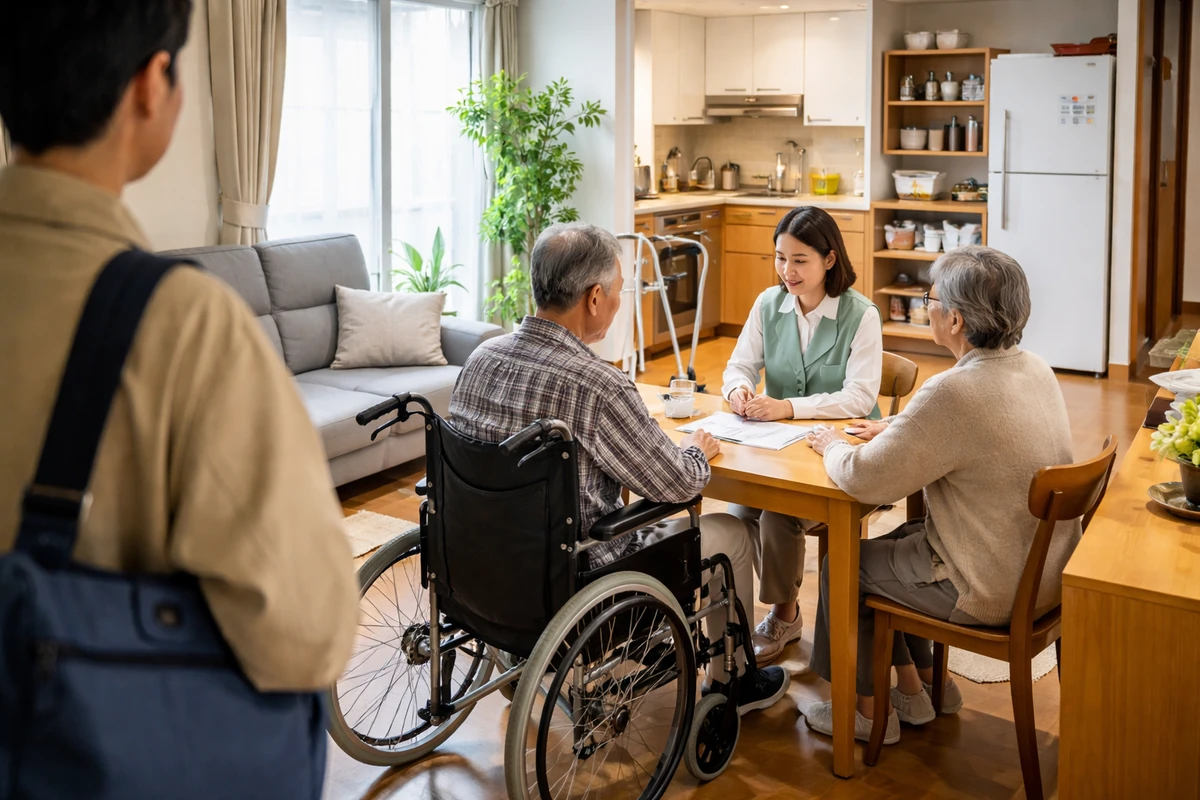
Busan tries to shift care away from institutions and back into the home
South Korea’s second-largest city is making a clear statement about what growing old — or living with a disability — should look like in the years ahead: not in a hospital ward or residential facility, but at home, in the neighborhood where a person has built a life.
On April 13, 2026, Busan city officials announced a multilateral agreement to strengthen what they call the “Busan-style integrated care” system, a local model designed to help older adults and people with disabilities continue living in their own homes instead of moving into institutions. The policy goal sounds straightforward, but it reflects a major shift in how care is being defined in South Korea, a country facing one of the fastest demographic transformations in the world.
For decades, care needs in Korea often escalated into a familiar pattern: when a person became too frail, too sick or too isolated to manage daily life, the answer was likely to involve a hospital, nursing facility or some other form of institutional care. Families, too, have shouldered enormous responsibility, often with little formal support and under strong social expectations that children, especially daughters and daughters-in-law, would step in.
Busan’s new push suggests local officials believe that model is no longer sufficient — and may no longer match what many people actually want. Instead of treating a move into a facility as the default endpoint of aging or disability, the city is trying to reorganize public services around the idea that people should be able to remain in familiar surroundings as long as possible. In policy language used in the United States and Europe, this is often called “aging in place.” In Busan, the concept is expanding beyond seniors alone to include people with disabilities as part of the same community-based support framework.
That matters because it reframes care not as a narrow welfare benefit for a specific group, but as a broader civic system: one that touches housing, health care, mobility, daily assistance, crisis response and social connection. The city says the agreement is intended to improve the quality of integrated care services and make it easier for residents to apply for help and be connected to support through nearby neighborhood administrative welfare centers.
At one level, this is a city government fine-tuning service delivery. At another, it is a social choice about how a community wants to define dignity, independence and responsibility in an aging society.
Why this matters in South Korea, one of the world’s fastest-aging countries
To American readers, debates over elder care may sound familiar. The United States has wrestled for years with the high cost of nursing homes, the burden on unpaid family caregivers and the patchwork nature of home- and community-based services. Japan, too, has been widely watched as a super-aging society trying to adapt its care systems. South Korea is now moving into that same demographic pressure cooker — and in some ways even faster.
South Korea has one of the world’s lowest birth rates and a rapidly growing older population. That combination creates a blunt challenge: fewer working-age adults are available to support more older people, whether financially, emotionally or through direct caregiving. At the same time, traditional family structures have been changing. Smaller families, lower marriage rates, more women in the workforce and increased urban migration have made it harder to rely on the old assumption that relatives will simply absorb care responsibilities indefinitely.
Busan is a particularly important place to watch. The port city, long known to Americans as South Korea’s bustling southern hub and the setting of the global zombie hit “Train to Busan,” is also one of the country’s oldest major cities in demographic terms. Like parts of Japan, Italy and even rural America, Busan is confronting what happens when a city ages faster than the systems around it.
That makes the city’s integrated care plan more than a local bureaucratic exercise. It is a test case for whether Korean local governments can redesign care around ordinary life rather than around moments of crisis. If the old model was often triggered after someone’s condition deteriorated enough to require hospitalization or institutional placement, the new model tries to intervene earlier and more holistically, with support structured around daily living.
The distinction is important. For a frail older adult, the difference between staying home and entering a facility may hinge on seemingly simple supports: help with meals, transportation to appointments, safety monitoring, counseling, assistance navigating benefits or someone coordinating medical and social services that are usually scattered across separate agencies. Those needs are rarely dramatic enough to make headlines on their own. But taken together, they often determine whether a person can safely remain at home.
In that sense, Busan is engaging a problem the United States knows well: institutionalization is often not just a medical outcome but a systems outcome. People move into facilities not only because they need care, but because home-based supports are too fragmented, too hard to access or too late in arriving.
What “Busan-style” integrated care is supposed to mean
The phrase “Busan-style” is not just branding. According to the city, the local model goes beyond nationally standardized integrated care services by adding eight locally developed services tailored to needs officials say they see on the ground. The exact list was not the central point of the announcement; what stands out is the governing philosophy behind it.
In many countries, local governments serve largely as implementers of national policy. Busan is signaling that a one-size-fits-all framework is not enough. Dense urban neighborhoods, apartment-heavy housing patterns, variable access to transit, the location of public facilities and the strength of private-sector participation all shape what care looks like in daily life. In other words, care systems are intensely local, even when the broad funding and policy architecture is national.
That may sound abstract, but it gets at one of the biggest weaknesses in modern welfare systems: fragmentation. A person’s life is integrated; bureaucracy usually is not. A senior who is beginning to struggle at home may have overlapping needs tied to health, mobility, nutrition, emotional support, housing safety and financial insecurity. But those issues are often handled by different departments, different case managers and different eligibility rules.
Busan’s approach appears to recognize that the quality of care is not measured only by how many services exist on paper. It depends on how well those services connect. A standardized national service can provide the skeleton, but local add-ons are often what fill the gaps between categories. If basic care is available but transportation is unreliable, the system fails. If medical treatment is covered but no one helps coordinate follow-up, the system fails. If a disabled resident qualifies for one benefit but cannot navigate three separate offices to access it, the system fails.
Officials are emphasizing “advancement” or “enhancement” of integrated care, but in practical terms that means improving the precision and speed of connection. The policy aim is not simply to increase the quantity of services. It is to make the path from need to support less confusing, less duplicative and less dependent on whether a person or family already knows how government systems work.
That is one reason the city’s announcement matters beyond Busan. It reflects a broader realization visible across aging societies: the future of care may depend less on building more institutions and more on building better coordination.
The neighborhood office could become the front door to care
One of the most concrete details in Busan’s plan is also one of the easiest to overlook. Residents seeking integrated care will be able to apply through nearby administrative welfare centers, local government offices that function as a familiar neighborhood-level point of contact for a range of public services.
For Americans, the closest comparison might be a hybrid of a city social services office, a community services center and a neighborhood government desk. In South Korea, these local offices are often the place where residents go for practical dealings with the state — documents, benefits, counseling and local administrative support. By making those centers the entry point for integrated care, Busan is trying to bring the first step in the process closer to where people actually live.
That may not sound revolutionary, but access is often where social policy either works or fails. One of the biggest barriers in care systems is informational inequality: not everyone knows what exists, what they qualify for or which office to call first. People who are educated, digitally connected or already experienced in navigating bureaucracy tend to fare better. Those who are older, isolated, disabled or overwhelmed can easily fall behind, even when programs technically exist for them.
Placing an integrated care desk in a local welfare center lowers that initial threshold. It reduces travel burdens for seniors and disabled residents. It creates a more visible and routine point of entry. It also signals that care is not an exceptional, last-resort intervention but part of ordinary civic infrastructure.
Still, the real test comes after the application. A front desk alone does not produce integrated care. The hard part is what happens next: how need is assessed, who coordinates among agencies, how quickly services are deployed, how follow-up is handled and whether the system prevents duplication or dangerous gaps. The city’s emphasis on a “multilateral” agreement suggests officials understand that no single agency can do this alone.
That is especially true in care policy, where the word “integrated” is often easier to say than to operationalize. Health care providers, disability services, housing officials, emergency responders, social workers and local administrators may all touch the same resident’s life. Without clear coordination, a person can still end up stuck in bureaucratic no-man’s-land: eligible for help in theory, underserved in practice.
If Busan can make the local welfare center a true front door — not just a referral stop but an effective coordinator — it would mark a meaningful improvement in how care is delivered. If not, the risk is that integrated care remains a slogan attached to a more familiar maze.
A challenge to the old assumption that families will carry the burden alone
Underneath the administrative language, Busan’s initiative raises a much bigger social question: Who is responsible for care?
In Korea, as in many societies shaped by Confucian traditions, family duty has historically occupied a central place in expectations around aging parents and vulnerable relatives. Americans often encounter this idea through the term “filial piety,” a shorthand for deeply rooted norms of respect and obligation toward one’s elders. But those values, while still powerful, now collide with modern realities — smaller households, longer life spans, chronic illness, disability, geographic separation and intense economic pressure.
That tension is not unique to Korea. In the United States, millions of family caregivers also juggle jobs, children and aging parents, often at significant personal and financial cost. But in Korea, where social expectations around family responsibility remain especially strong, the burden can be compounded by moral pressure. Caregiving is not just labor; it is often framed as proof of devotion.
Busan’s integrated care strategy implicitly challenges the idea that aging at home should depend primarily on private sacrifice. To remain in one’s own home safely, a person usually needs a web of support: food access, mobility help, home safety checks, social contact, medical coordination, counseling and rapid intervention when something goes wrong. Without that infrastructure, “living at home” can become less a mark of independence than a form of isolation.
That is why the distinction between home care and institutional care is not merely a matter of personal preference. It is a matter of whether support systems are in place. Families may desperately want to keep a parent or disabled relative at home, but if services are late, fragmented or unavailable, the burden can become unsustainable. Exhausted caregivers burn out. Preventable crises escalate. Institutional placement then appears inevitable, when in fact it may reflect policy failure as much as personal circumstance.
In this light, Busan’s policy is significant not because it romanticizes home life, but because it tries to move caregiving out of the realm of private virtue alone and into the language of public responsibility. That is a meaningful shift. It suggests that support for older adults and disabled residents should not hinge solely on whether a family has enough time, money, proximity or emotional capacity to fill every gap themselves.
For a society under intense demographic stress, that is more than a welfare adjustment. It is a redefinition of what the community owes its members.
What “independent living” really means for seniors and people with disabilities
Another phrase running through the Busan announcement is “independent living.” It is an appealing phrase, but one that can be misleading if interpreted too literally.
In disability rights circles in the United States, independent living has long meant not the absence of help, but the ability to live with autonomy, dignity and choice, supported by the services and accommodations needed to make that possible. Busan’s policy appears to be moving in a similar direction. Independence does not mean a person receives no assistance. It means the assistance is structured in a way that allows daily life to continue on terms as close as possible to one’s own choosing.
That distinction is crucial for both seniors and people with disabilities. Too often, public systems define independence as self-sufficiency in the narrowest sense: doing everything alone. But real-world independence usually depends on reliable support. A wheelchair user with transportation access, personal assistance and coordinated services may live more independently than someone technically “alone” but cut off from help. An older adult who receives meal support, safety monitoring and regular check-ins may maintain more genuine control over daily life than someone left unaided until a crisis forces hospitalization.
Busan’s integrated care model seems to recognize that the real challenge is not whether services exist individually, but whether someone is capable of coordinating them into a stable life. Governments often divide support into categories such as health, housing, welfare, safety and emotional care. Human beings do not live in categories. Their lives are continuous.
That is why integration matters. A missed connection between services can unravel a fragile household quickly. A person is discharged from a hospital but no one checks whether medications are manageable. A home aide is arranged but transportation to physical therapy remains unresolved. A disabled resident qualifies for one support but not the counseling needed to navigate the rest. Each gap may appear minor from inside a bureaucratic silo. In lived experience, those gaps can be decisive.
If Busan succeeds, independent living in this context will come to mean something more mature and realistic: not stoic endurance, but supported autonomy. Not being left alone, but being able to remain oneself within the community.
The bigger test will be sustainability, not the announcement itself
As with many social policy rollouts, the announcement is the easy part. The harder question is whether the system can function consistently after the ceremony ends.
Integrated care is not the kind of policy that can be judged by a ribbon-cutting, a memorandum of understanding or even a list of new services. Its success depends on continuity. Are people assessed accurately? Are services delivered on time? Are case managers empowered and adequately staffed? Do agencies share information effectively? Can the system keep following a resident over time rather than treating each need as a separate event?
Those are operational questions, but they determine whether a policy becomes real. Busan says it expects to improve the quality of integrated care through this agreement. That promise will rise or fall on implementation. In care systems, timing is often as important as scope. Support that arrives too late may still count in a spreadsheet while failing the person it was meant to protect. By contrast, modest but timely intervention can prevent hospitalization, delay institutional entry and relieve an enormous amount of family stress.
The city’s additional eight services may prove useful, but raw numbers are not the main measure. Residents will judge the system by whether it feels navigable, responsive and dependable. In many countries, social programs lose public trust not because the goals are unpopular, but because access is opaque and follow-through is inconsistent.
There is also a labor question here. Community-based care systems depend heavily on frontline workers — social workers, coordinators, care aides, counselors and local administrators — whose jobs are often demanding and undervalued. If staffing is unstable or caseloads are too high, integration can break down quickly. A sustainable care model requires not just policy alignment but human capacity on the ground.
And then there is the fiscal reality. Aging in place is often described as more humane and, in many circumstances, more cost-effective than institutional care. But building a reliable community support system still requires investment. Savings do not automatically materialize just because a government declares a preference for home-based care. They come only if services are robust enough to prevent more expensive crises later.
In that way, Busan’s initiative mirrors debates unfolding far beyond South Korea. From Medicaid home-based care in the United States to municipal aging strategies in Europe and Japan, governments are increasingly confronting the same challenge: everyone likes the idea of helping people stay at home, but doing it well requires long-term administrative discipline and political commitment.
A local policy with national and global implications
What Busan has announced is, in one sense, very local. It depends on neighborhood offices, municipal coordination and services tailored to the city’s own urban conditions. But it also speaks to a much larger global question: what should a humane care system look like in an aging world?
The answer Busan is putting forward is that care should begin from the place people already inhabit — the apartment, the block, the neighborhood, the web of routine that makes a life recognizable. That is a subtle but powerful departure from systems built around institutional transfer after need becomes severe. It says the proper starting point is not where to send a person once care is required, but how to keep life intact when care becomes necessary.
For American readers, that may resonate in obvious ways. The United States has spent years debating how to rebalance long-term care away from institutions and toward home and community settings. Families routinely face impossible trade-offs between work, finances and caregiving. Older adults often say the same thing people in Busan are saying: they want to stay in their own homes, near familiar people and places, for as long as they safely can.
What Busan is attempting offers no magical solution. Community-based care can still be uneven, underfunded or hard to coordinate. But the city’s announcement matters because it makes a deliberate choice about values. It places dignity in continuity. It defines independence as supported daily life rather than solitary endurance. And it treats caregiving not only as a family matter, but as an obligation that communities and public institutions must help shoulder.
If the model takes hold, the phrase “Busan-style” may come to mean more than a set of local services. It could represent a broader shift in Korean social policy: from facility-centered care to home-centered care, from fragmented assistance to coordinated support, and from private burden to shared responsibility.
That is the promise, at least. The coming years will show whether the city can turn that promise into an everyday reality for the residents who need it most.
Comments
Post a Comment