In Seoul’s Housing Market, Rent Is Climbing Faster Than Home Prices — and an Old Rule of Thumb Is Breaking Down
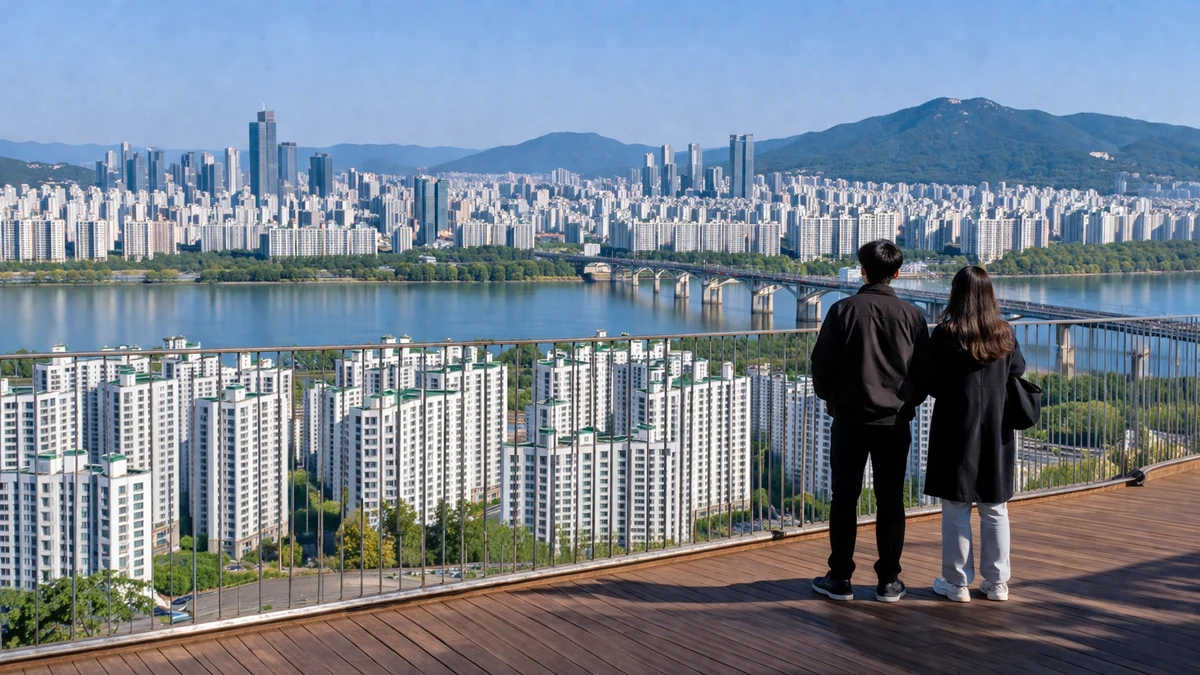
A familiar housing story is changing in one of the world’s priciest capitals
For years, one of the most widely accepted assumptions in South Korea’s housing market was simple: when jeonse prices rise, home-sale prices usually follow. In Seoul, where housing costs are a defining political issue and a daily source of anxiety for millions, that relationship has long shaped the way tenants, buyers, investors and policymakers read the market.
But this spring, that old formula is looking less reliable.
New data from Seoul in March suggests the city’s housing market is no longer moving in lockstep. Apartment sale prices still rose, up 0.34% from the previous month, according to local reporting summarizing market figures. But the pace of that increase slowed. At the same time, jeonse prices — a distinctive Korean lease system that requires tenants to put down a massive lump-sum deposit instead of paying monthly rent — rose 0.56%, while monthly rents climbed 0.51%.
That gap matters. It suggests that demand for living in Seoul remains strong, but not all of that demand is turning into home purchases. Instead, more pressure is building inside the rental market, where residents who need a place to live now are competing in a tighter and more expensive environment.
For American readers, it may help to think of this as a market where would-be buyers are not disappearing, but are hesitating. In many U.S. cities, high mortgage rates have kept households renting longer even as home prices remain elevated. Seoul appears to be experiencing a version of that tension, but in a distinctly Korean system shaped by jeonse deposits, dense urban geography, tight supply in desirable districts and a culture in which homeownership still carries deep financial and social weight.
The result is a city where housing demand is alive and visible, but the pathways that demand takes are diverging. Renting is getting more expensive immediately. Buying still looks costly, complicated and risky enough that many households are waiting.
Why the old “rising jeonse means rising home prices” rule is weakening
Historically, the logic behind the old rule was straightforward. If jeonse deposits rose enough, many tenants would conclude that the jump to ownership no longer seemed so large. Rather than tie up a huge amount of cash in a lease, they might decide to buy an apartment instead. That migration from renting to owning helped push sale prices higher.
Today, that transition appears harder.
Rising rental costs are no longer automatically pushing households into the sales market because the barriers to buying have become more daunting. Financing conditions, loan limits, interest-rate concerns, future price uncertainty and the broader burden of ownership all make the decision to purchase feel heavier than it once did. In other words, the pain of renting and the risk of buying are now felt as two different kinds of pressure.
That distinction is crucial. A renter whose lease is up cannot postpone housing costs forever. A buyer can postpone a purchase. The rental market reflects immediate need; the sales market reflects a longer-term commitment, one that many households now approach with more caution.
This is where the Seoul story becomes more structural than cyclical. The issue is not simply whether the market is “up” or “down.” The bigger question is where housing demand stops. More households appear to be pausing in the rental market instead of flowing through it into ownership. That means rental prices can keep rising even when sale-price growth begins to cool.
That shift also complicates the way policymakers and analysts interpret the market. A decade ago, a surge in jeonse might have been read as a near-direct signal of coming home-price gains. Now, the transmission mechanism is weaker. The rental market can tighten sharply without producing the same automatic response in transactions or prices on the ownership side.
That does not mean Seoul’s housing market is weak. It means it is more segmented. Demand is still there. But it is not all behaving the same way.
Understanding jeonse, the Korean rental system with unusually high stakes
To understand why this matters so much in South Korea, Americans need to understand jeonse itself.
Jeonse is not a typical lease arrangement by U.S. standards. Instead of paying rent every month, a tenant gives a landlord a very large upfront deposit, often amounting to a substantial share of the home’s value. At the end of the lease term, that deposit is supposed to be returned in full. For decades, the system functioned as a core feature of Korean housing, allowing tenants to avoid monthly rent while landlords used the deposit for investment or financing.
In practice, jeonse can feel less like renting an apartment and more like parking a life-changing amount of money in someone else’s hands for two years. For many Korean households, coming up with that deposit requires family help, bank loans or years of savings. It is one of the biggest financial thresholds in adult life, akin to a hybrid of a security deposit and a down payment, but on a much larger scale.
That is why movements in jeonse prices are watched so closely. When jeonse rises, the strain is immediate and tangible. A renewing tenant may suddenly need tens of thousands of dollars more — or the Korean won equivalent — just to stay in place. If they cannot afford it, they may have to move farther from work, downsize, switch to monthly rent or seek financial help from parents, a common dynamic in a society where family support often fills gaps left by the market.
Now add another layer: monthly rent is rising too. That means tenants are not escaping higher costs by switching contract types. If jeonse gets too expensive, monthly rent is not necessarily a comfortable fallback. Both doors are getting harder to open.
That is part of what makes the March figures in Seoul notable. If only jeonse were rising, analysts might interpret it as a temporary shift in lease preferences. But when both jeonse and monthly rent rise together, it suggests a broader squeeze: people still need homes in Seoul, available options are not expanding enough, and more households may be staying in the rental market longer than before.
In U.S. terms, imagine a city where security deposits ballooned at the same time monthly rents surged, while homebuyers remained reluctant to jump into ownership because borrowing costs and uncertainty still felt too high. That is closer to what Seoul’s residents appear to be facing.
What March’s numbers say about a more divided Seoul market
The March data does not indicate a collapsing housing market in Seoul. Sale prices still rose. But the slowdown in that increase matters because it points to a market that is losing some of its broad-based momentum.
That is especially important in a city that is often discussed as if it moves as one unit. Seoul, however, is less a single market than a stack of smaller ones. Neighborhood, school district, transit access, apartment age, unit size, redevelopment prospects and financing capacity all shape prices. A modest citywide average can mask very different realities on the ground.
That pattern showed up in the same news cycle with an eye-catching transaction in Nowon, a northeastern Seoul district that has traditionally been considered more affordable than some of the city’s elite neighborhoods south of the Han River. A roughly 25-pyeong apartment — about 890 square feet — reportedly changed hands for around 1.7 billion won, or roughly the kind of price point that grabs national attention because it underscores how deeply expensive even less-central parts of Seoul can become.
One sale does not define a market. But symbolic transactions like that matter because they reveal that some pockets of buyer confidence and price strength remain very much intact. Even as citywide sale-price gains cool, desirable or supply-constrained properties can still command startling numbers.
That creates a split-screen effect. The average market may be decelerating, but select properties can still look red-hot. For residents, that makes the housing landscape feel even more disorienting. The headlines may say growth is slowing, yet the apartment they want — or the one near a top school, a major subway line or a redevelopment zone — still feels completely out of reach.
The rental side looks broader and more immediate. Rising jeonse and rising monthly rent suggest the pressure is not confined to one niche of the market. Instead, it appears to be spreading through everyday housing demand. Families who need to remain near jobs, schools or aging parents cannot wait indefinitely for a better market. They must absorb the increase, compromise on location or housing quality, or keep searching in an increasingly competitive pool.
That is why the Seoul market today is better understood not as simply bullish or bearish, but as fractured. Sales and rentals are responding to different clocks, and averages no longer tell a single, unified story.
Why renters feel pain in the present while buyers worry about the future
One useful way to understand Seoul’s current housing divide is this: renters are dealing with present-tense stress, while buyers are making future-tense calculations.
For a renter, the problem is immediate. How much more cash is needed to renew a jeonse contract? How much higher will the monthly payment be? Can the household afford to remain in the same district? Can children stay in the same school? Can a commute remain manageable in a city where time and transit access deeply affect quality of life?
These are not abstract concerns. They hit household budgets right away.
For a potential buyer, the questions are more layered. Even if renting is getting more expensive, is now really the right time to take on a mortgage? What if interest rates remain high or financing terms worsen? What if the property does not appreciate enough to justify the debt? What if regulations shift again? What if the burden of ownership crowds out other life decisions, from child care to retirement savings?
That difference helps explain why rental inflation is not automatically converting into home purchases. The same household can conclude two things at once: renting is painful, and buying is still too risky.
This is not unique to South Korea, though the local system gives it particular urgency. In the United States, many younger households have delayed buying because homeownership feels financially precarious despite rising rents. Seoul’s version is intensified by the scale of jeonse deposits, the concentration of opportunity in the capital region and a longstanding belief that real estate is central not just to shelter, but to family wealth and class mobility.
In South Korea, where educational opportunity, employment networks and social status are closely tied to location, especially in greater Seoul, housing decisions can carry extra weight. A move across the city is not always just a move across the city. It can affect school access, child care support, commute length and perceived social mobility. That makes staying in the rental market more painful, but it also makes rushing into the ownership market more fraught.
The gap between those pressures is producing what might be called a waiting-room market. People are not necessarily satisfied with renting. They are simply not convinced that buying solves their problem at a tolerable cost.
The policy lag: why government action and market reaction do not move at the same speed
Another important piece of the Seoul story is timing. Housing markets rarely respond to policy changes in a neat, immediate way, and that is particularly true when the sales market depends on financing and sentiment as much as raw demand.
Regulations, lending rules and broader monetary conditions often affect home purchases with a delay. Buyers reassess. Banks tighten or loosen. Investors wait. Developers respond slowly. Households calculate, then recalculate. That means a shift in the policy environment may not show up in sales prices right away.
The rental market is different. People need housing now. Lease decisions do not always wait for policy to work itself through the system. If available homes are limited and more people remain renters longer, the effect on rents can appear faster and feel harsher.
That lag helps explain the current combination in Seoul: a rental market showing stronger upward pressure while sale-price growth continues, but more moderately. The market has not stopped moving. It is just not moving in unison.
This distinction matters for public officials. If authorities focus too narrowly on sale-price stability, they risk overlooking the acute stress building in rentals. If they assume rising jeonse automatically means a new home-price surge is around the corner, they may overread the signal. In the current environment, the pathways through which demand travels have changed.
That makes policymaking harder. Measures aimed at buyers do not necessarily relieve renters. Measures that cool speculative purchasing may have little immediate effect on households trying to renew a lease. And because Seoul’s housing market influences national politics so strongly, any mismatch between policy and lived experience can quickly become a broader source of frustration.
For American observers, there is a useful parallel in the way U.S. housing debates often split between affordability for renters and attainability for buyers. In Seoul, that divide is arguably even sharper, because the capital city is so dominant economically and symbolically. When Seoul housing becomes less predictable, it is not just a market story. It is a social story and a political one.
The bigger question now is not movement into ownership, but how long households stay put in rental housing
If there is one central takeaway from Seoul’s spring housing data, it is that analysts may need to stop asking only how quickly rising rents will push tenants into buying. The more revealing question may be how long households are remaining in the rental market instead.
The longer end-users stay in jeonse or monthly rent arrangements, the more pressure can accumulate across the rental sector. Competition intensifies. Both major lease formats get more expensive. Households with fewer resources face sharper trade-offs. And the emotional sense of housing insecurity grows, even if headline home prices are not exploding.
That is why the current moment in Seoul can feel unstable without fitting the classic pattern of a runaway property boom. Sale prices are still rising, but more selectively and with less force. Rental prices are rising more broadly and more directly. The market is not frozen; it is separating.
That separation may become one of the defining features of Seoul real estate in 2026. It suggests a city where demand remains strong but is increasingly trapped in place. Households still want access to Seoul’s jobs, schools and infrastructure. They still see the city as the center of opportunity. But more of them may be lingering in rental housing because the step into ownership feels steeper than before.
For a generation of residents, that could mean a new housing reality: not the disappearance of ownership ambitions, but their postponement. And when enough people postpone at once, the rental market absorbs the pressure.
The old rule of thumb — that rising jeonse inevitably leads to rising home prices — has not vanished entirely. It has simply lost some of its explanatory power. Seoul’s housing market is still moving upward in parts. But the route that pressure takes now looks more complicated, more fragmented and more difficult to predict.
In practical terms, that means the city’s most urgent housing stress may be showing up first not in bidding wars for apartment purchases, but in the day-to-day squeeze facing tenants. For policymakers, investors and households alike, that is the warning embedded in the latest data. The market’s direction matters. But in Seoul right now, the speed and destination of demand matter just as much.
And for the people living through it, the distinction is not academic. It determines whether they can stay in their neighborhood, afford their next contract or continue believing that one day, renting in Seoul might still lead to owning there.
Comments
Post a Comment