South Korea’s Mask Expiration Date Scandal Raises a Bigger Question: Can Consumers Trust Basic Health Supplies?
A familiar product, and a troubling breach of trust
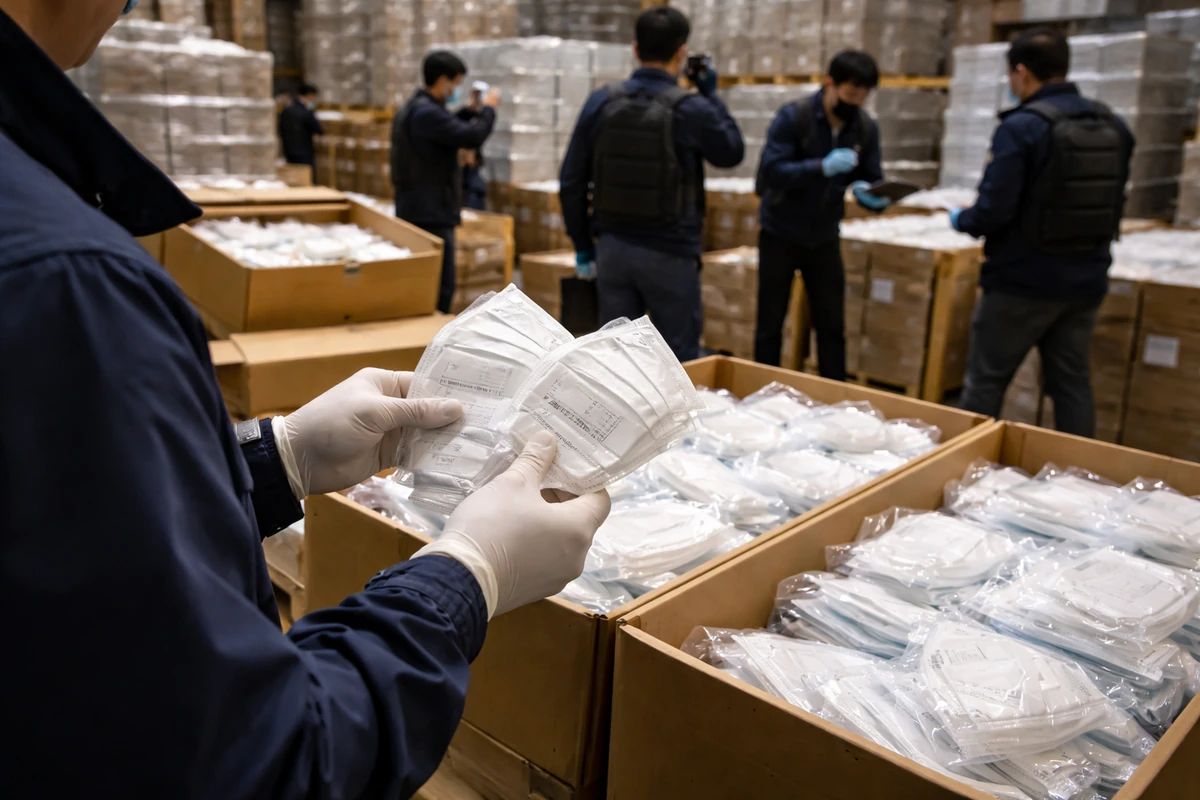
In South Korea, a country where face masks became both a public health tool and a part of daily life long before the COVID-19 pandemic, authorities say they have uncovered a scheme that goes far beyond mislabeled inventory. According to the Ministry of Food and Drug Safety, two people have been referred to prosecutors after allegedly taking roughly 82,000 expired health masks that were supposed to be destroyed, altering the expiration dates on the packaging and putting them back on the market.
On paper, the case may sound like a fairly straightforward consumer fraud story: old goods were relabeled and resold. But South Korean officials and public health observers are treating it as something more consequential. These were not novelty items or low-stakes household products. They were health masks, a category of regulated protective goods that consumers buy on the assumption that the information printed on the package, including expiration dates, manufacturing details and filtration standards, is accurate.
That assumption matters in any country. In South Korea, it carries extra weight. Masks are still widely used there during flu season, periods of heavy fine dust pollution and in households with older adults or people who are immunocompromised. For many Americans, masks may now feel like an occasional pharmacy purchase tucked next to cold medicine and hand sanitizer. In South Korea, they remain a routine item in a way that resembles how many Americans think about allergy medication, air filters or bottled water during a storm warning: ordinary, easy to buy and trusted because the system is supposed to guarantee a minimum level of safety.
That is why the case has drawn attention disproportionate to the number of masks involved. The central issue is not simply that expired products were sold. It is that a product whose reliability depends heavily on printed labeling was allegedly manipulated in a way that stripped consumers of their most basic way to judge whether it was safe to use.
What authorities say happened
South Korea’s food and drug safety ministry said the masks in question had passed their usable shelf life and could no longer legally be sold. Instead, authorities say, the inventory was removed from the manufacturer under the false pretense that it would be discarded. From there, investigators allege, the expiration dates were extended by about three years and the products were redistributed into the marketplace.
The case is notable because it appears to involve several points of failure rather than a single bad act. There was the removal of inventory that was supposedly headed for disposal. There was the alleged tampering with the label itself. And there was the reentry of those products into ordinary sales channels where consumers, retailers and possibly online platforms could encounter them as if they were legitimate stock.
South Korean officials say the products are being destroyed and that the suspects have been sent to prosecutors on alleged violations of the Pharmaceutical Affairs Act, the law that governs many products tied to health protection. That legal detail is important. In South Korea, health masks are not treated merely as generic clothing accessories or simple industrial goods. They are classified as quasi-drugs, a regulatory category that includes products intended to protect human health but that do not require a doctor’s prescription. That means packaging, quality controls and expiration dates carry regulatory significance, not just marketing value.
For an American audience, one rough analogy would be the difference between an ordinary bandana and a box of medical-grade disposable masks sold with specific performance claims. Consumers may not fully understand the chemistry or materials involved, but they rely on the label, the lot number and the expiration date as shorthand for state-supervised quality assurance. If that system can be manipulated, the consequences extend well beyond one shipment.
Why expiration dates matter more than many shoppers realize
One reason the case resonates is that consumers often think of expiration dates as suggestions rather than hard boundaries. In an American kitchen, many people have learned that a "best by" date on cereal or crackers does not necessarily mean the food becomes dangerous the next day. But health masks are a different kind of product.
Expiration dates on regulated protective masks are not just about freshness in the everyday sense. They reflect the period during which the manufacturer, under approved storage conditions, can stand behind the product’s quality and performance. That can involve the condition of the filter material, the integrity of the straps, the seal of the packaging and whether the product still meets the standard under which it was authorized for sale.
In South Korea, one of the most familiar markings on these masks is KF94, a national standard somewhat comparable in public recognition to the way Americans came to understand N95 masks during the pandemic. While the standards are not identical, the core idea is similar: consumers are looking for a mask that meets a tested filtration threshold. The average shopper cannot inspect the microscopic structure of the filter media at home. They trust the label to tell them whether the product remains within its certified window of effectiveness.
That is what makes expiration-date tampering so serious. This is not like changing a price sticker at a discount store. It is closer to falsifying a key part of the product’s safety profile. A shopper standing in a drugstore aisle or browsing an online marketplace is unlikely to have any realistic way to know the difference. If the date, lot information and packaging appear normal, the ordinary consumer’s ability to make an informed choice is effectively gone.
The stakes are even higher for people who are not using masks casually. Older adults, cancer patients, those with chronic respiratory illnesses and family caregivers may still rely on them as a practical layer of protection during seasonal disease surges or poor air quality. For those consumers, the product is not symbolic. It is functional. And function depends on trust.
A post-pandemic blind spot
The alleged scheme also highlights something many countries have been grappling with since the height of COVID-19: public vigilance around protective gear tends to fade faster than the need for oversight. During the pandemic, masks were among the most intensely scrutinized consumer products in the world. Governments worried about shortages, price gouging, counterfeits and substandard imports. News coverage was constant. Consumers learned new acronyms. Retailers posted purchase limits.
That environment no longer exists. In the United States, masks have largely shifted from emergency essentials to occasional-use items for travel, hospitals, wildfire smoke and cold-and-flu season. In South Korea, the shift has been less dramatic because mask-wearing was already more normalized, especially during high pollution days or when someone had cold symptoms. Even so, demand has stabilized, urgency has subsided and the market no longer carries the same level of public attention.
That can create a dangerous opening. When a product is no longer at the center of a national crisis, consumers become less suspicious, sellers face less scrutiny and irregularities are easier to miss. Bargain bundles, clearance sales and online discounts begin to look like ordinary commerce rather than a possible warning sign. In that environment, the basic safeguards that should protect consumers become even more important because shoppers are no longer on high alert.
South Korean authorities said they launched an investigation after receiving information suggesting that masks with altered labeling may have been circulating. That is encouraging in one sense: it suggests the monitoring system still works. But it is also a reminder that enforcement often begins only after suspicious products have already moved through the supply chain. By then, some portion may have reached homes, offices, schools or care settings.
The broader lesson is not unique to South Korea. In any country, routine health products can become vulnerable once they are treated as too ordinary to watch closely. Americans have seen versions of this pattern in recalls involving infant formula, over-the-counter medications, contaminated eye drops and food products that passed through multiple intermediaries before problems were detected. The lower the day-to-day sense of alarm, the easier it can be for trust to erode quietly.
Where the supply chain appears to have broken down
The details released so far suggest that the biggest questions may lie not only with the individuals accused of wrongdoing but with the system around them. If products designated for disposal were able to leave the manufacturer’s control, have their labels changed and return to regular distribution, then the weakness was not confined to a single warehouse shelf.
Supply chains for low-cost, high-volume consumer goods are often built for speed and efficiency, not for forensic transparency. That is not necessarily a problem when products are ordinary and risks are low. But for regulated health items, the chain of custody matters. There should be reliable procedures for documenting what is destroyed, when it is destroyed, who verifies it and how inventory is prevented from slipping back into resale channels.
Manufacturers have a role here that extends beyond production. If a batch is expired and destined for destruction, controlling that batch is part of protecting the integrity of the brand and the regulatory approval behind it. Distributors, wholesalers and retailers also carry responsibility. So do e-commerce platforms, which increasingly move health-related products at a pace and volume that can outstrip traditional oversight.
One reason online retail creates special risk is that it can blur distinctions between authorized stock, gray-market inventory and product that looks legitimate but comes from a questionable source. Americans are familiar with this dynamic from third-party marketplace sellers offering everything from skin care to supplements to electronics at steep discounts. South Korea has its own highly developed online shopping ecosystem, and while it offers extraordinary convenience, that same convenience can make irregular inventory harder for consumers to spot.
The lesson from this case is not that online sales are inherently unsafe, nor that all discounted mask inventory should be viewed with suspicion. It is that protective health goods cannot be managed as though they were just another pile of seasonal merchandise. Once expiration dates and package markings become vulnerable to manipulation, every part of the chain has to be evaluated, from disposal verification to platform monitoring.
What this says about trust in Korea’s public health culture
South Korea has built a reputation over the past decade as a highly organized, technologically capable society with a public that is generally responsive to health guidance. During the pandemic, that image was reinforced by the country’s testing systems, mask adoption and public communication. But trust in public health is not built only during emergencies. It is sustained through the mundane credibility of everyday products.
That is especially true for masks in Korea, where they came to symbolize not only pandemic precautions but also a broader civic habit of reducing harm to others. Before COVID-19, it was common to see people wear masks when they had a cold, during yellow dust events or on days with severe particulate pollution. In the American context, that may be easiest to understand by comparing it to carrying hand sanitizer, staying home when sick or checking the Air Quality Index during wildfire season. Over time, the practice becomes part of social etiquette as much as personal protection.
When the reliability of a mask label is called into question, the damage is not limited to one product line. It can chip away at confidence in the whole idea that regulated everyday health goods are what they claim to be. That matters because public health depends on countless small acts of trust. People trust that a thermometer gives a reasonably accurate reading, that a sealed bottle of children’s medicine is properly labeled and that a mask marked for health protection has not quietly exceeded the conditions under which its performance was assured.
Authorities in South Korea appear to understand the symbolic weight of the case. By referring the matter for prosecution rather than treating it as a minor administrative infraction, regulators are signaling that label tampering on health masks strikes at a more fundamental issue than improper sales paperwork. It is about the credibility of the system that stands behind the package.
What consumers should check now
For shoppers, the immediate practical advice is not complicated, though it may be inconvenient. Consumers in South Korea and elsewhere should look more carefully at health masks they already have at home, especially bulk purchases bought long ago, deeply discounted lots and products from sellers they cannot easily identify. Check the expiration date, lot number, printing quality and condition of the packaging. If the package appears tampered with, unusually faded or inconsistent with other products from the same brand, it may be worth contacting the seller or relevant authorities.
That said, consumers should not be made to bear the full burden of policing a regulated market. The whole point of expiration dates and official labeling is that shoppers are not supposed to need specialized knowledge to verify them. The average person cannot audit a warehouse chain or confirm whether a disposal certificate was legitimate. Responsibility ultimately belongs to regulators, manufacturers, distributors and sales platforms.
Still, there are common-sense steps that translate easily across borders. Buy from established retailers when possible. Be cautious about unusually cheap prices for products that are supposed to provide health protection. Keep receipts or digital purchase records. If a brand offers customer service or product verification tools, use them. In the United States, consumers learned similar habits when counterfeit personal protective equipment and questionable COVID-19 tests began circulating during the pandemic. South Korean shoppers now face a reminder that those lessons did not expire when the emergency phase ended.
Longer term, the case is likely to renew discussion about stronger tracking tools, such as linking lot numbers to digital verification systems or tightening requirements around disposal documentation for regulated goods. Those policy debates will take time. The more immediate takeaway is simpler: when a society relies on ordinary protective products, trust in the information printed on those products is not a technical detail. It is the foundation of the transaction.
That is why the South Korean mask scandal matters beyond the country’s borders. In a world where supply chains are fast, marketplaces are fragmented and public attention shifts quickly, even basic health supplies depend on systems that can fail quietly until someone notices. What South Korean authorities uncovered is not just an expiration-date fraud case. It is a warning about how fragile trust can be when the products people use to stay safe are treated as just another line item in inventory.
Comments
Post a Comment