Samsung’s Foundry Business Sees a Possible Turnaround, and Korea’s Chip Industry Is Watching Closely
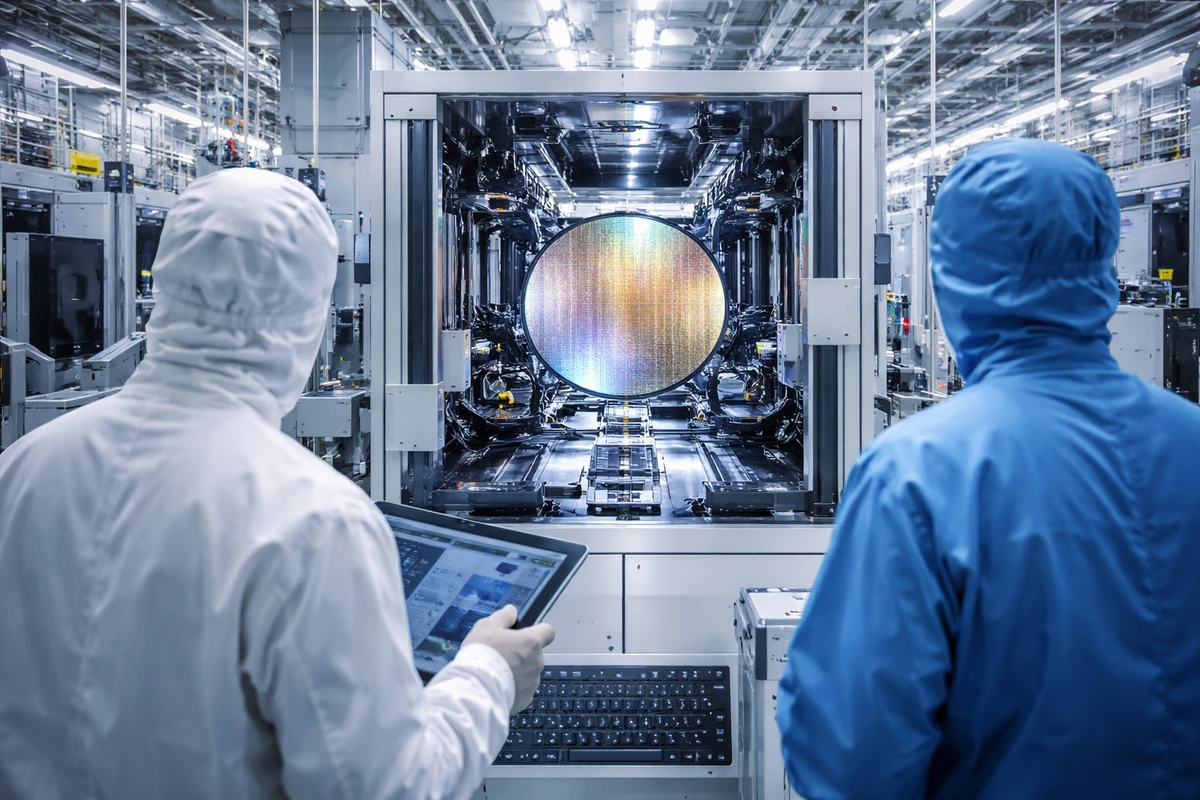
A business line long seen as Samsung’s weak spot may be improving
For years, Samsung Electronics has occupied a near-mythic place in South Korea’s economy. The company is not just a major corporation; it is a national industrial pillar whose fortunes can shape investor sentiment, export figures and even broader debates about the country’s technological future. Americans often know Samsung as the brand behind smartphones, televisions and home appliances. But inside the global semiconductor industry, the company’s importance runs much deeper. It is one of the world’s dominant memory chip makers, supplying components that help power everything from laptops to artificial intelligence servers.
That is why the latest signal surrounding Samsung’s foundry business has drawn intense attention in South Korea’s tech sector. According to industry reporting in Seoul, Samsung Foundry, the unit that manufactures chips designed by outside customers, is showing signs that it may reach profitability sooner than previously expected, with 2026 emerging as a more clearly defined target and perhaps an earlier inflection point than the market had assumed.
That may sound like a dry accounting milestone, but in the chip industry, profitability often serves as shorthand for something much larger: manufacturing stability, customer confidence, operational discipline and long-term competitiveness. In other words, when investors and industry insiders ask whether Samsung Foundry can turn a profit, they are really asking whether Samsung can become a stronger, more trusted manufacturing partner in the part of the semiconductor market that matters most for the next era of computing.
This is especially important because Samsung’s reputation in semiconductors has never been the same across all categories. In memory chips, the company is a global heavyweight. In foundry, however, it has spent years trying to prove that it can compete more consistently with Taiwan Semiconductor Manufacturing Co., or TSMC, the dominant contract chipmaker relied on by many of the world’s biggest technology companies. Samsung has had to contend with questions about yields, a term used in chip manufacturing to describe how many usable chips come out of a production run, as well as concerns about execution, customer retention and the ability to win major long-term clients.
So when the market begins to talk not just about eventual profitability, but about the timetable moving forward, the significance is strategic rather than merely financial. It suggests that at least some observers believe Samsung is making progress in cost control, production efficiency, process management and customer mix. In South Korea, that possibility is being read as more than a corporate earnings story. It is being treated as a potential signal that the country is trying to rebalance its semiconductor ambitions beyond memory and into a broader, more resilient manufacturing ecosystem.
What a foundry does, and why Americans should care
For readers outside Asia, the word foundry may need some explanation. A semiconductor foundry is essentially a highly specialized factory business. Instead of designing chips for its own products alone, a foundry manufactures chips on behalf of other companies, including firms that focus on chip architecture, software integration or end products such as phones, cars and servers. Think of it as the difference between a fashion brand and the advanced industrial facility that actually produces the fabric and assembles the garments, except on a far more technically demanding scale and with far higher capital costs.
In the United States, the growing public awareness of foundries came largely through supply chain shocks, the chip shortage during the pandemic and the political push behind the CHIPS and Science Act. As Washington has poured subsidies into domestic manufacturing and tried to reduce dependence on overseas production, Americans have become more familiar with how central chip fabrication is to national security, industrial policy and economic competitiveness. Samsung itself is part of that story in the U.S., where it has invested heavily in Texas and positioned itself as a player in America’s attempt to rebuild advanced manufacturing capacity.
But foundry economics are uniquely unforgiving. A company can announce big orders and still lose money if yields are poor, if production ramps are delayed, or if the cost of research and equipment outpaces revenue. The more advanced the manufacturing process, the harder the challenge becomes. Customers are not only buying raw production capacity. They are buying reliability, predictable timelines, design support and confidence that a factory can move from prototype to volume manufacturing without expensive surprises.
That is why profitability matters so much here. A profitable foundry operation is not simply one that sold more wafers. It is often one that has begun to align several complicated variables at once: stable yields, better factory utilization, a healthier mix of customers, stronger pricing power and fewer costly disruptions. In an industry where trust is accumulated slowly and lost quickly, those signals matter enormously.
For American readers, there is another reason this matters. The chips made in foundries increasingly underpin almost every major technology trend. AI accelerators, smartphone processors, automotive chips, networking components and edge-computing devices all depend on advanced manufacturing. Whether consumers are thinking about Nvidia-powered AI systems, the next iPhone, autonomous driving features or industrial robotics, the quiet industrial reality underneath all of it is the foundry business. That makes Samsung’s progress, or lack of it, a global concern rather than a narrowly Korean one.
Why this moment matters more in the age of AI
The timing of this renewed focus is not accidental. The AI boom has changed the semiconductor conversation everywhere, including in South Korea. Early headlines around artificial intelligence often centered on software models or on the huge demand for high-bandwidth memory, a category where Korean companies have a formidable presence. But AI is not only a memory story. It is also a manufacturing story.
Training and running AI systems requires a wide range of chips: high-performance accelerators for data centers, mobile processors capable of on-device AI tasks, power management components, networking chips and specialized semiconductors for cars, factories and consumer devices. As AI spreads beyond giant cloud companies and into handsets, appliances, vehicles and industrial systems, the number of chip types involved grows. So does the need for dependable foundry capacity.
This is where Samsung’s broader strategic challenge comes into view. South Korea has long been a powerhouse in memory chips, but the global semiconductor industry’s value is increasingly spread across design, manufacturing services, packaging and software-linked system semiconductors. A country can be exceptionally strong in memory and still leave a great deal of value on the table if it cannot translate that strength into a more comprehensive ecosystem.
That is part of why the debate over Samsung Foundry’s profitability carries such weight in Seoul. If Samsung can turn operational improvements into a durable foundry recovery, the benefits could extend beyond one division’s balance sheet. It would strengthen South Korea’s claim to be more than a memory specialist at a time when the industry is being reorganized around AI, geopolitical risk and supply chain resilience.
Still, the AI boom does not automatically solve foundry problems. If anything, it raises the bar. Customers producing advanced AI chips are often cautious in choosing manufacturing partners because errors are costly, schedules are tight and technical complexity is immense. High demand alone is not enough. A foundry must be able to convert demand into consistent output, on time and at scale. That is why market observers are looking past the headline of possible profitability and asking deeper questions: Are yields improving? Are utilization rates stronger? Is Samsung winning a better portfolio of long-term business? Has confidence among customers started to recover?
Those questions are not academic. In this industry, a strong quarter can attract attention, but a stable multiyear operating pattern wins business. The companies designing expensive next-generation chips want partners they can trust not just for today’s product launch, but for the next design cycle and the one after that. If Samsung can move the profitability timeline forward, many in the market will interpret that as evidence that the company is not just trimming costs, but regaining operational credibility.
Customer trust, not just earnings, is the real test
In foundry manufacturing, trust functions almost like an invisible currency. It does not show up neatly on a balance sheet, but it shapes the business in powerful ways. A customer deciding where to place a next-generation chip order is not making a one-time retail purchase. It is entering a tightly interdependent relationship involving design support, process optimization, testing, schedules, cost assumptions and future road maps.
That is why one yield issue or a production delay can have consequences far beyond a single product. If a customer experiences disruption in one generation of manufacturing, it may shift future generations elsewhere. Conversely, once a foundry proves it can deliver stable output at an advanced node, the relationship can deepen into repeat business, bigger orders and longer-term contracts.
South Korean industry watchers appear to understand that well. The renewed discussion over Samsung Foundry’s path to profitability is being treated less as a simple margin story than as a referendum on whether the company has begun to restore confidence among customers. That includes not only whether existing clients stay, but whether new ones are willing to entrust Samsung with strategically important products.
In practical terms, customer trust in this business depends on several factors. One is yield stability, which determines whether a complex design can be produced economically. Another is factory utilization, a sign that capacity is being used efficiently rather than sitting idle. Another is design enablement, the support a foundry offers customers as they adapt their chip blueprints to a specific manufacturing process. Still another is predictability: Will the product ramp on schedule, and will the next process generation be mature when promised?
This helps explain why even a relatively subtle shift in sentiment around Samsung Foundry can produce outsized attention in South Korea. The market is looking for proof that the business is moving from a phase defined by long-running underperformance into one characterized by improving execution. Profitability is the headline metric, but the underlying question is whether Samsung is becoming easier, safer and more attractive to do business with.
That distinction matters because there is a big difference between reaching breakeven through temporary belt-tightening and doing so through a structural improvement in competitiveness. Investors and industry customers alike want to know whether Samsung’s operations are becoming more efficient for durable reasons. If the answer is yes, then an earlier move into the black would suggest more than an accounting rebound. It would indicate that Samsung may be making real progress in one of the hardest segments of the semiconductor industry.
The ripple effects across South Korea’s chip ecosystem
In the United States, semiconductor debates often center on a few giant names such as Intel, Nvidia, TSMC and Micron, along with the federal policy effort to bring more fabrication onshore. In South Korea, the structure of the conversation can be somewhat different because the health of a major conglomerate like Samsung can have broad knock-on effects across suppliers, smaller technology firms and national industrial planning.
That is one reason the prospect of a Samsung Foundry recovery is attracting attention well beyond Samsung itself. A more stable and profitable foundry operation could influence South Korea’s fabless chip designers, materials companies, equipment suppliers, testing firms and packaging providers. In other words, this is not just about one business unit posting better numbers. It is about whether a central piece of the domestic semiconductor value chain becomes more dependable and more capable of supporting a wider ecosystem.
That point is especially important for South Korea’s fabless companies, which design chips without owning their own factories. Many of these firms have engineering talent and commercial ideas but face constraints when it comes to manufacturing access, process optimization and cost-effective scaling. If a major local foundry becomes healthier and more predictable, that could give smaller designers a more stable platform for bringing products to market.
There is also a supply-chain effect. Advanced semiconductor production is no longer confined to wafer fabrication alone. Packaging, testing, design verification and electronic design automation tools all play increasingly important roles, especially as chips become more complex and multi-layered. If Samsung Foundry is able to strengthen its business, demand could rise across adjacent services and suppliers. That would matter for a country like South Korea, which has been trying to preserve its edge in manufacturing while expanding into higher-value segments of the chip stack.
At the same time, none of these positive outcomes should be assumed. A profitable foundry does not automatically mean smaller companies get better treatment or that the broader ecosystem instantly becomes more competitive. Those gains depend on whether improved finances translate into better customer support, clearer road maps, more accessible design resources and more predictable production schedules. For many companies in the industry, the real question is not simply whether Samsung Foundry becomes profitable, but whether it becomes easier to work with in practical, day-to-day ways.
That may sound like an unglamorous benchmark, but it is often the one that matters most. Semiconductor ecosystems thrive not only because a flagship company is large, but because partners can reliably build businesses around it. South Korea’s tech sector is watching closely for signs that Samsung’s foundry operation can offer exactly that kind of stability.
The obstacles have not disappeared
Even if the mood around Samsung Foundry is improving, there is little indication that the hard part is over. Foundry is among the most capital-intensive and strategically brutal businesses in the global economy. It requires enormous spending on equipment, process development and capacity years before returns are guaranteed. It also demands patience. Customer relationships can take years to build and only a short period to damage.
Samsung is also operating in a field where the benchmark competitor is unusually formidable. TSMC has spent decades building scale, trust and process leadership, and it remains the default manufacturing choice for many elite chip designers. That does not mean Samsung cannot gain ground, but it does mean that any recovery will be judged against very high standards. Customers weighing whether to diversify suppliers or move more work to Samsung will want convincing evidence, not just hopeful projections.
Another challenge is that process road maps must remain consistent over time. In foundry, customers are not only choosing a factory for today’s chip. They are effectively placing a bet on whether that manufacturer will deliver mature, high-performing processes in the future. If a company’s road map appears uneven, customers may hesitate, even if short-term pricing or incentives look attractive.
Then there is the macro backdrop. Semiconductor markets are cyclical, and a company can improve execution only to face softer demand, geopolitical disruptions or changing customer strategies. The AI boom has created huge excitement, but it has also concentrated attention on a relatively narrow set of products and buyers. For Samsung Foundry, translating broader AI enthusiasm into a stable, diversified and profitable business remains a difficult operational assignment.
There is also a difference between market optimism and confirmed results. The current conversation in South Korea centers on signs that the clock on profitability may be moving forward, not on a final declaration that the turnaround is complete. That distinction matters. Investors, suppliers and customers will want to see whether the underlying indicators, including yields, capacity utilization and customer quality, continue to move in the right direction over time.
For that reason, the most responsible reading of the moment is one of cautious significance. Something appears to be changing in the narrative around Samsung Foundry. The market seems more willing to consider the possibility that the business is recovering faster than expected. But in a sector where credibility is earned through execution, the next phase will matter more than the headlines.
Why this story reaches beyond Samsung
For Americans, it can be tempting to see Samsung chiefly through the lens of consumer electronics or as one of several foreign companies involved in the U.S. chip-building push. In South Korea, however, the company’s foundry performance is being interpreted as a broader test of whether the country can evolve from memory leadership into a more complete semiconductor power. That is why the prospect of earlier profitability is resonating so strongly.
The issue touches several of the biggest themes in the global economy at once: the AI arms race, supply chain resilience, industrial policy, manufacturing credibility and the competition to control high-value parts of the semiconductor stack. It also reflects a challenge familiar to many countries, including the United States: how to convert success in one part of the tech supply chain into strength across the whole system.
If Samsung Foundry truly is moving toward profitability faster than expected, the implications could be meaningful. It would suggest not just that the company is containing losses, but that it may be making progress on the operational and reputational problems that have weighed on the business. That, in turn, could strengthen South Korea’s semiconductor ecosystem, improve options for chip customers seeking manufacturing partners and add another layer to the global contest over advanced chip production.
But if the anticipated recovery proves shallower than hoped, the episode will still reveal something important: just how difficult it is to build a world-class foundry business, even for one of the most powerful electronics companies on earth. In that sense, the intense attention now being paid to Samsung Foundry says as much about the future of the semiconductor industry as it does about Samsung itself.
For now, what has changed most clearly is the direction of the conversation. A business once defined in much of the Korean market by prolonged underperformance is now being discussed in terms of possible acceleration toward profitability. In an industry built on precision, confidence and long time horizons, that shift in tone is significant. Whether it becomes a lasting turning point will depend on the kind of evidence that matters most in semiconductors: consistent performance, satisfied customers and the ability to deliver when the next wave of demand arrives.
Comments
Post a Comment