Seoul Home Prices Rise, but a Rush of Distressed Listings in Gangnam and Yongsan Tells a More Complicated Story
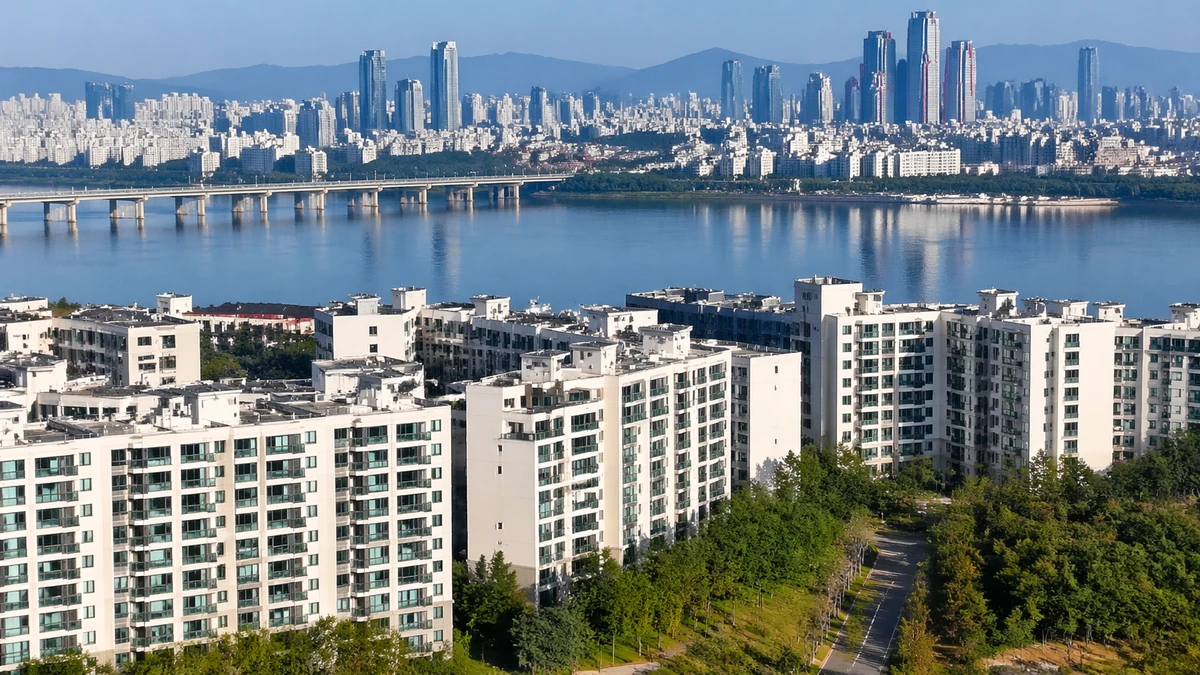
Two signals at once in one of Asia’s most watched housing markets
Seoul’s housing market is sending two very different messages at the same time, a combination that would look familiar to anyone who has followed overheated real estate cycles in places like New York, San Francisco or Toronto. On one hand, home prices in the South Korean capital rose 0.15% in a single week, a notable gain in a market where even small weekly changes are closely watched for signs of momentum. On the other hand, some of the city’s most expensive and symbolically important neighborhoods — Gangnam and Yongsan — are reportedly seeing a surge of so-called emergency or distressed listings, with 7,653 properties said to have hit the market.
Taken separately, either development could support a simple narrative. Rising prices might suggest a rebound. A spike in distressed sales could suggest weakening confidence. But happening together, they point to something more complex: not a clean recovery, and not an outright slump, but a reshuffling inside the market as different groups of buyers and sellers respond to different pressures.
That matters because Seoul is not just another big city housing market. In South Korea, real estate is deeply tied to middle-class wealth, family stability, education access and social status. Housing decisions in Seoul often carry outsized economic and emotional weight because of the capital’s dominance in jobs, elite schools and cultural influence. If Manhattan and Silicon Valley were rolled into one metropolitan area, with much of a country’s opportunity concentrated there, the resulting housing market might begin to resemble Seoul.
The latest signals suggest that what is happening now is less about a broad wave of speculative optimism and more about a collision between anxious renters, cost-burdened owners and a regulatory system that can squeeze both. For American readers, the easiest shorthand may be this: imagine a market where rent pressure pushes some households into buying earlier than they wanted, even as higher carrying costs push some owners to sell faster than they planned. That is the tension now visible in Seoul.
Why pressure in the rental market matters so much in Korea
To understand why Seoul home prices can rise even when distress appears elsewhere, it helps to understand a uniquely Korean housing institution: jeonse. Often described as a lump-sum deposit lease, jeonse allows a tenant to live in a home by putting down a very large refundable deposit instead of paying monthly rent, or by paying a mix of deposit and rent in other arrangements. For years, this system has shaped the financial lives of Korean households in ways that do not have a direct American equivalent.
When the jeonse market tightens — meaning deposits become harder to afford, listings become scarcer or renewal terms worsen — the effects can spill into the for-sale market. A renter who cannot find an acceptable lease, or who faces a much larger deposit than before, may begin to weigh buying a home not as an investment play but as a way to secure housing and avoid repeated financial shocks. In that sense, purchase demand can be defensive rather than bullish.
That appears to be part of what is happening in Seoul now. The recent price increase does not necessarily mean buyers have suddenly become convinced that a major boom is back. It may instead reflect households reacting to instability in the rental market. In practical terms, if living as a renter becomes too uncertain or too expensive, buying can start to look like the less risky option — even if the buyer is not especially optimistic about future home appreciation.
American readers can think of this as a version of what happens in tight U.S. metro areas when rent hikes, low vacancy and weak tenant bargaining power push households toward homeownership before they are fully ready. The difference in Korea is that the structure of rental finance can make that pressure feel much sharper and more immediate. Instead of simply facing a somewhat higher monthly rent, tenants may have to come up with significantly more capital at renewal time. That can turn a housing choice into a financial cliff.
This is why a modest-seeming weekly gain in Seoul home prices can carry broader meaning. It may not represent exuberance. It may represent households trying to reduce uncertainty in a system that has become harder to navigate.
Gangnam and Yongsan are not ordinary neighborhoods
The second signal — the reported flood of 7,653 distressed listings in Gangnam and Yongsan — is especially important because of where it is happening. Gangnam, known globally thanks in part to pop culture but far more consequential in Korea as a byword for wealth, elite education and prestige, has long occupied a near-mythic place in the country’s property market. Yongsan, meanwhile, has become one of Seoul’s most prominent redevelopment and luxury residential zones, aided by its central location and political visibility.
If distressed listings were piling up mainly in the far outskirts of the capital region, the story might be easier to dismiss as a problem of weaker submarkets. But when sellers in Gangnam and Yongsan begin putting properties up under pressure, it suggests that even owners in core districts are reassessing how long they can afford to wait.
That does not automatically mean prices are about to collapse. Premium districts often retain deep pools of demand, especially in a city where location can determine everything from commute times to school access to long-term status. Well-located, high-quality apartments in top Seoul neighborhoods do not behave like average inventory in a soft suburban market.
Still, the symbolism matters. In expensive districts, small changes in interest rates, tax burdens, financing conditions or holding costs can translate into very large absolute sums. An owner who might have been willing to sit tight six months ago may no longer believe time is on his or her side. Once that mindset begins to spread, it weakens one of the most important pillars supporting high-end markets: the belief that waiting is always rewarded.
For U.S. readers, there is a rough analogy in the difference between weakness showing up in an outer-ring exurb versus signs of stress emerging in prime Manhattan or the most prized parts of Silicon Valley. One does not mean the same thing as the other. Stress in a prestige market may not instantly reset prices across the board, but it can alter psychology for the entire system.
That is why the volume of distressed listings matters even if not every listing becomes a deeply discounted sale. The issue is not only supply. It is sentiment. When owners in symbolic districts begin to act like liquidity matters more than patience, the market’s narrative starts to change.
What looks like recovery may actually be a market reordering
It would be tempting to look at Seoul’s weekly price increase and declare that the city’s housing market is back on an upswing. But that reading risks missing the more important development: the market may be reorganizing itself around different motives and constraints.
Some buyers are entering the market because they fear what staying in the rental system will cost them. Some sellers are entering because carrying property has become too expensive or uncertain. Those are not the same forces that drive a classic boom, when optimism broadens, investors pile in and sellers feel comfortable holding out for ever-higher offers.
In other words, Seoul’s current movement may be less about an across-the-board rise in confidence and more about selective repositioning. End users, rather than speculative buyers, may be doing more of the heavy lifting in certain pockets. Meanwhile, financially pressured or less confident owners may be adding supply in others. The result is a market that can show strength in headline numbers while becoming internally more fragmented.
This helps explain why broad averages can be misleading. A citywide increase may mask sharp differences by neighborhood, apartment size, price band and buyer profile. Households seeking practical homes in areas with solid schools, transit access and manageable price points may still compete aggressively. Luxury units or properties held by owners facing tax and financing burdens may trade under very different conditions.
That pattern is not unique to Korea. American housing markets have also gone through periods when aggregate statistics obscured important splits beneath the surface. In many U.S. cities, first-time buyers, cash-rich investors and higher-income move-up households can experience entirely different markets at the same moment. Seoul now appears to be entering a similar phase, though shaped by Korean institutions and regulations.
The key point is that “prices are up” does not necessarily mean “the market is healthy,” just as “distressed listings are rising” does not necessarily mean “the market is crashing.” Both can be true in different corners of the same city when housing is being repriced according to stress rather than shared optimism.
The paradox of regulation: Why both owners and renters can feel squeezed
Another important part of the Seoul story is the role of policy. South Korea has a long history of using housing regulations, tax measures and lending rules to try to cool speculative excess and stabilize prices. Those policies often emerge from a real political imperative. Housing affordability is a major social issue, especially in Seoul, and no government wants to be seen as allowing a runaway property market to worsen inequality.
But regulation can produce side effects, especially when it slows transactions, delays supply decisions or raises the cost of holding property without meaningfully easing rental stress in the short run. This is the paradox now being discussed in Korea: measures intended to tame the market can leave both owners and renters feeling trapped, albeit in different ways.
For owners, the burden can come through taxes, financing restrictions, uncertainty about future rules or simple illiquidity — the difficulty of selling at an acceptable price in a hesitant market. For renters, the burden can come through reduced choices. If owners delay sales, adjust lease terms conservatively or hold back supply while waiting for clarity, tenants face a tighter market right when they need flexibility.
In effect, a policy environment designed to discourage speculative churn can also reduce mobility. That is especially painful for renters, who do not have the luxury of waiting indefinitely. Households need a place to live on a fixed timeline. They cannot postpone shelter in the same way an owner can postpone a sale.
American readers have seen versions of this dynamic before. In heavily constrained housing markets, rules meant to protect affordability can sometimes have the near-term effect of reducing turnover or limiting available units, even if the long-term intent is sound. Korea’s case is different in its legal and financial specifics, but the basic tension is familiar: a market can become less volatile on paper while feeling more punishing for ordinary households trying to move.
In Seoul, that dynamic may be part of what is feeding both sides of the current split. Tighter rental conditions push some households toward buying, supporting prices in parts of the market. Meanwhile, the cost and uncertainty of ownership push some sellers toward discounting, increasing distressed inventory elsewhere. Regulation does not create all of that pressure by itself, but it shapes how the pressure is distributed.
Why this should not be mistaken for a simple bull market
The phrase that appears to be circulating in market commentary — something close to “stirring for the first time in three months” — captures the psychological dimension of what is happening. Housing markets are driven not only by data but also by mood. Once people start to sense movement, they often react before a trend is fully formed.
That is why caution is warranted. If Seoul were truly entering a straightforward new bull market, one might expect stronger evidence of broad-based seller confidence, less urgency among owners in premium districts and a clearer return of risk-taking demand. Instead, the city appears to be showing a push-pull pattern: upward pressure from renters-turned-buyers and downward pressure from cost-conscious or anxious sellers.
This makes the current moment look less like a clean rebound and more like a contested transition. Some households are acting because they are afraid of being shut out of stable housing. Others are acting because they are afraid of the cost of holding on. Both fears can produce transactions, but they do not produce the same kind of market.
That distinction matters for anyone trying to forecast what comes next. Defensive buying can support prices for a time, particularly in neighborhoods where supply is limited and practical demand is strong. But if that demand is rooted in avoiding rental insecurity rather than belief in lasting appreciation, it may not be durable enough to lift the entire market for long. At the same time, distressed listings in core districts can remain manageable if high-income buyers absorb them — but if absorption slows, those listings can become a source of broader price pressure.
In short, the current data should not be read as a green light for blanket conclusions. Seoul may be stabilizing in some segments, straining in others and recalibrating almost everywhere. That is not unusual after years of volatility, policy intervention and affordability stress. It is simply more honest than declaring either victory or crisis.
What to watch next in Seoul’s housing market
The most important question in the months ahead may not be whether prices rise or fall in the abstract, but what kind of demand is absorbing what kind of inventory, and how quickly. If end-user buyers continue stepping in because rental conditions remain painful, some parts of Seoul could hold up better than expected. If distressed listings in Gangnam, Yongsan or other key districts linger without being cleared, buyers may gain bargaining power in places once seen as nearly untouchable.
Transaction quality will matter as much as transaction volume. Analysts will want to know whether deals are closing near asking prices or only after large discounts, whether buyers are using leverage aggressively or purchasing conservatively, and whether sales are concentrated in specific building types or school districts. Those details reveal far more than a single citywide price figure.
Psychology will also remain central. The same market can be pulled upward by fear of missing out on stable housing and pulled downward by fear of overpaying into uncertainty. Seoul appears to be experiencing both emotions at once. That duality is one reason the next phase is likely to be uneven rather than dramatic.
For American readers, the broader lesson is that headline housing numbers often tell only part of the story, especially in globally significant cities where policy, status and scarcity collide. Seoul is not moving in one direction so much as it is sorting itself into multiple sub-markets under stress. Renters, homeowners and investors are responding to different incentives. The result is a city that can look hot and vulnerable at the same time.
That may be the clearest way to understand Seoul’s latest housing signals. A weekly rise in home prices says demand has not disappeared. A jump in distressed listings in Gangnam and Yongsan says confidence is not uniform. Together, they suggest not a simple comeback, but a reordering — one in which housing security, holding costs and policy friction matter at least as much as raw price momentum.
And in a city where housing is tied so tightly to class mobility, family planning and the possibility of staying in the capital at all, that reordering is more than a real estate story. It is a window into how ordinary South Koreans are navigating uncertainty in one of the world’s most pressurized urban economies.
Comments
Post a Comment