South Korea Clears Its First Regenerative Medicine Treatment Plan, Opening a New Chapter for Patients With Rare Diseases
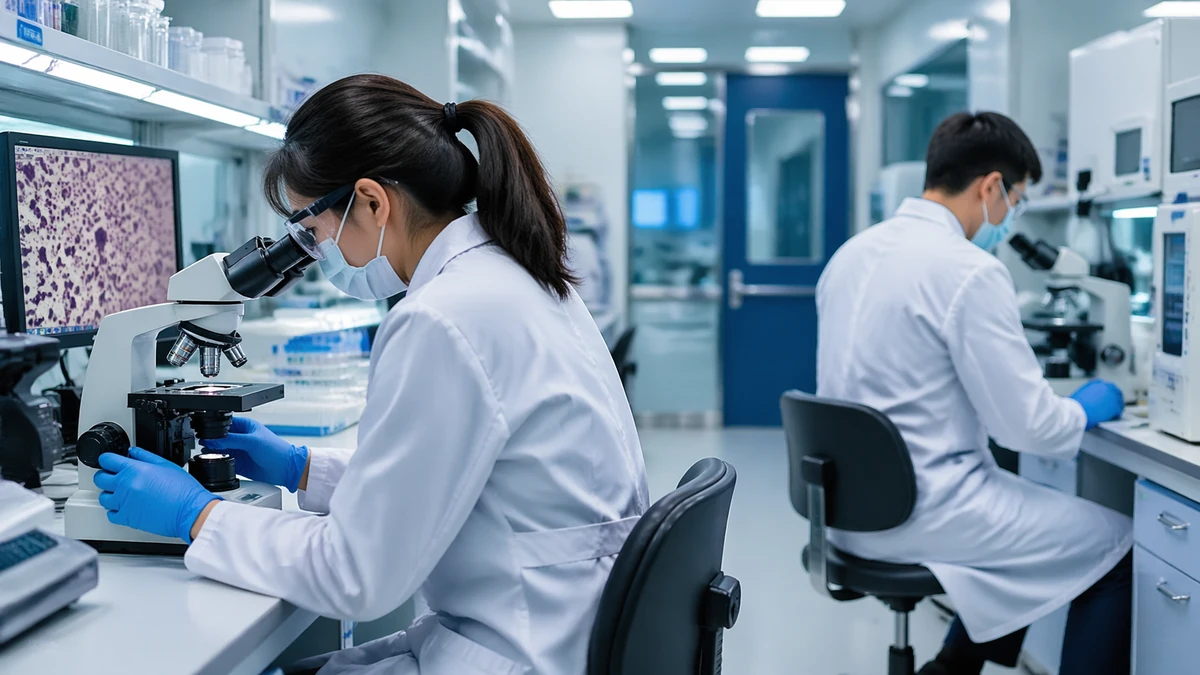
A milestone for a promising but tightly controlled field
South Korea has taken what health policy experts would call a small but potentially consequential step into the future of medicine: The government has approved its first clinical treatment plan under the country’s advanced regenerative medicine framework, allowing a highly specialized therapy to move from regulatory theory into real-world patient care.
The case involves a narrow group of patients — people with a rare form of lymphoma who are currently in complete remission but face a high risk that the cancer could return. On paper, that may sound like a technical decision affecting only a small number of people. In practice, it marks something larger. It is the first time South Korea’s new system for regulating regenerative medicine has formally cleared a path for a treatment plan to be used on actual patients with rare, hard-to-treat illnesses.
South Korea’s Ministry of Health and Welfare said the plan was approved by the national review committee that oversees advanced regenerative medicine and advanced biopharmaceuticals. The decision comes a little more than a year after the country began implementing a formal system, in February of last year, to allow highly specialized cell-, tissue- and gene-based therapies to be considered for rare or incurable diseases when conventional alternatives are limited or nonexistent.
For American readers, one way to think about this is as a hybrid of cutting-edge cancer care, tightly regulated clinical oversight and public-health gatekeeping. The science behind regenerative medicine — using human cells, tissues or genetic material to repair, replace or restore damaged function — has generated excitement around the world for years. But the question every health system has had to answer is not simply whether the science is promising. It is whether the government, hospitals and medical ethicists can create rules strong enough to let innovation reach patients without opening the door to hype, unsafe practices or inequitable access.
That is why South Korea’s first approval matters beyond the specifics of this lymphoma case. The significance is less about a single therapy than about the system itself proving it can function. In other words, South Korea is no longer just saying regenerative medicine may someday help patients with rare diseases. It is beginning, cautiously, to show how that can happen inside a public regulatory structure.
Why this first approval matters more than a single treatment
In health policy, first cases often become precedent-setting cases. That appears to be true here. Rare diseases, by definition, affect relatively few patients, and those patients are often scattered across different hospitals and regions. That makes it harder to conduct large traditional drug trials and harder for pharmaceutical companies to justify the time and cost of developing standard treatments. As a result, patients with rare or intractable illnesses often face a familiar and painful reality: There may be no widely accepted treatment roadmap, especially if a disease returns or stops responding to existing options.
Regenerative medicine has long been seen as one possible answer to that problem because it opens the door to therapies tailored more directly to the biology of a disease or even to the characteristics of an individual patient. But scientific promise alone does not make a treatment broadly usable. Governments need a process for deciding who qualifies, how safety is judged, what evidence is enough to proceed, how hospitals are monitored and how patients are protected from both physical harm and exaggerated claims.
That is the barrier South Korea’s latest decision begins to cross. The country already had the legal and administrative framework in place. What had been missing was a real, approved patient-facing case that showed the system could move from policy language to action. In that sense, the approval functions a bit like the first plane cleared for takeoff after a new airport control tower opens. The tower existed; the procedures existed; the infrastructure was there. But until one flight was cleared and managed, it remained uncertain how smoothly the whole system would work in practice.
South Korea is hardly alone in wrestling with this balance. In the United States, regenerative medicine is often discussed alongside high-profile areas such as CAR-T cell therapy, gene editing and stem cell research. Americans may also be familiar with warnings from the Food and Drug Administration about unproven stem cell clinics promising miracle cures for everything from orthopedic injuries to neurodegenerative disease. That experience has made one point abundantly clear: In a field where hope runs high, regulation has to do more than encourage innovation. It has to separate serious medicine from speculative marketing.
South Korea’s decision signals that its regulators want to proceed deliberately. The approval was not portrayed as a broad opening of the floodgates. Instead, it was presented as a carefully reviewed, committee-approved case in a high-need population where alternatives are scarce. That deliberate pace may frustrate some advocates of faster access, but it may also strengthen public trust in a field where credibility is essential.
The patients at the center: In remission, but not free from fear
The choice of patient population also says a lot about how South Korea intends to use this new system. The approved treatment plan is aimed at patients with a rare lymphoma who have achieved complete remission yet remain at high risk of relapse. To people outside oncology, “complete remission” can sound like the end of the story — the medical equivalent of an all-clear signal. In reality, remission often means something more complicated: no detectable evidence of disease for now, coupled with the ongoing uncertainty that the disease could return.
That uncertainty can define daily life for cancer survivors. In the United States, patients often describe the period after treatment ends as emotionally jarring. Family and friends may assume the crisis is over, while the patient remains trapped in a cycle of scans, follow-up visits and fear before each test result. The same dynamic applies in South Korea, especially for patients with rare blood cancers where relapse risk carries serious clinical consequences and treatment options may be limited.
So while the approved plan may not fit the popular image of a dramatic last-minute rescue therapy, it addresses a very real medical and psychological burden. It focuses on a group of patients who are technically in remission but still living under the shadow of recurrence. That matters because modern cancer care is not just about getting a patient through initial treatment. It is increasingly about reducing relapse risk, preserving quality of life and managing survivorship over time.
Patients with rare diseases often face a second challenge beyond the illness itself: scarcity. There may be fewer specialists, fewer studies, fewer established protocols and fewer support networks than exist for common cancers such as breast, lung or colorectal cancer. In the United States, rare-disease advocates have long argued that patients are too often left navigating fragmented information and limited options. South Korea’s health system, despite its strengths in hospital care and national insurance coverage, faces a version of the same problem when it comes to conditions that do not affect large numbers of people.
That is one reason this first use of regenerative medicine carries symbolic weight. It is starting in a space where unmet need is high and conventional choices are not abundant. Rather than introducing the new system through a common chronic illness or a relatively routine condition, regulators are signaling that the priority is likely to remain on rare and severe diseases where the gap between patient need and existing treatment options is widest.
What regenerative medicine means — and why it is so closely watched
“Regenerative medicine” can sound futuristic, and in some ways it is. The term generally refers to medical approaches that use living cells, tissues or genetic material to restore or repair function in the body. Depending on the disease, that can include therapies designed to replace damaged cells, modify immune responses or intervene more directly in the underlying biological mechanisms of illness than many conventional drugs do.
For American audiences, the closest reference points might be gene therapies for rare inherited disorders, stem cell-based research or sophisticated immunotherapies that train the body’s own cells to fight disease. These approaches differ from standard medications in both promise and complexity. They are often personalized or semi-personalized, may require specialized manufacturing and handling, and can carry risks that are harder to evaluate using the traditional playbook developed for mass-market pharmaceuticals.
That complexity is exactly why governments tend to move carefully. A pill can often be tested, manufactured and distributed in relatively standardized ways. A therapy involving cells or genetic material is another matter. Questions multiply quickly: How are the cells collected and processed? What quality controls exist? What are the short- and long-term side effects? Which patients are appropriate candidates? How should hospitals monitor outcomes? What happens if adverse events appear months or years later?
In South Korea, those questions have been central to the debate over how to handle advanced regenerative medicine. The country is known internationally for moving quickly in some areas of technology and industry, from semiconductors to broadband infrastructure to electric-vehicle batteries. But health care innovation operates under a different social contract. Moving quickly is not enough; the public must also believe the safeguards are real, the review standards are meaningful and the system is not being captured by commercial pressure.
That helps explain why South Korean officials are framing this first approval as proof of institutional function, not just scientific progress. The message is that regenerative medicine is no longer confined to research papers and policy ambitions. It has entered the realm of regulated medical application — but only after passing through a formal committee review process that weighs safety, appropriateness and public interest.
That distinction is especially important in Asia, where regenerative medicine has sometimes been caught between world-class biomedical research and a broader regional marketplace of aggressive wellness claims and loosely regulated interventions. By anchoring the new therapy plan in an official review structure, South Korea appears to be trying to build legitimacy the slow way: through procedure, not promotional splash.
South Korea’s health system reaches a turning point
This moment also reflects a broader evolution in South Korea’s medical system. The country has built a reputation for high-performing hospitals, advanced cancer care and universal health coverage through its national insurance system. It is often cited by policymakers abroad as a country that combines modern medical infrastructure with relatively efficient administration. But like many developed nations, South Korea is under pressure to adapt its health system to new realities: an aging population, demand for more personalized treatment and rising expectations for access to breakthrough care.
In that context, the first regenerative medicine approval serves as a policy turning point. It suggests that South Korea is trying to position itself not only as a place that delivers advanced hospital care, but also as a country that can manage frontier biomedicine inside a formal public framework. For a nation that has often sought to pair technological leadership with state-guided systems, this is a familiar pattern.
Americans may recognize a rough analogy in how the U.S. debates the rollout of emerging medical technologies. Breakthroughs are often greeted with enthusiasm, but the real test comes later: Who gets access? Who pays? Which hospitals can offer them? How are outcomes tracked? And how do regulators respond if early optimism gives way to mixed results? Those questions are now beginning to confront South Korea in a more concrete way.
The first approved case does not mean regenerative medicine will suddenly become commonplace across Korean hospitals. Quite the opposite. These therapies are typically expensive, technically demanding and limited to specialized institutions with the facilities, expertise and ethical oversight required to handle them responsibly. That means access is likely to remain concentrated in top-tier medical centers, particularly in and around Seoul, where South Korea’s most advanced hospitals are clustered.
That concentration creates another challenge familiar to Americans: geography. Just as patients in rural parts of the United States may have trouble reaching leading academic medical centers in Boston, Houston or San Francisco, patients outside South Korea’s major urban hubs may find it harder to access the institutions capable of delivering advanced regenerative treatment. As the system grows, regional disparities could become a major policy issue.
There is also the question of information. Rare-disease patients often live with significant information asymmetry, meaning doctors, institutions and regulators may know far more about a treatment’s realistic prospects than patients and families do. If communication is poor after approval — about who qualifies, what the risks are, where treatment is available and what follow-up will look like — hope can quickly turn into confusion or mistrust. That is why the quality of explanation, not just the fact of approval, will shape how patients experience this new phase.
Hope for patients, caution for policymakers
For patients and families dealing with rare or incurable diseases, South Korea’s decision sends an unmistakable message: A treatment path that once existed mostly in the realm of possibility is beginning to take shape within the official health system. That is no small thing. In serious illness, even the creation of a formal pathway can matter, because it means patients are no longer relying solely on distant research, informal networks or off-label desperation. There is now, at least in one case, a recognized route through a public review process.
Still, approval is only the start of the story. A treatment plan can be cleared by regulators and still remain out of reach for many patients due to cost, eligibility restrictions, limited hospital capacity or the practical burden of long-term follow-up. Regenerative medicine, by its nature, does not lend itself to easy mass rollout. It depends on highly trained personnel, strict facility standards, careful patient selection and robust post-treatment monitoring.
That means the next phase may be even more important than the first approval itself. South Korea will need to show that it can track outcomes, detect complications, maintain transparency and refine its criteria over time. In medicine, especially with novel therapies, one successful approval is not the same as a mature, reliable system. It is more like the first data point in what needs to become a much larger body of evidence.
There is also a political and ethical dimension. Whenever a government formally opens a pathway for advanced therapies, it has to guard against two opposite risks. One is moving too slowly and leaving patients without access to potentially meaningful care. The other is moving too fast and allowing public hope, institutional competition or commercial incentives to outrun the evidence. In regenerative medicine, that tension is particularly sharp because the field carries both genuine scientific potential and a long history of inflated expectations.
South Korea’s regulators appear aware of that tension. By emphasizing committee review, patient suitability and the narrow scope of the first case, they are signaling that the goal is not rapid expansion at any cost. The larger challenge will be maintaining that discipline if more hospitals, researchers, patient groups and biotech companies begin pressing for broader approvals.
The bigger question now: Can South Korea scale trust as well as technology?
The most important question raised by this first approval may have less to do with one lymphoma treatment plan than with what comes next. South Korea has crossed a threshold, but thresholds are only beginnings. The real test will be whether the country can build a durable body of clinical experience, transparent oversight and public confidence around advanced regenerative medicine.
That will require time. It will require patient outcome data, not just regulatory announcements. It will require review standards that become more refined with each case. It will require hospitals capable not only of administering complex therapies but also of managing long-term surveillance, side effects and patient counseling. And it will require a public conversation honest enough to resist treating every “first” as a guaranteed breakthrough.
For American readers, this is a familiar story in a different national setting. Modern medicine often advances through moments that sound modest at first — a committee approval, a pilot program, a narrow eligibility group. But such moments can prove pivotal because they show whether a health system is capable of translating frontier science into everyday clinical reality. South Korea’s first regenerative medicine approval appears to be one of those moments.
It opens the door for patients with rare and difficult illnesses who have long lived with too few options. It gives researchers and hospitals a clearer signal that the regulatory path, while strict, is navigable. And it tells policymakers that the work ahead is no longer about designing a system on paper. It is about operating one in the real world, where safety, fairness, access and trust matter as much as innovation.
In that sense, South Korea’s first approval is both encouraging and incomplete — a sign of progress, but not yet proof of success. The country has begun to answer one question: Can regenerative medicine enter the formal treatment system? The harder questions remain. Can it do so safely? Can it do so fairly? Can it expand without becoming overhyped or unevenly distributed? And can patients understand what this new era actually offers, beyond the language of promise?
Those are the questions that will determine whether this decision becomes a one-time symbol or the start of a lasting shift in Korean medicine. For now, the headline is clear: One of Asia’s most advanced health systems has taken its first official step toward making regenerative medicine a practical option for patients with rare diseases. The rest of the story will be written in the years ahead, one carefully watched case at a time.
Comments
Post a Comment