Seoul’s Shrinking Jeonse Listings Are Reshaping How Families Across Greater Seoul Choose Where to Live
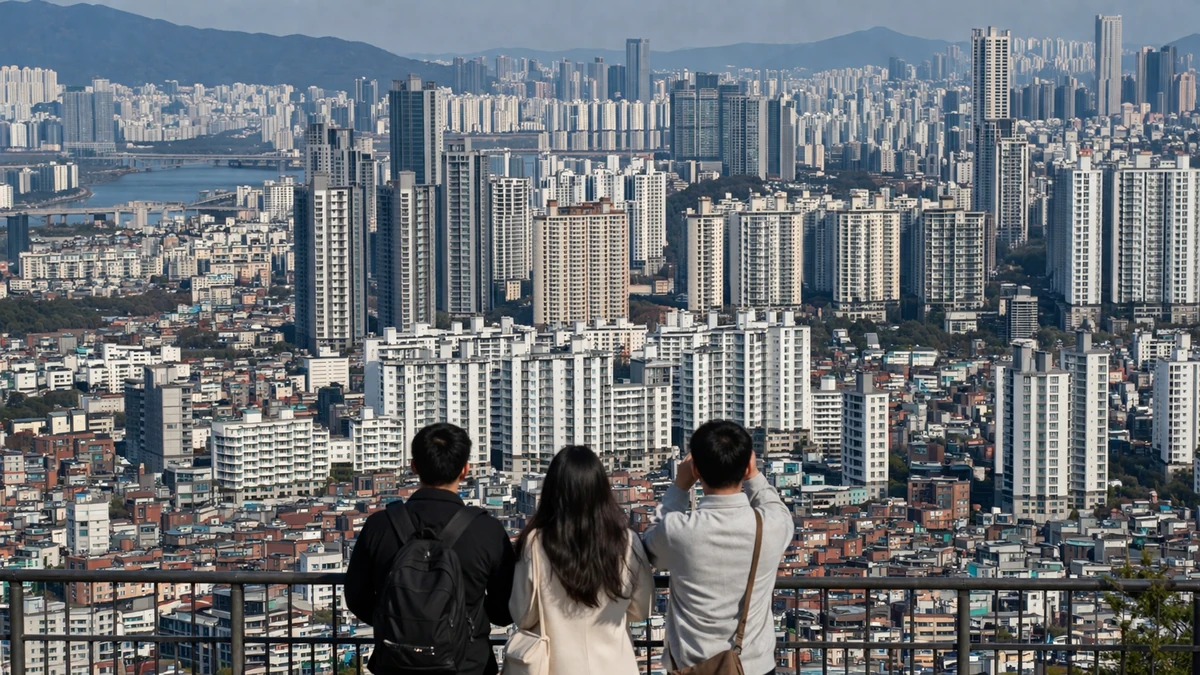
What a 33% drop in Seoul jeonse listings really means
South Korea’s housing market is flashing a warning sign that may not be obvious to readers outside the country: In Seoul, listings for homes available under the nation’s distinctive jeonse rental system have fallen by roughly one-third, according to local reporting this month. At the same time, six cities or districts in Gyeonggi Province, the populous ring surrounding the capital, are posting some of the fastest home-price gains in the country. Taken together, the developments suggest more than a temporary squeeze. They point to a shift in how households across the Seoul metropolitan area are making decisions about rent, home buying and daily life.
For Americans, the easiest comparison might be a housing market in which affordable leases in Manhattan suddenly dry up, pushing renters into nearby parts of New Jersey, Long Island or Westchester, where prices then begin rising faster as demand spills outward. But South Korea’s situation comes with an added wrinkle: the widespread use of jeonse, a system unfamiliar to most U.S. readers.
Under jeonse, a tenant gives the landlord a large lump-sum deposit, often amounting to a significant share of the home’s value, instead of paying monthly rent. The landlord invests or otherwise uses that deposit during the lease term, and the tenant gets the money back at the end of the contract. In practice, jeonse has long functioned as a major pillar of middle-class housing in South Korea, especially for families trying to live in strong school districts or near subway lines without taking on the full cost of buying a home.
That is why a decline in jeonse inventory matters so much. This is not just a story about rising prices in a hot city. It is a story about disappearing choices. When fewer jeonse homes are available in Seoul, renters are forced to decide earlier, compromise faster and often settle for a smaller home, a less convenient neighborhood or a different form of housing altogether. The pressure is especially intense in a city where commute times, school access and neighborhood amenities heavily influence where people believe they can build a stable family life.
Housing markets often send their first signal through inventory, not price. Before bidding wars become obvious and before headline-grabbing price spikes appear, people notice that there is simply less to choose from. In Seoul, that appears to be happening now.
Why jeonse matters so much in South Korea
To understand the significance of this shift, it helps to understand why jeonse became so deeply rooted in South Korean life. In a country where homeownership has long been tied to social status, family security and children’s educational prospects, jeonse offered a middle path. It let households avoid monthly rent while postponing the cost of buying. Over time, it became a practical strategy for families saving for a future purchase, newlyweds trying to establish themselves and working professionals trying to remain close to jobs in Seoul.
There is no exact American equivalent. It combines elements of a security deposit, an investment arrangement and a long-term lease, but at a scale that can reach hundreds of thousands of dollars in the Seoul area. That structure has advantages for tenants who can assemble the cash, often with help from family or bank loans, because it can reduce monthly housing costs. But it also creates vulnerability. When jeonse listings dry up, households cannot simply switch to another similar option. They may have to move into monthly rent, known as wolse, or a hybrid arrangement sometimes called semi-jeonse, in which a tenant pays a smaller deposit plus ongoing monthly payments.
That shift matters financially and psychologically. For many South Koreans, jeonse has represented more than a lease. It has been a key rung on the ladder to homeownership and a way to preserve dignity in a costly metropolitan region. Monthly rent, by contrast, is often seen as a heavier recurring burden, especially in a country where household debt is already a major concern and where families routinely budget around education costs, elder care and long commutes.
The jeonse market also plays an outsized role in setting broader expectations. If tenants can no longer secure jeonse units in neighborhoods they want, some begin considering home purchases sooner than planned. Others move farther out. Still others stay put longer, renewing contracts rather than risking the uncertainty of a search. Each of those responses can tighten supply even more. That is one reason a drop in listings in Seoul can ripple quickly through the wider capital region.
In short, this is not a niche housing product under pressure. It is a central mechanism by which many South Korean households organize their finances, family plans and geography. When jeonse contracts become harder to find, the effects can spread well beyond renters themselves.
Why listings are disappearing in Seoul
Several factors appear to be pushing jeonse inventory lower, and none of them on its own fully explains the current squeeze. One major factor is lease renewal. If tenants stay in place longer, fewer homes come back onto the market. That can happen when households are worried that moving will cost more, take more time or force them into a worse location. In a city as competitive as Seoul, the safest option for many families is simply to hold onto the home they already have.
Another factor is landlord preference. Owners facing uncertainty may be less inclined to offer pure jeonse contracts and more willing to switch to monthly rent or a mixed model that generates steady cash flow. That can be especially attractive if landlords are worried about returning a large deposit later, a major issue in recent years as South Korea has grappled with jeonse-related financial strains and high-profile deposit-return failures. From a landlord’s standpoint, monthly rent can feel more manageable. From a tenant’s standpoint, it can feel like losing access to one of the country’s defining housing arrangements.
New housing supply also matters. Seoul is not a place where large numbers of new apartments can be added quickly and cheaply. When a wave of new units opens, rental supply can temporarily loosen. When there is a gap in move-ins, pressure falls back on existing homes. Because Seoul has tight land constraints, heavy regulation and intense demand tied to jobs and prestige, even a short-term lull in fresh supply can be felt sharply in the jeonse market.
Interest rates, financing conditions and expectations about future prices likely play a role as well. In uncertain markets, both landlords and tenants become more cautious. Owners may delay sales, keep units off the market or alter contract terms. Tenants may rush decisions not because they are sure prices will soar tomorrow but because they fear the kind of apartment they want will vanish before they can act. That distinction matters. The current moment is not only about affordability. It is about shrinking availability.
In a dense city where people often prioritize a specific school zone, subway access or proximity to work, fewer comparable listings weaken tenants’ bargaining power almost immediately. The impact is tangible: less time to compare options, less leverage in negotiation and more pressure to compromise on neighborhood, size or contract type.
Why Gyeonggi is gaining as Seoul renters look outward
The fastest-rising housing markets tied to this story are not necessarily in central Seoul but in parts of Gyeonggi Province, which surrounds the capital and functions much like a vast commuter belt. If Seoul becomes harder to access through jeonse, households naturally widen the search. But they do not move just anywhere. They target places that still allow workable commutes, decent schools and everyday convenience.
For American readers, think of the calculus many families make when they leave a core city for a suburb with reliable train service, good public schools, shopping centers, parks and hospitals. In South Korea, these trade-offs are even more compressed because urban density is high and small differences in transit time can dramatically affect quality of life. A city or district that offers strong rail connections into Seoul, a stable school environment and established retail can quickly become the next-best option for priced-out or shut-out renters.
That helps explain why not all of Gyeonggi moves in lockstep. Some areas become clear substitutes for Seoul. Others do not. A district with good infrastructure and a reputation as a practical alternative can absorb demand quickly. As jeonse seekers fan outward, some decide that if the deposit for a rental is already close to the cost of buying in a neighboring area, purchasing may make more sense. That can feed price gains in certain Gyeonggi markets even if the original shock began in Seoul’s rental sector.
This kind of spillover can deepen regional inequality inside the metropolitan area. On paper, it may look like the entire Seoul capital region is heating up. In reality, demand may be concentrating in a narrower set of neighborhoods and satellite cities that offer the strongest combination of transit, schools and livability. That distinction matters for policymakers and households alike. The real story is not that every place outside Seoul suddenly becomes equally attractive. It is that a handful of well-positioned communities begin functioning as pressure valves for the capital’s housing shortage.
That, in turn, can transform local markets. Areas once viewed as secondary choices can become fiercely competitive. Families who had hoped to rent there may discover that they are now competing with households priced out of Seoul, better-funded buyers and investors betting on further spillover. What begins as a rental squeeze in the capital can end as a broader reshuffling of who gets to live where across the metropolitan region.
How the squeeze changes decisions for renters, newlyweds and first-time buyers
The decline in Seoul jeonse listings is likely to affect groups differently, but almost no one in the market is untouched. For renters, the most immediate change is the order of decision-making. In a normal market, a household might begin with a preferred neighborhood and budget, compare multiple units and negotiate based on trade-offs. In a tight market, the first question becomes whether any suitable unit exists at all. Only then do questions of price, layout and timing follow.
That shift can be particularly stressful for families with children. In South Korea, school zones and education access often weigh heavily on housing choices, much as they do in high-pressure U.S. suburbs. But in greater Seoul, education considerations can be intertwined with daycare availability, after-school academies, commute burdens and family caregiving logistics. A household may not be choosing simply between two apartments. It may be choosing between one life pattern and another.
Newlyweds and people in their 30s may face a different dilemma. If the deposit required for jeonse is already extremely high, some may decide it is worth stretching further to buy, especially if they fear repeated instability in future lease renewals. In South Korea, as in the United States, the leap from renting to buying is not just financial. It is emotional, generational and often wrapped up in ideas about adulthood and long-term security. But such a move can also expose households to significant risk if mortgage costs rise or income weakens. A rushed purchase made out of frustration can become a burden later.
Single-person households may feel the squeeze sharply in another segment of the market: small homes near train stations or major job centers. Those units are often among the first to become scarce. Older renters, meanwhile, may find the shift from jeonse to monthly rent especially difficult because recurring cash-flow burdens can feel more daunting than moving a deposit from one place to another. A retiree with limited income may see monthly rent as a much greater threat to stability than a younger worker would.
In that sense, a reduction in jeonse inventory is not one story but many. It can mean delayed marriage for one couple, a longer commute for another family, a forced switch to monthly rent for a retiree and an early, potentially risky home purchase for a first-time buyer. Housing stress rarely lands evenly, and the Seoul region’s current squeeze appears likely to widen those differences across age groups and income levels.
Why families are gravitating toward neighborhoods with strong schools and amenities
One of the clearest patterns emerging from the current market is a growing preference for residential complexes and neighborhoods with strong educational and daily-life infrastructure. In uncertain times, people become defensive in their choices. If there are fewer available homes and the next move may be difficult, households naturally prioritize places that feel like safer long-term bets.
That means demand is likely to cluster around neighborhoods with the Korean equivalent of what many American families seek in a competitive suburb: convenient transit, grocery stores, clinics, parks, libraries, child care, good elementary schools and a sense that everyday life will be manageable. In South Korea, that package can also include access to hagwons, the private academies that many families use for supplemental education. For outsiders, the intensity of Korea’s education culture can be hard to overstate. Where a child can walk to school, study after class and move safely through the neighborhood can profoundly shape housing demand.
Even so, it would be too simple to say every well-equipped neighborhood will see prices soar automatically. Financing conditions still matter. So do the exact timing of new supply, local job conditions and the structure of each lease. But in a market with shrinking jeonse options, homes in neighborhoods with proven livability are likely to be examined first and discarded last. They hold a kind of resilience because households believe that if they need to move again later, those areas will still attract demand.
That defensive logic can make already desirable places even more resilient while leaving less-connected neighborhoods behind. The result is a more polarized market, one in which the gap widens between areas seen as practical substitutes for Seoul and those viewed as inconvenient or uncertain. For local officials, that kind of divergence can become just as important as the average regional price trend.
It also underscores a larger point: when housing markets become unstable, people do not simply chase the lowest number. They chase predictability. In greater Seoul, that often means choosing a neighborhood that can support school routines, work commutes and family life with as few disruptions as possible.
What policymakers and households should watch next
The most important question now is whether Seoul’s drop in jeonse listings is a temporary dip or evidence of a longer structural shift. If the decline is mainly seasonal or tied to a short-term gap in move-ins, pressure could ease over time. But if landlords are steadily moving away from pure jeonse toward monthly rent and if tenants keep renewing rather than moving, the market may be changing in a more lasting way.
That distinction matters for public policy. South Korea has spent years trying to stabilize housing through a mix of lending rules, tax changes, supply plans and tenant protections. If the jeonse system itself is gradually shrinking in practice, policymakers may need to rethink how they support renters. That could mean more attention to public rental housing, better-targeted assistance for deposit financing, stronger safeguards around deposit returns and more careful management of regional supply timing in areas expected to absorb overflow from Seoul.
Households, meanwhile, may need to focus less on headline averages and more on the realities of individual neighborhoods. A broad statistic like a 33% decline in listings is powerful, but it does not tell every family the same thing. The key questions are far more specific: How many actual listings remain in the district I want? How quickly are contracts being signed? Is the landlord offering pure jeonse, semi-jeonse or monthly rent? If I move farther out, what does that do to my commute, my child’s school path and my monthly costs?
Comparing the total cost of jeonse, monthly rent and buying will also become more important. In a market under pressure, people can be tempted into false comparisons, focusing only on the upfront deposit or the sticker price of a home. But the real burden includes loan costs, commuting time, child care logistics and the possibility of having to move again sooner than expected. For some households, staying flexible may still be the smartest choice. For others, locking in stability outside Seoul may feel worth the trade-off.
What is clear is that greater Seoul’s housing market is not being shaped only by price. It is being reshaped by scarcity, by the changing role of jeonse and by the geography of opportunity in one of the world’s most densely populated metro regions. In the United States, housing debates often center on mortgage rates, zoning fights and the cost of rent in major cities. In South Korea, those issues matter too. But this moment also turns on a uniquely Korean reality: when a housing system built around massive deposits begins to offer fewer options, it can alter not just where people live, but how they imagine their future.
That is why the current data out of Seoul deserve attention beyond South Korea. The story is local, but the underlying lesson is global. In expensive, high-pressure cities, the first sign of strain is often not an eye-popping number. It is the quiet disappearance of choice.
Comments
Post a Comment