A new signal from South Korea’s tech market
South Korea’s latest round of cybersecurity investment is sending a message that will sound familiar to security teams in the United States: The biggest problem is no longer simply finding threats. It is figuring out which alerts actually matter.
That was the clearest takeaway from two separate investment announcements in South Korea’s IT sector on April 12, 2026. One startup, Aim Intelligence, raised 10 billion won — roughly $7 million to $8 million, depending on exchange rates — in a Series A round. Another, Provalley, drew seed funding with technology designed to sharply reduce false security alerts. The companies are at different stages, and the deal sizes are not comparable. But together, they point to the same shift in how investors and corporate buyers are thinking about cybersecurity in one of Asia’s most digitally connected economies.
For years, much of the security industry sold itself on volume: more detection, more logs, more sensors, more dashboards, more threat intelligence, more automation. In principle, that sounds like stronger defense. In practice, many companies ended up buried in warnings, many of which led nowhere. Security teams were left to spend precious time sorting signal from noise. The more tools an organization bought, the more data it often had to triage.
South Korea appears to be entering the same stage of security market maturity that many U.S. enterprises have already confronted. The value proposition is moving away from “we can catch more things” and toward “we can help your team make better decisions with less wasted effort.” That may not sound as flashy as the old promise of detecting every possible attack, but it reflects how security actually works inside companies: understaffed teams, too many alerts and not enough time to investigate them.
In that sense, these Korean investment deals are not just startup news. They are evidence of a deeper operational reality. Investors are increasingly betting that the next meaningful gains in cybersecurity will come from reducing false positives, prioritizing real risk and helping human analysts focus on what is truly urgent.
Why false alarms have become a real business problem
In consumer life, a false alarm is an annoyance. In cybersecurity, it is an expense — and sometimes a dangerous one.
When a security system generates a warning that turns out not to be a meaningful threat, analysts still have to review it, document it, discuss it or dismiss it. Multiply that by dozens, hundreds or even thousands of alerts a day, and the cost becomes obvious. Security professionals call this alert fatigue, a problem that has become a fixture of modern cyber defense. Analysts get worn down by repetitive notifications, and the odds rise that a serious incident gets overlooked because it arrived looking too much like the last 50 noncritical ones.
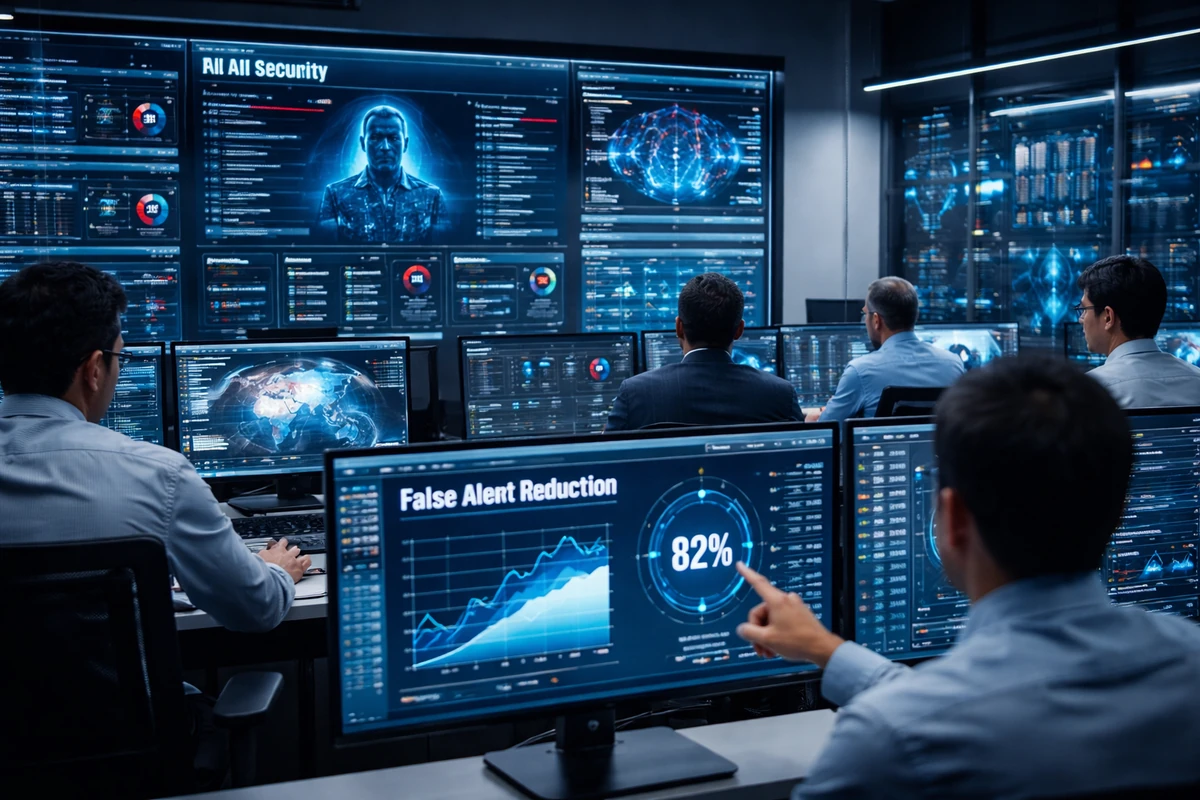
That is why Provalley’s pitch appears to have resonated. The company’s core value, as described in local coverage, is reducing “fake security alerts,” a plain-language phrase that captures one of the industry’s oldest headaches. While false positives have always existed, they are becoming more painful as corporate tech environments grow more complicated. Businesses are now operating across cloud platforms, remote work systems, software-as-a-service applications, mobile devices and AI-assisted workflows. Every layer creates more logs, events and anomalies to analyze.
To an outside audience, especially readers not immersed in cybersecurity jargon, it may help to think of this like airport security or emergency dispatch. A system that flags every possible bag, every possible passenger or every possible phone call as suspicious is not necessarily safer. It may actually be less effective because the staff on the ground cannot respond with the same urgency to everything at once. The best systems are not the loudest. They are the most reliable at telling people where to look first.
That practical point matters in South Korea, where companies tend to adopt digital tools quickly and operate in a highly connected business environment. Fast digital adoption can be a competitive advantage, but it also means the burden on security teams grows fast. If a startup can cut down the number of meaningless warnings and help a lean security team focus on real threats, that is not just a technical improvement. It is a direct labor and efficiency gain, something procurement managers and executives can understand immediately.
Seed funding for a company like Provalley, then, is not merely a bet on a clever algorithm. It is a bet that enterprises are willing to pay for calmer, more manageable security operations. In a field that often markets fear, that is a notable change.
What Aim Intelligence’s Series A says about the market
If Provalley’s seed investment represents curiosity and early validation, Aim Intelligence’s 10 billion won Series A suggests something further along: investors believe at least part of the AI security story is moving beyond experimentation.
That matters because cybersecurity startups do not scale like social apps or entertainment platforms. They usually face longer sales cycles, tougher trust requirements and more technical scrutiny from customers. A company can attract consumer users with novelty. A security company has to persuade corporate buyers that its product will not create new risks, overwhelm staff or miss something serious. In other words, the bar for credibility is higher.
That is especially true when artificial intelligence is involved. AI has become the most overused label in the global tech industry, and security is no exception. Around the world, vendors have rushed to add AI branding to products, often without proving that the technology meaningfully improves outcomes. In cybersecurity, buyers have reasons to be skeptical. They want to know whether AI recommendations are explainable, whether they integrate with existing tools and who is accountable when an automated system gets a judgment call wrong.
A Series A round of this size in South Korea suggests the market is starting to distinguish between AI as marketing and AI as operational infrastructure. Investors are not just chasing the excitement around large language models or generative AI. They appear to be backing products that promise measurable improvements in the daily mechanics of security work — sorting alerts, prioritizing incidents and accelerating analysis.
That mirrors a broader pattern seen in the U.S. enterprise software market. After the first burst of enthusiasm around generative AI, corporate buyers increasingly began asking harder questions: What problem does this solve? How much time does it save? Can it reduce head count pressure or prevent expensive mistakes? In security, those questions are even more concrete because the return on investment can sometimes be counted in hours saved, incidents escalated more quickly or false alarms avoided.
South Korea’s significance here goes beyond the deal itself. The country has one of the world’s most advanced digital consumer cultures, world-class broadband infrastructure and major corporations operating at global scale. It is often quick to adopt new technologies, but that also means it can act as a useful indicator of where enterprise pain points are becoming acute. If Korean investors are rewarding AI security companies for improving operational judgment rather than merely expanding detection volume, that is a sign of a maturing market.
South Korea’s corporate reality: Too many tools, not enough people
To understand why this investment theme is gaining traction, it helps to understand the business environment many Korean companies face.
South Korea is home to some of the world’s largest electronics, gaming, e-commerce and manufacturing companies, alongside a vast network of suppliers, midsize firms and startups. Like their counterparts in the United States, these organizations are under pressure to digitize quickly while maintaining compliance, protecting customer data and defending against ransomware, fraud and nation-state hacking attempts. Security expectations are high, but security staffing is uneven.
Large companies may have internal security operations centers and multiple layers of defensive tools, but even they can struggle to integrate systems cleanly. Midmarket and smaller firms often face a tougher challenge: They may rely heavily on outside vendors, have limited in-house expertise and still be expected to meet modern standards for privacy and resilience. Buying more software is easy in theory. Operating it well is harder.
That creates a paradox. For years, when a company felt exposed, the instinct was often to buy another security product. Each new tool promised better visibility or another line of defense. But every tool could also produce more telemetry, more alerts and more complexity. Eventually, organizations reached a point where additional software did not necessarily make them feel safer. Instead, it increased the amount of information they had to process.
This is one reason the Korean summary’s emphasis on “structural bottlenecks” is so important. The bottleneck is not simply that companies need more detection. It is that human teams can only process so much. In many security departments, the slowest and most expensive part of the workflow is not finding anomalies. It is evaluating them. Which event is genuinely dangerous? Which system should be checked first? Which alert can wait? Which one is likely noise?
That is where AI can offer practical value without pretending to replace people. The strongest near-term use case is not a fully autonomous cyber defense system that runs without humans. It is a decision-support layer that helps analysts sort, rank and interpret what they are already seeing. In the American corporate world, this is often framed as “augmenting” analysts rather than replacing them. The Korean investment trend suggests a similar philosophy is taking hold there as well.
And that philosophy may be especially attractive in a labor-constrained environment. Cybersecurity talent is scarce in many countries, including the United States and South Korea. If software can help a small team function like a larger, less exhausted one, buyers do not need much cultural translation to grasp the appeal.
A more mature way to evaluate AI security startups
One of the most interesting implications of these deals is that they may reshape how AI security startups in South Korea are judged.
For much of the past decade, tech startups were often evaluated on scale, novelty or the size of the technological ambition. In AI, that sometimes translated into fascination with model size, raw computing power or futuristic claims. But in cybersecurity, customers are usually more conservative than the surrounding startup culture. They care less about spectacle and more about reliability.
That pushes the market toward a different set of metrics. Instead of asking how sophisticated the model is in the abstract, customers may ask how much the system reduces false positives, how quickly it shortens incident response time and how well it fits into existing workflows. A product that improves triage accuracy by a meaningful margin may be more commercially valuable than one that boasts more advanced AI terminology but does not fit real operations.
Integration also matters. Most enterprises already run a patchwork of systems: endpoint detection tools, identity platforms, cloud monitoring services, email security products and regulatory compliance software. Any new security product has to work with that environment rather than force a complete redesign. In the U.S., that challenge has made buyers cautious about vendors that sound impressive in demos but difficult in deployment. Korean companies are likely moving toward the same standard. The real test is not whether a startup can present well, but whether it can plug into a messy corporate stack and make the whole system feel less overwhelming.
Trust is another major factor. Security software occupies a more sensitive role than most workplace tools. If an AI assistant mis-summarizes a meeting, the consequences are usually minor. If an AI security system downranks the wrong alert or fails to escalate the right one, the consequences can be severe. That means buyers will demand evidence, not just promises. They will want to know where the model performs well, where it struggles and how easily analysts can understand its reasoning.
In that sense, the Korean market may be moving toward a more sober, enterprise-minded way of evaluating AI startups. That is healthy. It rewards companies that can show operational outcomes and punishes those that rely too heavily on hype. It also aligns with what American enterprise buyers have increasingly demanded across software categories: measurable productivity, interoperability and accountability.
What this means beyond South Korea
It would be a mistake to read these developments as a Korea-only story. The underlying issue is global.
Across industries and across borders, security teams are struggling with the same problem: modern systems generate more data than people can reasonably process. Whether the company is a Seoul-based manufacturer, a Silicon Valley software firm or a hospital network in the Midwest, the core question is similar. How do you make sure the truly dangerous event stands out from the clutter?
That question has become even more urgent as cyber threats continue to diversify. Companies are dealing not just with classic malware or phishing, but with cloud misconfigurations, identity-based attacks, supply chain compromises and AI-assisted social engineering. Meanwhile, boards and regulators expect better reporting, faster response and fewer failures. More pressure comes in, but staffing and budget discipline remain real constraints.
This is why the idea of “less wrong” security may be more commercially powerful than “more detection” security. It recognizes a reality that people inside the industry have understood for years: a security operation does not fail only because it sees too little. It can also fail because it sees too much of the wrong kind of thing.
For American readers, there is a close parallel in health care diagnostics, where the challenge is not merely spotting abnormal patterns but minimizing false positives that trigger unnecessary follow-up, costs and anxiety. Cybersecurity is different, of course, but the logic is similar. A useful system is one that improves judgment under pressure. In both fields, precision can matter as much as sensitivity.
South Korea’s investment signals also illustrate how the AI conversation is becoming more grounded. The first phase of AI enthusiasm often centers on what the technology can theoretically do. The next phase is about where it can save time, reduce error and fit into institutions that already exist. Security is a natural place for that transition because the operational pain is immediate and quantifiable.
None of this guarantees success for the startups involved. Early funding is only a starting point. Security companies still have to prove they can win customers, retain trust and perform consistently in live environments. The history of cybersecurity is full of tools that looked compelling in theory and disappointing in practice. But the logic behind the investment is increasingly clear: the winners may be the companies that help overwhelmed teams do fewer useless tasks and make fewer costly mistakes.
The next test: Can investors’ thesis survive the real world?
For all the promise in these funding rounds, the hardest part lies ahead. Raising money is not the same thing as proving long-term product value inside real security operations.
Startups such as Aim Intelligence and Provalley will now face the challenge that confronts security vendors everywhere. They will have to show that their systems can work across different corporate environments, manage varied data quality, handle edge cases and maintain performance over time. They will also need to reassure customers that AI-driven recommendations are transparent enough for analysts to trust, especially when the stakes are high.
That may be the biggest cultural and commercial hurdle in this sector. Security professionals, by training and necessity, tend to be skeptical. They are often less interested in whether a tool is innovative than whether it is dependable at 2 a.m. during a real incident. If a product can reduce noise on an ordinary Tuesday, that is helpful. If it can guide a team accurately during a fast-moving breach, that is where reputations are made.
The pressure will be particularly strong in South Korea’s business environment, where speed and efficiency are prized, but where enterprise customers also expect products to deliver on promises. Korean technology culture is often associated abroad with cutting-edge consumer electronics, gaming and ultra-fast connectivity. But in enterprise software, the buying logic is familiar to any U.S. chief information security officer: Does this reduce workload? Does it fit my stack? Can I defend this purchase to management? Will it make us more resilient in a measurable way?
Those are the questions that will determine whether this moment marks a durable turning point in Korea’s AI security sector or just another brief wave of AI enthusiasm. Still, the signal coming from the market is noteworthy. Investors are increasingly backing companies not because they promise to flood security teams with more findings, but because they claim they can make those teams more effective, more focused and less exhausted.
That shift may sound modest. In reality, it is a major redefinition of what security performance means. For years, the industry often equated strength with abundance: more visibility, more alerts, more coverage. South Korea’s latest investment trend suggests a more mature idea is taking hold. In a world drowning in digital noise, the real advantage may belong to the companies that can tell you, with confidence, what you can safely ignore.
Comments
Post a Comment