South Korea’s Kim Jong-hoon Wins Asian Judo Title, Signaling a Shift in a Weight Class Long Defined by Doubt
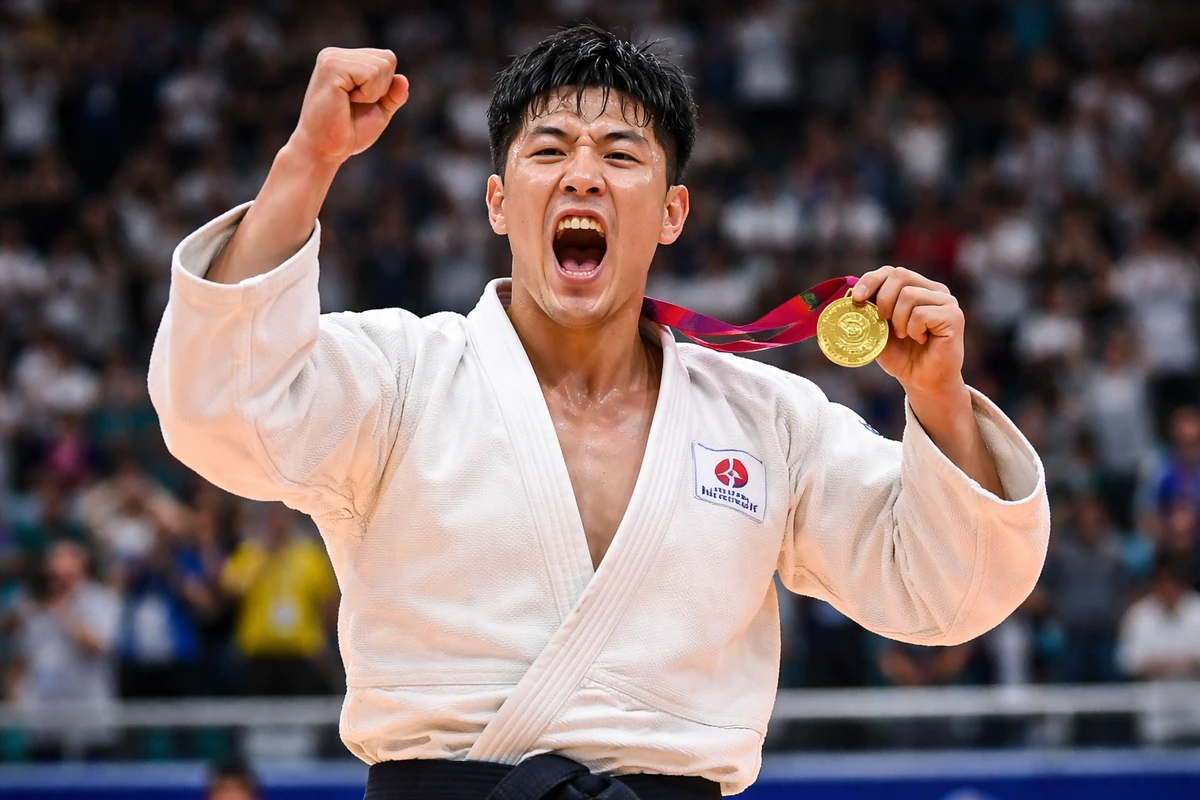
A gold medal that means more than one result
South Korean judoka Kim Jong-hoon captured the men’s 90-kilogram title at the 2026 Asian Judo Championships on April 18 in Ordos, China, defeating China’s Buhu Bilige in the final and delivering a result that resonated far beyond a single medal match. On paper, the outcome might have looked straightforward: Kim entered as the world No. 13, while his opponent, competing on home soil, was ranked No. 127. But in judo, and especially in Asian continental competition, rankings rarely tell the full story. Finals are tense, tactical and often shaped by subtle battles over grip, balance and patience rather than by brute force alone.
Kim’s victory mattered because it answered a larger question hanging over South Korean men’s judo, particularly in the heavier divisions. For years, South Korea has remained one of the sport’s most respected nations, with a tradition rooted in technical sharpness, disciplined strategy and fast, precise attacks. But as international men’s judo has increasingly rewarded athletes who combine size, power and punishing grip strength, Korea’s heavier weight classes have often faced a familiar challenge: proving they can still dictate matches at the highest levels rather than simply survive them.
That is why Kim’s gold in the 90-kilogram class carried unusual weight. It was not just a win over a lower-ranked opponent. It was a display of match management, composure and tactical maturity in one of judo’s most demanding divisions. The 90-kilogram category sits in a kind of middle ground in heavyweight judo. It is not the absolute upper limit of the sport, but it is heavy enough that physicality alone can overwhelm an opponent if technique slips even slightly. Success there requires a rare blend of strength, timing, hand fighting and the ability to create scoring chances in very small windows.
For American readers more familiar with Olympic sports than with the rhythms of the international judo circuit, the Asian Championships can be understood as something like a grueling regional proving ground. It does not carry the singular prestige of the Olympics or world championships, but it is one of the most technically demanding stages in the sport because Asia includes several of judo’s deepest and most tactically sophisticated programs, including Japan, South Korea, Mongolia and rising contenders across Central and East Asia. Winning this event is not a side note. It is often a strong indicator that an athlete is capable of threatening for medals on the biggest stages later.
Kim’s title, in that sense, was less an isolated triumph than a declaration that South Korea may finally have a dependable modern contender in a division where certainty has been harder to come by.
How Kim won: control, patience and one decisive opening
The final itself illustrated why coaches and analysts often look beyond the scoreboard when evaluating a judo athlete’s long-term prospects. According to Korean reports, Kim secured the match with a yuko score using an inside leg technique known in Korean coverage as andwichuk geolgi, a kind of reaping attack that depends on disrupting an opponent’s base at exactly the right moment. For casual viewers, judo can sometimes seem like a sport decided by sudden, almost mysterious bursts of motion. But those moments are usually the product of a long setup, with each failed grip, each step and each posture adjustment contributing to the eventual opening.
That was the story here. Early in the bout, both judoka were assessed one shido, the sport’s minor penalty system used to punish passivity, illegal gripping or other rule infractions. In practical terms, a shido works like a warning that can alter the tactical landscape of a match. Once penalties are on the board, athletes must manage risk differently. Too passive, and the next penalty becomes dangerous. Too aggressive, and they can overextend and give up a score. Kim did not rush. He stayed within the match, absorbed the pressure of a home opponent likely energized by the crowd, and waited for the contest to settle into the kind of grip-and-balance battle where experience and judgment matter most.
With 1 minute, 45 seconds remaining, Kim found the decisive moment. As Buhu Bilige committed to the jacket-gripping exchange, Kim recognized the vulnerability created by that focus and attacked into the opening. That detail is important. This was not a case of simply overpowering a lesser-ranked opponent. It was a case of reading intent, understanding where the opponent’s center of gravity was shifting and striking at the instant his attention narrowed. In a division as unforgiving as 90 kilograms, those reads separate good international athletes from serious medal threats.
There is a temptation, especially in television-era sports culture, to value highlights over control. American audiences see that dynamic across many sports: the dunk over the box-out, the home run over the disciplined at-bat, the knockout over the tactical decision. Judo has its own version of that bias. Big throws command attention. But championship-level judo is often won by athletes who can script the emotional pace of a contest, navigate penalties, impose preferred grips and stay calm long enough for one clean scoring chance to appear. Kim’s final fit that pattern almost perfectly.
The result was significant not just because he won, but because the process looked repeatable. That matters more than a flashy single-day performance. Athletes rise in the rankings when they show they can reproduce winning conditions against different opponents, in different settings and under different pressures. Kim’s performance in Ordos suggested that his success is rooted in sustainable habits rather than a one-off surge.
Why this title answers questions left after Paris
Kim first grabbed wider attention in 2025 at the Paris Grand Slam, one of the marquee stops on the international judo calendar. At the time, he was ranked No. 111 in the world, a position that did not mark him as an obvious contender for a major title. Yet he stunned the field by defeating 2023 world champion Luka Maisuradze and winning gold. It was the kind of breakthrough result that can instantly change a career. It also prompted the usual questions that follow any breakout athlete in any sport: Was this the start of something real, or just the perfect weekend?
That kind of skepticism is not unfair. Sports history is full of surprise finalists, sudden tournament runs and brief spells of brilliance that fade once opponents adjust. In judo, those doubts are especially common because matchups, draws and day-of form can radically shape outcomes. A single title can announce a new arrival, but it does not by itself confirm staying power. The sport is too studied, too video-driven and too unforgiving for that. Once a judoka breaks through, the rest of the world studies the tape, identifies patterns and prepares counters. What worked the first time often becomes harder the second.
That is why Kim’s Asian title mattered so much. It functioned as the “next result” every emerging athlete needs. His Paris breakthrough was notable because it introduced him. His win in Ordos mattered because it confirmed him. Moving from No. 111 to No. 13 in the world is not the product of one lucky draw or one hot streak. International judo rankings reward accumulation: repeated wins, repeated placements and repeated proof against quality competition. Kim’s rise suggests a body of work, not just a memorable headline.
For South Korea, that distinction is especially valuable. In sports systems everywhere, federations and coaching staffs are constantly deciding which athletes should be treated as developmental prospects and which should be viewed as immediate medal candidates. Kim’s latest title strengthens the argument that he now belongs firmly in the second category. He is no longer merely a promising name with upside. He is an athlete with recent, concrete evidence that he can win in pressure environments against opponents who know exactly what is at stake.
American fans may recognize a similar shift from other Olympic sports. There is a difference between a swimmer who suddenly wins one major meet and a swimmer who returns the next season and makes another final, another podium, another statement. The second result changes how everyone sees the athlete: coaches, rivals, media and, perhaps most importantly, the athlete himself. Kim now appears to be in that phase of his career.
What this says about South Korea’s men’s heavyweight judo
To understand why Kim’s success has stirred such interest in South Korea, it helps to understand the nation’s broader judo identity. South Korea has long been one of the sport’s global powers, consistently producing Olympic and world-level talent. But that success has historically been associated more strongly with lighter and middle-weight divisions, where speed, technical precision and dynamic movement have been central to Korean strengths. In heavier men’s categories, however, the global landscape has often favored countries and athletes with exceptional mass, crushing grip pressure and a style built around attrition as much as artistry.
That does not mean South Korea has been absent in those divisions. It means the bar for proof has felt higher. Every heavyweight or upper-middleweight contender has had to confront a quiet but persistent question: Can Korean men’s judo still win these kinds of fights consistently against the most physically imposing international fields? A single gold medal does not answer that question for an entire program, but it does provide a meaningful piece of evidence.
The 90-kilogram class is especially revealing because it serves as a kind of threshold division. It is heavy enough that physical pressure can dominate long stretches of a match, but technical shortcomings are exposed quickly because opponents are too skilled to be beaten by strength alone. Athletes who succeed there are often seen as tactically versatile. They can manage hand fighting, resist being bullied in grips and still generate attacks with enough quality to score. Kim’s final showed all of those traits.
There is also a team-level implication. In major judo events, national programs think strategically about where medals are most realistic, where draws may be favorable and which athletes can be relied upon to reach quarterfinals, semifinals or finals. When a country develops a stable contender in a division that previously felt uncertain, it changes planning. It influences training emphasis, lineup confidence and even how success is discussed internally. A dependable medal threat in 90 kilograms gives South Korea something it has badly wanted in men’s heavier judo: not hope, but a card it can reasonably play.
That may sound abstract, but it matters in elite sports. Programs do not transform overnight because one athlete wins one title. Still, athletes can force institutions to rethink what is possible. Kim’s victory suggests South Korea’s men’s program in the heavier ranks is not merely trying to hang on against larger opponents. It may again be building the capacity to compete on equal terms.
Why Asian judo titles still carry global significance
To some American readers, a continental championship might sound secondary compared with the Olympics, the world championships or even some professionalized sports circuits in the West. But in judo, geography often tells you something about competitive density. Asia is not just one region among many in this sport. It is one of judo’s historical and technical centers, home to styles and training systems that shape the global game. Japan remains the sport’s spiritual and competitive standard-bearer, but South Korea, Mongolia, Uzbekistan and others have all produced world-class athletes capable of upsetting anyone on the right day.
That makes the Asian Championships a high-level test of adaptability. Fighters encounter a range of tactical identities: disciplined Japanese structure, Mongolian pressure and unpredictability, Korean hand speed and technical economy, and a growing mix of power-heavy and strategy-driven approaches from across the continent. Winning in that environment requires more than one good move. It requires the ability to solve problems under stress.
For Kim, this title offered exactly that kind of validation. It showed he can handle the unique pressures of an international final, including the emotional variable of facing a home-country athlete in front of a partisan crowd. It showed he can win a contest that turns into a drawn-out battle of grips and posture rather than a free-flowing exchange. And it showed he can make a correct tactical decision late in the match when margins are small and one mistake can flip everything.
In many Olympic sports, analysts talk about athletes “traveling well,” meaning their performance holds up in unfamiliar venues and against different conditions. Judo has a version of that concept, too. Athletes have to travel across officiating tendencies, crowd pressure, stylistic contrasts and the mental fatigue that comes with constant international adaptation. Kim’s gold medal in China was a reminder that he is not just effective in one familiar environment. He can bring his game into a difficult setting and still execute it.
That is one reason the title may be remembered as more than a line on a resume. It functions as a serious credential in a sport where continental competition is often brutally honest about who is truly ready for the next stage.
The larger lesson: in judo, repeatability matters more than hype
Sports discourse everywhere tends to overuse the word “talent.” A player breaks out, and talent becomes the explanation. The results cool off, and the conversation shifts to inconsistency, nerves or lack of experience. But elite judo is less sentimental than that. Once an athlete has shown something dangerous, opponents study the footage, prepare counters and try to shut down preferred grips, entries and rhythms. The challenge is not merely reaching the top once. It is proving you can keep winning after everyone knows what you want to do.
Kim is entering that stage now. His surprise title in Paris introduced him to the wider international field. His Asian championship means he will no longer be treated as an emerging unknown. Rivals will prepare for him. Coaches will dissect his timing. Opponents will attempt to deny him the gripping patterns that allow him to control tempo. In one sense, that makes his next tournaments harder. In another, it is the clearest sign that he has arrived.
There is no need to exaggerate what one Asian title guarantees. It does not make future medals inevitable, and it does not erase the volatility that defines combat sports. Judo can turn on one grip exchange, one step, one counter. Yet it is also fair to say something important has changed. Kim has moved beyond being a name invoked for his potential. He is now an athlete carrying current, verifiable results into the next phase of his career.
For South Korea, that distinction comes with responsibility. Strong programs cannot afford to consume breakthrough moments as feel-good stories and leave them at that. They have to convert them into structure: better individualized preparation, smarter scheduling, more exposure to varied international opponents and long-term planning that turns one medal into a broader competitive foundation. A gold medal does not by itself prove a system is healthy. But it can show where investment and confidence should be directed.
That may be the most important takeaway from Kim’s win in Ordos. This was not simply a happy ending to one tournament. It was a statement about where South Korean men’s judo may be heading in one of its most scrutinized weight ranges. Kim first announced himself in Paris. In China, he backed it up. For a nation that has waited to see convincing evidence from the heavier men’s divisions, that sequence matters.
And in elite judo, where reputations are built not by a single flash but by the ability to reproduce winning under pressure, Kim Jong-hoon’s gold medal looked less like an upset avoided and more like a standard beginning to take shape.
Comments
Post a Comment