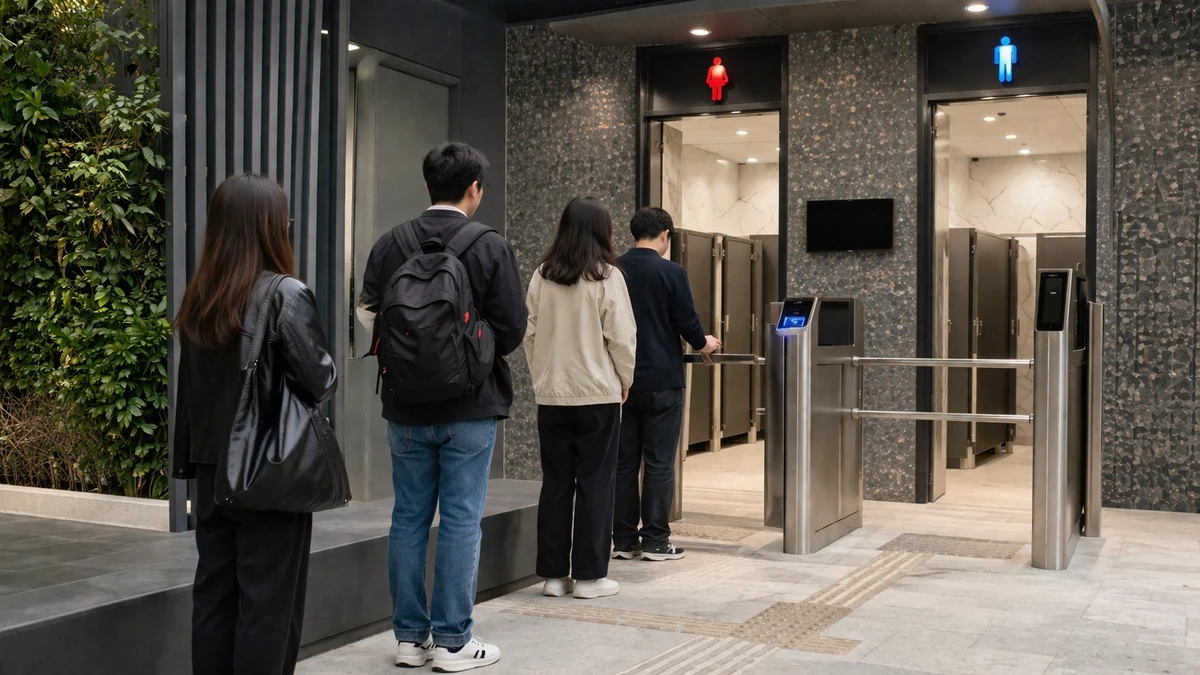
The Emergence of Bathroom Usage Fees
On April 8, 2026, a new regulation emerged in South Korea that requires users to pay a fee in order to use a public restroom at certain public spaces. While charging for bathroom usage in private facilities has become somewhat common, the introduction of such fees in public spaces has sparked widespread debate. This issue goes beyond the simple matter of restroom fees; it has ignited a broader discussion about the role and responsibility of public services in South Korean society.
The Role and Responsibility of Public Facilities
In South Korea, public facilities are generally considered to have a responsibility to provide basic amenities for citizens. The introduction of bathroom fees in public facilities has led to significant backlash, with many arguing that charging for access to public restrooms goes against the core mission of public service. Citizens view these facilities as part of the social contract, where the government provides essential services as part of its duty to the public. There are concerns that such fees would disproportionately affect lower-income individuals, for whom even small charges can be a financial burden.
Comparing Public and Private Sector Practices
While charging for bathroom use is commonplace in some private establishments, the introduction of such fees in public spaces is controversial. Private businesses often justify these fees as a way to maintain their facilities or generate profit. However, public facilities, funded by taxpayer money, are expected to serve the broader public interest, not profit motives. The introduction of fees in public facilities could be seen as a restriction on access to services that should be universally available, and this has become a major point of contention in the ongoing debate.
Political Implications and Disagreements
The issue of public bathroom fees has also become a political hot topic, with both the ruling and opposition parties taking opposing stances. The government and local authorities argue that charging fees is a necessary step to maintain the efficiency of public facility operations. They claim that such fees help cover the costs of cleaning and maintenance. On the other hand, citizens, particularly from opposition groups, argue that the government has a duty to provide basic services without placing financial burdens on the public. This debate is playing out on a larger stage as political leaders take sides, framing the issue as one of social responsibility versus economic practicality.
Social Consequences and Future Prospects
The debate over bathroom fees has sparked a wider reflection on the role of public services in society. Critics warn that imposing such fees could exacerbate social inequality, with low-income individuals being the most affected. Many argue that public services should remain accessible to all, without charging users or introducing barriers based on financial ability. As the government moves towards a resolution, the public will be watching closely to see how this debate evolves. Will a solution that balances economic realities with social responsibility emerge? The decision on this issue could have lasting implications for how public services are viewed in South Korea moving forward.
Comments
Post a Comment