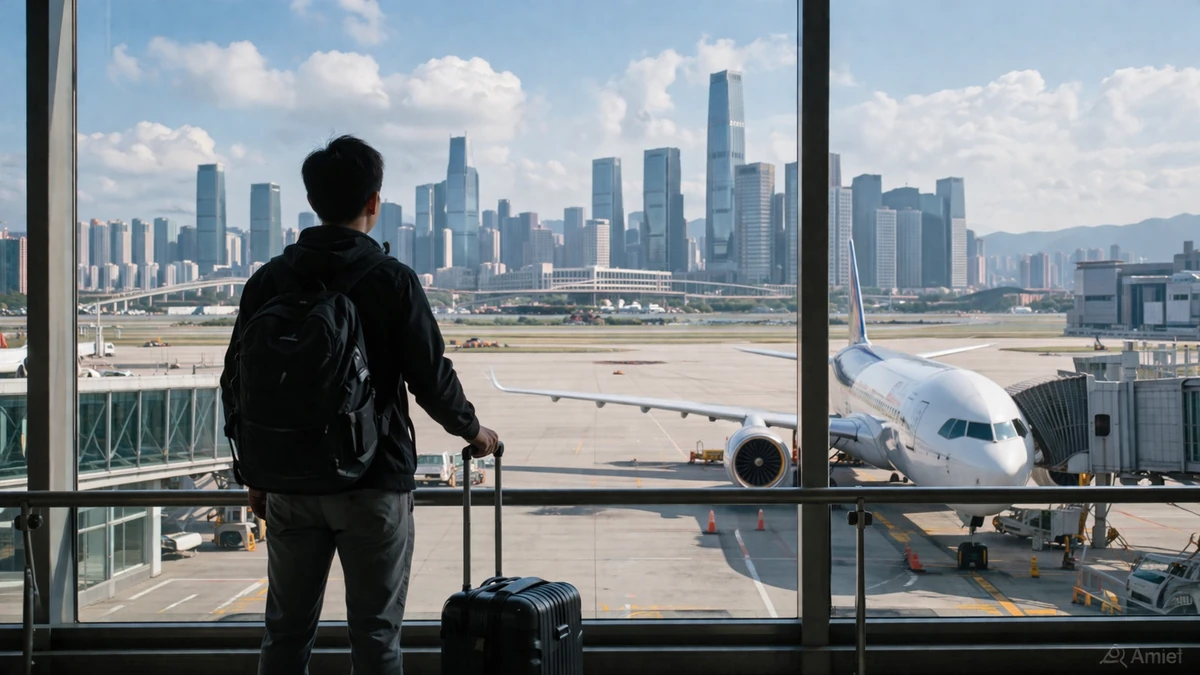
A new signal in the U.S.-China AI race
For years, the default map of artificial intelligence talent seemed easy to draw for American readers. The brightest researchers went to elite universities, top labs and, eventually, Silicon Valley. If you wanted to understand where cutting-edge AI work was happening, you looked to the San Francisco Bay Area, the home of companies such as Google and OpenAI and the broader culture of venture capital, moonshot engineering and sky-high pay that has defined the American tech industry for a generation.
But a new development is complicating that picture. According to a report cited by South Korea’s Yonhap News Agency, a number of Chinese AI researchers who had been working in Silicon Valley have returned to China over the past year, taking senior roles at major Chinese technology companies or launching startups there. The moves do not prove that the global AI race has been decided, and they do not erase Silicon Valley’s enormous advantages. They do, however, suggest that the geography of AI talent is no longer as one-sided as many Americans may assume.
That matters because the contest over AI is no longer just about chips, data centers and export controls. It is also about people: who can attract them, keep them and give them the best reason to build the next generation of technology in one place rather than another. In that sense, the return of high-profile Chinese researchers from the United States to China is more than a set of individual career moves. It is a reminder that the struggle for technological leadership increasingly runs through the global labor market.
Who is moving, and why that stands out
The report highlighted several researchers whose careers span some of the most recognized names in AI. Among them is Wu Yonghui, described as having left a senior post at Google DeepMind to lead development of a next-generation large language model, or LLM, at ByteDance, the Chinese technology company best known in the United States as the parent company of TikTok. Another is Yao Shunyu, who reportedly left OpenAI to join Tencent’s AI development efforts. Roger Zhang was described as having left OpenAI and gone on to found a robotics startup in Shenzhen, the southern Chinese city that functions in some ways like a cross between Silicon Valley and America’s manufacturing belt. Zhou Hao was identified as a researcher recruited by Alibaba from Google DeepMind.
For an American audience, those names matter less than the pattern they represent. These are not stories about inexperienced engineers chasing a first job. They are examples of researchers with résumés tied to some of the most prestigious institutions in the field choosing to build their next chapter in China. And the destinations are not confined to one type of employer. Some are going to established Chinese tech giants; others are pursuing startup paths. That range suggests a broader ecosystem with room for both corporate research and entrepreneurial bets.
It is also worth pausing on the symbolism. In the American imagination, Google DeepMind and OpenAI are not just employers; they are shorthand for the frontier of AI. When researchers leave that orbit, especially for roles in China, the move attracts attention precisely because it challenges a longstanding assumption: that the highest-value AI careers inevitably flow toward the United States and stay there. What Yonhap’s report points to is not a wholesale reversal, but a growing two-way competition for elite talent.
Money, lifestyle and the changing economics of talent
According to Yonhap, headhunters say China’s top-tier AI researchers can now receive compensation packages that, once taxes and cost of living are taken into account, exceed what they would experience in Silicon Valley. That is a striking claim because Silicon Valley has long been the benchmark for outsized pay in technology. For decades, the region offered not just salary, but stock options, prestige and the possibility of joining a company at exactly the right moment. In many ways, it sold a dream as much as a job.
But anyone familiar with the Bay Area also knows the tradeoffs. Housing costs are punishing. Daily life can be expensive even for highly paid professionals. And for workers with spouses, children or aging parents, the practical question is not simply, “What is my paycheck?” It is, “What kind of life does this package actually buy?” That is where the report becomes especially significant. Yonhap says recruiters also point to lifestyle advantages in China even for midlevel researchers, including housing, domestic support and convenience-oriented benefits that can make day-to-day life feel more manageable.
For American readers, this is a useful reminder that talent competition is no longer waged solely through laboratory budgets or brand-name employers. It increasingly resembles the competition between global cities for bankers, consultants or athletes: a total package calculation that includes compensation, family life, housing and quality of life. In other words, the pitch is not just “Come do important work,” but “Come live well while doing it.” That is a very different kind of pressure on Silicon Valley, which has spent years assuming its prestige could offset almost any practical downside.
Why this is bigger than a few job changes
It would be easy to overread these cases and declare a dramatic turning point. The available facts do not support that. The report cited by Yonhap says the recent returns are drawing attention as evidence that the global map of AI talent may be shifting. That is a more careful and more useful way to see it. A handful of notable moves do not settle the question of who will lead AI in the long run. But they do indicate that China’s AI sector is increasingly competitive in the one market that may matter most: the market for proven researchers.
That is why this story belongs in international news, not just business or technology coverage. Washington’s debates about AI often focus on export restrictions, national security, semiconductor supply chains and the strategic rivalry with Beijing. Those are real and important concerns. But underneath all of them is a quieter contest over human capital. Governments can shape incentives, companies can spend lavishly and regulators can set rules, but in the end research agendas are advanced by scientists and engineers deciding where to work and what to build.
The return of Chinese researchers from the United States to China also complicates a familiar American narrative about brain drain. This is not simply one country poaching talent from another in a traditional sense. Many of these researchers are part of a transnational professional class, educated or employed across borders and able to move between ecosystems. Their decisions may reflect identity, opportunity, compensation, family considerations and a sense of where the future market lies. Yonhap’s reporting emphasizes practical incentives such as pay and living conditions. That detail matters because it suggests these are not purely ideological moves. They are labor-market decisions made in a very competitive global industry.
What it says about China’s tech ecosystem
The companies mentioned in the report offer clues about how China is positioning itself. ByteDance, Tencent and Alibaba are not niche firms. They are among the biggest technology players in China, with the resources to fund ambitious AI projects and the scale to integrate those systems into widely used products and services. The fact that ByteDance reportedly hired Wu to lead development of a next-generation large language model is especially notable. In the United States, much of the public discussion around AI centers on chatbots and consumer applications. But beneath that is a more fundamental race to build the base models that power those systems. If Chinese firms are recruiting globally experienced researchers to lead that work, it suggests they are competing not just in deployment, but in the underlying technology itself.
The startup example matters, too. Roger Zhang’s reported move from OpenAI to founding a robotics startup in Shenzhen points to something beyond the pull of big corporate salaries. Shenzhen is one of the world’s best-known hardware and manufacturing hubs, a place often described as uniquely suited for turning ideas into physical products at high speed. For American readers, one rough comparison might be to imagine the research intensity of a major tech cluster paired with the manufacturing accessibility of an industrial powerhouse. That does not make Shenzhen identical to any U.S. city, but it helps explain why someone interested in robotics might see an opening there.
In short, the picture that emerges is of a Chinese AI ecosystem trying to attract talent through multiple doors at once. There is the big-company route, where major platforms can offer scale, resources and prominent leadership roles. There is also the startup route, where researchers can try to build new companies in cities designed for rapid iteration. Together, those paths suggest a level of maturity and ambition that deserves attention even from audiences accustomed to seeing U.S. firms as the natural center of AI innovation.
Why American readers should pay attention
For Americans, the most important lesson is not that Silicon Valley is fading. It is that its dominance can no longer be treated as automatic. The United States still has formidable strengths: elite universities, deep capital markets, leading cloud infrastructure, globally influential companies and a culture that remains unusually friendly to risk-taking in technology. But the assumption that top researchers will always accept the costs of Bay Area life in exchange for those advantages is becoming harder to defend if rival ecosystems can offer equally compelling work and a better overall deal.
This is also a story about how globalization has changed shape. In an earlier era, global competition in technology could be framed in terms of factories moving offshore or hardware supply chains spreading across borders. In AI, the movement that matters may be less visible: senior researchers changing employers, returning to home countries or deciding that the next major breakthrough is more likely to happen elsewhere. These are not dramatic images in the way a new chip plant or a government ban might be. Yet over time, they can be just as consequential.
There is a cultural layer here as well. In South Korea and much of East Asia, news coverage often pays close attention to education, elite credentials and the career trajectories of standout individuals as a way of reading broader structural change. American audiences may be more accustomed to stories about companies and products than about the migration of researchers themselves. But this case is a good example of why personnel moves matter. In a field as specialized as advanced AI, a relatively small number of people can have outsized influence over what gets built, what gets funded and which ecosystem gains momentum.
A shift worth watching, not a verdict
The safest conclusion from the Yonhap summary is also the most illuminating: something is changing, even if its ultimate meaning is still unsettled. The recent return of several Chinese AI researchers from Silicon Valley to China signals that competition over top talent has become more balanced, more global and more responsive to everyday quality-of-life issues than many outsiders might expect. That does not mean Silicon Valley has lost its central role. It means others are proving increasingly capable of contesting it.
For policymakers in Washington, business leaders in the Bay Area and universities that feed the AI workforce, the message is fairly direct. If the United States wants to remain the obvious destination for the world’s best researchers, it cannot rely on reputation alone. The broader environment matters. Compensation matters. Immigration policy matters. Housing costs matter. Family life matters. In many industries, those realities are treated as secondary to innovation. In AI, they may increasingly be part of the innovation equation itself.
And for readers trying to make sense of the U.S.-China technology rivalry, this story offers a useful corrective to headline-driven coverage. The future of AI will not be determined only by splashy product launches, export-control battles or geopolitical speeches. It will also be shaped by quieter choices made by highly skilled people deciding where they can do their best work and live their best lives. The return of Chinese AI talent from Silicon Valley to China may not be the final word on that future. But it is a sign that the map Americans have grown used to is no longer fixed.
Comments
Post a Comment