Yunho of TVXQ! to launch first solo concert in Seoul, marking a new chapter for a veteran of K-pop’s arena era
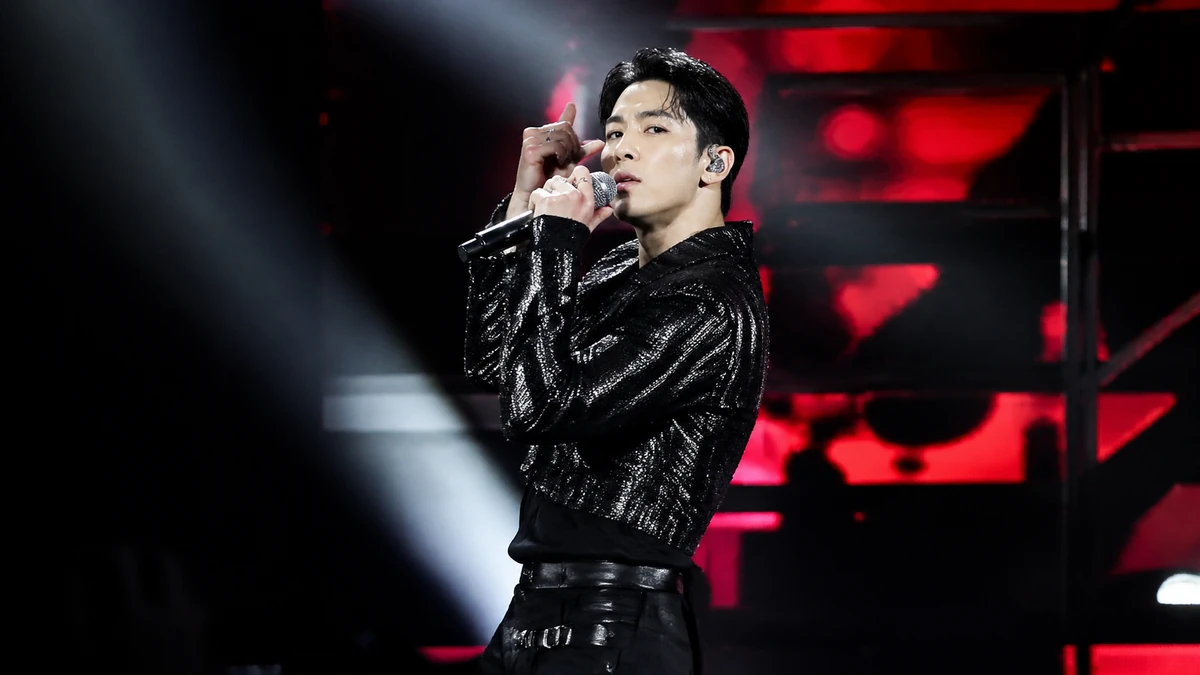
A veteran K-pop star steps into the spotlight alone
U-Know Yunho, the longtime TVXQ! member known in South Korea for relentless stage discipline and high-voltage performances, is set to hold his first solo concert in Seoul in July, a milestone that carries unusual weight in a music industry often obsessed with the next debut rather than the next reinvention.
The three-night run, scheduled for July 17 through 19 at Ticketlink Live Arena in Seoul’s Olympic Park, is being billed as “Yunho Project 26: A New Chapter One,” according to his agency, SM Entertainment. On paper, it is a concert announcement. In practice, it reads more like a statement of intent from an artist who has spent much of his career as part of one of K-pop’s most durable and historically significant acts and is now inviting audiences to see what remains when the group identity falls away and only the individual is left at center stage.
For American readers who may not follow Korean pop music closely, TVXQ! — known in Korea as Dong Bang Shin Ki and in Japan as Tohoshinki — occupies a place in the K-pop ecosystem somewhat analogous to a legacy arena act that helped define the genre’s live-performance standard. The group debuted in the early 2000s, long before BTS and Blackpink turned K-pop into a familiar fixture on the U.S. charts. In Asia, and especially in South Korea and Japan, TVXQ! has for years been associated with polished vocals, ambitious staging and large-scale touring power.
That makes Yunho’s first solo concert notable for reasons that go beyond fandom. It arrives not as a rookie’s coming-out party but as a late-career pivot by an artist whose public image is already well established. In K-pop, where stars are often introduced through tightly managed concepts from the outset, a first solo concert after years of group success becomes a different kind of test: not whether the performer can command a stage, but whether he can reshape a familiar image into a new story worth following.
That distinction matters. In a group concert, charisma can be shared, emotional focus can shift between members, and performance energy can be distributed across a larger whole. In a solo show, every transition, every silence, every camera close-up and every interpretive choice points back to one person. The audience is no longer simply watching a star perform songs; it is watching that star define himself.
Why a “first solo concert” means more in K-pop than it might elsewhere
In the United States, solo concerts by members of established groups are common enough that they can feel like a natural side lane in a long career. In K-pop, the stakes can be sharper. The industry has long relied on highly choreographed teamwork, clear member roles and the chemistry of the ensemble. Fans often know not only the songs but the emotional architecture of a group: who anchors the vocals, who drives the dance breaks, who handles the banter, who delivers the dramatic tension. A solo concert strips away that structure.
That is part of why the words “first solo concert” carry such a charge here. They imply not just independence, but reinterpretation. The performer has to answer a set of questions that become more pressing the longer the career has been: Why now? What is different? What can this artist say alone that could not be said within the group?
By naming the show “A New Chapter One,” Yunho appears to be signaling that this is not meant to function as a one-off vanity project or a simple victory lap through familiar hits. Even the phrasing suggests serial storytelling rather than a stand-alone event. In K-pop, “project” language often hints at a broader creative framework — an unfolding artistic plan, not just a concert date on a calendar. For fans used to decoding teasers, visual motifs and narrative concepts, the title alone suggests that the July performances are meant to inaugurate something larger.
There is also a generational dimension. K-pop’s global rise has been driven partly by youth culture and the speed of online fandom, but its maturing stars increasingly face a different challenge: how to remain culturally urgent when they are no longer the newest face in the room. The answer, more and more, has been to deepen rather than simply scale — to create richer stage narratives, more self-conscious artistic identities and live shows that function less like recitals and more like immersive productions.
That appears to be the lane Yunho is choosing. He does not need to prove that he can execute choreography in front of a crowd. He has spent years doing exactly that. The more interesting question is whether he can transform experience into authorship — whether a performer famous for discipline and intensity can turn inward and make self-examination feel theatrical, not indulgent.
A concert built around “self” and “identity”
SM Entertainment says the concert will be structured around a concept tracing Yunho’s search for his true self and identity. That kind of description may sound abstract in plain English, but in K-pop it points to something quite specific: a show designed as a narrative environment rather than a string of songs.
Unlike many Western pop concerts, where the appeal may rest heavily on set lists, crowd interaction and live reinterpretations of familiar tracks, Korean pop concerts often operate like multimedia story machines. Lighting, video interludes, costume changes, stage blocking and spoken segments are carefully integrated to create what fans in Korea often describe as a “worldview” or “universe” — a term that refers not to science fiction, necessarily, but to the internal logic and emotional map of a performance. The result can feel closer to a Broadway-adjacent spectacle or a themed arena production than to a traditional stand-and-sing set.
That context helps explain why “self” and “identity” are not just promotional buzzwords here. They are clues to the grammar of the event. If the show is truly organized around those themes, then the audience will likely be asked to read movement, staging and transitions as expressions of an internal journey. One song may not merely follow another because of tempo or popularity, but because it marks a shift in mood, ego, vulnerability or confrontation.
For international audiences, especially those who do not speak Korean fluently, that kind of structure can be especially effective. Storytelling through image, pacing and emotional tone can cross language barriers in ways lyrics alone cannot. A fan in Los Angeles or London may not catch every line of spoken commentary, but can still understand when a stage has moved from bravado to introspection, from spectacle to confession, from public persona to something more private or performatively private.
It also raises the bar. The more established the artist, the more a new solo outing needs a defining question. The public already knows Yunho as a star, a veteran and, in many accounts, one of K-pop’s most driven performers. So the task is not simply to reintroduce him, but to complicate him. A show centered on identity suggests an attempt to do exactly that: to move beyond brand recognition and into character study.
More than a concert: a hybrid stage production
Perhaps the most intriguing part of the announcement is the promise that the show will move beyond a conventional concert format and incorporate elements of musicals and theater into what the agency describes as a complex entertainment production. In a U.S. context, that might sound like the kind of broad claim routinely attached to arena tours. In South Korea’s live-performance market, however, such language deserves attention.
K-pop concerts have been escalating for years in visual ambition and technical precision. Fans do not just expect live vocals and choreography; they expect narrative transitions, cinematic VCR segments, sophisticated lighting cues and emotional sequencing that rewards repeat viewing. In that environment, invoking musical and theatrical elements suggests a further step toward a staged dramatic arc — one in which scenes may matter as much as songs.
That has practical implications for how the audience experiences the night. A theater-inflected concert can create tension and release more deliberately, using pauses, roles, symbolic imagery and dramatic framing to deepen immersion. For a solo performer, that can be especially powerful. With only one central figure onstage, every narrative device is magnified. If it works, the artist’s presence feels larger because the surrounding production is designed not merely to decorate him, but to interpret him.
It also says something about where K-pop is headed. As the genre has globalized, the industry’s competitive edge has increasingly rested not only on catchy songs or star charisma, but on the ability to package performance as total experience. To put it in American terms, this is not just about delivering tracks live; it is about building a show that borrows from pop touring, theater, fashion presentation and cinematic world-building all at once.
That evolution is one reason veteran artists remain so important to the Korean entertainment business. Younger acts may dominate social media conversation, but established performers often have the experience, catalog and audience trust needed to attempt more formally ambitious live experiments. A solo concert by Yunho can therefore function on two levels: as fan service for people who have followed him for years, and as a live-industry case study in how K-pop continues to stretch the definition of what a concert can be.
Coming off stadium dates in Japan, Yunho shifts from group scale to personal narrative
The timing adds another layer. TVXQ! recently held concerts on May 25 and 26 at Nissan Stadium in Yokohama, Japan, one of the country’s marquee large-capacity venues. That matters because TVXQ!’s stature in Japan remains a major part of its legacy. Long before K-pop became a mainstream topic in U.S. entertainment media, the group was building a powerful cross-border career in the Japanese market, where Korean acts have often treated success as both a commercial opportunity and a measure of regional staying power.
Moving from a stadium-scale group performance in Yokohama to a first solo concert in Seoul creates a striking narrative contrast. The Japan shows underscore the group’s breadth: mass audience, accumulated catalog, shared mythology. The Seoul concerts, by contrast, promise compression and focus. If the stadium dates represent collective force, the solo run represents close-up definition.
For fans, that shift is part of the appeal. It offers two ways of seeing the same artist in rapid succession: first as one half of a veteran act commanding a giant crowd, then as an individual carrying the entire emotional and structural burden of a show built around personal identity. In the language of entertainment storytelling, it is a strong pivot from franchise scale to character study.
It also reflects how K-pop careers are increasingly managed across overlapping platforms of identity. An artist is not only a group member, but also a soloist, variety personality, actor, digital presence and, often, a symbol of a certain generation of fandom. The most successful transitions are the ones that do not erase those previous selves but reorganize them. Yunho’s July concerts seem poised to do just that, drawing power from the TVXQ! legacy while reframing him as a self-contained performer with his own evolving arc.
What this signals about the K-pop business now
The venue matters too. Olympic Park in Seoul is one of the city’s signature concert districts, a place closely associated with major pop events and a common reference point for K-pop fans traveling to South Korea. For international readers, think of it as one of the capital’s best-known live-entertainment hubs — the kind of location that carries industry symbolism as well as practical prestige.
Hosting a first solo concert there gives the event added weight. Seoul remains the symbolic center of K-pop even as the business expands globally. A major solo debut on a Seoul stage is not just for domestic audiences; it is also a message to the international fan base about where the industry locates authenticity, authority and creative reset. What happens in Seoul still helps define what counts as the “current” of K-pop for many fans abroad.
The three-day schedule also suggests this is being positioned as more than a one-night headline. Multi-night runs are common in Korean pop touring for top-tier acts, but they carry strategic significance. They create repeat attendance, encourage fan discussion across consecutive nights and allow a concert to become an event cycle rather than a single performance. In fandom-driven economies, that matters. Buzz builds not just from attendance, but from comparison, interpretation and the feeling that a show is unfolding in real time.
More broadly, the announcement is a reminder that K-pop continues to generate new stories not only by introducing fresh stars, but by giving established ones new frameworks. Reinvention is often treated in American pop culture as a matter of image change — a new sound, haircut, era color or social-media strategy. In Korea’s idol industry, reinvention is just as often about staging: changing the frame through which the audience is asked to understand the artist.
That is why this solo concert announcement lands as a meaningful industry signal. It suggests that K-pop’s next frontier is not simply bigger scale, but denser interpretation — more integrated storytelling, more hybrid forms, more insistence that a concert can function as an artistic thesis rather than a promotional stop.
Why global audiences are likely to pay attention
For English-speaking readers who know K-pop mainly through its most recent global wave, Yunho’s first solo concert is a useful reminder that the genre’s international story did not begin in the late 2010s. It was built by earlier generations of artists who laid down performance standards, touring models and fan cultures that newer acts would later inherit and expand. Watching one of those veterans attempt a new solo chapter offers a window into the genre’s longer arc.
It is also a chance to see how K-pop treats longevity. In many Western markets, aging within pop can mean either nostalgia packaging or a jump to more “serious” adult artistry. K-pop often takes a different route, asking veteran artists to remain technically sharp while also growing more narratively self-aware. The result is not necessarily less theatricality, but more of it — theater used to express maturity rather than youth alone.
That may be the clearest reason this concert matters beyond the fan base. It captures a central truth about K-pop in 2025: the industry is no longer defined only by novelty. It is increasingly defined by its capacity for self-renewal. A famous artist can still become news not because he is newly discovered, but because he has found a new way to organize what audiences thought they already knew about him.
Whether “Yunho Project 26: A New Chapter One” ultimately lands as a creative breakthrough or simply an ambitious next step, the setup is compelling. A veteran performer, fresh off stadium-scale group concerts in Japan, returns to Seoul to headline his first solo show. The concept centers on selfhood. The format promises theater and musical elements. The title declares a beginning, not a summary.
In a music economy that often rewards speed, that is a different kind of headline: not the arrival of someone unknown, but the deliberate reintroduction of someone already deeply familiar. And in K-pop, that can be one of the more fascinating stories of all.
Comments
Post a Comment