A veteran K-pop act returns to one of Asia’s biggest stages
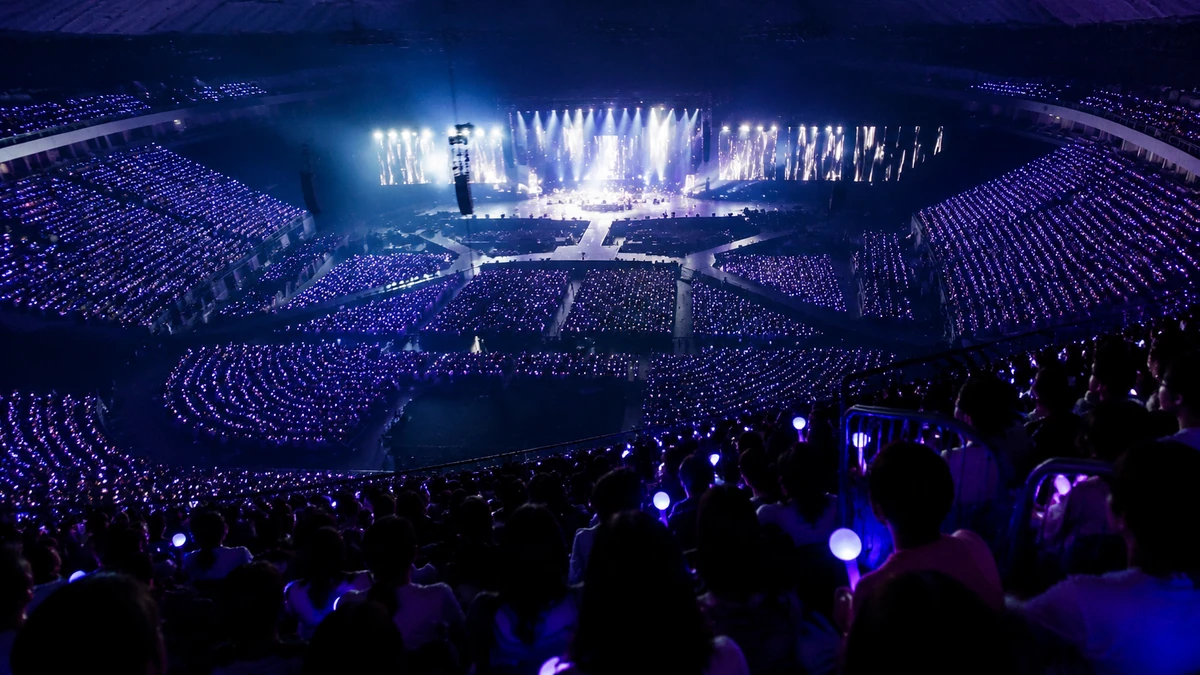
In a music business obsessed with what is new, fast and viral, 2PM’s latest milestone lands with a different kind of force. The veteran South Korean boy band drew about 85,000 fans over two nights at Tokyo Dome for its 15th anniversary concert, “The Return,” marking the group’s first performance at the landmark venue in roughly a decade. For casual American readers, that number may register as just another big attendance figure in the era of global pop. But in the context of K-pop, and especially in Japan, it says something more enduring: 2PM is not simply a legacy act revisiting old glory. It remains a live draw with the kind of loyalty many younger groups are still trying to build.
Tokyo Dome is not just another arena stop. In Japan and across the broader Asian pop industry, it carries a symbolic weight similar to Madison Square Garden, Dodger Stadium or the old benchmark of selling out a major U.S. arena tour. A concert there signals scale, prestige and mainstream relevance. Returning to that stage after 10 years — and doing so with a crowd large enough to fill it across two nights — suggests that 2PM’s name still matters in a marketplace known for being both competitive and fast-moving.
According to JYP Entertainment, the group’s agency, the concerts were held July 9 and 10 and attracted 85,000 concertgoers in total. The event also doubled as the group’s 15th anniversary show, a framing that could easily have turned into a straightforward nostalgia exercise. Instead, the scale of the turnout and the way the concerts were presented suggested something more current. This was less a museum exhibit of K-pop’s second generation than a reminder that some of the genre’s earlier stars still command deep emotional investment across borders.
That matters because K-pop’s global story is often told through constant reinvention: the latest chart record, the newest rookie act, the next social media flashpoint. 2PM’s return points to another truth. Longevity, consistency and fandom built over years can be just as powerful as the newest breakout. In that sense, the Tokyo Dome concerts were not only about where 2PM has been. They were about whether the group can still occupy the present tense. The answer, by any practical measure, appears to be yes.
Why 85,000 fans in Tokyo matters
Attendance numbers alone do not tell the whole story, but they do establish the scale of what happened. Filling a venue as large and historically important as Tokyo Dome is not something a group coasts into on reputation alone, especially after a long gap. If American audiences think of reunion tours as events that often trade mainly on memory, Japan’s concert market tends to be less forgiving. Fans there are famously committed, but major venues also demand real consumer confidence. Tickets move when audiences feel the act still means something now, not just then.
That is what makes the 85,000 figure so significant. It suggests that 2PM’s Japanese presence was never merely an export campaign from South Korea. Over the years, the group built its own history in Japan, with songs, promotions, live performances and fan relationships specific to that market. In other words, 2PM was not simply imported into Japan as part of the K-pop wave. It became embedded in the local concert culture.
For Americans less familiar with East Asian music markets, Japan has long been one of the most important foreign territories for Korean acts. It is the world’s second-largest music market by revenue, and success there has historically been a major marker of long-term viability for K-pop groups. Many Korean artists release Japanese-language singles, hold arena tours and cultivate fan communities separate from their Korean promotions. 2PM was among the groups that did this especially well, building a durable identity rather than treating Japan as a temporary stop.
That durability is central to understanding why these concerts drew attention beyond fan circles. In an industry where careers can move quickly from breakout to burnout, lasting power becomes its own headline. A group reaching its 15th anniversary is notable on its own. A group doing that while drawing arena-level crowds in a foreign market after a long absence is something rarer. The Tokyo Dome concerts effectively turned that rarity into a public statement: 2PM is not surviving on fumes. It still has weight.
More than nostalgia: A 15th anniversary show framed as a present-day statement
Anniversary concerts often come with a familiar emotional script. They celebrate milestones, revisit defining songs and give longtime fans a chance to relive a formative chapter of their youth. There is nothing wrong with that; in pop, memory is part of the product. But what made “The Return” stand out was how clearly it resisted feeling like a farewell lap or a commemorative footnote.
The title itself telegraphed that ambition. “The Return” did not merely refer to a physical return to Tokyo Dome. It suggested a renewed arrival — a reclaiming of presence. For a group that had not played the venue since 2016, the phrase carried both emotional and commercial meaning. It acknowledged the gap, then answered it with a spectacle large enough to make the gap feel like buildup rather than decline.
That distinction matters in K-pop, where time can be especially unforgiving. Mandatory military service for South Korean men, agency changes, solo careers, acting work and the sheer churn of the industry often complicate the lifespan of idol groups. By the 15-year mark, many teams either formally disband, become functionally inactive or reunite only in highly occasional ways. To be active enough, coordinated enough and popular enough to mount a major two-night event in Tokyo gives 2PM a different status. It places the group in the small class of K-pop acts whose identities can survive long interruptions without losing their essential pull.
For American readers, there is a rough analogy in how certain veteran acts can still turn a tour into an event because fans are not only buying songs; they are buying continuity. Think of how audiences respond when a beloved lineup reunites, or how a long-running group can trigger devotion not because it is the newest voice in pop but because it soundtracked a period of life. 2PM’s Tokyo Dome return worked in similar fashion, though with the added intensity of K-pop fandom culture, where the bond between artists and fans is often cultivated more directly and ceremonially than in most Western pop marketing.
That is why the concerts read less like a sentimental look backward and more like a demonstration of present relevance. The anniversary framing gave the event emotional depth. The attendance, the venue and the execution gave it contemporary credibility.
A setlist connecting Korea and Japan — and a fandom that grew in both
One of the more revealing elements of the concerts was the setlist. Over about three hours, 2PM performed 25 songs, including its Japanese debut single “Take Off” and Korean hits such as “I’m Your Man.” That structure may sound like a standard greatest-hits package, but it carried extra significance because it reflected the group’s dual identity across two markets.
In practical terms, the setlist appears to have functioned as a narrative. By bringing together material associated with both its Japanese and Korean careers, 2PM presented itself not as a Korean group temporarily greeting Japanese fans, but as a transnational act whose history genuinely unfolded across both countries. That distinction is important. The group’s Japanese catalog is not an afterthought or side project; it is part of the core story fans have built around 2PM over many years.
For U.S. readers, this is one of the places where K-pop can differ from the way many American acts expand overseas. In the United States, going international often means exporting the same product. In K-pop, successful overseas expansion can involve creating parallel discographies, localized promotions and market-specific memories. A fan in Tokyo may have first fallen for 2PM through a Japanese release, while a fan in Seoul may connect most deeply with the group’s Korean hits. A concert that brings both strands together lets those histories coexist in one room.
There is also the matter of length and density. A 25-song, roughly three-hour show is not a token anniversary appearance. It signals a substantial catalog and the confidence to let that catalog breathe. Rather than speeding through a handful of signature tracks, 2PM appears to have embraced the marathon quality of a large-scale concert, giving fans something closer to a fully lived retrospective. That kind of pacing can deepen the emotional payoff for longtime supporters, especially those who have waited years to see all six members onstage together again.
And in a live business where shortened sets and streamlined spectacles are increasingly common, there is value in sheer endurance. A long set communicates respect for the audience’s investment and for the material itself. It says the history is broad enough to fill the evening. In 2PM’s case, that seems to have helped turn the concerts into more than a hit parade. They became a reenactment of a shared timeline.
The emotional power of a full-group reunion
Another key reason the concerts resonated is wrapped up in a single K-pop term that often needs explanation for general audiences: “full group,” or in Korean fan language, a complete-group reunion. In the K-pop world, the difference between some members appearing and all members appearing can carry real emotional weight. Because idol groups often navigate military service, contract changes, health breaks and solo activities, seeing everyone together again is not just a logistical detail. It can feel like the restoration of the group’s original form.
That sentiment was reinforced by the members’ own comments. 2PM described returning to Tokyo Dome, often called a dream stage in Asian pop, as something close to a miracle. Member Ok Taec-yeon also said that standing onstage with all six members and facing the audience again reminded him how happy he was. Those remarks matter because they frame the event not just as a successful booking, but as a deeply felt reunion between artists and fans.
In American pop culture, reunion language can sometimes sound manufactured, but in K-pop it is often tied to years of visible interruption. Fans track enlistments, hiatuses and agency transitions closely. They understand how many moving pieces have to align for a full-group performance to happen. So when 2PM stood together at Tokyo Dome, the image itself carried a story independent of the songs: despite time, separate schedules and the natural drift that affects any long-running act, the unit still exists.
That story helps explain why older K-pop groups can still ignite powerful reactions. Fans who have followed a team for a decade or more are not necessarily waiting for another chart milestone. Often, what they want most is confirmation that the relationships at the heart of the group remain intact. The full-group stage provides that confirmation in a way no press release can.
At Tokyo Dome, that confirmation was amplified by scale. It happened not in a small fan event or a sentimental livestream, but in one of the region’s most storied venues before tens of thousands of people. The message, both emotionally and commercially, was difficult to miss.
What 2PM’s comeback says about the evolution of K-pop
There is a larger industry lesson in 2PM’s success, and it has to do with how K-pop is maturing. For years, much Western coverage of K-pop has focused on speed: rapid growth, rapid fandom mobilization, rapid online engagement and rapid record-breaking. Those dynamics are real, but they can make the genre look disposable, as though it is powered only by the next trend cycle. Veteran groups like 2PM complicate that picture.
The Tokyo Dome concerts suggest K-pop has now been around long enough, and globally visible long enough, to generate something closer to multigenerational fandom. Some fans who discovered 2PM in the late 2000s or early 2010s are now adults with spending power, long memories and a desire to revisit the artists who helped define an era. That is not unique to K-pop, of course; it is how pop music cultures deepen over time. But it is increasingly important as the genre moves from novelty to institution.
In that sense, 2PM’s return is not just a story about one group. It is a case study in how K-pop sustains itself after the initial rush of breakthrough. New acts bring energy and innovation, but veteran acts give the genre continuity. They prove that fandom is not just a spike of enthusiasm but a social structure that can persist across years, countries and life stages.
The cross-border dimension matters here, too. At a moment when global pop is often discussed through streaming charts and algorithmic reach, 2PM’s success underscores the continuing importance of physical gathering. Tens of thousands of people showing up in person at Tokyo Dome is a reminder that fan culture is not fully captured by digital metrics. Real longevity reveals itself in ticket sales, travel plans, collective memory and the willingness of fans to reconvene years later for a shared experience.
That may be one reason stories like this resonate with audiences beyond Korea and Japan. Even readers who do not follow 2PM closely can recognize the broader cultural pattern. Pop’s biggest test is not whether it can explode. It is whether it can endure.
The next chapter heads back to South Korea
2PM’s Tokyo Dome triumph is not being framed as a standalone celebration. The group is scheduled to continue its 15th anniversary run with a full-group concert in Incheon, South Korea, on Aug. 8 and 9, its first domestic complete-group performance in three years. That follow-up matters because it extends the narrative from Japan back to Korea, turning what might have been a single high-profile comeback into a larger anniversary project with momentum.
There is strategic value in that sequencing. First came the dramatic return to one of Japan’s signature venues. Then came the agency’s announcement confirming the turnout. Now comes the promise of a Korean homecoming. Taken together, those moves suggest a carefully constructed arc: not just remembrance, but reconnection across the two markets that have defined much of 2PM’s career.
For fans, that continuity is likely part of the appeal. A one-off anniversary event can be moving, but it often feels finite. A series of linked performances gives the sense that the group is not simply revisiting the past; it is actively reactivating its identity. The upcoming Incheon shows will test how strongly that energy carries into the domestic market, but the Tokyo results already suggest that anticipation is not built on nostalgia alone.
And for industry observers, the broader takeaway is clear. K-pop’s global story is no longer just about who is arriving. It is also about who remains. 2PM’s return to Tokyo Dome, 10 years after its last appearance there, offers a vivid example of how a veteran act can still fill a giant venue, still command attention and still make its history feel unfinished.
That may be the most important part of this story. In a genre often defined by acceleration, 2PM made a case for duration. Fifteen years in, with 85,000 fans turning out in Tokyo and more concerts on the horizon, the group did not look like a relic from an earlier chapter of K-pop. It looked like proof that the chapter is still being written.
Comments
Post a Comment