Busan KCC Claims Another Korean Basketball Title, With Heo Hoon and Coach Lee Sang-min Defining a Championship Run
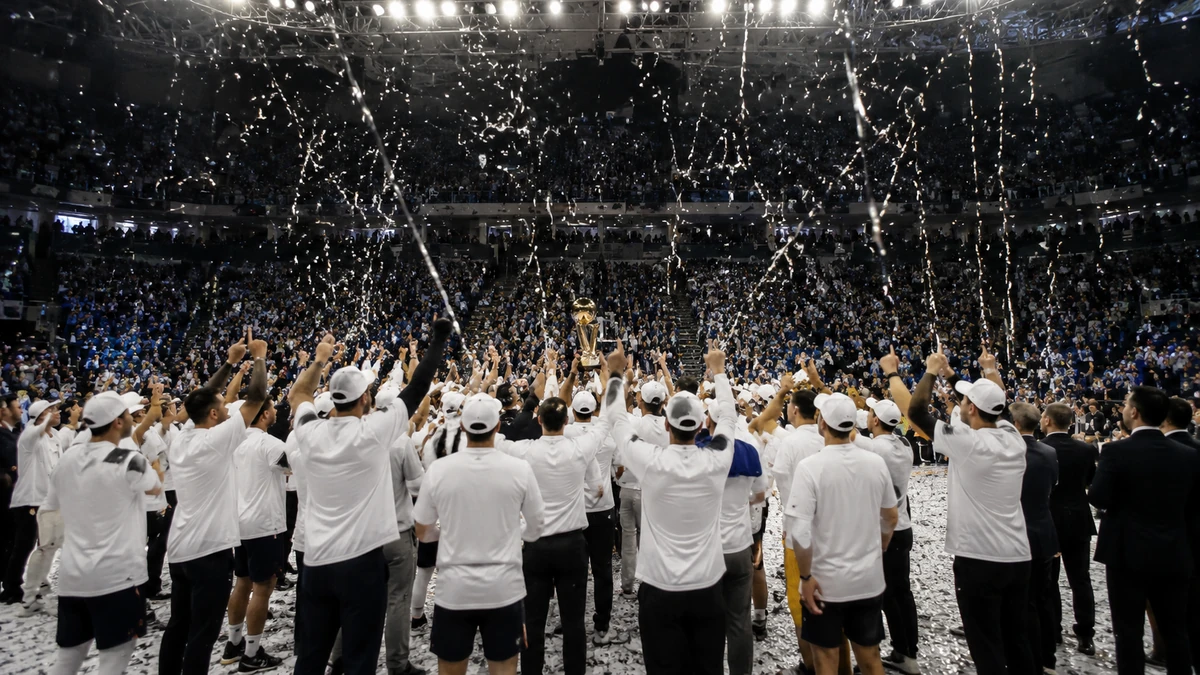
A title in five games, and a statement about where Korean basketball stands
Busan KCC is back on top of South Korean men’s professional basketball, and the way it got there helps explain why this championship resonated beyond a single box score. KCC beat Goyang Sono 76-68 on Tuesday in Game 5 of the Korean Basketball League finals at Goyang Sono Arena, closing the series 4-1 and securing the club’s seventh championship overall. It was KCC’s first title in two years, a return to the summit that confirmed what many around the league had believed for months: This was one of the most talented teams in Korea, and when the stakes were highest, it finally looked fully complete.
For American readers less familiar with the KBL, South Korea’s top domestic basketball league is not the global commercial force that the NBA is, and it does not command the worldwide recognition of top European soccer or Japanese baseball. But within South Korea, the league occupies an important place in the country’s sports culture, particularly during a long winter sports season dominated by indoor competitions, college entrance pressures and a media environment that pays close attention to star athletes. The KBL has a loyal fan base, a deep sense of team history and a knack for producing storylines that are immediately recognizable to sports audiences anywhere: star guards, high-pressure playoff series, proud clubs and coaches carrying both strategic burdens and emotional baggage.
This KCC title checks nearly every one of those boxes. It featured a headline player in Heo Hoon, one of the league’s most visible guards, claiming his first championship ring and playoff MVP honors at the same time. It featured coach Lee Sang-min, a revered former point guard, winning his first championship as a head coach with the same franchise he once represented as a player and assistant. And it featured a roster often described in Korea as a “superteam” — a term familiar to American fans from the NBA — proving that star power can, in fact, be translated into team discipline and postseason success.
The final score in Game 5, 76-68, suggested a competitive closeout rather than a rout. That was part of the point. Championship games are not always remembered for beauty. They are often remembered for composure, especially in the final stretch, when nerves distort timing and every possession begins to feel heavier than the last. KCC handled that weight better than Sono did, and in doing so, it finished a series that had come to symbolize both its expectations and its maturity.
Heo Hoon’s breakthrough arrived in the way stars are remembered
The brightest individual story belonged to Heo Hoon, who entered the postseason with a reputation as one of Korean basketball’s most dynamic scoring guards and left it having expanded that reputation into something more durable. In these playoffs, according to Korean reports, he was not just a finisher or a shot maker. He functioned as an organizer, a tone-setter and, at critical moments, the player most capable of seeing the entire floor clearly when everyone else seemed to be reacting instead of deciding.
That matters because guards are judged differently once the playoffs begin. In the regular season, flashy scoring nights and highlight-reel drives can carry the conversation. In a championship series, especially one that tightens defensively, the questions become more demanding. Can a lead ballhandler control tempo? Can he create quality looks for teammates when the defense loads up on him? Can he make the unglamorous plays — the extra pass, the hard rotation, the patient reset — that do not always trend on social media but often determine who gets the trophy?
By that measure, Heo’s postseason was a career-shaping performance. Korean coverage emphasized not just the obvious scoring talent that made him famous, but also the subtler work that changes a team’s personality. He reportedly threw himself into hustle plays, steadied teammates, and delivered the kind of passes that turn tense possessions into clean points. For American fans, it is the difference between a guard who merely puts up numbers and one who truly runs a team — the difference, in broad terms, between being known as a scorer and being trusted as the engine of a championship offense.
That is why the playoff MVP award carries special weight here. Winning a first title is one milestone. Winning a first title while being named the most valuable player of the postseason is another. It reorders how a career is discussed. The talent was already known. What changed is that Heo now has the kind of defining championship moment that tends to follow great players for the rest of their careers. In sports, fans admire skill, but they remember the players who can point to a title and say they were central to it.
There is also a broader cultural dimension to Heo’s rise. In South Korea, star athletes are often judged through a mix of performance, perceived character and their willingness to subordinate themselves to the group. That emphasis is not unique to Korea, but it is often more explicit there, especially in team sports shaped by school, military and corporate organizational cultures. The celebration of Heo in this championship run was not simply that he dazzled. It was that he showed he could channel personal brilliance into team order. In the language of Korean sports coverage, that kind of sacrifice and connection matters deeply.
Why the Game 5 closeout mattered more than the final margin
KCC’s 76-68 victory in the clincher did not need to be spectacular to be revealing. It needed to show that the team could manage pressure on the road, withstand whatever emotional push Sono had left, and avoid the sloppiness that sometimes afflicts favorites when a championship is one win away. It did all three.
The KBL finals are played in a best-of-seven format, familiar to anyone who follows the NBA, Major League Baseball or the NHL. That format is designed to reduce flukes. It rewards not only top-end talent but also adaptability, lineup discipline and emotional resilience. KCC’s 4-1 series win made a fairly clear statement: This was not a team that merely caught fire for a night. It was the better team over time. Sono had enough quality to force moments of tension, and earlier reporting around the series noted flashes of resistance and attempted momentum swings. But by the end, the broader picture was hard to dispute. KCC controlled more of the series, solved more of the problems in front of it, and closed with the steadiness expected of a champion.
The road setting added another layer. Winning a title away from home is often remembered in a strange double frame. On one hand, there is no immediate eruption from your own crowd. On the other, there is a particular kind of cold-bloodedness attached to silencing an opponent’s arena. KCC did that in Goyang, a city northwest of Seoul that has become a familiar stage for Korean pro basketball. For American readers, imagine a playoff team going into an opposing NBA building, surviving the predictable early burst, then gradually asserting itself through execution and poise rather than spectacle. That is the feeling of a road closeout.
The score also reflected the reality of championship basketball. Finals games often compress. Spacing gets tighter, rotations shorten, and even highly skilled offenses can begin to look mechanical under the pressure of consequence. In those conditions, late-game discipline becomes a premium skill. KCC’s ability to finish possessions, defend well enough in key moments and avoid being rattled by the occasion suggested a group that had learned how to wear the label that had followed it all season.
The label, of course, was “superteam.” In any sport, that word can be both compliment and trap. It acknowledges talent while warning that talent alone is not enough. KCC entered these finals with the burden that comes with being expected to win. The fact that it closed the series in five games, instead of letting it drift into a more chaotic seventh-game scenario, is part of why this title feels persuasive rather than merely celebratory.
Lee Sang-min’s championship carries the kind of symbolism sports executives dream about
If Heo supplied the breakthrough star arc, Lee Sang-min supplied the institutional one. For Korean basketball fans, Lee is not just another coach. He is one of the most recognizable point guards in the history of the sport there, a franchise-linked figure whose name carries memories of his own playing days as well as the expectations that inevitably follow a former star into management.
This championship was his first as a head coach, and that detail matters. Great players do not automatically become great coaches. American sports history is full of examples across basketball, football and baseball. The skill set changes. The responsibility multiplies. The emotional experience is completely different. A player can impose himself directly on a game. A coach has to live through others, balancing personalities, egos, fatigue, strategy and public scrutiny while knowing that every decision will be second-guessed.
That is why Lee’s postgame comments, as reported in Korean media, were so striking in their simplicity. He expressed gratitude to the club leadership for giving him the chance to be in that position, noting that without that opportunity he would not have been able to win as an assistant or as a head coach. In American sports language, it was the kind of understated remark that hints at a much longer story underneath — years of loyalty, institutional trust, pressure and the nagging sense that a legacy remains incomplete until a coach wins one himself.
Korean fans would also recognize the deeper emotional resonance of Lee’s trajectory. He won with KCC as a player, then as a coach on staff, and now as the head coach. In franchise sports, that sort of continuity is gold. It links eras. It offers fans something they can anchor to in a sports world increasingly shaped by transactions and short cycles. To borrow a reference point more familiar in the United States, it is the kind of full-circle narrative that teams market for decades because it reinforces the idea that a club has a living identity rather than simply a payroll.
Lee reportedly joked that this title felt even better than those he won as a player. That line was telling. It speaks to the burden of the job as much as the joy of the result. Head coaching in any professional setting can be isolating, and in South Korea, where public criticism can be sharp and hierarchy remains culturally significant, that pressure can be especially intense. A head coach is expected to command respect, shape conduct and answer for failure in a very visible way. Winning, then, is not just vindication. It is release.
For KCC, his victory also delivered a symbolic alignment: the legendary point guard on the sideline and the current star guard on the floor, both contributing to a championship that connected past prestige to present execution. That is the sort of generational handoff every proud franchise hopes to stage, but few manage to do so this neatly.
The “superteam” test is easy to announce and hard to pass
Korean reporting around KCC has described the club as a “superteam,” a term that American sports audiences instantly understand. It conjures the familiar image of a roster stacked with high-end names, expectations rising in direct proportion to payroll and publicity, and a standing assumption that anything short of a title will be treated as disappointment. The phrase can sound glamorous, but it often hides the hardest part of the equation: turning a collection of stars into a functioning hierarchy.
That was the real challenge KCC solved in this postseason. Teams with multiple headline players do not fail because they lack talent. They fail because roles blur, sacrifices are uneven and pressure exposes every unresolved question. Who takes over late? Who is willing to do the dirty work? Who accepts fewer touches if it helps the lineup breathe? And can the coaching staff persuade everyone that structure is not a constraint but the path to winning?
By the end of this series, KCC had supplied convincing answers. Heo’s playmaking and willingness to connect the offense rather than dominate every moment became a symbol of the larger balance the team found. Teammates benefited from that balance, and Lee’s management from the bench helped translate raw ability into order. The result was a team that looked less like a marketing concept and more like a genuine champion.
That distinction matters in Korea because the country’s sports culture is particularly sensitive to the difference between hype and proof. Star status absolutely draws fans, but championships remain the standard by which ambitious teams are ultimately judged. KCC did not merely live up to its billing in some vague sense. It converted a season of expectation into a title, and in doing so removed the easy criticism that often follows high-profile rosters when they fall short.
There is also a lesson here that travels well across borders. American fans have seen versions of this story in every major team sport. A talented roster becomes a talking point. Analysts debate chemistry. Opponents promise that hunger and cohesion can beat reputation. Sometimes that is true. This time, the stars actually did come together. That does not make the title inevitable in hindsight; it makes the achievement more credible. KCC had to overcome the very problems that tend to sink superteams, and that is part of what made this championship meaningful.
Seven titles and a two-year gap say something about the franchise itself
Championships are often discussed in two kinds of time: immediate and historical. The immediate frame is simple — KCC won this season, in this series, with this roster. The historical frame is what gives the result extra depth. This was the franchise’s seventh championship, a number that places it firmly among the major powers in Korean professional basketball. It was also the club’s first title since the 2023-24 season, ending a two-year wait that was short enough to preserve urgency and long enough to make the return feel satisfying.
That combination matters because it says KCC is not a one-off success story. It is an institution with repeated access to the top of the sport. In American terms, fans tend to distinguish between a Cinderella run and a championship culture. A seventh title puts a team on the side of the ledger associated with sustained relevance. It tells supporters that the franchise has not just had good teams; it has repeatedly built teams capable of surviving the grind of a full season and the pressure of the playoffs.
For supporters in Busan, South Korea’s second-largest city and a place with a strong local identity distinct from Seoul, that matters even more. Busan often sees itself as proudly regional, fiercely loyal and culturally confident. Sports teams can become vehicles for that civic pride, particularly when they are competing in national leagues where Seoul and the surrounding capital area tend to dominate media attention. KCC’s championship therefore lands not only as a basketball result but also as a moment of affirmation for a fan base eager to celebrate a flagship team on a national stage.
The two-year gap is also narratively useful. If a team wins every season, dominance can begin to dull emotion. If it waits too long, the title can feel more like a break from frustration than a continuation of identity. Two years is long enough to reintroduce longing, but not so long that the connection to past success is lost. It creates a return, not a resurrection. That is part of why this championship can be celebrated both as a present-day achievement and as a continuation of club tradition.
For the KBL itself, outcomes like this help stabilize and elevate the league’s profile. Leagues benefit when their championships feature recognizable stars, credible powerhouses and stories that casual viewers can understand quickly. KCC offered all three. The club’s seventh title enhances its brand, but it also gives the league a compelling showcase product: a marquee team, a star guard entering a new phase of stardom and a legendary former player now validated as a championship coach.
Why this story can connect with sports fans far beyond South Korea
At one level, this was a domestic Korean sports story, important mainly to the teams involved and the country’s basketball community. At another level, it carries a universality that makes it easy for international audiences to appreciate, even if they do not follow the KBL regularly. That universality is built from familiar elements: a talented team proving it can handle expectation, a star player winning the first title that changes how he will be remembered, and a former great finally capturing the trophy from the bench instead of the floor.
That is sports storytelling in its most durable form. You do not need extensive knowledge of Korean basketball to understand why Heo’s first championship ring and playoff MVP trophy matter, or why Lee’s first title as a head coach feels like closure after years of living with a famous name. You do not need to know every detail of KCC’s roster construction to grasp what it means for a so-called superteam to justify the label. These are emotional and competitive patterns that recur from the NBA Finals to college basketball tournaments to soccer title races around the world.
There is also a reason this kind of story matters in broader coverage of the Korean Wave, or Hallyu, the global spread of Korean culture. International audiences often encounter South Korea through K-pop, film, television, beauty brands and food. Sports, while not always as visible abroad, are another part of that national story. They show how Korean public life organizes ambition, celebrity, loyalty and competition. A championship like KCC’s offers a window into the country’s domestic passions — not as a side note to pop culture, but as a culture in its own right.
For American readers, the best way to understand this title may be to think of it less as a remote result from a faraway league and more as a familiar championship script playing out in a different language and setting. The court was in Goyang, not Boston or Los Angeles. The names may be less familiar to casual U.S. fans. But the drama was instantly recognizable. A guard took command when it mattered most. A coach with a heavy history finally stepped into a new level of legitimacy. A team with too much talent to hide from expectations met them head-on and won.
That is why KCC’s championship deserves notice beyond Korea’s borders. It was not just a final score or a trophy presentation. It was the moment a star, a coach and a franchise all found their stories lining up at once. Those are the nights that stick in sports memory, whether they happen under NBA arena lights, in a college gym or in a Korean indoor arena packed with fans waiting to see if promise can finally become proof.
Comments
Post a Comment