A 47-Year-Old Protest Conviction Is Overturned in South Korea, Recasting How a Democracy Judges Its Authoritarian Past
A late ruling with present-day consequences
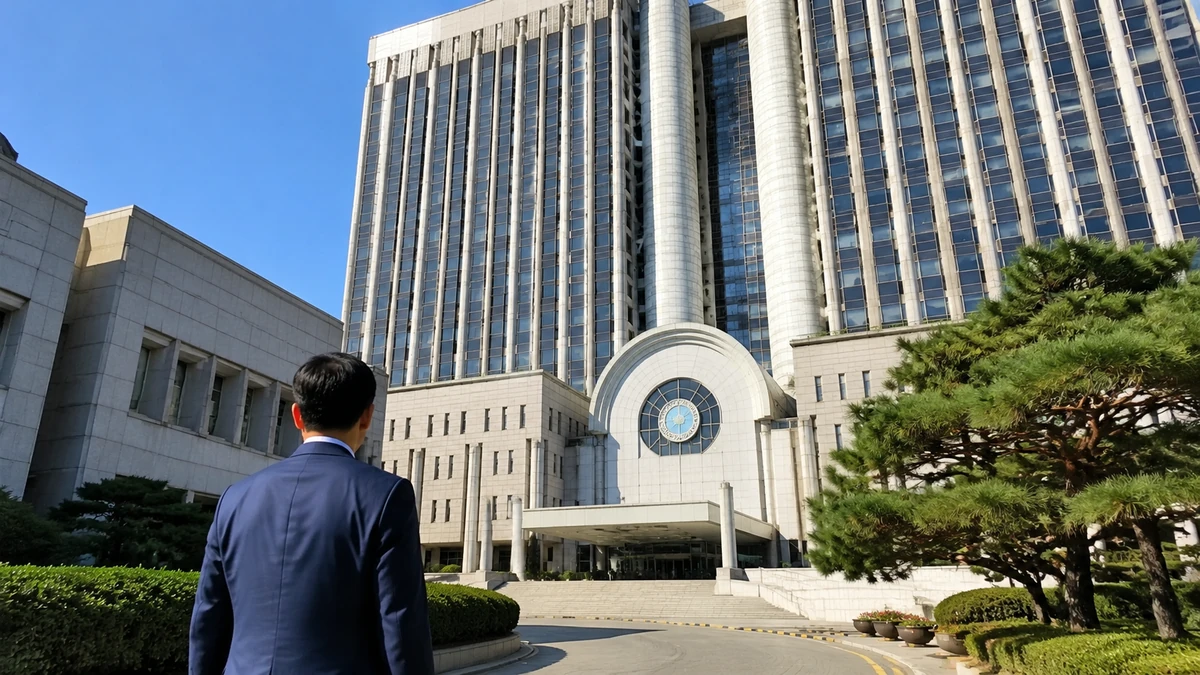
A South Korean court has overturned a minor criminal conviction tied to one of the country’s most important pro-democracy uprisings, delivering a ruling that reaches far beyond the record of a single former student. In a retrial decided May 21 in Busan, the Busan District Court found a man identified by his surname, Kim, not guilty nearly 47 years after he was detained for 10 days during the 1979 Bu-Ma Democratic Protests.
At first glance, the case may look narrow: a one-time college student, a decades-old traffic-related violation and a short detention. But the court’s decision carries unusual weight because it revisits a familiar question in democracies wrestling with their past: When does the state cross the line from maintaining order to criminalizing ordinary civic movement and political suspicion?
For American readers, the broader significance may feel somewhat familiar. The United States has had its own periods when public authorities treated dissent, assembly or even proximity to protest with sweeping suspicion, from civil rights-era crackdowns to aggressive policing at anti-war demonstrations. The Busan ruling does not erase South Korea’s authoritarian history. What it does is show how a mature legal system can revisit the record and ask whether the government punished conduct that was never truly proven to be criminal in the first place.
According to South Korean media reports, Kim was a first-year student at Pusan National University on Oct. 17, 1979, when he was told to head to a meeting point in front of the Buyeong Theater in central Busan, one of the gathering spots linked to the demonstrations. Police arrested him on the way. He was investigated and ultimately served 10 days in detention on a charge related to violating the Road Traffic Act.
The retrial ruling matters because the court did not simply decide to show mercy to an aging defendant. Instead, it concluded that the old guilty finding could not stand on the evidence. In other words, this was not symbolic forgiveness. It was a judicial statement that the original punishment was not adequately supported in the first place.
Why the Bu-Ma protests still matter in South Korea
To understand why this case resonates in South Korea, it helps to know what the Bu-Ma Democratic Protests were. The name “Bu-Ma” combines Busan and Masan, two southern cities where mass anti-government demonstrations broke out in October 1979 against the authoritarian Yushin system of President Park Chung-hee. Park, who had ruled South Korea for years, had tightened his grip through emergency decrees, restrictions on political opposition and extensive controls on civil liberties.
For Americans, the simplest comparison is not to a single event but to a broader democratic turning point, something like a local uprising that later comes to symbolize a nation’s refusal to accept permanent emergency rule. In South Korea, the Bu-Ma protests are remembered as a major precursor to the country’s eventual democratization. They were not the final chapter in that struggle, but they were a crucial one.
The Yushin era, which began in the 1970s, is often understood in South Korea as a time when the state expanded executive power in the name of national stability and anti-communist security. That context matters because South Korea then was still living under the shadow of the Cold War, direct military tensions with North Korea and a development-first political culture that often justified repression as necessary for the national good. In practice, that meant dissidents, students, labor activists and even bystanders could become entangled in the machinery of state control.
That historical backdrop is essential to the Busan court’s ruling. Kim was not accused in the retrial of carrying out a violent act. The central question was narrower and more revealing: Was there enough proof that he had actually violated the law, or had the authorities effectively treated his movement toward a protest site as criminal by itself?
That distinction matters in any constitutional society. Democracies do not just test their values when they protect popular speech. They test them when authorities confront speech or assembly that seems inconvenient, destabilizing or threatening. South Korea today is a vibrant democracy, one with heated elections, robust media and an active civil society. But cases like Kim’s show that the record of how the state once treated political unrest remains unfinished business.
What the court found — and why it is significant
The Busan District Court’s reasoning appears to be what gives this case its force. The court noted that after emergency martial measures were declared under the Yushin regime, troops, armored vehicles and police traffic controls were deployed around Busan’s city hall and major roads. That point is more than historical scene-setting. It means the roads were not operating under ordinary civilian conditions.
In the American legal imagination, a traffic violation usually suggests a relatively straightforward infraction: blocking a roadway, ignoring police direction, driving recklessly or obstructing normal public order. But the Busan court effectively recognized that these were not normal road conditions. They were roads shaped by military and police control in the middle of a political crackdown.
The court also found there was no evidence that Kim had actually joined the demonstration while in transit. Specifically, it pointed to the lack of material showing that he shouted slogans, chanted or otherwise participated in protest activity on the way to the gathering point. That may sound like a technical detail, but in criminal law it is a critical one. Mere intent, assumption or association is not supposed to substitute for proof of conduct.
That principle will be instantly recognizable to American readers. Courts in democratic systems are expected to distinguish between what authorities suspect a person is about to do and what that person can be shown to have done. When governments blur that line, ordinary movement can become grounds for punishment. A person heading toward a march, rally or sit-in can be treated as though he has already committed the offense the state fears may occur.
In overturning the conviction, the Busan court appears to have sent a clear message: Even under conditions of political emergency, the state cannot automatically convert proximity, movement or presumed sympathy into a criminal act. The ruling did not require the court to romanticize the protests or ignore the tension of the period. It required the court to ask a simpler question — whether the government proved this individual’s guilt. It concluded that it had not.
That is why the case has social meaning beyond Kim himself. The ruling calls attention to the fragility of state judgments that can survive for decades unless someone has the time, resources and institutional opening to challenge them. For nearly half a century, the original conviction remained on the books as a valid act of public authority. The retrial says, in effect, that the authority was never as solid as it looked.
How an ordinary trip became a criminal case
There is a reason this case feels especially striking. Kim was arrested not after a documented violent act, not after a confirmed confrontation and not after prosecutors established active participation in a protest. He was arrested while going to a place where protesters were expected to gather.
That fact turns what might otherwise be a routine historical legal correction into a much sharper story about civil liberties. At the center of the case is not only freedom of assembly, but also freedom of movement and the state’s power to infer intent from context. How far can authorities go in deciding that a person’s destination reveals a punishable purpose? At what point does preventive policing become punishment for thought, association or anticipated dissent?
Those are not abstract questions. In the United States, courts and communities still debate the limits of preemptive policing at demonstrations, mass arrests based on location and the broad use of public-order offenses during periods of unrest. The Busan case lands in that same conceptual territory, though its origins lie in a more openly authoritarian system.
What makes the ruling socially powerful is that it reframes the incident at a human scale. Kim was a freshman, moving through his city toward a politically charged gathering point. The state interpreted that movement through the lens of emergency control. Decades later, the court looked again and found the state’s inference wanting.
In journalistic terms, that is often where history becomes newly legible: not when a court announces a sweeping theory, but when it revisits one person’s daily movement and decides that the government read too much into it. South Korea’s democratization is frequently told through dramatic moments — mass protests, constitutional reforms, national reckonings. But democratic accountability is also built through smaller acts of legal repair, including the correction of records that once treated ordinary citizens as threats.
For survivors of authoritarian periods, the legal record matters. A short detention may sound minor compared with prison sentences, torture cases or disappearances. Yet a criminal record, however small, can shape how a person is seen by the state and by society. It can linger as an official version of events long after the politics that produced it have collapsed. That is one reason retrials in historical protest cases carry emotional and civic significance beyond the punishment originally imposed.
A pattern of retrials signals a broader reckoning
This was not an isolated decision. South Korean reports say the Busan court has this year acquitted defendants in four retrial cases related to the Bu-Ma Democratic Protests. Each case stands on its own facts, and courts are right to assess them individually. Still, the pattern is hard to ignore.
When the same court repeatedly reexamines prosecutions from the same historical moment and arrives at the same basic conclusion — not guilty — it suggests more than coincidence. It suggests that the legal architecture used during that era may not withstand contemporary scrutiny, especially when courts insist on evidence rather than deference to old state narratives.
That matters in South Korea, where public debate over history is often intense and politically consequential. Questions about how to remember the authoritarian decades, how to evaluate anti-communist state power and how to honor democracy movements remain deeply woven into national identity. Legal rulings do not settle those debates by themselves, but they shape the documentary record in ways that historians, educators and the public cannot easily dismiss.
For a country that has transformed itself from dictatorship to high-tech democracy in a matter of decades, these retrials also serve another purpose: They test whether the institutions of the present are willing to interrogate the assumptions of the past. It is one thing for a democratic society to celebrate former protest movements rhetorically. It is another to revisit the actual case files, examine the evidence and formally vacate convictions that no longer meet legal standards.
In that sense, the Busan ruling reflects what legal scholars sometimes describe as the self-correcting function of the rule of law. Courts cannot undo lost years or erase the emotional cost of state punishment. But they can declare that official power was misused, that guilt was not proven and that the democratic order now rejects the logic that once treated a student’s movement toward a demonstration as sufficient basis for detention.
That distinction is crucial. A democracy does not prove its strength by claiming it never made such errors. It proves its strength by building institutions capable of admitting, reviewing and correcting them.
What this says about South Korea now
The timing of the decision is also part of the story. This is not simply a history item pulled from an archive. It is current news because it reflects a judgment made now, by a present-day court, under present-day standards of legal reasoning.
South Korea in 2026 is a very different society from South Korea in 1979. Its public institutions speak the language of citizen safety, service and accountability far more than overt political control. That does not mean power is no longer contested. It means the terms of legitimacy have changed. Authorities are expected, at least formally, to justify restrictions on the public in ways consistent with democratic rights.
The contrast is revealing. On the same day this ruling was reported, another item in South Korean news involved modern transit officials recruiting subway safety assistants to help manage crowds and improve public safety. That kind of story belongs to the ordinary grammar of democratic administration: the state as service provider, organizer and protector. Set beside Kim’s case, however, it also highlights how governments can use the language of order in dramatically different ways depending on the era and political system.
In one version, public order becomes a reason to monitor, restrict and punish citizens before they have demonstrably broken the law. In another, public order is framed as support, safety and infrastructure. The difference is not just rhetorical. It goes to the heart of whether the public experiences the state primarily as guardian, manager or enforcer.
The Busan acquittal therefore speaks to a larger evolution in South Korean civic life. It suggests that the country is still engaged in the long work of deciding what kind of public power it wants to remember, reject and preserve. That process is often uneven. Some reckoning happens in textbooks, some in memorials, some in elections and some, as here, in quiet courtroom rulings about old case files.
There is also a deeply human dimension to what South Koreans often call “late justice.” The phrase can sound bittersweet because it acknowledges what cannot be restored: youth, time, opportunity and the emotional burden of living for decades under a state-imposed stain. But there is another side to late justice. It affirms that democratic institutions can still matter long after the original harm was done.
Why global audiences should pay attention
For readers outside South Korea, especially in the United States, it may be tempting to see this as an internal matter tied to a specific chapter of Korean history. But the themes are universal. Every democracy faces pressure, at some point, to let officials act first and justify later in moments of fear, unrest or political tension. Every democracy has to decide how much evidence should be required before the state restricts liberty. And every democracy eventually confronts the records created during its least liberal moments.
South Korea’s story is especially instructive because it compresses so much political change into one lifetime. Many older South Koreans remember censorship, emergency decrees and military-backed rule not as distant history but as lived experience. Many younger South Koreans have grown up in a democratic culture shaped by constitutional rights, mass civic participation and digital transparency. Retrial decisions like this one connect those two eras.
They also offer a reminder to U.S. readers that democratic resilience is not only about elections or constitutions in the abstract. It is also about the minute details of criminal procedure: what counts as evidence, what behavior can be punished and whether courts are willing to challenge the assumptions of police and state officials when those assumptions are rooted in political crisis rather than proven fact.
Kim’s acquittal, nearly half a century after his detention, does not rewrite the entire history of the Bu-Ma Democratic Protests. But it does revise one official sentence in that history. It says the state once punished a student for conduct it did not adequately prove. It says a road under military control was not an ordinary road, and suspicion was not a substitute for evidence. And it says that even after 47 years, the legal record is not beyond review.
That is why this ruling matters. It is about one man, but not only one man. It is about one old conviction, but not only one old conviction. It is about the power of a democratic court, acting in the present, to revisit the habits of an authoritarian past and insist that the state must do better than presume guilt from movement, mood or moment. In any country that values civil liberties, that is not just Korean history. It is a democratic lesson with broad relevance.
Comments
Post a Comment