A Heat Wave Without Smoke: South Korea’s Ozone Alert in Dangjin Shows How Summer Air Pollution Can Turn Invisible and Local
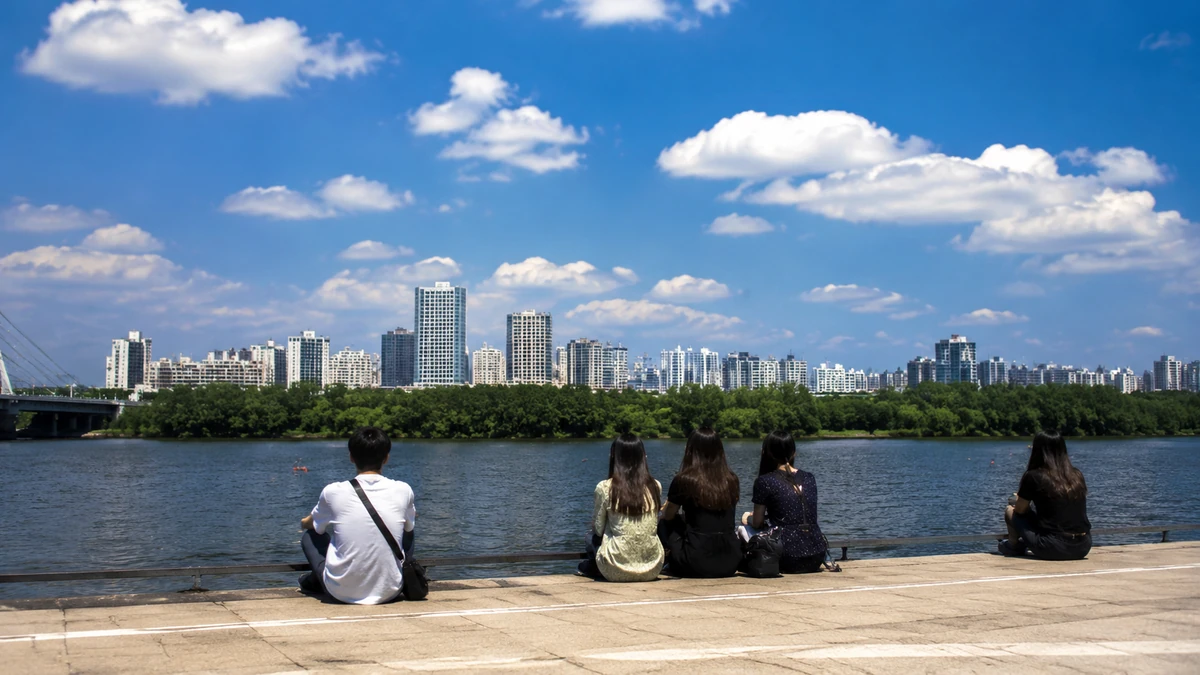
An invisible warning on a hot Korean evening
As much of South Korea baked under temperatures that felt more like July than mid-May, officials in one western city issued a public warning that many Americans would recognize from summer smog seasons in places like Los Angeles, Houston or Phoenix: The air itself had become a health concern.
At 8 p.m. on May 14, authorities issued an ozone advisory for Dangjin, an industrial and coastal city in South Chungcheong Province, according to data from South Korea’s Environment Ministry and the Korea Environment Corp. The one-hour average ozone concentration there reached 0.1237 parts per million, just above the country’s threshold of 0.12 ppm for an ozone advisory.
At the very same time, another county in the same province, Yesan, was having its own ozone advisory lifted.
That split-screen reality — warning in one community, all-clear in another — helps explain something important about modern air pollution in South Korea and beyond: Dangerous air does not always arrive as a broad regional crisis that blankets an entire map in one color. Sometimes it is highly localized, fast-changing and all but invisible to the naked eye. A clear blue sky can coexist with a public health warning.
For readers in the United States, the easiest comparison may be to the way extreme heat advisories, wildfire smoke alerts and ozone action days can alter daily life even when the weather looks beautiful outside. South Korea is now entering the same kind of seasonal tension. Early summer brings longer daylight, stronger sun and rising temperatures — conditions that encourage outdoor activity but can also help produce ground-level ozone, a pollutant linked to breathing trouble, aggravated asthma and stress on the cardiovascular system.
What happened in Dangjin was not the highest-level emergency on South Korea’s books. But it was significant enough to trigger behavior guidance for residents, especially children, older adults and people with respiratory or heart conditions. In practical terms, that means a category of air pollution that cannot be seen directly can still reshape how a city moves, exercises, works and cares for its most vulnerable residents.
What an ozone advisory means in South Korea
In South Korea, ozone alerts are issued in stages. An advisory begins when the one-hour average ozone concentration reaches at least 0.12 ppm. A higher-level ozone warning is issued at 0.30 ppm, and a serious warning at 0.50 ppm.
The Dangjin reading of 0.1237 ppm barely crossed the formal threshold, but in air-quality policy, crossing a threshold matters. Public warning systems are built around the idea that once a pollutant reaches a scientifically designated level, waiting for conditions to become obviously worse can carry its own risks.
That is especially true for ground-level ozone, which differs from the ozone layer high in the atmosphere that helps shield Earth from harmful ultraviolet radiation. The ozone that worries public health officials is the one near the surface, created when pollutants from vehicles, industry and other sources react in sunlight and heat. In other words, this is not a distant environmental abstraction. It is a byproduct of modern urban and industrial life interacting with weather.
In the United States, many people encounter ozone information through Air Quality Index alerts or local “Code Orange” warnings. South Korea’s system serves a similar purpose, though it is often folded into a broader culture of public alerts that can include weather notices, fine dust updates, heat warnings and emergency text messages sent directly to mobile phones. Koreans are used to receiving highly specific public guidance from government agencies, sometimes multiple times a day, and air-quality information has become a normal part of that ecosystem.
When an ozone advisory is issued in South Korea, the guidance prioritizes people thought to face the highest risks first: children, seniors and those with respiratory or cardiovascular illness. They are urged to limit outdoor activity. The recommendations can also extend to the general public, with advice to avoid strenuous exercise outdoors.
That is an important detail. Ozone is not treated solely as a niche concern for medically fragile people. It is presented as a condition that can affect ordinary routines for healthy residents too, especially on days when they may be most tempted to spend extra time outside.
Why Dangjin and Yesan could face opposite conditions on the same day
To outsiders, it may seem odd that one part of the same province was under an ozone advisory while another was being cleared. But that kind of divergence is central to how ozone behaves.
Unlike the image many people have of pollution as a uniform dirty haze, ozone levels can vary sharply depending on local emissions, wind patterns, sunlight, temperature and geography. An industrial coastal city like Dangjin can experience different atmospheric chemistry than an inland county like Yesan, even if both are in South Chungcheong Province.
Dangjin sits on South Korea’s west coast, facing the Yellow Sea and connected to major industrial infrastructure. It is known for large-scale steel and energy facilities and for its role in the manufacturing economy that has helped power South Korea’s rise as a major exporter. That industrial footprint does not by itself explain every air-quality event, but it places the city in a landscape where emissions, shipping, power generation and weather can interact in complex ways.
Yesan, by contrast, is better known as a more rural inland area. When ozone levels dropped there and the advisory was lifted, it underscored a lesson public health experts have been emphasizing for years: Air quality is hyperlocal. It can change by hour, by neighborhood and by terrain.
Americans have seen versions of this before. Southern California residents know that one valley can trap pollution while a nearby beach community gets an ocean breeze. People in the Mountain West have watched wildfire smoke settle in one basin while a neighboring town gets relief. In the Northeast, summer ozone can rise in one metro corridor faster than in another depending on traffic, temperature and wind. South Korea is dealing with the same basic truth, even if the scale of its cities and the structure of its alert systems differ.
The Dangjin-Yesan contrast also carries a practical message for the public: broad assumptions about a region’s air are not always reliable. A resident cannot safely conclude that “the whole province is bad today” or “the whole province is fine.” That is why real-time government monitoring matters so much. For a pollutant that most people cannot detect by sight or smell in a consistent way, data becomes the public’s main window into risk.
The paradox of beautiful weather that is not entirely safe
The timing of the advisory mattered. On May 14, temperatures soared across South Korea. In Seoul, the capital, daytime highs reached 31 degrees Celsius, or about 88 degrees Fahrenheit — unusually hot for this point in the season. Forecasts for the following day suggested that parts of western South Korea could again rise above 30 degrees Celsius, with generally sunny conditions.
For many people, those are the kind of days that signal the arrival of park weather. Families head outside. Children play after school. Office workers take evening walks. Runners crowd riverside paths. In Seoul, that often means the trails and lawns along the Han River; elsewhere, it means neighborhood parks, apartment courtyards, sports fields and hiking routes.
But ozone creates a paradox familiar to air-quality researchers and increasingly to the public: the nicest-looking days can produce some of the least healthy conditions for strenuous outdoor activity.
Heat and sunlight are major ingredients in ozone formation. So the same atmosphere that encourages picnics, bike rides and outdoor exercise can also make those activities riskier, especially in the late afternoon and early evening when ozone levels can remain elevated. That tension is one reason ozone warnings can feel more disruptive than the numbers alone might suggest. They do not merely tell people that pollution exists. They ask them to revise their intuition about what kind of day they are having.
In South Korea, that shift has broader cultural significance. Spring and early summer have long been prized as some of the most comfortable times of year, especially after the cold, dry winter and before the peak humidity of the monsoon season. Yet climate volatility, heat spikes and recurring air-quality concerns are changing what those seasons mean in everyday life. Checking the temperature is no longer enough. Residents increasingly check particulate matter readings, ozone alerts and heat advisories too.
For Americans, this may sound increasingly familiar. Across much of the United States, especially in the West and South, the old idea of a simple “nice day” has eroded. A clear afternoon can now come with wildfire smoke, extreme UV exposure, dangerous ozone or oppressive heat. South Korea is confronting its own version of that new reality, in which environmental risk is layered rather than singular.
Who faces the greatest risk when ozone rises
One of the clearest features of South Korea’s ozone guidance is that it begins with the most vulnerable. Older adults, young children and people with heart or respiratory disease are singled out first for reduced outdoor activity.
That approach reflects a public-health principle that is widely recognized in the United States as well: environmental threats do not affect everyone equally. A healthy adult may experience irritation or discomfort during high-ozone conditions, while someone with asthma, chronic obstructive pulmonary disease or a cardiac condition may face significantly greater risks.
Children are especially important in this equation because they tend to spend more time active outdoors and because their lungs are still developing. Seniors may be more susceptible because of underlying health issues or reduced physiological resilience. Outdoor workers, though not always the first group mentioned in public advisories, can also face meaningful exposure simply because their jobs do not move indoors when the air changes.
That matters in a place like Dangjin, where industrial and port activity intersects with ordinary city life. Advisories may sound abstract in a news alert, but they translate quickly into concrete decisions: whether a school should scale back sports practice, whether a retiree should skip an evening walk, whether a construction crew should modify its schedule, whether parents should keep children inside after dinner even when the sky appears calm and bright.
Public alerts like this also reveal how environmental policy can become social policy. The stated goal is not just to monitor pollution but to protect the people least able to absorb its effects. In that sense, the advisory is not only an atmospheric measurement. It is a cue for collective adjustment.
That can be easy to miss in headlines about parts per million. Yet the political and social meaning of such warnings often lies in who must change behavior first. The people asked to alter their day are frequently the same people who already have less margin for risk: the elderly, the chronically ill, the very young and workers whose routines are least flexible.
How South Korea’s alert culture turns data into daily behavior
South Korea is one of the world’s most wired societies, and that matters when public agencies issue environmental warnings. Residents are accustomed to a high volume of official notifications, from typhoon updates and heavy rain alerts to disease-control messages and air-quality bulletins. In recent years, these digital systems have become part of the everyday infrastructure of risk management.
That means an ozone advisory is not simply a line item for weather enthusiasts. It fits into a larger public expectation that the government should measure conditions in real time, warn people quickly and offer specific behavioral guidance. Information is expected to be granular, current and actionable.
There is a revealing cultural dimension to this. In American discussions about weather and air, much of the burden often falls on individuals to seek out AQI apps, local TV forecasts or county health notices. In South Korea, the state plays a more visibly centralized role in packaging and distributing practical alerts. People may still consult private apps and news services, but the underlying model places strong emphasis on public institutions as the interpreters of invisible risk.
The Dangjin advisory, and the simultaneous lifting of the alert in Yesan, shows why that model persists. Without official monitoring, many residents would have little way to know that conditions had diverged so sharply within the same province. The air might feel warm, still and pleasant in both places. But the data told a more complicated story.
This dependence on monitoring is especially important because ozone lacks the dramatic visual signature that makes some other hazards easier to understand. Unlike yellow dust, wildfire smoke or heavy rain, ozone can leave few obvious clues for nonexperts. Its danger is translated through instruments, thresholds and institutional trust.
That is one reason local news coverage of these alerts matters. It bridges the gap between a technical measurement and a civic response. It turns a decimal figure into a story about schools, families, health systems and the pace of daily life.
A broader warning for a hotter future
On one level, the Dangjin advisory was a routine public notification: a threshold was crossed, guidance was issued and another nearby area saw conditions improve. But on another level, it points to a larger challenge that South Korea, like the United States, will likely face more often as warm seasons lengthen and heat intensifies.
Higher temperatures can increase the likelihood of ozone formation, particularly when paired with sunlight and the pollutants that come from traffic, power generation and industry. As climate change pushes weather patterns toward more heat extremes, ozone risk can become harder to treat as an isolated summer inconvenience. It begins to overlap with energy demand, labor safety, elder care, public health planning and urban design.
In South Korea, where dense urban development and heavy industry coexist within relatively compact geographic space, those overlaps can become visible very quickly. A hot day in May is no longer just a seasonal oddity. It can be a stress test for how well communities handle layered environmental threats before peak summer even arrives.
The forecast for continued heat the next day added to that sense of unease. No one can assume that one advisory automatically leads to another. But when temperatures remain high and skies remain clear, the conditions that help ozone form do not simply disappear from public concern.
For Americans, the story from Dangjin may feel distant in geography but familiar in logic. Environmental risk is becoming more subtle, more local and more dependent on real-time data. The old warning signs — dark smoke, choking haze, dramatic storms — are no longer the only signals that matter. Sometimes the threat comes on a nearly perfect evening, measured in decimal points, announced by a phone alert and felt first by the people with the least room for error.
That is what makes the Dangjin advisory more than a routine weather-side headline. It is a reminder that in a hotter world, public safety is increasingly tied to hazards people cannot always see. The challenge for governments is to detect them quickly and explain them clearly. The challenge for residents is to trust that a beautiful day can still carry invisible limits.
And in South Korea, where daily life is closely intertwined with fast-moving public information systems, that lesson is becoming part of the seasonal rhythm: summer does not only arrive with sunshine and heat. Sometimes it arrives with a warning that the air itself has changed.
Comments
Post a Comment