
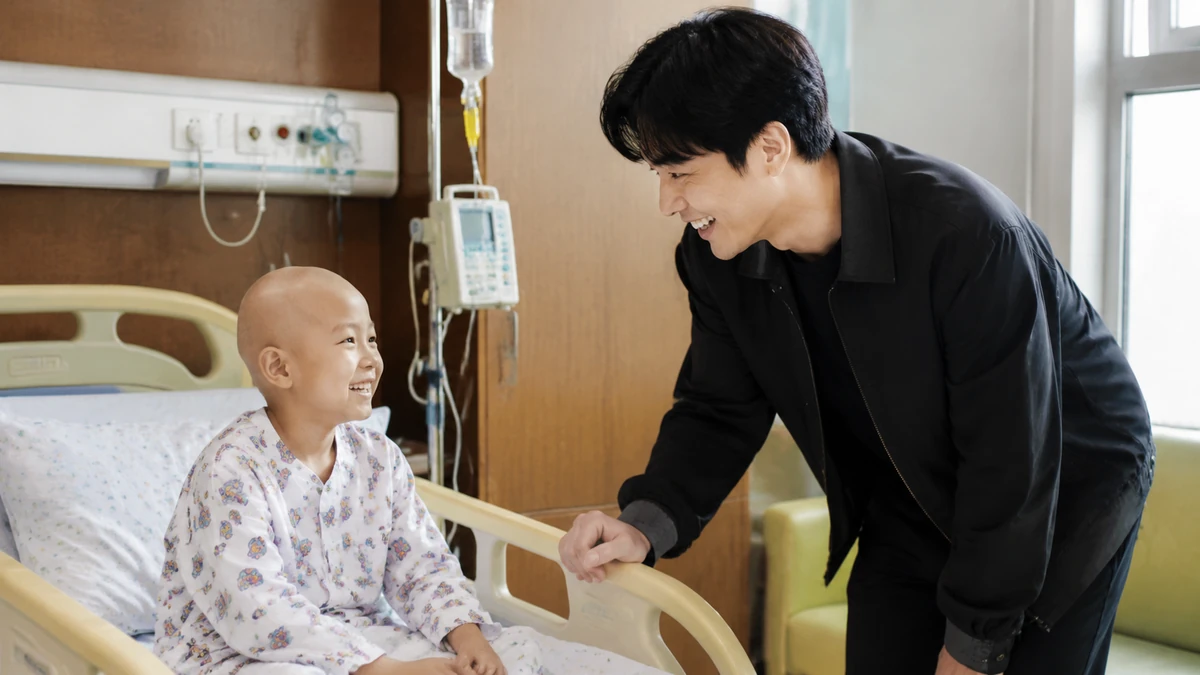
A holiday for children, and a reminder of children in crisis
In South Korea, Children’s Day is not a minor calendar observance or a marketing footnote tacked onto spring. It is one of the country’s most recognizable family holidays, marked each year on May 5 with outings, gifts, crowded parks and a wider public conversation about the well-being of children. For many Americans, the closest comparison might be a blend of a family-centered holiday, a civic awareness day and the kind of public attention that comes when schools, brands, public institutions and entertainers all turn their focus to kids at once.
That is the backdrop for a donation announced this week by South Korean comedian Lee Sang-hoon, who gave 20 million won, or roughly $14,000 to $15,000 depending on exchange rates, to Seoul Metropolitan Children’s Hospital in connection with Children’s Day. According to his agency, the money came from proceeds from a recent charity auction. On its face, that may sound like a straightforward celebrity donation story. But in the South Korean context, the timing, the destination of the funds and the fact that Lee has reportedly made similar donations every year since 2019 give the gesture a deeper meaning.
The donation was disclosed May 6 through his agency, a day after the holiday itself. That timing matters because Children’s Day in South Korea is not only about celebration. It also carries a moral undertone: a chance to ask whether society is doing enough for children who are sick, vulnerable or otherwise left out of the cheerful imagery that often defines the day. In that sense, a gift to a children’s hospital does more than generate warm headlines. It redirects attention from balloons and amusement parks to treatment rooms, long hospital visits and the families navigating serious pediatric illness.
For an American audience more accustomed to celebrity philanthropy being filtered through galas, foundation announcements or year-end giving campaigns, Lee’s donation offers a useful window into how public figures in Korea often tie charitable acts to symbolically important dates. Rather than making a vague appeal to kindness, the structure of this donation links a specific holiday to a specific population: children spending Children’s Day in medical care, including pediatric cancer patients, rather than at a zoo or on a family outing.
That connection is part of why the story has resonated. South Korea’s entertainment industry is global in reach, but moments like this reveal another side of the Korean Wave beyond hit songs, streaming dramas and sold-out tours. They show how entertainers can translate visibility into public responsibility in ways that are modest in scale but clear in purpose.
Who is Lee Sang-hoon, and why this story travels beyond fan culture
Lee is best known in South Korea as a comedian who debuted in 2011 through KBS, the country’s public broadcaster, as part of its 26th class of comedians. For viewers in Korea, that is a meaningful credential. KBS has long served as a major launching pad for comics and television personalities, not unlike the way certain American institutions or networks can confer legitimacy on performers early in their careers. Lee gained broad recognition through “Gag Concert,” a long-running sketch comedy show that introduced many Korean comedians to national audiences. One of the segments associated with him, “Niggle Niggle,” helped make him a recognizable face in the country’s comedy scene.
But like many entertainers in South Korea and elsewhere, Lee’s career has evolved with the media landscape. He now also runs a YouTube channel focused on toy reviews, a detail that might seem small but helps explain why this donation feels especially coherent. In the same way some American entertainers have moved from broadcast TV to podcasts, livestreams or creator-led digital brands, Lee has shifted from a traditional television path into platform-based content. That means his current public identity is not just tied to old television fame. It also includes an ongoing relationship with family-oriented, child-adjacent content through toys and digital media.
There is no indication in the available summary that Lee explicitly framed the donation as an extension of his toy-review work. Still, the overlap is hard to miss. A comedian who now spends part of his working life reviewing toys making a Children’s Day donation to a children’s hospital creates a kind of narrative consistency audiences easily recognize. It suggests that celebrity influence does not have to operate only through blockbuster success or large-scale campaigns. It can also move through smaller, more personal channels, where content, audience and charitable purpose intersect.
For international readers who mostly encounter Korean entertainers through K-pop, Oscar-winning films or globally distributed dramas, Lee’s profile is also a reminder that the broader Korean cultural industry is much larger and more varied than its export stars. Domestic comedians, TV personalities and digital creators may not be household names abroad, but they play an important role in shaping Korean public life. Their charitable choices can carry real weight, especially when those choices are repeated over time and attached to culturally significant moments.
Why Children’s Day matters so much in South Korea
To understand why Lee’s donation drew attention, it helps to understand Children’s Day itself. In South Korea, the holiday has roots in a modern movement that emphasized children’s dignity, growth and rights. Over time, it became a nationally observed day centered on family life, with schools closed and parents often planning activities for their kids. Parks, museums and major family attractions typically fill up. Retailers push promotions. Public institutions run child-focused events. The social mood is celebratory, but the holiday also carries an implicit message: children deserve care, investment and public recognition.
That dual meaning is what gives charitable giving on Children’s Day its force. A donation made on an ordinary date can be appreciated as kindness. A donation made on a day when the entire country is talking about children gains an extra layer of visibility and moral clarity. It says, in effect, that while many children are enjoying a special day, others are spending it in treatment, in recovery or under financial and emotional strain with their families.
Americans may recognize a similar dynamic when public figures use symbolic dates like Veterans Day, Martin Luther King Jr. Day or World AIDS Day not just to post tributes but to direct money and attention toward a specific need. The date changes how the act is read. It broadens the frame from a private donation to a public intervention in the national conversation.
That appears to be part of what makes Lee’s annual Children’s Day donations meaningful in Korea. According to the news summary, he has continued donating every year since 2019 to support pediatric cancer patients. That kind of repetition matters because holidays are often prone to sentimentality. Repeated action cuts through that. Instead of a one-time burst of goodwill attached to a photogenic date, it signals a pattern of behavior.
And in a media environment where celebrity charity can sometimes be met with skepticism, routine may be the strongest proof of sincerity. A single large donation can attract headlines. A series of smaller or moderate donations made on the same day, for the same cause, year after year, starts to look less like image management and more like habit, conviction or both.
More than a feel-good story: The significance of giving to a children’s hospital
The choice of recipient is crucial here. Seoul Metropolitan Children’s Hospital is not an abstract cause or a loosely defined charity category. It is a real medical institution, a place where treatment, caregiving and financial strain meet in visible and immediate ways. The summary of the Korean reporting did not specify exactly how the funds will be spent, and responsible reporting should not assume a designated use without evidence. But even without a line-item breakdown, the destination tells readers plenty about the nature of the support.
Hospitals occupy a special place in philanthropy because they represent both hope and burden. They are where recovery happens, but also where families confront fear, long routines and often significant costs in time and energy, regardless of how a country structures health care. In pediatric care, those pressures can be especially intense. Childhood cancer, in particular, turns ordinary family life upside down. School schedules, sibling routines, work lives and finances all shift around treatment.
That is why giving to a children’s hospital on Children’s Day resonates so strongly. It interrupts the comforting imagery that tends to dominate kid-centered holidays and points instead to children who are not having a carefree day. For some families, May 5 is not a day of outings and snacks. It is another day of test results, medications, waiting rooms and trying to create a little normalcy in an abnormal situation.
In the United States, celebrity hospital visits and children’s health donations often gain public support because they meet people at a deeply relatable point: almost everyone understands the emotional stakes of a sick child. In Korea, the emotional logic is similar, but the Children’s Day connection sharpens the contrast. The holiday celebration does not disappear; rather, the donation asks the public to widen its definition of what honoring children means.
It is also worth noting that the Korean summary emphasizes pediatric cancer patients specifically. That makes the message even more precise. Children’s causes can sometimes be framed so broadly that the public is left with a general sense of kindness but little understanding of who is actually being helped. By identifying young cancer patients, the story gains specificity. It is no longer about children in the abstract. It is about a population facing one of the most serious forms of childhood illness.
The charity auction model, and how fandom becomes a funding source
One of the more interesting details in this story is not the donation alone but how the money was raised. Lee’s agency said the funds came from proceeds from a recent charity auction. That may sound procedural, but it points to a larger shift in how entertainers turn cultural attention into public benefit. Rather than simply writing a check from personal funds, a charity auction creates a participatory structure. Fans, collectors or members of the public contribute through purchases, and those transactions are redirected toward a social purpose.
In practical terms, that means the donation is not only an act of individual generosity. It is also a mechanism for converting celebrity value into charitable support. The appeal of the auction likely depends on Lee’s public persona, audience connection and the desirability of whatever items or experiences were offered. The summary does not detail the items, so it would be wrong to speculate. But the underlying logic is clear: attention has value, memorabilia has value, access has value, and those forms of value can be transferred into money for a public institution.
This is increasingly important in modern entertainment culture, where stars and creators are not limited to one medium. In the same way American celebrities may sell signed items, host benefit streams, auction wardrobes or offer experiences for nonprofit causes, Korean entertainers can mobilize their communities in ways that go beyond ticket sales and broadcast appearances. The donation then becomes evidence not just of generosity, but of infrastructure — a small example of how the creator economy can be aligned with public-good goals.
That may be one reason the story lands as more than a simple human-interest item. It illustrates how philanthropy can be embedded in content culture. Lee did not merely use fame to attract praise; according to the summary, he used a market activity tied to his public presence to generate actual funds for care. That distinction matters. It moves the story from symbolism to transaction, from sentiment to support.
It also invites a broader question relevant far beyond South Korea: What should celebrity influence do? In an era when public attention is itself a form of currency, entertainers are often criticized for monetizing every aspect of their identity. A charity auction flips that formula, at least in part. It monetizes attention, then routes the proceeds somewhere outward-facing and concrete.
Why consistency counts more than the amount alone
Twenty million won is a meaningful donation, but the amount is not the only reason this story matters. If anything, the more notable detail is that Lee has reportedly made donations every Children’s Day since 2019. In celebrity culture, repetition changes the public reading of a charitable act. A one-off donation can generate praise, but it can also be dismissed as strategic branding, timed promotion or image repair. A sustained pattern is harder to wave away.
That is true in the United States, and it is true in South Korea. Public trust often depends less on a splashy announcement than on whether the behavior continues when the headlines fade. By giving on the same holiday over multiple years and focusing on children facing serious illness, Lee’s charitable work appears to have developed a recognizable shape. It is not random. It has a calendar, a beneficiary group and now a track record.
That kind of consistency also contributes to what might be called a public identity. Celebrities are often known for performance first and character second. Repeated acts of giving do not erase the promotional machinery that surrounds fame, but they can add a stable layer to how a performer is understood. In Lee’s case, this year’s donation reads less like a new publicity angle than like the continuation of an existing practice.
The distinction matters because celebrity philanthropy often lives in a tension between sincerity and spectacle. The modern media ecosystem rewards visible generosity, which can make even earnest giving seem strategic. The best antidote to that perception is usually endurance. If someone keeps returning to the same cause without dramatic reinvention, audiences begin to treat the giving as part of the person’s habits rather than part of a campaign.
There is a broader lesson here for entertainment industries across borders. Social responsibility becomes more credible when it is measurable, targeted and repeated. Lee’s donation checks all three boxes based on the reported facts: a defined amount, a named institution and a practice dating back several years.
A quieter side of the Korean Wave
For global audiences, South Korean popular culture is often associated with scale: stadium tours, streaming dominance, beauty exports, fashion influence and films that move fluidly from local acclaim to international awards. Those are real and important parts of the Korean Wave, or Hallyu. But they are not the whole picture. Equally revealing are the smaller stories that show how cultural figures operate within Korean society itself.
Lee’s donation belongs to that category. It is not a blockbuster entertainment headline. It does not announce a new series, a chart milestone or a red-carpet moment. Instead, it offers a glimpse of how a domestic entertainer’s career, audience relationship and charitable habits intersect with a national holiday and a public medical institution. That may seem modest. In some ways, that is exactly the point.
Sometimes the clearest measure of a cultural industry’s maturity is not its export power but its civic behavior at home. When entertainers connect their fame to institutions that care for vulnerable people, they help define what responsible visibility can look like. They also remind international audiences that Korean celebrity culture, like American celebrity culture, is not only about glamour. It is also about expectations, obligations and the public meaning of influence.
There is another reason the story stands out right now. In many countries, including the United States, readers are often weary of celebrity news that feels detached from everyday life. A report about a donation to a children’s hospital cuts through that fatigue because its stakes are recognizable and immediate. It says something practical about where money can go and who it can help. And because the donation came from auction proceeds rather than vague goodwill alone, it also illustrates a workable model for converting public interest into assistance.
For American readers trying to make sense of Korean public life beyond the stereotypes of hyper-competitive schooling, polished entertainment and rapid digital trends, this story offers a more grounded image. It is about a comedian, a children’s holiday, a hospital and a repeated act of giving. But taken together, those elements say something larger: public figures in South Korea are increasingly judged not only by what they perform, but by what they return to society.
That does not mean every celebrity donation deserves celebration without scrutiny. Journalism should resist turning philanthropy into automatic public relations. Yet the reported facts here are specific enough to matter on their own: a 20 million won donation, a named hospital, proceeds from a charity auction and a documented pattern of annual giving since 2019. In an era of inflated rhetoric, plain facts can be persuasive.
And perhaps that is the most notable part of this story. It does not need exaggeration. It is significant precisely because it is concrete, consistent and well-timed. On a holiday meant to celebrate children, a Korean comedian used the fruits of his public career to support children in medical need. That is not a global spectacle. It is something quieter and, in many ways, more durable: a reminder that cultural influence can be measured not just by applause, but by where it lands after the show is over.



0 Comments