A different kind of celebrity move in South Korea
In the modern entertainment business, stars often expand into predictable lanes: a singer launches a fashion brand, an actor starts a production company, a YouTube personality opens a cafe or signs on as a brand ambassador. What is less common, in South Korea or in the United States, is a public figure stepping forward not as the face of a project but as the person who discovered it, backed it and decided it deserved a local audience.
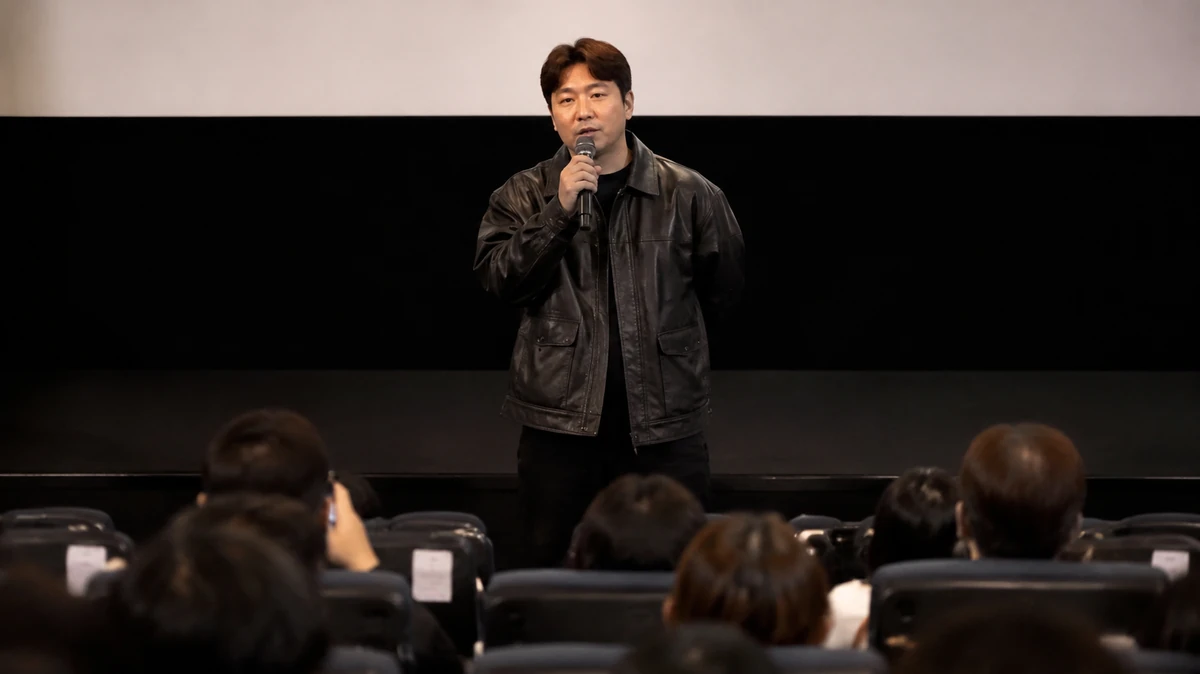
That is what made Mun Sang-hoon’s latest move stand out in Seoul this week. Mun, a South Korean actor and online creator best known as a member of the comedy team BddNers, appeared at a preview screening at CGV Yongsan I’Park Mall, one of the country’s highest-profile multiplex venues, not to promote a movie he starred in, but to introduce one he personally imported for Korean release. The film, “Nirvana the Band,” is an eccentric time-slip comedy centered on two bandmates, Matt and Jay, whose determination to land a performance leads them into the absurd idea of building a time machine and revisiting the past.
On paper, that may sound like a small industry item, the sort of niche distribution story that would usually stay inside trade publications. But in the context of Korean popular culture, where celebrities are increasingly expected to function not just as performers but as taste-makers, entrepreneurs and community builders, Mun’s appearance signaled something larger. He was presenting himself as a curator, someone using his reputation not merely to draw attention to his own work but to guide audiences toward a work he loves.
For American readers, an easy comparison might be a comedian with a loyal cult following deciding to personally bring a quirky Canadian or British indie film into U.S. arthouse theaters because he believes his fans will connect with it. Think less blockbuster studio rollout and more a passionate recommendation from someone whose comic voice audiences already trust. That kind of endorsement can carry real weight in an era when people are overwhelmed by endless streaming options and increasingly rely on personalities, not institutions, to help decide what is worth watching.
According to South Korean media reports, Mun described the experience in deeply personal terms. Rather than talking about market strategy, box office projections or expansion plans, he compared it to taking a friend to a favorite restaurant and anxiously watching to see whether that friend enjoys the meal. It was an unusually intimate metaphor for a film event, and it captured the emotional stakes of what he was doing: He was not just launching a title. He was putting his taste on the line.
Why Mun Sang-hoon matters to Korean audiences
To understand why this resonated, it helps to understand Mun’s place in Korean entertainment. He is not simply an actor in the conventional TV-drama sense, nor is he just another internet personality chasing clicks. He belongs to a generation of Korean creators who move fluidly between sketch comedy, online video, acting, commercial appearances and broader cultural influence. Through BddNers, a comedy collective known for sharp character work and satirical humor, Mun built a following among younger Koreans who respond to performers that feel accessible, self-aware and deeply internet-native.
That kind of celebrity operates differently from the more top-down star system long associated with K-pop or prime-time Korean television. Traditional Korean stardom often relied on large agencies, highly managed public images and carefully choreographed promotional cycles. Today, while those systems still matter, digital creators can cultivate something more direct: a sense that fans know not only what they make, but also what they genuinely like. That distinction matters in an age of fandom, where authenticity, or at least the impression of it, is part of the currency.
Mun’s public image has largely been built on humor, performance and a strong personal sensibility. So when he says importing a film is a form of self-realization and a longtime dream, Korean audiences do not hear that as empty celebrity branding. They hear it as an extension of an established creative identity. In other words, this was not a random endorsement deal or a publicity gimmick attached to an unrelated release. It was framed as a personal act of selection.
There is also a broader cultural layer here. In South Korea, the phrase often used in these situations is tied to “taste,” but not in the purely snobbish sense. Taste in Korean youth and consumer culture can mean a whole worldview: what you find funny, what aesthetics you gravitate toward, what music you listen to, which neighborhoods you go to, what restaurants you recommend to friends. To publicly stand behind a movie is to reveal something about yourself. Mun’s restaurant analogy worked because it tapped into a familiar social dynamic in Korea, where recommendations carry emotional risk. If you tell a friend, “Trust me, this place is great,” and the experience falls flat, it can feel like a judgment on your judgment.
That is part of why the preview event drew attention. Mun was not hiding behind generic promotional language. He was openly admitting nerves. In a celebrity culture often dominated by polished confidence, that vulnerability read as sincere.
A niche film becomes a test of trust
The movie at the center of all this is not a mainstream crowd-pleaser in the usual sense. “Nirvana the Band” carries a title that immediately invites confusion, particularly for English-speaking audiences who may think first of the grunge band fronted by Kurt Cobain. The point, however, is precisely that slight misdirection. The film is about a band called Nirvana the Band, and the title telegraphs an off-kilter sensibility, one that seems comfortable playing with expectations and building a comic identity around them.
The premise itself is another clue. Two friends struggling to get a club performance slot become entangled in a time-travel scheme that sends them back 17 years. It is a setup that blends underdog ambition, oddball genre mechanics and a kind of buddy-comedy energy. For a creator like Mun, whose own comedy background suggests an affection for awkward situations, tonal surprises and character-driven humor, the appeal makes sense.
What is interesting is not just that he liked the film, but that he judged it to be worth introducing to Korean audiences himself. South Korea has a sophisticated moviegoing culture, but it is also a market where Hollywood franchises, domestic commercial films and prestige festival titles all compete for attention. Importing a smaller or more eccentric foreign film can be risky. The audience may love it, ignore it or simply fail to understand what it is supposed to be. In that sense, Mun’s involvement acts as a bridge. He is effectively telling viewers: I know this is unusual, but trust me.
That type of trust-based recommendation has become more powerful as entertainment consumption has fragmented. American readers will recognize the pattern from podcasts, newsletters, TikTok feeds and niche YouTube channels. The old gatekeepers still exist, but increasingly people discover art because a person they follow insists, “You have to see this.” Mun’s role in this release reflects the same shift. His value is not limited to appearing on screen. It lies in his ability to frame a work and invite a specific audience into it.
The emotional tone of his remarks reinforced that dynamic. He did not speak like a studio executive or a seasoned distributor. He sounded like someone anxiously hosting a movie night for a room full of friends. That difference may seem cosmetic, but it helps explain why the story landed as entertainment news rather than a dry business brief. The human angle was not manufactured. It was built into the event.
From performer to curator
The key development here is role expansion. In South Korea’s entertainment industry, stars have long exercised influence over what becomes popular. What is changing is how visibly and directly some of them are shaping cultural circulation itself. Mun was not merely cast in something, investing passively in a production or lending his name to marketing. He was involved in selecting and importing a film, taking on a role closer to that of a curator, programmer or boutique distributor.
That matters because it reflects a wider blurring of boundaries in culture industries. The old lines between creator, promoter, distributor and tastemaker are increasingly porous. Musicians run labels. Actors produce and package projects. Influencers launch consumer brands. In that environment, it is no surprise that a comedian-actor might also function as a cultural intermediary. What is striking is that Korean entertainment audiences are now paying attention to that role itself.
There is a useful American analogy in the way some filmmakers, comedians or musicians champion restorations, host repertory screenings or start boutique imprints to surface overlooked works. Those efforts often say as much about the curator as the title being shown. They create an ecosystem in which cultural authority is tied not only to what you make but also to what you recommend. Mun’s move fits that pattern, but with a contemporary Korean twist: his existing fandom gives the recommendation a ready-made audience, while social media amplifies the emotional story around the screening.
The company Green Narae Media, a distributor involved in the release, also matters in this equation. Their participation shows that this was not a purely symbolic passion project. It was connected to the actual machinery of film distribution. In practical terms, that means Mun’s personal enthusiasm was translated into industry action. For Korean entertainment observers, that combination is part of what makes the episode notable. It suggests a model in which creators do not just inspire audiences to consume culture; they help determine what culture enters the market in the first place.
That may be especially significant in South Korea, where cultural consumption is intense, highly social and often trend-driven. A recommendation from the right figure can do more than generate a one-day spike in attention. It can help frame a work as something to be part of, discussed and shared. Mun’s supporters are not just being asked to watch a film. They are being invited to participate in validating his taste.
What the screening says about fandom in 2025
The preview event at CGV Yongsan I’Park Mall worked on several levels at once. It was, first, a routine piece of the release process: get the film in front of an audience, generate conversation and set the stage for a theatrical run. But it was also a performance of trust between a creator and his fans. By appearing in person, expressing nervousness and talking about the movie in personal rather than corporate terms, Mun turned the screening into a small referendum on his sensibility.
That is a very 2025 kind of celebrity interaction. Fans increasingly care not just about the songs, series or sketches a star produces, but about the broader map of their cultural interests. What are they watching? What do they think is funny? What books do they recommend? What kind of art reflects their worldview? In that sense, a celebrity’s consumption habits become content in their own right.
South Korea is especially fertile ground for that model because fandom there is already highly organized and participatory. Fans are used to rallying around releases, boosting visibility and discussing every layer of a public figure’s output. In the K-pop world, supporters routinely coordinate around album launches, birthdays and charity drives. In the creator economy, those habits translate into close attention to collaborations, guest appearances and side projects. Mun’s film import sits squarely inside that larger ecosystem, where the relationship between creator and audience is interactive rather than one-directional.
For Americans less familiar with Korean media culture, it can help to think of fandom here as a blend of cinephile recommendation culture and creator-community loyalty. The audience is not just consuming a product. It is engaging with a person’s taste as part of their identity. When Mun says this project fulfilled a personal dream, fans are asked to see it not only as a movie release, but as a milestone in his creative life.
That helps explain why his restaurant metaphor was so effective. It collapsed the distance between celebrity and audience. He was not talking down to viewers as a public figure unveiling a grand artistic mission. He was talking like a friend hoping his recommendation lands. In a media environment saturated with hype, that modesty can itself be persuasive.
The larger shift in Korean entertainment
The bigger takeaway is not simply that one actor-comedian imported one unusual movie. It is that the story points to a broader shift in how influence works in South Korean entertainment. The industry has spent the past decade proving its global power through obvious metrics: chart performance, streaming rankings, sold-out tours, awards recognition and export growth. Those numbers still matter. But increasingly, another question is emerging alongside them: Who gets to shape the flow of culture?
Mun’s move suggests that this power may be spreading beyond traditional executives, programmers and critics. Creators with strong personal brands can now serve as cultural filters, deciding what deserves attention and bringing it directly to their followers. That is not unique to Korea, but the Korean context gives it unusual visibility because the country’s entertainment industries are so tightly networked and so attuned to fan response.
There is a practical side to this as well. Smaller foreign titles often struggle in crowded markets. Having a recognizable local figure advocate for a film can give it a narrative hook that conventional marketing cannot. Instead of selling a movie only on plot or reviews, distributors can sell the story of why this particular person believed in it enough to put their name behind it. In an increasingly personality-driven media economy, that kind of framing can be decisive.
At the same time, the approach carries risk. If the movie fails to connect, the disappointment can feel more personal because the endorsement was personal. That is what made Mun’s nerves believable. He was exposing himself to a kind of judgment that performers do not always face when they are simply one part of a larger production. Here, the selection itself reflects on him.
Still, that is also what makes the gesture compelling. It restores some element of human recommendation to a film culture increasingly ruled by algorithms. Instead of being told that a title is trending because anonymous users clicked on it, audiences are hearing from a recognizable person who says, in effect, this moved me, this amused me, this feels like something worth sharing. That kind of handoff can create a stronger bond than any automated recommendation engine.
Why this story travels beyond South Korea
For international readers, the appeal of this story lies in what it reveals about Korean pop culture after its global breakthrough. Much of the Western conversation about the Korean Wave has focused on exports: K-pop’s worldwide fan armies, Korean dramas on Netflix, Oscar recognition for South Korean filmmakers, beauty and fashion trends crossing borders. Those are important markers, but they can sometimes flatten Korean culture into a pipeline of products headed outward.
This episode offers a different view. It shows a Korean creator acting as a mediator inside his own market, bringing in a foreign work he cares about and offering it to local audiences through the lens of his own sensibility. In other words, Korean cultural power is not only about producing things the world consumes. It is also about how Korean creators interpret, repackage and circulate culture themselves.
That is an important distinction. It underscores that the Korean Wave is no longer just a story of export success. It is also a story about a maturing cultural ecosystem, one in which stars can shape taste, take risks and move between creative and industrial roles. A generation ago, that kind of influence might have remained largely behind the scenes. Today, it becomes part of the public story.
Whether “Nirvana the Band” becomes a breakout hit in South Korea is, in some ways, beside the point. The larger significance lies in the image that emerged at the screening: Mun Sang-hoon, visibly tense, standing before an audience with a movie he chose himself, waiting to see if his instinct would connect. In a celebrity landscape often dominated by scale, branding and numbers, it was a refreshingly human scene.
And it hinted at where entertainment culture may be headed next, in Korea and beyond. The future may belong not just to the artists who make things, but also to the ones who can convincingly say: I found this, I loved it and I think you will, too.
Comments
Post a Comment