A Korean University’s New Gaming Deal Shows How the Korean Wave Is Being Built From the Classroom Up
A campus agreement with outsized implications
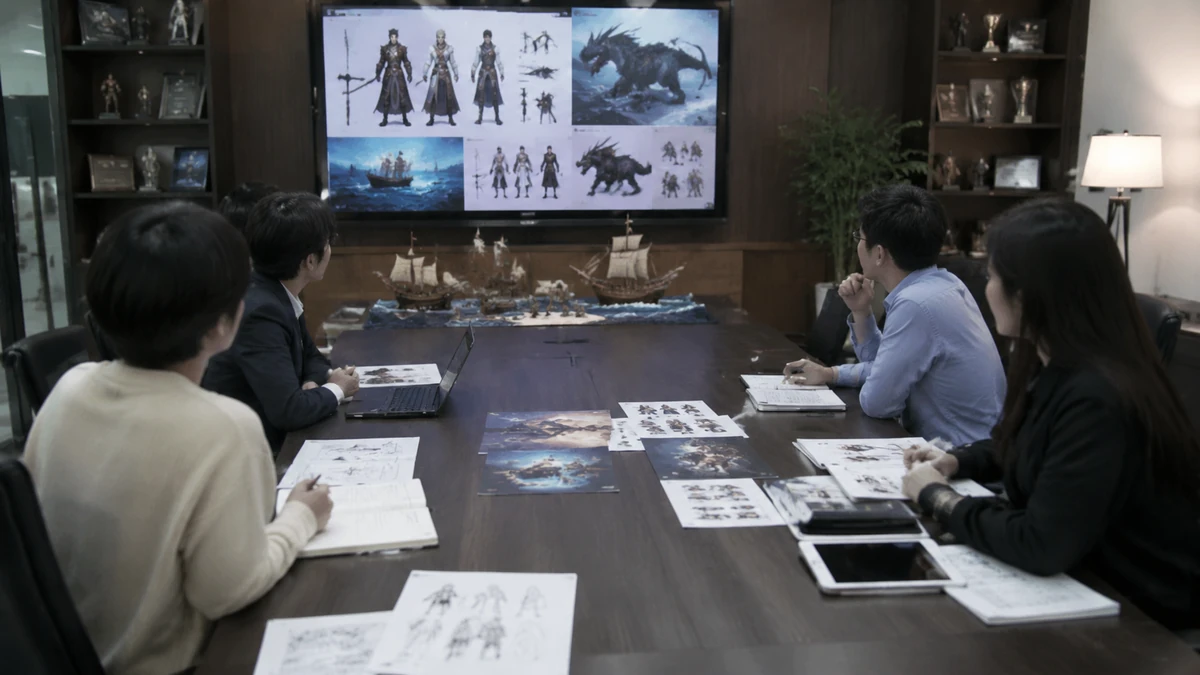
On its face, the announcement sounded modest: a university in Gwangju, a city in Gyeonggi Province southeast of Seoul, signed a memorandum of understanding with a private cultural organization called Hip Hop World League to work together on game content development and talent training. The agreement, signed June 6 at Dongwon University, centers on collaboration with the school’s webtoon creation department and aims to connect education, content production, media and performance platforms.
But in South Korea, where the global success of K-pop, streaming dramas and web-based comics has turned culture into a major export industry, even a seemingly local agreement can offer a revealing look at the machinery behind the so-called Korean Wave. This is not just a story about one school and one outside partner. It is a story about how South Korea increasingly treats storytelling, intellectual property and workforce training as parts of the same economic system.
For American readers, a useful comparison might be the way Hollywood studios, gaming companies, art schools and streaming platforms increasingly overlap in Southern California. Except in South Korea, that integration is often more intentional, more centralized and more closely tied to education. Rather than waiting for a hit comic, game or animated series to emerge on its own, Korean institutions are trying to design the pipeline in advance: train students, develop characters and story worlds, test them across formats, then build them into reusable franchises.
That is why this partnership matters beyond the walls of Dongwon University. According to the Korean summary of the agreement, the two sides are not merely planning one-off events or a ceremonial tie-up. They are proposing what amounts to a structural cooperation model, one that treats games, webtoons, animation, media and live performance not as separate businesses but as connected parts of a broader content ecosystem. In a country that has made culture a strategic industry, that is a significant signal.
Why games sit at the center of the plan
The most concrete project named in the agreement is an effort to develop game-related intellectual property around “Yi Sun-sin, Immortal Waves,” a title that invokes one of the most revered figures in Korean history. Adm. Yi Sun-sin, a 16th-century naval commander celebrated for defending Korea during Japanese invasions, occupies a place in Korean public memory somewhat akin to a blend of George Washington’s symbolic stature and the battlefield mythology that surrounds figures such as Adm. Chester Nimitz. He is a national hero, taught in schools, dramatized on screen and frequently revisited in popular culture.
That makes the choice of source material telling. The project is not starting from a blank slate. It begins with a recognizable historical figure and a narrative universe that can be adapted, visualized and extended. In business terms, that is the logic of intellectual property, or IP: build from a story, character or brand that can live across multiple formats. Americans see this constantly in the Marvel universe, “Star Wars,” “The Last of Us” and countless game-to-screen or screen-to-game adaptations. South Korea is increasingly pursuing a similar model, though often with different source material and a stronger role for webtoons.
Games are especially important in that equation because they do more than entertain. They act as hubs. A game can absorb visual art, music, narrative design, animation, character branding and community building, while also generating merchandise, streaming content and spin-off opportunities. When a university with a webtoon creation department joins a partnership focused on game content, the logic becomes clearer: the drawing, storytelling and character development skills taught in the classroom can feed directly into a format with broad commercial potential.
That is one of the key takeaways from this deal. South Korea is no longer thinking only about the next standalone hit song, series or comic. It is increasingly thinking about how one story can move through a chain of formats and audiences, extending its lifespan and deepening its commercial value along the way. In that sense, the Dongwon-Hip Hop World League partnership is not an isolated oddity. It is a compact example of a larger industrial trend.
Understanding webtoons, and why universities are investing in them
To understand why Dongwon University’s webtoon creation department is central to this agreement, it helps to understand what webtoons are and why they matter so much in South Korea. Webtoons are digital comics, typically formatted vertically for smartphone reading. They are not simply Korean versions of American comic books or Japanese manga, though they borrow from both traditions. Instead, they evolved for mobile-native audiences and became one of South Korea’s most influential storytelling formats.
For many Americans, webtoons may still sound niche. But their influence is already global. Popular Korean dramas on Netflix and other platforms have been adapted from webtoons. International platforms now host English-language webtoons and cultivate creators from around the world. In South Korea, webtoons are more than a reading habit; they are a development engine. They function as inexpensive testing grounds for characters, plots and visual worlds that might later become TV series, films, games or animation projects.
That makes universities a natural participant. Schools can provide students with training in visual storytelling, serial narrative, world-building and design software while also serving as low-cost laboratories for experimentation. When professors and students are involved directly in industry collaboration, as the Korean summary indicates they will be, education stops being a separate stage that precedes “real” work. Instead, the classroom becomes part of the development pipeline itself.
That shift is important economically. Training creative workers has always been difficult because the skills involved are both technical and subjective. It is one thing to teach software tools or production methods. It is another to teach taste, pacing, visual coherence and the ability to create worlds that audiences want to return to. Industry-linked programs allow students to learn those lessons while working on material intended for the market. For companies and partner organizations, that also lowers the cost of experimentation and helps identify talent earlier.
In the United States, comparable models exist in film schools, game design programs and music business partnerships, but they are often fragmented. One school may specialize in animation, another in coding, another in entertainment law. South Korea’s advantage has been its growing willingness to link those functions around specific projects and franchises. The Dongwon agreement reflects that philosophy.
What Hip Hop World League brings to the table
One of the more intriguing aspects of the agreement is the role of Hip Hop World League. Based on the summary, the organization is not positioned simply as a concert promoter or youth culture brand, despite its name. Rather, it appears to be part of a broader network connecting content, education, media and performance platforms.
That matters because live performance and media exposure can play a powerful role in content development, even when the ultimate goal is a game or a transmedia franchise. A performance platform offers audience contact. It creates visibility, tests reception and helps build cultural relevance. Media channels amplify that exposure. Education provides the creators. And games can turn all of that into a longer-form, repeat-engagement product that extends beyond a one-night event or a short news cycle.
In other words, the organization’s value may lie in connectivity as much as in any single product. This is a familiar pattern in South Korean entertainment, where agencies, production companies, broadcasters, digital platforms and educational institutions often form dense networks rather than operating as isolated silos. The Korean Wave did not become global simply because Korean artists were talented. It grew because South Korea built systems that could package, distribute, refine and multiply cultural products efficiently.
That system-building instinct is visible here. The agreement, as described, seeks to unite performance, media, education and content production along a common axis. Even if the partnership is still at an early stage, the structure suggests a business mindset shaped by platform thinking: each piece of the network strengthens the others. For American readers familiar with tech ecosystems, the analogy may be closer to a startup incubator linked to a media company and a creative arts school than to a traditional university-industry handshake.
There is also a symbolic angle. Hip-hop, though born in the United States, has long been adapted and localized in South Korea. Korean hip-hop has developed its own stars, audiences and media ecosystems. An organization with “Hip Hop” in its name participating in a project involving historical IP, webtoon education and gaming reflects how fluid genre boundaries have become. Korean content industries are increasingly comfortable combining local history, global youth culture and digital storytelling into the same commercial strategy.
The larger Korean playbook: from hit content to reusable IP
The real significance of the Dongwon partnership lies in what it says about the next phase of the Korean Wave. For years, much international coverage of Korean culture has focused on breakout successes: BTS topping charts, “Parasite” winning Oscars, “Squid Game” becoming a streaming sensation, or Korean beauty brands filling American store shelves. Those stories are important, but they often emphasize finished products rather than the underlying system that produces them.
This agreement offers a view of that system in miniature. South Korea is increasingly focused not just on making popular content, but on creating repeatable intellectual property that can travel across platforms and markets. That means taking a story and asking not only whether it can become a comic or a game, but whether it can become an animation, a live event, an educational project, a licensing opportunity or a long-term brand.
That approach helps explain why the language of “IP-ization,” or turning source material into formal intellectual property assets, has become so common in Korean industry discussions. To American ears, the phrase may sound awkward or overly corporate. But the idea is familiar: treat stories and characters not as one-time creative outputs, but as assets that can be managed, expanded and monetized over time.
For South Korea, this is more than a business preference. It is a strategic response to the realities of a smaller domestic market. The country cannot rely solely on population size to sustain expensive entertainment and gaming ventures. It needs content that can scale internationally and survive across multiple forms. That makes adaptability crucial. A successful webtoon can become a TV drama. A drama can increase interest in a game. A game can revive interest in a historical figure or original comic. The cycle feeds itself.
The Dongwon-Hip Hop World League agreement fits neatly into that logic. By joining academic training, creative experimentation and commercial development at an early stage, the partners are effectively trying to build IP with both market value and production continuity. They are not just asking what can be sold now. They are asking who will make the next version, and in what format.
The role of professors, students and creative veterans
Another detail from the Korean summary deserves attention: professors and students are expected to participate directly in a range of IP creation experiments, and animation director Kim Jae-ho is set to oversee the IP development effort in an advisory role through Hip Hop World League. Kim is associated with “Run, Hani” and “Yeongsimi,” animated properties well known to many Koreans who grew up in earlier decades.
American readers may not recognize those titles, but the broader point is understandable. South Korea is pairing emerging talent with creators who have experience turning illustrated stories into mass-audience visual content. That is not a ceremonial flourish. It suggests a deliberate attempt to bridge generations of Korean popular culture: legacy animation know-how, younger digital-native creators, and new commercial formats such as games and platform-based media.
That kind of combination can be powerful if executed well. Students bring fresh sensibilities, familiarity with digital culture and fewer assumptions about format boundaries. Experienced directors and industry veterans bring discipline, pacing, production judgment and institutional memory. Together, they can do more than produce content; they can shape development processes that are teachable and repeatable.
There is a workforce implication here as well. In many countries, creative industries struggle with a familiar disconnect: graduates emerge with portfolios but little real-world experience, while companies complain that entry-level workers are not production-ready. Partnerships like this one try to close that gap by embedding market-facing projects into education. If successful, that can create graduates who are not just employable, but already accustomed to collaborative development cycles and commercial constraints.
For South Korea, which has invested heavily in culture as a growth sector, that matters. The next global entertainment boom may not come from a single blockbuster. It may come from a country’s ability to produce trained creators at scale who can keep feeding stories into a flexible, cross-platform system. Dongwon University’s role in this deal points directly at that ambition.
Why American readers should pay attention
To some readers in the United States, a memorandum signed at a Korean university may seem too small to warrant notice. But ignoring these early-stage agreements would mean missing the way cultural influence is actually built. By the time a Korean series becomes a Netflix sensation or a Korean game climbs global charts, much of the foundational work has already been done in places like classrooms, incubators, training programs and industry partnerships.
That is one of the lessons American observers can draw from South Korea’s cultural rise. The Korean Wave is not simply the result of spontaneous creativity, though creativity is central. It is also the product of institutions that increasingly understand how to connect education, production, branding and export strategy. A deal like this one shows that the work of building global content often starts long before the public sees a trailer, hears a single or downloads an app.
There is also a broader geopolitical and economic dimension. As competition intensifies over digital entertainment, artificial intelligence tools, youth attention and streaming revenues, countries are looking for sustainable cultural advantages. South Korea has chosen to compete not just through stars and spectacle, but through infrastructure: training pipelines, adaptable IP, and dense networks linking creators to platforms. That is a model worth studying, especially as U.S. entertainment industries wrestle with consolidation, labor disruption and changing audience habits.
None of this guarantees that “Yi Sun-sin, Immortal Waves” will become a global hit or that the Dongwon partnership will transform the gaming landscape. Memorandums of understanding are, by definition, frameworks rather than finished products. Many will produce less than they promise. But the details outlined in this case make it harder to dismiss as empty ceremony. There is a specific project, a defined educational partner, an identified source of creative oversight and a clear emphasis on IP development tied to workforce training.
That combination is what makes the story meaningful. South Korea’s content economy is evolving beyond a focus on isolated success stories. It is trying to build a more integrated ecosystem in which a historical narrative can become a game, a classroom can become a development studio, a performance network can become a distribution asset, and a student project can become the seed of the next franchise. For anyone trying to understand where the Korean Wave goes next, that may be the real headline.
A small story that captures a larger shift
In the end, the agreement between Dongwon University and Hip Hop World League is best understood as a small but revealing window into how South Korea thinks about culture as industry. The partnership links creative education with commercial experimentation. It treats webtoons, games, media and performance as mutually reinforcing rather than separate sectors. It frames talent development and marketable content as twin priorities rather than sequential steps.
That mindset is increasingly central to South Korea’s global cultural strategy. The country is not waiting for the next viral phenomenon to appear by accident. It is building conditions meant to increase the odds of repeat success. That includes training students inside industry-connected programs, using recognizable cultural material as adaptable IP, and recruiting experienced creators to guide the transition from concept to marketable asset.
For audiences outside Korea, especially in the United States, the story serves as a reminder that cultural exports do not emerge from glamour alone. They are made through systems, and those systems often begin in unglamorous places: offices, classrooms, planning documents and partnership agreements. The Korean Wave’s next chapter may depend less on discovering one more surprise smash hit than on whether South Korea can continue turning education, storytelling and technology into a single coordinated engine.
If this agreement is any indication, that engine is still being refined — and still accelerating.
Comments
Post a Comment