A Korean women’s handball dynasty adds a historic chapter as SK Sugar Gliders win a third straight title
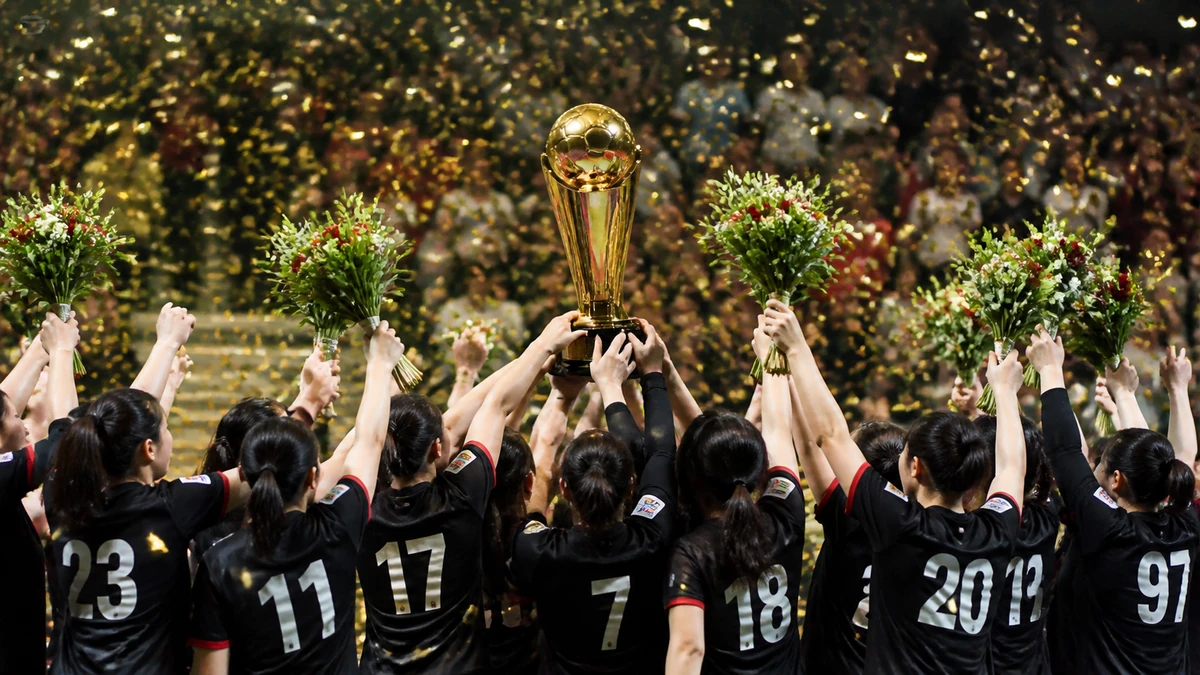
A dynasty takes shape in a sport many Americans rarely see
In the United States, handball often exists at the edge of the sports map, confused with the wall game played in school gyms or occasionally surfacing during the Olympics. In South Korea, though, team handball has a longer and more familiar pedigree, especially on the women’s side, where the country has produced some of its most enduring international success. That is what makes the latest achievement by SK Sugar Gliders more than a line in the standings. It is a landmark moment in Korean sports.
SK Sugar Gliders captured the women’s H League championship with a 30-25 win over Samcheok City Hall on Sunday at the Handball Gymnasium in Seoul’s Olympic Park, clinching what Korean sports call a “combined title” for the third straight season. That phrase needs some explanation for American readers: In Korea, a combined title means a team finishes first in the regular season and then goes on to win the postseason championship as well. Think of it as the equivalent of finishing with the best record in a major American pro league and then closing the deal in the playoffs, without letting either part of the season belong to someone else.
That distinction matters because this was not simply another trophy. By sweeping both the regular season and the championship series for a third consecutive year, SK Sugar Gliders became the first team in Korean women’s handball to accomplish that feat. In a sports culture that places heavy value on both consistency and performance in the biggest moments, that combination carries unusual weight. It says a team was not only the best over time, but also the best when everything narrowed to one final stage.
The arc of the title run made it more compelling. SK Sugar Gliders did not coast through the championship series untouched. After dropping the opener, they came back to win Games 2 and 3, finishing their season the way great teams often do: under pressure, with adjustments, and with enough poise to turn doubt into another banner. Dynasties can become dull when they feel automatic. This one did not. It had resistance, a real challenge and, ultimately, a response that reinforced why SK sits where it does in Korean handball.
The comeback in the final was a snapshot of the season
The decisive third game offered a compact version of everything SK Sugar Gliders have represented this season. Samcheok City Hall, seeking to reclaim the title for the first time in three years, looked sharper early and better prepared in the opening half. The challenger used well-rehearsed offensive patterns to pull apart SK’s defense and carried a 17-14 lead into halftime. For a team trying to prove the series was not a coronation but a contest, it was exactly the kind of start it needed.
Then the match changed. Over the final 30 minutes, SK Sugar Gliders outscored Samcheok 16-8, flipping a three-goal deficit into a five-goal victory. In championship games, halftime speeches are often romanticized beyond reason, but whatever tactical reset or emotional recalibration took place in the locker room showed up clearly on the floor. SK tightened defensively, controlled the rhythm and turned the second half into the kind of disciplined, punishing stretch that defines veteran champions. The final score, 30-25, did not capture just how dramatic the swing was. An eight-goal margin over one half of a title-deciding match is not a subtle correction. It is a takeover.
For American sports fans, there are familiar echoes here. This was not unlike a basketball team weathering a hot shooting first half from an underdog before locking down defensively after the break, or a football team making the right halftime adjustments and completely changing the flow of a playoff game. The core lesson is the same across sports and across borders: talent wins games, but composure and flexibility win championships.
That second-half surge also underscored a point that will likely define how this team is remembered. SK Sugar Gliders are not merely front-runners who look unbeatable when things are easy. They are a team that can absorb a blow, reorganize and come back stronger. In a title series that began with an upset loss and nearly tilted further in the final, that capacity may be the most impressive part of the whole run.
An undefeated regular season set the stage
If the championship comeback gave the season its emotional payoff, the regular season provided its overwhelming evidence. SK Sugar Gliders entered the title series after going 21-0, becoming the first team in H League regular-season history to finish unbeaten across all 21 matches. In any sport, in any country, that kind of record demands attention. It does not happen because of one star player getting hot at the right time. It happens because a team is structurally sound, mentally steady and able to avoid the kind of random stumbles that nearly every long season produces.
For readers more familiar with American leagues, an undefeated campaign over that length is best understood not as a quirky statistical footnote but as a sign of near-total control. Imagine a team spending an entire season without a single off night, bad matchup or letdown game. Even the best clubs in the NBA, NFL, NHL or WNBA rarely approach that standard. The longer a schedule goes, the harder perfection becomes. Fatigue builds. Opponents adjust. Depth gets tested. The exceptional gives way to the inevitable. SK Sugar Gliders pushed past that logic for an entire season.
That is one reason the Game 1 loss in the championship series stood out so sharply. It was not just a defeat; it was an interruption in a season that had otherwise seemed almost machine-like in its consistency. But in retrospect, the stumble may have clarified the team’s quality rather than diminished it. It showed that SK could be rattled, yes, but not broken. Their body of work was simply too strong to be rewritten by one poor result.
There is also a broader point here about what it means to dominate in Korean handball. The H League does not command the global profile of European club handball, nor the mainstream visibility that baseball, soccer or basketball receive in many countries. But domination inside a league still carries meaning, especially when it is sustained. A 21-0 regular season paired with a championship is not an accident of formatting or a hot streak. It is the sort of year that reshapes a record book and gives a franchise a lasting place in a sport’s history.
Why women’s handball matters in South Korea
To understand why this story resonates in Korea, it helps to know where women’s handball fits in the country’s sporting culture. South Korea has long punched above its weight internationally in women’s handball, most famously winning Olympic gold in 1988 and 1992 and earning silver in 1984, 1996 and 2004. The 2004 Athens final, a double-overtime thriller against Denmark, remains one of the defining memories of Korean handball, and the sport later reached a wider audience through the 2008 film “Forever the Moment,” which dramatized the women’s national team’s run at the 2004 Olympics.
That history gives women’s handball a different cultural status in Korea than it might have in the United States. It is not necessarily the biggest sport or the most commercially powerful, but it carries a reputation for grit, discipline and national pride. Korean audiences have long associated the women’s handball team with overachievement and relentlessness, particularly on the Olympic stage, where team sports can offer a different kind of national narrative than individual medal events.
There is also a social dimension. Many women’s sports in Korea, as in the United States, have had to fight for consistent media attention, sponsorship and institutional support. So when a team like SK Sugar Gliders builds a genuine dynasty, it does more than add trophies to a cabinet. It provides a visible example of excellence in a women’s league that still operates outside the global spotlight. That matters for fans, for younger athletes and for a sports culture that is still working through what equal visibility and long-term investment should look like.
The team’s corporate name may also sound unusual to American ears. In Korea, it is common for professional and semi-professional teams to be closely associated with companies, public institutions or local governments. Samcheok City Hall, SK’s opponent, is not a quirky nickname but a municipal-backed team. SK Sugar Gliders, meanwhile, are tied to the SK group, one of South Korea’s major conglomerates. For American readers, think of it less as a direct equivalent to privately owned U.S. franchises and more as part club, part institutional team, operating within a different sports ecosystem.
Samcheok’s challenge made the title more meaningful
If dynasties are measured partly by the strength of the opposition they repel, then this championship should age well for SK Sugar Gliders. Samcheok City Hall was not there merely to complete the bracket. It arrived with a real plan, real belief and evidence that it could disrupt the league’s dominant force. In Game 1, Samcheok snapped a 10-game losing streak against SK across regular-season and championship meetings, immediately changing the feel of the series. Suddenly, what might have looked from afar like a routine finish for the league’s best team became a live contest.
Samcheok reinforced that in the first half of Game 3, when it once again found success through set patterns and offensive execution. For long stretches, it looked like a team that had solved enough of the SK puzzle to force the favorite into deep discomfort. That matters because it keeps this title from reading as a simple victory lap. SK did not beat a fading rival or glide past a psychologically defeated opponent. It beat a team that had found cracks, taken advantage of them and made the defending champion earn every adjustment.
There is a familiar American parallel in postseason sports: sometimes the significance of a championship is not just in who wins, but in whether the favorite had to answer a credible threat. Samcheok provided that threat. It broke the aura of invincibility for one night in Game 1 and nearly extended the drama further in the decisive game. It forced the champion to reveal something deeper than superior record or talent. It forced SK to show durability.
That, in the end, may be the clearest takeaway from the series. Samcheok proved that the gap was not imaginary and that a prepared, confident challenger could push Korea’s most dominant women’s handball team into real danger. SK, in turn, proved that danger is not the same thing as defeat.
The numbers matter, but so does the meaning behind them
There is, of course, a measurable side to all of this. By advancing directly to the championship series as the regular-season winner, SK Sugar Gliders secured prize money tied to finishing first, then added the championship award after winning the final. But the financial piece, while notable, is not what will endure. The larger value of this title lies in what Korean sports call an integrated achievement, the ability to pair week-to-week excellence with victory under playoff pressure.
That is harder than it sounds. Plenty of teams, in every sports culture, are built to dominate the regular season and then wobble under postseason intensity. Others barely survive the schedule but catch fire in knockout competition. To do both repeatedly is a different standard. It suggests not just skill, but infrastructure: conditioning, preparation, tactical depth, leadership and a locker room steady enough to survive the emotional volatility of a championship series.
It is especially revealing that this title was not sealed in a straight line. The first loss of the series created a wrinkle in what had been a nearly perfect year. The final game’s first half created another. Yet each moment of instability was answered. That makes the third straight combined title feel more substantial than a breezy repeat would have. This was not simply a great team adding one more trophy. It was a great team encountering adversity and still arriving at the same destination.
In American sports language, the question around repeat champions is often whether they can stay hungry, whether they still respond with urgency when the stakes rise. SK Sugar Gliders offered a clear answer. They may have entered as the standard-bearer, but they finished like a team still willing to fight for the right to keep that status.
What this moment says about Korean sports beyond the biggest headlines
For international readers, especially those whose view of South Korean sports begins and ends with soccer, baseball, figure skating or Olympic archery, this championship is a useful reminder. Important sports stories in Korea are not limited to the country’s most globally exported events. Beneath the better-known surface, domestic leagues continue to produce rich narratives filled with the same ingredients that travel across cultures: a dominant team, a stubborn challenger, a record-breaking season and a final comeback under pressure.
That universality is part of why this result deserves attention beyond handball specialists. The details are distinctly Korean: the institutional team structures, the concept of a combined title, the long history of national pride attached to women’s handball. But the emotional logic is familiar to anyone who follows sports. A champion falls behind, gets tested, adjusts and finds a way to finish the job. A great team proves its greatness not because it never looks vulnerable, but because it knows how to respond when vulnerability appears.
There is also a broader lesson in what gets overlooked. American audiences are often introduced to Asian sports only when they intersect with major international tournaments or when a star crosses into a U.S. league. Stories like this suggest there is far more worth watching on its own terms. Korean women’s handball may not command prime-time attention in the United States, but it can still produce a season and a championship series that stand up as serious sports drama.
As of Monday, the image left behind is a straightforward one: SK Sugar Gliders on top again, the first women’s handball team in South Korea to claim three straight combined titles. But the simplicity of that headline hides a fuller truth. This was a season of perfection in the regular schedule, a stumble when it mattered most, a halftime deficit in the deciding game and a final surge that restored order. It was dominance, yes, but not empty dominance. It was the kind that had to be re-earned in public.
That is why this title feels larger than a routine repeat. It sets a new benchmark in Korean women’s handball while also illustrating something timeless about sports. Records matter. So do trophies. But what tends to endure is the way a team behaves when the script slips. In that sense, SK Sugar Gliders did more than win another championship. They showed why dynasties are remembered: not just for how often they finish first, but for how convincingly they answer the moments when they might not.
Comments
Post a Comment