
A neighborhood project with citywide ambitions
Seoul is often introduced to foreign visitors through its biggest, brightest calling cards: the royal palaces, the neon retail corridors of Myeongdong, the nightlife of Hongdae, the luxury storefronts of Gangnam and, increasingly, the global reach of K-pop and Korean dramas. But major cities are not defined only by their postcard views or blockbuster attractions. Just as New York is understood not only through Times Square or Lincoln Center, and Los Angeles not only through Hollywood, Seoul’s identity is also shaped by the neighborhood-scale places where residents actually spend their time.
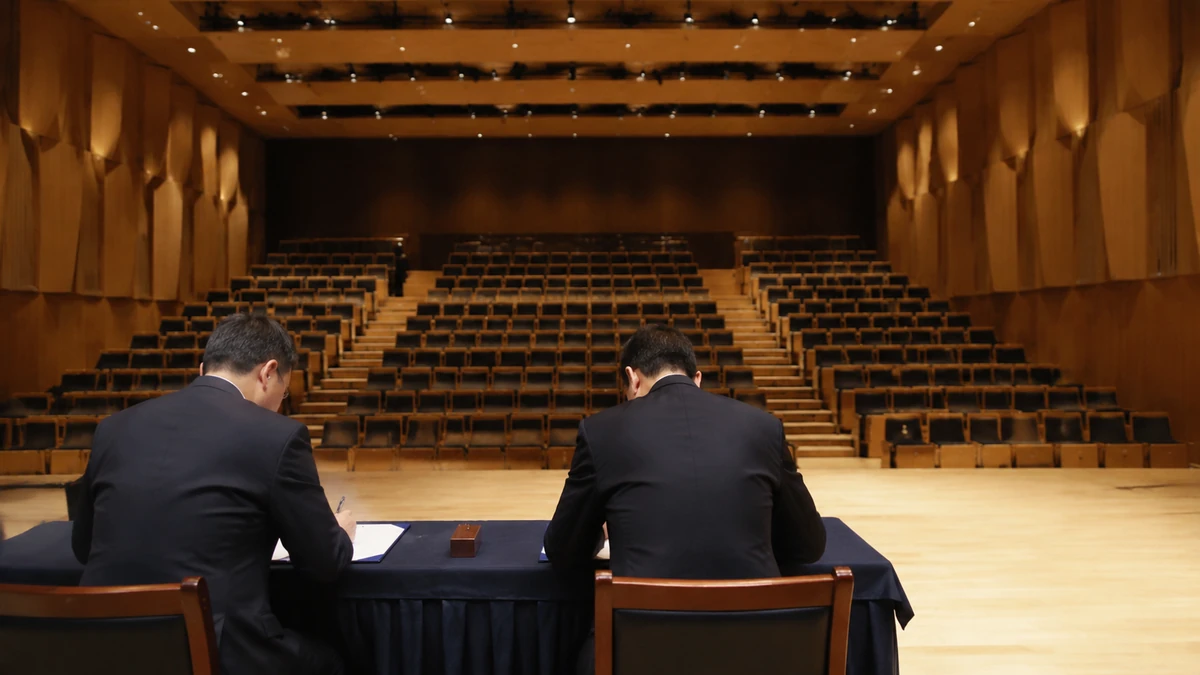
That is the broader significance of a new cultural development planned for Seoul’s Dongdaemun District. Local officials said they have signed an agreement tied to the redevelopment of the area around Yongdu Station, a stop on Seoul’s extensive subway network, to secure a 507-seat professional performance hall as a public contribution to the district. The venue is expected to become part of a larger cultural complex linking the district office plaza, exhibition areas and public gathering spaces. In plain terms, officials are trying to do more than build another theater. They are trying to redesign how culture is experienced in everyday urban life.
For American readers, it may help to think of this less as a stand-alone arts building and more as a district strategy — an effort to stitch together public space, performance, foot traffic and neighborhood identity so that one part of the city becomes a place people linger rather than merely pass through. The project sits in Seoul’s northeastern urban core, outside the handful of neighborhoods most familiar to international tourists. That matters. It suggests that South Korea’s capital is continuing to evolve beyond the concentrated tourism model that sends visitors to the same short list of destinations.
The agreement, reported by Yonhap News Agency and released publicly this week, is being presented as the beginning of a new cultural corridor in the northeastern part of central Seoul. If it succeeds, the Yongdu Station area could become a local example of a broader trend visible in many global cities: the conversion of once purely commercial or transit-oriented zones into mixed-use districts where housing, public space and cultural programming work together.
That may sound like the language of urban planning, but the effect is practical and easy to picture. A visitor could spend part of the afternoon in a plaza or exhibition space, eat dinner nearby and then attend a performance at night. A resident could do the same without making a special cross-city trip to one of Seoul’s established arts centers. That overlap — between daily life and cultural consumption — is exactly what local officials appear to be aiming for.
Why 507 seats matters
One of the most concrete details in the plan is also one of the most revealing: 507 seats. In arts coverage, seating capacity can sound like a dry statistic, but it often tells you what kind of institution a venue is trying to be. A hall that size lands in a useful middle ground. It is large enough to host polished professional productions with meaningful ticket revenue and production values, but not so large that it has to rely only on mega-events or celebrity bookings to justify its existence.
That is important in Seoul, where the performing arts ecosystem spans everything from intimate black-box theaters in university neighborhoods to arena-sized venues used for K-pop concerts and television events. A 507-seat venue suggests flexibility. It can likely accommodate music, theater, dance, talks, festivals and community-facing cultural programming without being locked into a single format. According to the district, the theater will include up-to-date sound and lighting systems and occupy a total floor area of about 7,495 square meters, giving it the technical capacity to host a wide range of performances rather than functioning as a symbolic stage with limited use.
For U.S. readers, the comparison might be to a strong regional performing arts venue — not a Broadway house or a giant downtown arena, but the kind of mid-sized hall that can anchor a neighborhood arts scene, attract repeat audiences and support both local and visiting productions. Those venues often play an outsized role in civic life because they are accessible enough for regular use while still feeling special enough for a night out.
That balance could prove crucial if Dongdaemun District wants the project to serve both residents and visitors. A smaller experimental space might appeal to niche audiences but struggle to become a broad civic anchor. A much larger venue could be too expensive to operate and too dependent on occasional headline events. By contrast, a mid-sized theater can generate a steadier rhythm: school performances, local festivals, touring productions, contemporary dance, classical recitals, crossover pop concerts, public lectures and seasonal programming.
In tourism terms, that rhythm matters because it changes how a neighborhood is used over the course of a day. Travelers tend to organize Seoul trips around shopping, dining and famous landmarks. A theater introduces a nighttime cultural destination that encourages people to stay longer. Urban economists sometimes talk about “dwell time,” the length of time people remain in an area and spend money there. A well-programmed venue can extend that time naturally, especially when paired with surrounding restaurants, cafes and public space.
In other words, the 507 seats are not just about audience size. They are a clue to the kind of urban behavior the district hopes to create: regular attendance, repeat visits and a cultural identity that feels woven into neighborhood life rather than imported for special occasions.
From department-store logic to cultural district logic
The site itself tells another story about how Seoul is changing. The redevelopment covers the area at Yongdu-dong 33-1, the former location of a Homeplus branch, part of a major South Korean discount retail chain roughly comparable to big-box shopping anchors familiar to Americans. The site is now being transformed through the Yongdu Station area revitalization project, which calls for a mixed-use complex that includes housing and cultural facilities. Demolition is already underway, and completion is currently projected for 2031.
That timeline is long, and it means the project will not immediately alter travel itineraries. But urban change is often most meaningful before it becomes visible to casual visitors. What is happening here is the repurposing of a large commercial footprint — once primarily a destination for buying goods — into a place expected to combine living, gathering, viewing and cultural participation. That shift reflects a wider reality in many advanced cities, including Seoul: retail alone no longer organizes urban life the way it once did.
In the United States, former malls and large-format retail properties have increasingly been reborn as mixed-use developments with apartments, entertainment, fitness facilities, green space and civic functions. Seoul’s version of that trend plays out differently because of its density, transit network and vertical development patterns, but the underlying logic is recognizable. Land in prime transit-accessible areas must do more than sell products. It has to create an experience, support residents and generate a stronger sense of place.
That phrase — sense of place — is especially relevant in Seoul, a city that changes fast and often rebuilds itself at a pace that can feel astonishing to outsiders. New towers rise where older commercial sites once stood. Transit access can transform neighborhood values. Public officials and developers increasingly talk not only about floor-area ratios and convenience, but also about whether a project creates an environment that people actually want to inhabit.
In Dongdaemun District, officials are clearly trying to frame this redevelopment in those terms. The proposed performance hall is not being treated as a decorative add-on. It is being described as a starting point for a broader reordering of the area’s cultural and pedestrian flow — the way people move through, experience and remember the district. That is a more ambitious claim than simply saying a new building is coming.
It also reflects a subtle evolution in how Seoul presents itself. For years, much international attention focused on monumental development, luxury consumption or globally exportable Korean entertainment. This plan points to something more neighborhood-centered: building culture into ordinary urban geography so that a district can become known not only for what it sells, but for how it feels and what people do there after work, on weekends and into the evening.
What “organic connection” means in a Seoul context
Dongdaemun District says it wants to create a complex cultural space by organically linking the district office plaza, the performance hall and exhibition areas. The wording may sound bureaucratic in translation, but the concept behind it is straightforward. Rather than scattering separate facilities across a site, planners want them to function as one connected experience.
That matters because some of the most successful urban cultural districts are not defined by a single iconic building. They work because the transition from one type of activity to another feels easy and intuitive. A public square invites casual use. An exhibition space provides low-barrier entry; people can stop in without committing to a full evening. A performance hall adds a clear destination and a reason to return at a scheduled time. When those elements are placed together thoughtfully, they create different levels of engagement for different users.
For readers less familiar with Korean local government geography, Dongdaemun District is one of Seoul’s 25 autonomous districts, each with its own district office and localized administration. The district office plaza is therefore not just extra open land; it can function as a civic focal point, something akin to the public space around a city hall or county administration center in the United States. By linking that plaza with exhibition and performance spaces, the district is trying to blur the line between formal civic space and everyday cultural space.
This approach also reflects a practical truth about contemporary tourism. Travelers increasingly value what might be called ambient experience — the chance to walk, sit, browse, watch and absorb the character of a place without constantly buying a ticket or following a rigid schedule. A plaza can accommodate public events, seasonal markets or informal gatherings. Exhibition spaces can draw in people who were not initially planning a cultural outing. A theater can then convert some of that foot traffic into a more committed audience.
In Seoul, where subway-centered mobility is a defining feature of urban life, this type of clustering can be especially powerful. Yongdu Station may not yet rank among the city’s most internationally recognized stops, but in Seoul’s geography, proximity to a station often determines whether a district becomes a habitual destination. The easier it is to step off a train and move through a coherent sequence of experiences, the more likely visitors and residents are to return.
For foreign travelers, that could eventually enrich what a Seoul trip looks like. Instead of a checklist approach focused on a few marquee sites, visitors may find more reasons to explore station-area districts where local life, cultural programming and public space intersect. That kind of urban tourism is common in cities people know well — think of spending an afternoon in Brooklyn, a night in Chicago’s theater districts outside the Loop, or a weekend wandering distinct neighborhoods in Paris or Tokyo. Seoul has always had that neighborhood richness. Projects like this are part of how the city makes it more legible to outsiders.
A changing map for Seoul’s northeast
Officials in Dongdaemun have connected the project to a wider transformation involving the broader Cheongnyangni and Wangsimni corridor, both important nodes in northeastern Seoul. Those areas are already well known to Seoul residents for transportation links, commercial activity and redevelopment pressures, even if they remain less familiar to first-time foreign tourists than districts such as Insadong or Gangnam.
That regional framing is significant. It suggests the district does not see the Yongdu Station plan as an isolated neighborhood upgrade, but as part of a larger attempt to redefine the northeastern part of central Seoul as a place with stronger cultural gravity. In city-building terms, officials are trying to move the area from being known chiefly as a pass-through or transfer zone to being remembered as a destination.
That shift mirrors the way major metropolitan areas often mature. Over time, visitors and even residents stop relating to a city through a single downtown core. Instead, they navigate a network of distinct centers, each with its own commercial identity, transit role and cultural profile. Seoul has long functioned that way for locals, but international narratives about the city have sometimes flattened it into a handful of famous neighborhoods. Projects like the one at Yongdu Station reinforce the idea that Seoul is better understood as a polycentric city — one with multiple hubs rather than one central stage.
For American audiences, that distinction matters because it changes the frame through which Korean urban life is interpreted. South Korea is often discussed internationally through the lens of exports: K-pop, television dramas, cosmetics, technology and food. Those are all real parts of the story. But they can obscure the domestic urban strategies that support the culture people eventually see abroad. Performance venues, exhibition spaces, public plazas and neighborhood programming are the local infrastructure of culture. They are where artistic habits form, audiences grow and civic identity gets rehearsed in everyday life.
In that sense, the Yongdu Station theater is not simply about entertainment. It is about positioning a district within Seoul’s internal hierarchy of places that matter. If successful, it could help the northeastern corridor offer a fuller mix of residential convenience, transit accessibility and cultural attraction. That would benefit local residents first, but it could also gradually change how visitors experience the city.
And that evolution may be increasingly important as Seoul competes not just as a shopping or sightseeing destination, but as a city where travelers want to spend more layered, more locally grounded time. The global tourism market has become crowded with cities selling spectacle. What keeps people curious is often authenticity, convenience and the feeling that a neighborhood has a real life beyond the visitor economy.
Why local residents are central to whether this works
One of the most important points in the district’s vision is also the easiest to overlook: officials emphasize that the space is meant to allow residents to enjoy performing arts and cultural programs in their own daily orbit. That is not just political messaging. It may be the single biggest factor in whether the project thrives.
Urban cultural projects often run into trouble when they are designed mainly for outsiders. Spaces that depend too heavily on tourists can feel empty or artificial during off-peak periods. Programming can become shallow, repetitive or detached from local needs. By contrast, venues that serve residents — families, students, older adults, arts groups, repeat attendees — tend to generate steadier use across seasons and times of day. They become part of a neighborhood’s routine rather than a backdrop for marketing photos.
That appears to be the model Dongdaemun is pursuing. The envisioned combination of a theater, exhibition space and public plaza creates multiple access points, including some that do not require buying a ticket. A resident may stop by an exhibition, attend a community event in the plaza or see a performance on another day. A visitor may encounter the same site through a different path: curiosity, travel research or an evening show. The goal is not to separate those groups, but to allow them to share the same urban environment without one overwhelming the other.
There is also a broader cultural point here for readers outside Korea. South Korean cities are often portrayed as relentlessly fast, hypercommercial and crowded with chain retail. There is truth in that image, but it is incomplete. Local governments across the country have increasingly invested in quality-of-life infrastructure — libraries, waterfront projects, parks, museums, neighborhood arts centers and redesigned public spaces — partly in response to public demand for a more livable city. The Yongdu plan fits within that trend.
For travelers, the payoff can be substantial even if they never explicitly seek it out. The most memorable city experiences often come not from famous icons, but from unexpectedly well-functioning neighborhoods — places where transit is easy, public space is inviting and culture is embedded in ordinary routines. If Yongdu Station develops as planned, it could become one of those places: not necessarily the first stop for a first-time visitor, but the sort of district that deepens a return trip and complicates simplistic ideas about Seoul.
Completion is still years away, and any long-term redevelopment project can face delays, redesigns or changing economic conditions. But the intent behind this one is already clear. Dongdaemun District is betting that a mid-sized professional theater, tied deliberately to public space and exhibition programming, can help turn a redeveloping station area into a cultural anchor. In a city known globally for polished pop exports and rapid urban transformation, that may be one of the more revealing stories of all: culture not as spectacle alone, but as neighborhood infrastructure.
What this could mean for the future of Seoul travel
For now, Yongdu Station is not likely to displace Seoul’s most recognizable destinations on mainstream tourist itineraries. But that may not be the right way to judge the project. The more meaningful question is whether developments like this expand the vocabulary of what a Seoul trip can be.
Increasingly, travelers want more than highlight reels. They want cities they can read at street level. They want places where they can see how residents move through public space, where cultural life happens outside major landmarks and where an evening performance can be part of a neighborhood experience rather than a stand-alone event. Seoul is exceptionally well positioned for that kind of tourism because of its public transit, density and varied district identities. What it sometimes lacks, from an outsider’s perspective, is enough translation — not linguistic translation, but urban translation. Visitors need cues that tell them where to go, why it matters and how a place fits into local life.
A well-executed cultural district around Yongdu Station could offer exactly that kind of cue. It would show that Korean urban tourism is not limited to palaces, shopping streets and Korean Wave pilgrimage sites, valuable as those remain. It can also include the more subtle pleasures of station-area wandering, civic plazas, neighborhood exhibitions and a mid-sized theater program that reflects both local demand and broader artistic ambition.
That possibility is why this project deserves attention beyond development circles. It is a reminder that the next chapter of Seoul’s cultural rise may not be written only on giant stages or streaming platforms. It may also be written in the smaller, more durable spaces where city residents build habits of attendance, where public and private life intersect, and where a visitor can begin to understand Korea not as a set of attractions, but as a lived urban culture.
If Dongdaemun’s plan comes together by the start of the next decade, a former retail site near a subway station could become something more lasting than another real estate project. It could become a test case for how Seoul turns everyday geography into cultural memory — one performance, one exhibition and one neighborhood evening at a time.



0 Comments