
A precision-medicine advance from South Korea
A research team in South Korea says it has developed a new way to forecast whether a cancer patient is likely to respond to immunotherapy before treatment starts, an advance that speaks to one of the biggest unanswered questions in modern oncology: How do doctors know which therapy is worth the time, cost and physical burden for a particular patient?
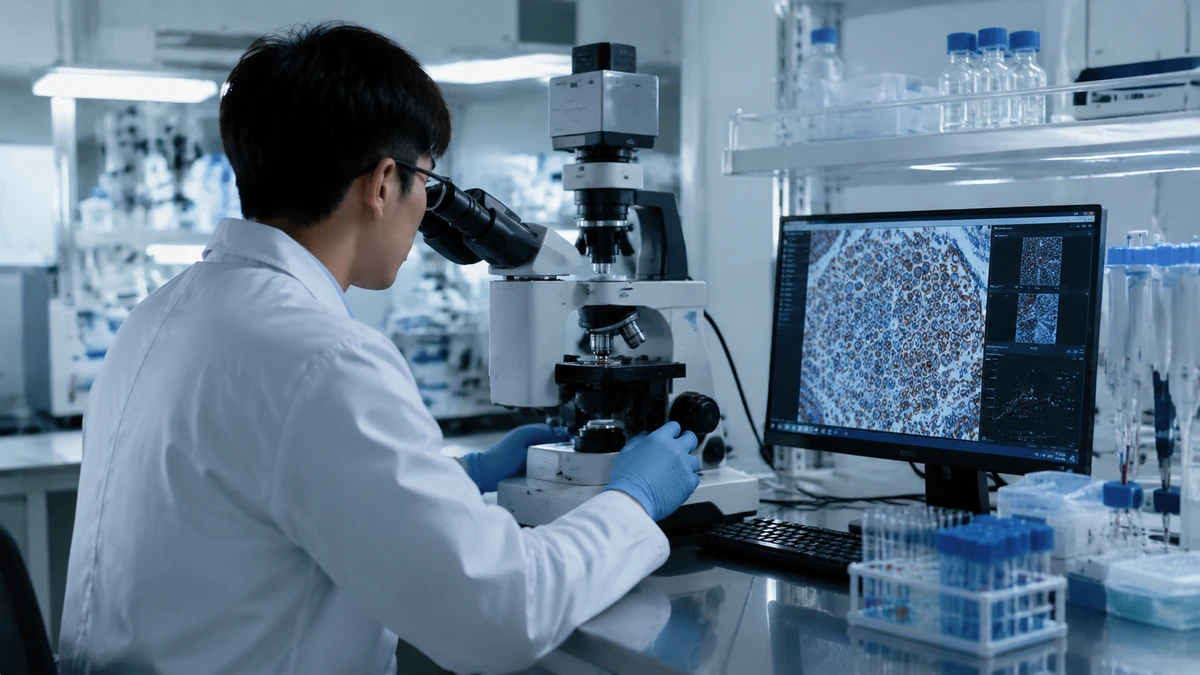
The work comes from the Gwangju Institute of Science and Technology, or GIST, a research-focused university in the southwestern city of Gwangju. According to a report from South Korea’s Yonhap News Agency, the team led by life sciences professor Park Ji-hwan unveiled an analytical technology called scMnT that examines tumors at the single-cell level. In plain English, that means the system is designed to look past the idea of a tumor as one uniform mass and instead study the different kinds of cells inside it, one by one, to better estimate whether immune-based cancer drugs will work.
That distinction matters. For American readers, a useful comparison is the difference between judging a city by its average household income and actually walking neighborhood by neighborhood to see who lives there, how resources are distributed and how conditions vary block to block. Tumors can work in similarly uneven ways. What looks like a single growth on a scan may contain many distinct cell populations, some of which may help the immune system attack cancer and others that may help the tumor hide.
The South Korean announcement fits into a broader global push toward precision medicine, an approach that tries to tailor treatment to the biology of each patient rather than relying solely on standard protocols. In the United States, cancer centers such as Memorial Sloan Kettering, MD Anderson and Dana-Farber have spent years building genomic and molecular testing into treatment decisions. What makes the GIST work notable is its focus not just on the tumor’s genes in a general sense, but on the cellular ecosystem inside the tumor and how that environment may shape the odds of immunotherapy success.
The news does not mean hospitals are about to replace current testing standards overnight. The Korean summary does not specify which cancer types the technology has been validated for, how quickly it could move into routine hospital use, what it would cost or how it would compare with existing clinical tools. But as a research development, it points to a clear direction in cancer care: less guesswork, more detailed biological profiling and a stronger attempt to answer a question patients ask every day — will this treatment actually help me?
Why predicting response before treatment matters
For patients and families, the emotional center of cancer treatment often comes before the first drug is infused. It is the moment when a doctor lays out options and the patient has to weigh hard trade-offs with incomplete information. Surgery, radiation, chemotherapy, targeted therapy and immunotherapy can each carry very different risks, timelines and odds of success. Even in top medical systems, one of the hardest realities is that not every promising treatment works for every patient.
That is especially true for immunotherapy, one of the most closely watched developments in cancer care over the past decade. Unlike traditional chemotherapy, which generally attacks rapidly dividing cells, immunotherapy aims to help the body’s own immune system recognize and fight cancer. Drugs known as immune checkpoint inhibitors, for example, can remove some of the biological “brakes” that keep immune cells from attacking tumors. For some patients, the results can be striking. For others, the response is limited or nonexistent.
That uneven track record is one reason predictive tools matter so much. Immunotherapy is not just another medication on a pharmacy shelf. It can be expensive, physically taxing and emotionally consuming. In the United States, where insurance coverage, co-pays and access to specialty care can shape treatment choices, better prediction is not only a scientific goal but a practical one. A more accurate forecast could help patients avoid therapies unlikely to work, spare them unnecessary side effects and help doctors move more quickly toward better options.
The Korean research appears to target exactly that point in the treatment journey: the decision before treatment begins. This is different from early cancer detection, which focuses on finding disease sooner. It is also different from monitoring a patient after therapy has started. Instead, the goal is to sharpen the quality of the initial decision itself. If clinicians can better estimate response before administering an immune-based drug, they may be able to personalize care more intelligently from day one.
That kind of change may sound technical, but its implications are deeply human. Anyone who has sat with a relative through cancer treatment knows how much hangs on early choices. A tool that improves the odds of picking the right strategy upfront does not eliminate uncertainty, but it can reduce the amount of blind trial and error in a process where time often matters.
What single-cell analysis means in everyday terms
The phrase “single-cell analysis” can sound like the kind of jargon that stays trapped inside laboratory papers, but the core idea is surprisingly intuitive. If a tumor is studied only as a whole, doctors and researchers may end up with an average picture that blurs crucial differences. Looking at individual cells offers a much more granular map.
Think of a tumor less like a marble and more like a crowded arena. Inside are cancer cells at different stages of development, immune cells trying to attack, support cells that may strengthen the tumor, and a network of molecular signals shaping the fight. Some parts of that crowd may be pushing toward treatment success; others may be undermining it. Averaging all those signals together can hide the very features that determine whether immunotherapy has a chance.
That is where the GIST team’s technology, scMnT, appears to make its contribution. According to the Korean summary, the system was designed to precisely analyze individual cells inside tumors and use that information to predict immunotherapy response more accurately. The important phrase is “more accurately.” In medicine, especially cancer medicine, prediction is almost never absolute. The value of a new tool often lies not in certainty but in improving the probability that a treatment recommendation is the right one.
For American audiences familiar with the rise of personalized medicine, this is part of a larger shift away from one-size-fits-all care. U.S. readers may think of genetic tests that help determine whether a breast cancer patient is likely to benefit from chemotherapy, or biomarker tests that help oncologists identify patients who may respond to certain targeted drugs. Single-cell analysis extends that logic further. Instead of asking only whether a tumor has a particular mutation, researchers are asking how the full cast of cells inside the tumor behaves.
The single-cell approach also reflects an increasingly sophisticated view of cancer itself. Cancer is no longer understood only as a mass of rogue cells growing out of control. It is also a microenvironment — a small, highly active biological community. If immunotherapy depends on mobilizing the immune system, then understanding that community in fine detail becomes central to predicting results.
Why immunotherapy is both promising and unpredictable
Immunotherapy has become one of the most hopeful areas in cancer treatment, but it is also one of the most frustrating. Its promise is easy to understand: instead of relying solely on an outside chemical assault, the treatment tries to activate the patient’s own defenses. In some cases, that has led to long-lasting remissions that were once difficult to imagine in advanced cancers.
But the treatment’s logic also explains why outcomes vary so widely. Immunotherapy does not act in a vacuum. Its effectiveness depends on the interaction between the drug, the tumor and the patient’s immune system. A tumor that is full of immune cells already poised to attack may behave very differently from one that has built strong mechanisms to suppress or evade immune detection. Two patients with what appears to be the same cancer on paper may respond in completely different ways.
The Korean report emphasizes that point indirectly. Because immunotherapy works by activating immune cells to attack cancer, understanding the tumor’s internal cell environment becomes essential. If the tumor is biologically arranged in a way that resists immune activity, the therapy may have limited effect. If its cellular makeup suggests vulnerability, the outlook may be better.
That is one reason this kind of analytical tool attracts attention. It is not merely a story about a new lab method. It is a story about improving one of the weak spots in a major treatment category. In the United States, immunotherapy has become a familiar word in cancer advertising, fundraising campaigns and medical news coverage, sometimes carrying an aura of breakthrough optimism. But oncologists routinely remind patients that immunotherapy is not a miracle switch. It can be transformative, but it can also disappoint.
A tool that helps distinguish between those possibilities sooner could be meaningful not only clinically but psychologically. It can help ground hope in stronger evidence. For patients, that matters. The cancer experience is often filled with broad promises and uncertain outcomes. More detailed prediction will not erase that uncertainty, but it may make the conversation between doctor and patient more honest, specific and useful.
What this says about South Korea’s biomedical research landscape
For readers who mostly encounter South Korea through headlines about K-pop, Korean dramas, semiconductors or geopolitical tensions with North Korea, this story is a reminder that the country is also a significant player in advanced biomedical research. South Korea has spent years investing in science, digital infrastructure and high-end manufacturing, and its universities and research institutes increasingly show up in fields ranging from stem cell biology to AI-assisted diagnostics.
GIST, located in Gwangju rather than the Seoul metropolitan area, also offers another noteworthy detail. Much like the United States, South Korea’s research and medical prestige is often concentrated in major urban centers. So when a regional research university produces work with clinical relevance, it signals that innovation is not limited to the capital’s elite hospital systems. It suggests a broader national research ecosystem at work.
The announcement also reflects how cancer research is evolving beyond the search for the next blockbuster drug. For years, public attention in biotech has gravitated toward therapies themselves: the next cancer pill, the next antibody treatment, the next checkpoint inhibitor. But diagnostics and analytical tools are increasingly just as important. In many cases, the right test can make an existing treatment more effective by helping identify the right patient at the right time.
That shift mirrors developments in other parts of health care as well. Around the world, including in the United States and South Korea, medical systems are moving toward data-rich, individualized decision-making. That shows up in human medicine and even in veterinary medicine, where data is increasingly used to predict disease risk and tailor care. The broader theme is the same: use biological and clinical information earlier and more precisely so treatment is less reactive and more targeted.
South Korea has tried to position itself within that future. The country’s strengths in data infrastructure, diagnostics, electronics and life sciences make it a natural environment for tools that sit at the intersection of biology and analysis. The GIST announcement, at least at the research stage, fits that pattern.
What patients should take from this — and what they should not
For cancer patients and their families, the most important phrase in the Korean summary may be “before administering anticancer drugs.” That is the window where this research aims to matter. In practical terms, the development is about improving decision-making before treatment, not changing the lived experience overnight for people already in a clinic this week.
That distinction is crucial because health news can easily create false immediacy. A lab advance is not the same as an available hospital service. The summary does not provide enough information to say when, where or how broadly scMnT could be used in clinical practice. It does not specify regulatory steps, real-world validation, insurance questions or how doctors would incorporate it into existing treatment workflows. Readers should understand this as a promising research development, not a ready-made appointment option at their local oncology center.
At the same time, the underlying message is still meaningful. The very fact that researchers are trying to predict immunotherapy response more precisely underscores an important truth: cancer treatment is highly individualized. Patients should not assume that a therapy praised in national headlines will automatically work for them. Nor should they assume that a lack of immediate access to a cutting-edge tool means their care cannot be personalized. Oncologists already use multiple layers of testing and clinical judgment to make treatment decisions, and this type of research aims to make those decisions even better over time.
There is also a quality-of-life dimension here. Better prediction can potentially mean less exposure to ineffective treatment, fewer wasted weeks on the wrong strategy and more confidence in the rationale behind a care plan. For families navigating cancer, confidence in the reasoning can matter almost as much as confidence in the outcome. Not because certainty is possible, but because informed choices can make an overwhelming process feel less arbitrary.
Patients reading about this research should view it as one more sign that cancer medicine is moving toward deeper personalization. If there is a practical takeaway today, it is to ask questions. What biomarkers is my tumor being tested for? Why is this therapy being recommended? Are there clinical trials or advanced profiling methods relevant to my case? Research breakthroughs become most useful when they encourage better, more informed conversations in the exam room.
The larger lesson for the future of cancer care
The GIST team’s announcement may turn out to be one step in a longer scientific journey, but it points toward a future that many oncologists already see coming. Cancer treatment is increasingly becoming a two-part challenge: finding therapies that can work and finding better ways to predict who will benefit from them. The second challenge has often received less public attention, yet it may be just as important.
In the American health care debate, discussions about cancer often revolve around access, drug pricing, clinical trials and breakthrough medications. All of those matter. But there is another issue beneath them: efficiency in decision-making. A therapy can be scientifically impressive and still be a poor choice for a specific patient. The more accurately medicine can identify likely responders in advance, the more rational the entire system becomes — medically, financially and emotionally.
That is why a story from a South Korean research institute can resonate well beyond South Korea. The problem it addresses is global. Whether a patient is being treated in Seoul, Gwangju, Boston or Houston, the core dilemma is familiar: how do you match the right therapy to the right person without wasting precious time?
The answer, increasingly, seems to lie in more detailed biological intelligence. Not simply bigger data sets, but smarter ones. Not simply more treatment choices, but better ways to choose among them. The concept behind scMnT — reading tumors cell by cell rather than as a single averaged mass — captures that shift clearly. It is a move from broad classification to fine-grained interpretation, from generalized hope to evidence-based probability.
For now, the development should be seen with cautious interest. It is encouraging, clinically relevant and consistent with the direction precision oncology has been heading for years. But it also requires the usual discipline that should accompany any medical breakthrough story: enthusiasm without exaggeration. Much remains unknown about timing, validation and deployment.
Even so, the significance is real. Cancer care does not advance only when a new drug reaches the market. It also advances when doctors get better tools to decide which treatments make sense in the first place. In that respect, the latest research out of GIST is more than a technical update from a Korean laboratory. It is part of a broader effort to make one of medicine’s hardest decisions a little less uncertain.


0 Comments