A Korean TV Legend Returns Through Absence: New Documentary Revisits Choi Bool-am, the Actor Many South Koreans Came to See as the Nation’s Father
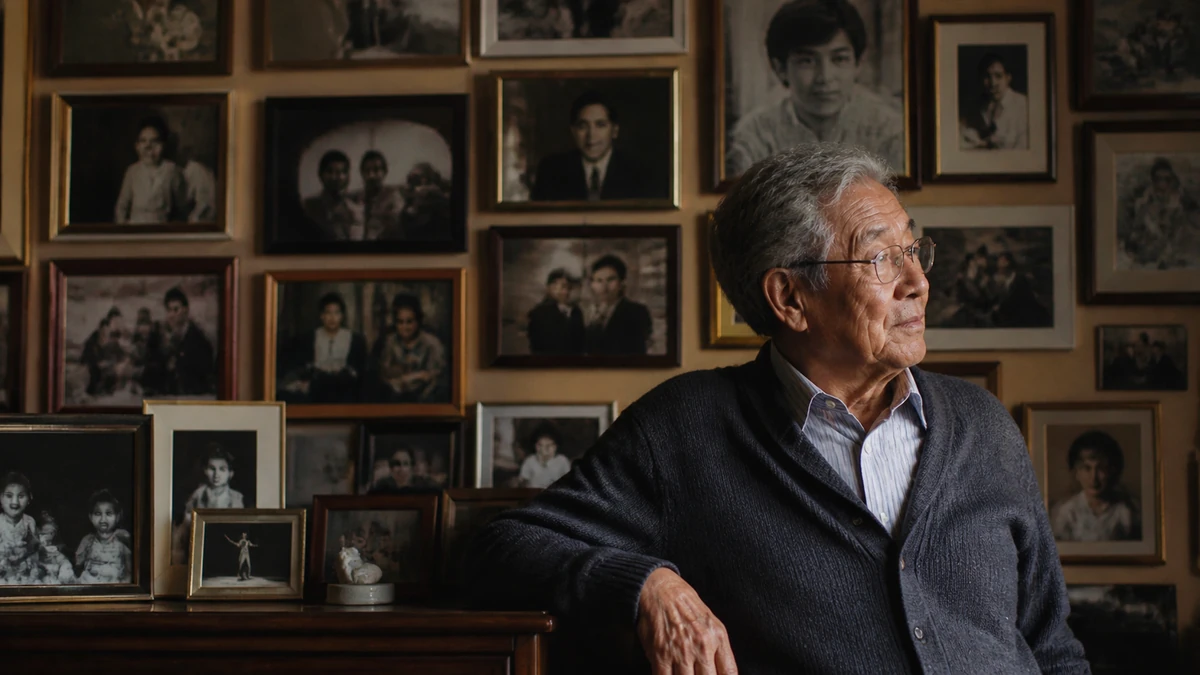
A familiar face, even when he is not on screen
In South Korea, where television drama has helped shape not only pop culture but also public ideas about family, authority and everyday morality, few actors carry the symbolic weight of Choi Bool-am. For decades, he has been more than a star or a respected veteran performer. He has been, for many viewers, a kind of emotional landmark: the dependable father figure at the center of the story, the steady voice in a changing country, the face audiences could trust to represent ordinary life with dignity.
That is the backdrop for a new MBC documentary, “Paha, This Is Choi Bool-am,” whose first episode was released May 5 and immediately drew attention in South Korea. The program looks back on Choi’s life and more than 60 years in acting, tracing his path from the stage to television and revisiting the roles that made him one of the most recognizable figures in Korean entertainment. But what gives the documentary much of its emotional force is not simply the career it celebrates. It is the fact that Choi himself does not appear on camera in the present day.
That absence matters. Recent concern over his health has circulated widely in South Korean entertainment news, and the documentary’s producers said they had been coordinating a filming schedule with the actor until his family requested that he focus on rehabilitation treatment instead. Rather than forcing a comeback appearance or building the program around spectacle, the filmmakers chose a quieter route: They turned their attention to the body of work, the memories, and the image that has endured long after the peak years of his fame.
For American readers who may not know Choi’s name, the easiest comparison is not to a single Hollywood actor but to a type of cultural institution that is becoming rarer everywhere. Think of the kind of performer who appears across generations, who becomes inseparable from certain family values on screen, and whose presence evokes not fandom alone but social continuity. In the United States, viewers of a certain age might understand the idea through performers who came to symbolize decency or parental authority on television, though the Korean version is distinct in its scale and cultural intimacy. Choi’s career is tied to the development of modern Korean broadcasting itself.
The new documentary arrives at a moment when Korean entertainment is often introduced abroad through global streaming hits, K-pop tours and awards-season breakthroughs. Yet the story it tells points to a different foundation beneath the Korean Wave: the long-built trust between television audiences and actors whose careers were formed before the streaming era, before worldwide fandom, and before Korea’s cultural exports became a major international industry. In that sense, the program is not just about an actor growing older. It is about how a country remembers itself through television.
What “the nation’s father” means in Korea
One phrase appears again and again in discussions of Choi Bool-am: “the nation’s father.” For readers outside Korea, the term may sound exaggerated or overly sentimental. In Korean popular culture, though, labels like “the nation’s younger sister,” “the nation’s MC,” or “the nation’s father” carry a specific meaning. They are not official titles. They are social nicknames that signal a broad, cross-generational consensus about what a public figure represents.
In Choi’s case, “the nation’s father” does not mean he played one famous dad and never escaped the role. It means that over many years, in multiple dramas, he came to embody a recognizable emotional center: paternal warmth without excessive sentimentality, authority without cruelty, and a sense of sacrifice and everyday endurance that resonated deeply with Korean viewers. The title speaks to accumulation. One role might make an actor popular. Many years of related performances, viewed by millions in their homes, can turn that actor into a national symbol.
The documentary’s first episode reportedly revisits dramas such as “Country Diaries,” known in Korean as “Jeonwon Ilgi,” and “You and I,” or “Geudae Geurigo Na,” to explain how that image took shape. Both series are important reference points in Korean television history, particularly for audiences who grew up with domestic dramas centered on family life rather than high-concept thrillers. If international audiences often associate Korean drama with romance, revenge stories or glossy streaming productions, these older series represent a different tradition: patient, long-running storytelling about home, obligation, generation gaps and the texture of daily life.
That helps explain why Choi’s cultural standing has lasted. The characters he played were not narrowly tied to one trend cycle or one historical moment. They were rooted in experiences that remain legible even as society changes: raising children, aging with pride, absorbing disappointments, caring for relatives and negotiating the emotional demands of family. Those themes are universal, but in Korea they carried additional weight because television dramas long served as a shared national ritual. Before media fragmented into thousands of streaming choices, families watched the same programs at the same time, and certain actors became part of the household almost by default.
For an American audience, it may be useful to think of Choi not as a niche classic-TV figure but as someone whose screen persona helped define mainstream national feeling. The nickname “the nation’s father” is not simply flattery. It is shorthand for a social role created through television, memory and repetition. The documentary’s significance lies partly in making that symbolic role visible again for a new era, including viewers abroad who know Korean entertainment mainly through its newest exports.
From theater to television, and the growth of an industry
According to the Korean summary of the program, the documentary does not rush through Choi’s life as a string of greatest hits. Instead, it spends time on how he began acting, how he moved from theater to television, and how he approached performance as a craft. That structure may sound straightforward, but it points to something larger than one man’s résumé. Choi’s path mirrors the broader development of South Korea’s entertainment industry, especially the period when stage-trained actors helped build the credibility of television drama.
That evolution matters because many international fans encounter Korean drama as a fully formed global product. What they often do not see is the long institutional history underneath it: the generations of performers shaped by theater, the broadcast systems that developed over decades, and the acting traditions that gave Korean TV its emotional precision. Choi belongs to a generation for whom television was not an instant celebrity machine but an extension of disciplined performance work. The movement from stage to screen was not just a career upgrade. It was part of how Korean broadcasting matured.
There is a familiar pattern here for Americans, too. In the early decades of U.S. television, many actors carried over techniques and seriousness from theater and radio, helping establish standards for a young medium still figuring out what it could be. In South Korea, the shift had its own historical rhythm, shaped by rapid social change, industrial growth and a public hungry for stories that reflected both hardship and aspiration. Actors like Choi helped make television feel trustworthy, not disposable.
The documentary’s emphasis on process rather than just outcomes is especially notable in a media climate driven by speed. Modern entertainment coverage often prizes records, rankings and immediate buzz: the No. 1 series, the opening-weekend numbers, the viral clip. By contrast, a documentary that patiently maps an actor’s formation suggests a different value system. It asks how a performer becomes culturally durable, not merely famous. It also implicitly argues that the international success of Korean content did not appear overnight. It was built on a long history of performers who learned how to communicate emotion with clarity, restraint and consistency.
That is one reason Choi’s story lands differently from the more export-friendly narratives of celebrity that dominate global entertainment news. His significance is not about novelty. It is about continuity. By following his route from theater to television, the documentary offers a compact history of how Korean acting traditions entered the home and became part of everyday national life.
A radio-style documentary in a visual age
One of the more intriguing elements of the MBC program is its format. Rather than leaning heavily on flashy visuals or assembling a rapid-fire montage of iconic scenes, the documentary is built in the style of a radio program, using voice, music and reflective narration to revisit Choi’s acting world. In an era of algorithm-driven video clips and hyperedited nostalgia packages, that is a striking creative choice.
The format creates a double effect: distance and intimacy at the same time. The distance comes from restraint. The program does not appear to force access where access is unavailable, nor does it overstate emotion through sensational devices. The intimacy comes from sound. A voice-led recollection invites audiences to listen, imagine and remember rather than simply consume an image. For a figure like Choi, whose cultural legacy is rooted in time, familiarity and emotional steadiness, the slower rhythm seems well matched to the subject.
The documentary is hosted by actor Park Sang-won, who played Choi’s eldest son in “You and I.” That casting choice carries its own resonance. It effectively turns a former on-screen son into a guide through the memory of a screen father. For viewers in South Korea, that overlap between drama and documentary likely deepens the emotional texture. For international audiences, it offers a window into how strongly Korean television has historically organized feeling around family relationships, both fictional and symbolic.
There is also something accessible about the radio-like approach for non-Korean viewers. Not everyone watching from abroad will know the landmark scenes or instantly recognize the full sweep of Choi’s filmography. But a documentary structured around explanation, atmosphere and voice can still communicate why he matters. It does not demand prior fandom. Instead, it gently teaches audiences how to understand a performer whose influence was built less on explosive singular moments than on cumulative emotional trust.
That may be one reason the documentary has drawn notice beyond ordinary nostalgia. In global entertainment, older stars are often repackaged through clips, memes or anniversary specials that reduce careers to highlights. This program seems to resist that reduction. It proposes that memory can be curated with patience, and that an actor’s legacy might be best approached not by speeding it up for modern consumption but by slowing the audience down.
The power of absence, and the ethics of covering health
The most consequential fact about “Paha, This Is Choi Bool-am” may be that the actor’s current image is missing from it. That absence, as the Korean coverage suggests, becomes the documentary’s emotional center. Instead of giving viewers the immediate satisfaction of a present-day appearance, the program leaves room for uncertainty, concern and reflection. In doing so, it turns Choi from a celebrity to be updated on into a life to be contemplated.
The producers said Choi’s family asked that he focus on rehabilitation treatment, and that he plans to greet viewers once that process is complete. That is important because South Korean entertainment coverage, like celebrity journalism elsewhere, can easily veer into rumor and invasive speculation. Choi’s health had already become the subject of concern after he stepped down from the long-running KBS program “Korean Cuisine and Dining,” more widely known as “The Table of Korea,” after 14 years as host. Reports said he had experienced mobility difficulties following surgery for a herniated disc. Comments from fellow actors on recent broadcasts added to public anxiety.
What the documentary appears to avoid is the trap of turning that anxiety into its main selling point. It does not ignore reality; his absence is too notable to ignore. But it also does not exploit it. That tonal restraint is significant in any media culture, and perhaps especially in one where veteran celebrities can become subjects of intense online speculation. The approach suggests a line between informing the public and consuming a person’s vulnerability as content.
There is a broader lesson here for entertainment journalism. American readers will recognize the pattern: an aging star’s health becomes public, rumors accelerate, and coverage begins to oscillate between tribute and intrusion. The challenge is how to acknowledge genuine public concern without collapsing a lifetime of work into a diagnosis or a whispered update. By centering the archive rather than the ailment, the MBC documentary seems to offer one answer.
Paradoxically, Choi’s absence appears to sharpen his presence. Because he is not there to reassure the audience, the audience returns to the performances themselves, to the accumulated image that made him beloved in the first place. That can create a more layered emotion than a conventional tribute would. Viewers are invited not only to remember who he was on screen but to confront what it means when a national figure begins to recede from public life. The result is less celebratory than elegiac, though not mournful. It is a meditation on endurance.
Why this matters beyond one actor
It would be easy to dismiss a documentary about a veteran Korean actor as a domestic nostalgia story with limited relevance outside South Korea. That would be a mistake. The attention around Choi Bool-am reveals something essential about the Korean Wave at a time when it is often defined almost entirely by the new: new streaming hits, new idol groups, new festival premieres, new international deals.
On the same stretch of the entertainment calendar, South Korean headlines have included the kinds of stories global media typically picks up more quickly, including awards at the Jeonju International Film Festival and the constant churn of high-profile releases. Those stories matter. But the Choi documentary points to another question, one that is less flashy and arguably more foundational: Whose faces and voices carried Korean popular culture before it became a global brand? And what happens when those figures grow old in public?
The answer helps explain why Korean entertainment has such emotional range and cultural staying power. Long before international audiences binged Korean dramas on Netflix or discovered Korean cinema through awards campaigns, Korean viewers were forming multigenerational relationships with actors like Choi. Those relationships created a domestic culture of attention that rewarded consistency, emotional realism and character-driven storytelling. In other words, the global success of Korean content did not emerge from nowhere. It grew from a local ecosystem in which audiences learned to value performers who could make familiar feelings feel truthful.
That is also why the documentary may resonate with younger Koreans and overseas viewers who did not grow up with Choi’s best-known dramas. It offers a chance to see the roots of a storytelling tradition that today circulates worldwide. The glossier contemporary exports of Korean entertainment often depend on a very modern production apparatus, but they also inherit something older: a belief that the smallest family exchange, when acted with conviction, can carry national meaning.
For American readers, there is a useful point of comparison here with the way older network television stars once served as anchors of common culture before streaming splintered mass audiences. The difference is that in South Korea, the symbolic density of family roles on screen often remained especially strong, partly because television dramas were central to negotiating social change. An actor who repeatedly represented fatherhood, duty and emotional steadiness could become more than a familiar performer. He could become a vessel for collective memory.
That is what this documentary appears to understand. By choosing reflection over spectacle and context over gossip, it reframes Choi Bool-am not simply as an aging celebrity but as a cultural archive. His missing present-day image does not weaken that archive. If anything, it clarifies it. In a media economy that moves too fast to sit with what lasts, “Paha, This Is Choi Bool-am” asks viewers to pay attention to the long arc of recognition: how a face becomes trusted, how a performance becomes part of family life, and how absence can make a public figure more vivid than one more interview ever could.
That may be the documentary’s most compelling achievement. It does not merely tell South Korean viewers to remember Choi Bool-am. It shows why they do. And for international audiences trying to understand Korean culture beyond its most exportable trends, that may be the more valuable story.
Comments
Post a Comment