A Night of Velocity and Momentum: Hanwha’s Young Arm and Three Homers Shift the Mood in Korean Baseball’s Tight Middle Tier
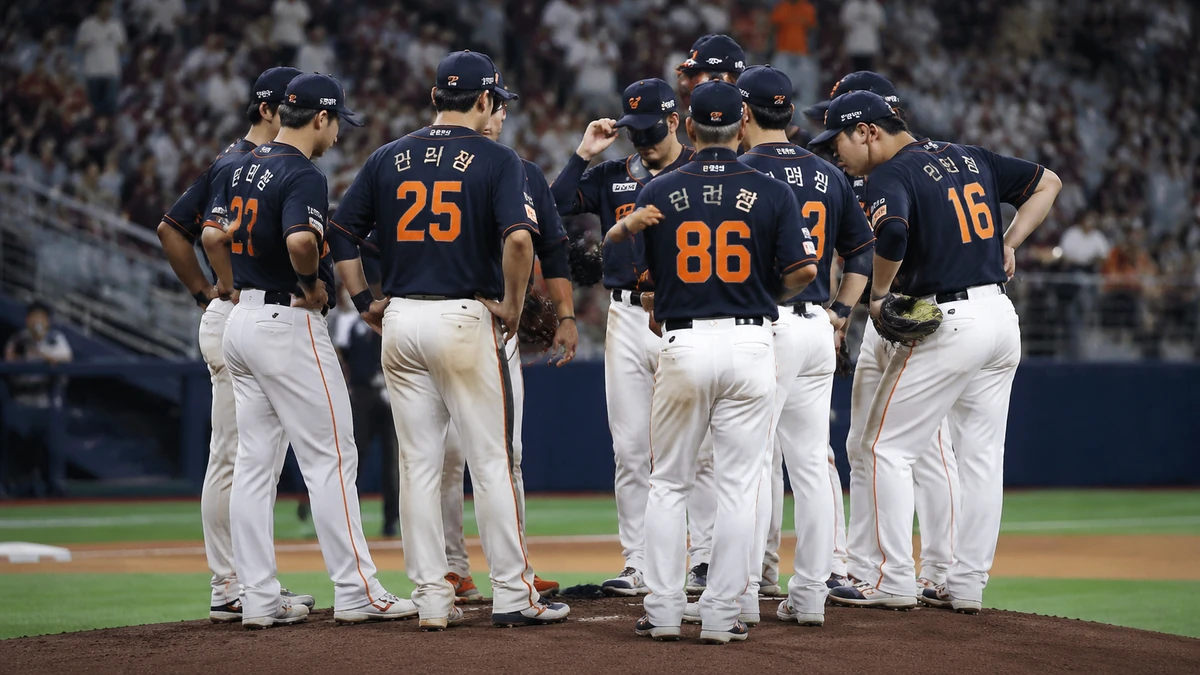
A statement win in Seoul
In a baseball season, some victories count as more than one game even if the standings only credit a team with a single notch in the win column. Hanwha Eagles’ victory over the Kiwoom Heroes on May 14 at Gocheok Sky Dome in Seoul felt like one of those nights. On paper, it was a regular-season KBO League result: Hanwha beat Kiwoom behind a strong outing from young starter Jung Woo-joo and the kind of timely power surge that can turn a tense pitching matchup into a defining evening. In practice, it was something more layered — a showcase for one of South Korea’s emerging power arms, a reminder of how quickly momentum can shift in a compressed standings race, and a snapshot of why Korean professional baseball continues to produce dramas that are easy for international audiences to understand.
Hanwha climbed into a tie for sixth place with the win, moving to 18-21. That may not sound seismic to American fans used to Major League Baseball’s marathon schedule, where May standings often come with a large disclaimer attached. But in the KBO, where momentum tends to shape mood quickly and where fan engagement can swing with every series, the emotional value of a game like this can far exceed its arithmetic value. Hanwha did not just beat Kiwoom. The Eagles looked like a team finding an identity: young pitching, loud contact and just enough composure to turn raw talent into a result.
The most memorable part of the game was the duel at its center. Kiwoom’s An Woo-jin and Hanwha’s Jung Woo-joo both lit up the radar gun, with An reaching 158 kilometers per hour — about 98.2 mph — and Jung touching 155 kph, roughly 96.3 mph. Those numbers immediately translate for American readers because they belong to the universal language of modern pitching. Velocity is one of baseball’s easiest measurements to export. Whether the game is played in Seoul, Los Angeles or Tokyo, everyone understands what happens when a young pitcher reaches the upper 90s and challenges hitters to catch up.
But as in any good baseball story, the radar readings told only part of the truth. The outcome did not hinge on which pitcher threw harder in absolute terms. It depended on who better controlled the rhythm of the game, who handled pressure more cleanly and whose teammates provided enough offense to convert promise into victory. By that standard, the night belonged to Jung and to Hanwha.
Why this matchup mattered beyond one box score
Korean baseball occupies an interesting place for American sports fans. The KBO became briefly familiar to many U.S. viewers during the early months of the COVID-19 pandemic, when ESPN aired games live because it was one of the few professional leagues in operation. For some Americans, that was their first sustained exposure to Korea’s baseball culture — the organized cheering sections, the songs customized for individual players, the emotional peaks that feel closer in volume to college sports than to the sometimes more reserved ambience of an MLB regular-season game.
That wider visibility introduced the league, but it did not fully explain why nights like this resonate so strongly in Korea. KBO fandom is deeply local and deeply social. Teams are attached to cities and regions, but also to generations of family routines, student culture and workplace life. A midweek or early-season game can become a communal release valve. A big win is not simply filed away as one result among 144. It can reset the conversation around a club for days.
That is especially true for Hanwha, one of the league’s most watched and emotionally invested teams. Based in Daejeon, Hanwha has one of the most loyal fan bases in Korean baseball, even through long stretches of frustration. If an American parallel is needed, think of a franchise whose supporters keep showing up despite uneven results, convinced that the next wave of players might finally change the trajectory. That kind of faith sharpens the meaning of a night when a young starter flashes frontline potential and the lineup backs him with three home runs. It does not erase the standings deficit, but it makes the future feel closer.
The same goes for the setting. Gocheok Sky Dome, located in Seoul, is Korea’s first domed baseball stadium and one of the league’s most recognizable venues. In practical terms, a dome means a cleaner stage: no rain delays, fewer weather variables and a crisp indoor environment where the sound of a fastball popping the glove or a home run ricocheting through the crowd feels more amplified. For a matchup built around velocity and power, it was the right theater. The game looked and felt big, and that matters in a league where spectacle is part of the sport’s pull.
The broader appeal of this story is straightforward. Every baseball culture gravitates toward the same elemental themes: a young pitcher announcing himself, a duel between hard throwers, a club trying to climb from the crowded middle of the standings and a fan base searching for proof that this season may be different. Those themes travel easily. This game offered all of them at once.
Jung Woo-joo’s short start carried outsized weight
Jung’s pitching line was not one of those exaggerated stat-sheet masterpieces that demand a double take. He worked four innings, allowed one hit, one walk and one hit batter, struck out four and gave up one run. In Major League terms, that is a promising but abbreviated start, the kind of outing that suggests both immediate value and remaining development. In the context of this game, though, the performance carried unusual force.
This was only Jung’s second appearance as a starter. That detail is important because it clarifies what Hanwha appears to be learning about him in real time. He had been used out of the bullpen, and now the club is seeing whether his stuff and temperament can translate to a larger role. That transition is one of the more consequential experiments a team can make during a season. Bullpen arms can survive in short bursts on raw stuff. Starters have to manage traffic, navigate lineups, absorb stress and prevent a game from getting away even if they do not have perfect command.
Jung did not dominate in the manner of a veteran ace; he did something more revealing for a pitcher at his stage. He kept the game centered. He did not let it speed up on him. When he surrendered his lone run after Hanwha had taken a 1-0 lead, he did not unravel. The score came on a two-out single by Ruben Cardenas? No — in this game summary, it was Trent Brooks, who lined a hit into center field to bring home a run. Either way, the key point is that the damage remained limited. What could have become the beginning of a larger inning stayed a blemish rather than a collapse.
That distinction matters. Teams evaluating young starters are often less interested in perfection than in response. How does the pitcher look when a runner reaches? What happens after the first hard contact? Can he still execute when the crowd gets louder and the inning threatens to tilt? Jung’s answer was encouraging. He offered enough velocity to excite, enough command to compete and enough composure to suggest that he can be more than a curiosity.
For American readers, it may help to think of the way organizations talk about a “starter’s mentality.” It is not just about innings volume. It is about sustaining an internal pace and refusing to hand emotional control of the game to the other dugout. Jung showed that trait in a compact sample. Four innings is not a full test. It is, however, more than enough to reveal whether a pitcher’s arsenal has real leverage. His did.
And then there was the simple visual fact of the fastball. A pitch at 155 kph plays anywhere. It grabs attention instantly, especially from a young arm not yet fully established in the rotation. Velocity by itself is not a finished product, and baseball history is full of pitchers who threw hard without learning how to win. But velocity remains one of the game’s most seductive forms of possibility. It suggests ceiling. It creates anticipation. Every pitch feels like it could change the inning. Jung gave Hanwha exactly that feeling.
The radar gun drew attention, but poise decided the duel
When two young pitchers both push into the mid-to-upper 90s, the story almost writes itself. Korean media framed this game as a showdown between hard-throwing representatives of the next generation, and that was not hyperbole. An hit 158 kph, the top number of the night. Jung reached 155. The crowd had the kind of immediate reaction that baseball crowds everywhere have when a scoreboard flashes a number that starts with a “9” in miles per hour or climbs well above 150 in kilometers. It is part measurable event, part theatrical cue.
Still, baseball has a way of resisting simplistic speed worship. Fans may arrive for the radar readings, but games are decided by sequence, location and leverage. A 98 mph fastball that arrives in the wrong spot can be more vulnerable than a 95 mph fastball thrown with purpose at the right moment. The most significant takeaway from this matchup was not that one pitcher was fractionally faster. It was that Jung made his velocity matter more within the game’s actual architecture.
That is why the phrase “judgment win” feels apt here. In combat sports, a decision can go to the fighter who controlled the action more effectively even without a knockout. This game had a similar texture. An’s top velocity may have been higher, but Jung’s outing more clearly pushed the contest in his team’s direction. He stabilized Hanwha, protected the lead well enough and handed the rest of the night to a bullpen and lineup positioned to finish the job.
There is also a larger symbolic element to games like this in Korean baseball. The KBO, like MLB, thrives when it has recognizable stars and emerging stars visible at the same time. A duel between young power pitchers suggests not just one compelling game, but a pipeline of future headline material for the league. It gives fans names to track and matchups to anticipate. The league benefits when a game can be packaged in a single irresistible idea: two hard throwers, one indoor stage, one crowded standings race and one team trying to turn talent into traction.
For audiences in the United States, where velocity has become almost a civic obsession in baseball development, this is a familiar framework. High school showcases, college super regionals, the draft, prospect rankings — so much of the conversation revolves around arm strength. Korean baseball shares that fascination, but it often presents it with a distinctly Korean flavor: a louder in-game atmosphere, a stronger sense of collective fan participation and a media lens that emphasizes how one outing fits into a team’s changing emotional weather. That combination made this duel feel richer than a mere scouting note.
Three home runs gave Hanwha the complete formula
No pitching performance, especially a four-inning start from a developing arm, can carry a team by itself. Hanwha’s other major achievement Wednesday was giving its young starter exactly the kind of support he needed: three home runs that transformed a close, tense contest into a more complete team victory. The game summary did not merely mention the homers in passing. It treated them as one of the two pillars of the night, alongside Jung’s work on the mound. That framing makes sense.
When a club is trying to integrate a young starter, offense does more than pad the score. It changes the psychological burden on the pitcher. A solo lead can feel fragile. A lineup that keeps producing damage allows a starter to attack the zone more freely and lets a team’s relievers inherit a game with margin instead of dread. Power is not just output; it is stress relief.
That dynamic was central to Hanwha’s win. The game’s identity was not solely “future ace versus future ace.” It was also “team that paired pitching with impact swings versus team that did not do quite enough with its own opportunities.” That distinction often defines games in the league’s middle tier, where clubs are close enough in talent that one or two loud swings can reset everything.
For American readers, this is the familiar formula of modern baseball in almost any league: get enough from the starter, hit the ball over the fence and trust that the combination can cover imperfections elsewhere. The specifics may differ from MLB in roster construction or bullpen usage, but the underlying logic is identical. Hanwha did not need a masterpiece because it built a cushion through force. The three home runs completed the picture and made Jung’s four innings feel bigger, sharper and more consequential.
There is also an emotional quality to home-run support that should not be overlooked in the KBO context. Korean baseball crowds are highly responsive to momentum swings, and few events redirect crowd energy more instantly than a homer. In a dome setting, that effect multiplies. Noise lingers. Anticipation builds more quickly during the next at-bat. A team can feel as if it has physically changed the room. Hanwha’s power surge did exactly that. It gave shape to the night’s narrative and ensured that the memory of the game would include not only fastballs but fireworks.
That matters because baseball stories endure through images. A young pitcher reaches back for 96. A slugger launches one into the seats. The scoreboard shifts. Fans rise together. A team that has spent much of the season chasing the pack suddenly looks, for one night at least, like a club worth fearing. Hanwha supplied all those images.
Why tied for sixth can feel like a turning point
Standings can be misleading in May, but they are never meaningless. After the win, Hanwha sat at 18-21, tied with the Doosan Bears for sixth place. The league leaders remained well ahead, with KT Wiz at 24-14-1, followed by Samsung and LG. The gap between Hanwha and first place was still significant at 6 1/2 games. No sober analysis would call that small. Yet the distinction between drifting in the lower tier and re-entering the crowded middle of the table is real, especially in a league where confidence and urgency are felt so acutely.
This is one area where American readers may benefit from a bit of context. In Korea, standings discourse often has a compressed emotional intensity. Fans and commentators alike can treat a move from the lower reaches into the mid-table cluster as evidence that a team has rejoined the real fight. It is not just mathematical. It is atmospheric. The difference between “falling behind” and “back in the mix” can reshape how the next week is experienced by a fan base.
Hanwha’s move into a tie for sixth did not transform the Eagles into contenders overnight. But it did place them back inside a more crowded, more plausible competitive lane. That matters because baseball seasons are partly about preserving optionality. A team does not need to look finished in May; it needs to remain within striking distance long enough for young talent to mature, for a rotation to settle and for winning streaks to become possible. Wednesday’s win strengthened Hanwha’s claim to that possibility.
The timing also amplified the effect. In the middle portion of a season, before the hierarchy hardens, individual games can meaningfully alter the mood around a club. A one-game swing can feel much larger than one game because it changes whether the conversation is about a slide, a reset or a push. This was a reset game for Hanwha. It suggested that the club’s route forward may depend not on chasing perfection but on assembling a repeatable formula: let the young arm hold the line, let the lineup supply extra-base damage and let the standings pressure work on someone else for a night.
That is why this was more than a pleasing result for fans. It was also an organizationally useful result. It gave the coaching staff evidence that a developing pitcher can handle a meaningful assignment. It reinforced that the offense can provide knockout swings. And it reminded everyone in the clubhouse that the distance between frustration and relevance can narrow quickly in a tightly packed league race.
What this game says about Korean baseball right now
For international readers who follow Asian baseball only intermittently, this game was a useful window into the current energy of the KBO. The league remains compelling not simply because of atmosphere, though the atmosphere is real and distinctive. It remains compelling because it continues to produce the same high-stakes ingredients that power baseball interest everywhere: youth, velocity, pressure, fandom and the constant tension between short-term results and long-term growth.
Jung’s outing captured that balance neatly. He was not flawless, and that is part of the appeal. Perfection can be abstract. Development under pressure is easier to invest in. Hanwha did not win because a polished veteran authored a predictable gem. It won because a young pitcher with obvious gifts gave his team a platform, and the offense met the moment with force. That is a future-facing kind of victory. It invites fans to imagine not only what happened, but what might happen next.
It also underscored the enduring significance of recognizable venues and stagecraft in Korean sports culture. Gocheok Sky Dome is not just a building. It is one of those places where a game can feel official in a larger sense, where narrative and environment reinforce each other. The dome sharpened every component of the evening: the fastballs, the home runs, the crowd reaction and the sense that this was not just another date on the schedule.
For Hanwha supporters, the takeaway was emotional but grounded. No one needs to declare a turning point too soon. One game does not erase inconsistency, and one four-inning start does not prove that every question about the rotation has been answered. But fans do not need certainty to celebrate progress. They need reasons to believe. On this night, they had several: a young starter who looked unafraid, a lineup that hit with authority and a standings bump that made the season feel more alive.
For the broader baseball audience, the appeal is just as clear. This was a game about how velocity becomes meaning only when it is paired with poise. It was a game about how power hitting can elevate a promising start into a memorable win. And it was a game about how, in the crowded middle of a season, one sharp performance can make a fan base feel the sport opening up again in front of it.
Hanwha left Seoul with one more win and a share of sixth place. That is the official record. The unofficial record is a little more vivid: a fastball-driven night under the dome, three home runs, a young pitcher winning the more important contest even without the hardest pitch of the evening, and a team suddenly looking as if it might have found the beginning of a useful rhythm. In baseball, that is often how momentum starts — not with a grand declaration, but with one night when the game looks faster, clearer and more promising than it did the day before.
Comments
Post a Comment