A Seoul district expands free HPV shots to 12-year-old boys, reflecting a broader shift in how South Korea thinks about prevention
A local policy change with a wider public health message
In the affluent Seoul district of Seocho, best known to many visitors for its apartment towers, private academies and the arts complex that anchors one of the capital’s busiest neighborhoods, a health policy update is drawing attention for a different reason: It broadens free human papillomavirus vaccinations to include 12-year-old boys.
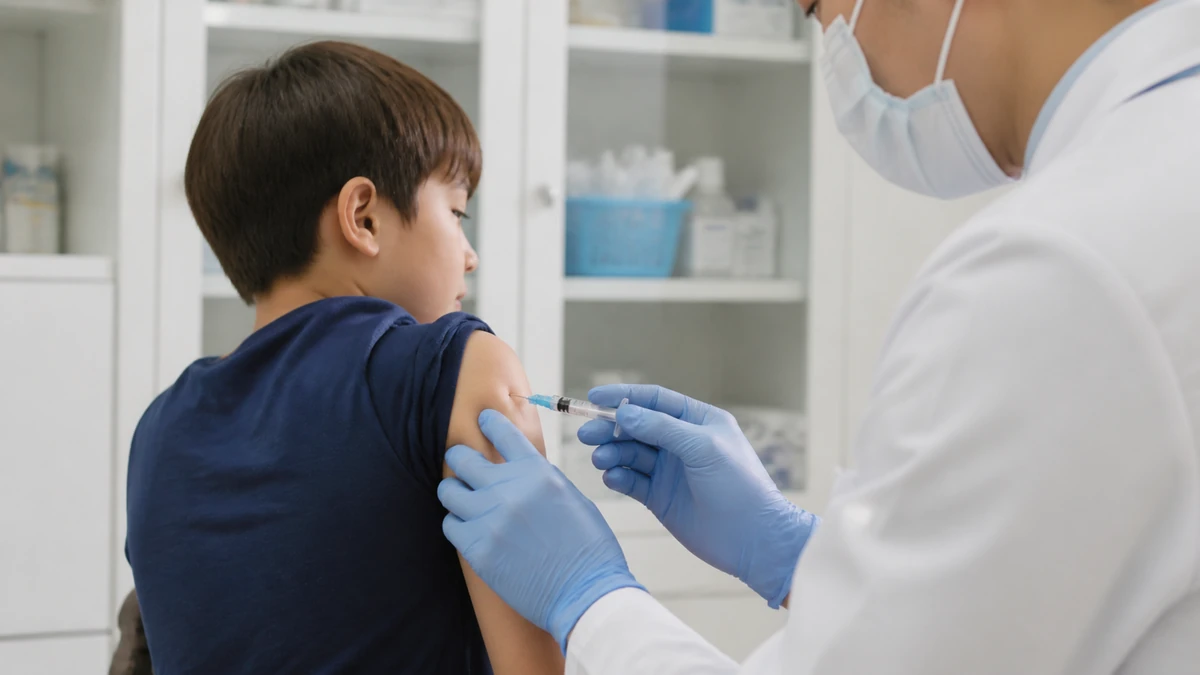
Starting May 6, Seocho District will support free HPV vaccination for male adolescents age 12 — specifically boys born in 2014 — according to South Korean media reports citing district officials. The move adds boys to a publicly supported vaccination framework that had largely been associated in the public mind with girls and women, especially because HPV is most commonly discussed in connection with cervical cancer.
On paper, the change can look administrative, the kind of eligibility adjustment local governments make all the time. In practice, it carries a bigger message about how South Korea, like many countries, is reconsidering who should be at the center of prevention campaigns. HPV is not a virus that affects only girls. It can infect both males and females, and it is associated not only with cervical cancer but also with anal cancer, genital warts, anal intraepithelial neoplasia and some cancers of the oropharynx, or the middle part of the throat, including the base of the tongue and tonsils.
For American readers, the significance may sound familiar. In the United States, pediatricians, family doctors and public health officials have spent years trying to move the HPV conversation beyond the outdated notion that this is only a “girls’ vaccine.” The Korean development underscores the same lesson: If the goal is to reduce infection and the diseases linked to it, the public health lens has to be wider than one gender.
That is what makes this development more than a neighborhood bulletin. It reflects a practical shift in thinking, one that matters to parents, schools and health officials because vaccines are not treatment. They are prevention, and prevention is often the most direct form of health policy ordinary families encounter.
Why HPV policy has often centered on girls — and why that is changing
The reason HPV vaccination campaigns have historically focused on girls is straightforward. HPV became widely known around the world because of its connection to cervical cancer. In public messaging, that association was so strong that many families came to understand the virus almost exclusively through women’s health.
South Korea is hardly alone in that pattern. In the United States, early HPV vaccine advertising and public education campaigns often emphasized protection against cervical cancer, reinforcing the idea that the vaccine was mainly or only relevant to girls. Over time, physicians and public health agencies have worked to correct that framing by stressing that HPV infection affects boys and men, too, and that vaccinating boys helps protect them directly while also reducing circulation of the virus more broadly.
Seocho’s decision fits squarely within that evolution. The district’s updated support targets three groups this year: girls ages 12 to 17, low-income women ages 18 to 26, and now 12-year-old boys. The most notable addition is the last one. By formally including boys in the supported group, officials are signaling that HPV prevention should not be treated as a women-only issue.
That change may sound obvious to infectious disease specialists, but public attitudes do not always catch up quickly to medical consensus. In many countries, including South Korea, conversations about adolescent vaccination can be shaped by social discomfort around sexual health, parental uncertainty and a tendency to think of vaccines in narrow terms tied to a single disease rather than a wider system of prevention.
For English-speaking audiences, it helps to understand one piece of Korean context here. South Korea’s public health communication often operates through a mix of national policy and highly active local governments. Districts within Seoul, the country’s largest city, can become important testing grounds for how health information reaches families on the ground. So while this is local news from one district, it also serves as a public signal, especially in a country where education systems, neighborhood clinics and local administrative offices play a major role in everyday family decision-making.
What the science says about boys and HPV
The public health logic behind including boys is not symbolic. It is evidence-based.
HPV is one of the most common sexually transmitted infections in the world. Many infections clear on their own, but some persist and can lead to disease years later. That is part of what makes vaccination policy so important and sometimes hard to communicate. Families are being asked to act before a problem appears, and often before adolescents or parents feel an issue is immediately relevant.
But that is how prevention works. The value of the vaccine lies in protecting people before exposure, not after illness develops. That is why health authorities commonly recommend vaccination around age 11 or 12, when the immune response is strong and before likely exposure to the virus.
The Korean summary cites figures from the U.S. Centers for Disease Control and Prevention indicating that HPV vaccination has shown preventive effects in males, including reductions in genital warts, external genital lesions and anal intraepithelial neoplasia. Those numbers matter because they help answer a question many parents ask right away: Why vaccinate boys if the virus is best known for causing cervical cancer in women?
The answer is that HPV-related harm in males is real, and the benefits of vaccination are concrete. Beyond protecting girls and women through lower transmission, vaccinating boys can reduce their own risk of HPV-related conditions. In recent years, American doctors have also talked more openly about the vaccine’s role in preventing certain head and neck cancers associated with HPV, especially cancers of the oropharynx. That has helped broaden public understanding of what is at stake.
In the United States, the recommendation that boys receive the HPV vaccine is no longer controversial within mainstream medicine, though uptake has varied from one community to another. Some parents remain hesitant because they associate the vaccine with sexual activity rather than cancer prevention. Others simply do not know boys are eligible or recommended to receive it. Seocho’s policy change addresses a similar information gap in the Korean context by making the inclusion explicit.
Why this matters in South Korea now
South Korea has one of the world’s most wired, fast-moving information environments, but that does not automatically make health communication simple. Parents are inundated with advice about nutrition, tutoring schedules, sleep, screen time, exercise and mental health. Vaccination campaigns compete with a crowded field of concerns, and preventive care can be easy to postpone when nothing feels urgent.
That is part of why the timing details in Seocho’s announcement matter. District officials did not merely say that boys would be included at some point. They gave a start date: May 6. They also clarified the age cohort: 12-year-old boys, meaning those born in 2014. In journalism terms, this is the kind of information that turns policy into action. It tells parents who qualifies, when to begin and why the guidance changed.
There is also a broader social backdrop. South Korea has spent years trying to improve public understanding of preventive care, even as many health conversations remain highly test-driven or treatment-focused. In everyday life, Korean families are often used to moving quickly when schools, districts or ministries issue clear guidance. That makes local eligibility announcements especially practical. They are not abstract debates. They are actionable notices that can shape appointments, school health discussions and family decisions in real time.
The inclusion of boys may also help loosen a cultural bottleneck that has affected HPV messaging in many places: the mistaken belief that talking about this vaccine is awkward because it touches on sexual transmission. Public health experts generally try to move that conversation back to its most important point: This is a cancer-prevention and disease-prevention tool. Framing it narrowly as a gendered or moral issue can discourage uptake and obscure the medical purpose.
In that sense, Seocho’s action does something public health officials often hope local government can do well: normalize a preventive measure by presenting it as standard care rather than exceptional care. When a district says boys are part of the eligible group, it helps reframe the vaccine as routine protection for adolescents, not a niche intervention for one segment of the population.
A familiar debate for American readers
For U.S. readers, the Korean news lands in recognizable territory. America’s own HPV vaccine rollout was shaped by many of the same debates now visible in South Korea: questions about age, parental hesitation, uneven awareness and the challenge of correcting early public impressions.
Over time, the U.S. medical establishment has worked to establish the HPV vaccine as a standard adolescent immunization. Pediatricians often discuss it alongside other recommended vaccines for preteens, and public health messaging increasingly stresses that the goal is cancer prevention for everyone, not just cervical cancer prevention for girls. Still, vaccination rates and public understanding differ widely depending on geography, access to care, education and trust in health authorities.
That is why even a seemingly small policy shift in Seoul can resonate beyond South Korea. It reflects a larger global lesson: Once a vaccine becomes associated in the public mind with only one disease and one group, it can take years to broaden that understanding even when the science supports it.
American readers may also recognize the importance of local government in driving health outcomes. In the U.S., state health departments, county systems, school districts and pediatric networks often shape how families encounter vaccines in practice. South Korea’s administrative structure is different, but the dynamic is comparable. A district-level announcement can have outsized impact because it translates national or medical understanding into specific eligibility and real appointments.
There is another point of overlap. In both the United States and South Korea, parents are increasingly asked to navigate health decisions in an environment crowded by internet misinformation, social pressure and fragmented media. A clear, simple message — boys can get HPV too, boys can benefit from the vaccine too, and here is when eligibility begins — can cut through that noise.
What parents, schools and caregivers need to know
The most immediate takeaway from Seocho’s announcement is practical. If a family has a 12-year-old boy born in 2014 and lives within the district’s jurisdiction, the beginning of support on May 6 is the key date. More broadly, the policy offers a framework that parents anywhere can use when thinking about HPV vaccination.
First, understand who the vaccine is for. The updated support in Seocho includes 12-year-old boys, as well as girls ages 12 to 17 and low-income women ages 18 to 26. For many families, the attention-grabbing part will be the addition of boys, because it answers a question that has often lingered in the background: Are sons supposed to get this vaccine too? The district’s answer is yes.
Second, understand why boys are included. The rationale is not political messaging or box-checking. It is that HPV can infect males and females, and it is linked to multiple diseases in both. Limiting prevention to girls leaves a large part of the transmission picture unaddressed.
Third, understand what vaccines can and cannot do. Vaccines prevent; they do not treat existing disease. That may seem obvious, but it is crucial to how families think about timing. The benefit comes from receiving the vaccine before exposure. Waiting until a problem appears misses the central purpose.
Fourth, understand the educational opportunity. In both Korea and the United States, health officials often struggle to present adolescent vaccination in a way that feels calm, factual and free of stigma. A district policy like this can help families start that conversation in ordinary terms: long-term health, evidence-based prevention and age-appropriate routine care.
Schools and school nurses also play an important role. When eligibility rules are clear, school health staff can reinforce accurate information and help families distinguish between rumor and guidance. In high-pressure education cultures such as South Korea’s, where schools are deeply embedded in family life, that can make a real difference.
More than a line-item expansion
It would be easy to treat Seocho’s announcement as one more bureaucratic update in a country known for active local governance. But doing so would miss the most important part of the story. The inclusion of 12-year-old boys is not just about adding one more category to a spreadsheet. It reflects a shift in how prevention is defined.
For years, much of the public conversation around HPV was narrow: women, cervical cancer, and a vaccine many people misunderstood as relevant only to one group. The Seocho decision points in a different direction. It suggests that South Korean health authorities at the local level increasingly see HPV as an infectious disease challenge that requires a broader, population-based response.
That may sound like a technical distinction, but it changes how people act. A women-only frame can lead families with sons to tune out. A public health frame invites everyone to pay attention. It also helps reduce the stigma that can arise when a vaccine is implicitly tied to one gender or one set of assumptions about future behavior.
For a global audience, the lesson is straightforward. The details belong to South Korea, but the underlying issue does not. Countries everywhere are wrestling with how to communicate preventive medicine clearly, how to widen access and how to make sure public understanding keeps pace with medical evidence. Seocho’s move offers a concise answer to three practical questions parents often ask: Who is eligible? When does it start? Why include boys?
Those questions matter because health news is only useful when it can be acted on. In this case, the answers are unusually clear. Boys are now included. Support begins May 6. And the reason is that HPV risk, and the benefits of prevention, were never limited to girls in the first place.
In a media landscape crowded with wellness trends, miracle supplements and algorithm-driven health anxiety, that kind of straightforward public health news can feel refreshingly concrete. It is about a proven preventive tool, a defined group of adolescents and a policy designed to reduce future disease before it begins. For parents in Seoul, it is immediate local guidance. For readers elsewhere, it is a reminder that some of the most meaningful health shifts do not arrive with dramatic slogans. Sometimes they arrive as a district notice that quietly updates who counts in prevention — and in doing so, changes the conversation for everyone.
Comments
Post a Comment