A Seoul District’s Dental Aid Plan Offers a Window Into How South Korea Is Rethinking the Welfare State
A local dental program with broader meaning
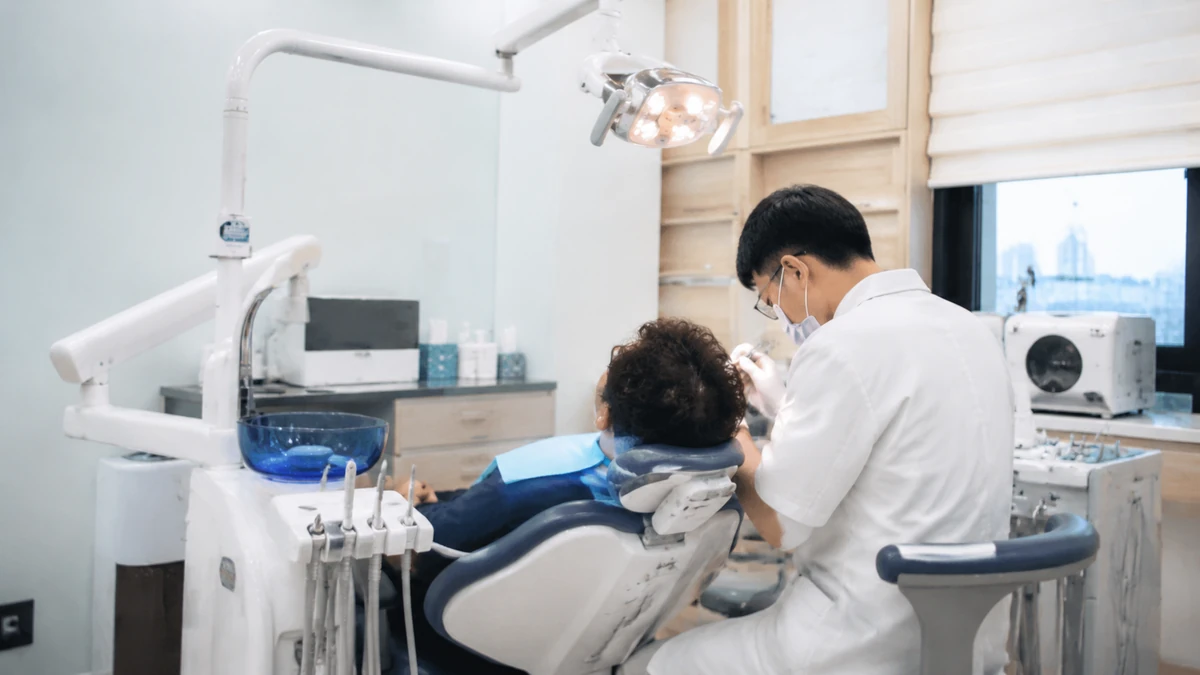
In the sprawling northwest section of Seoul, the district of Eunpyeong is rolling out a relatively small public assistance program that says something much larger about where South Korea’s social policy may be headed. District officials said they will begin a 2026 support program this month for low-income residents who need noncovered dental implants and prosthetic treatment but cannot easily afford it on their own.
Under the plan, residents of Eunpyeong age 20 and older who receive Medical Aid, South Korea’s public assistance program for people with very low incomes, may qualify if they need dental implants or prosthetic treatment not fully covered by the national insurance system. Those selected can receive care at participating dental clinics in the district and be reimbursed up to 1 million won per person, or roughly several hundred U.S. dollars depending on exchange rates.
On paper, that may sound like a modest municipal welfare announcement, the kind that rarely travels far beyond local government websites. But in a country where health coverage is broad yet still leaves meaningful gaps, especially in dentistry, the move reflects an increasingly important trend: local governments are trying to close what Koreans often call “blind spots” in the welfare system, the places where formal coverage exists but practical access still falls short.
To American readers, the closest comparison may be a city or county stepping in to help low-income residents pay for medically necessary dental work that standard public insurance does not adequately cover. In the United States, dental care is often treated as separate from the rest of health care, and many Americans know firsthand that a tooth problem can become a financial problem almost as quickly as it becomes a medical one. South Korea, despite its widely praised national health insurance framework, faces its own version of that tension.
Eunpyeong’s initiative is not a sweeping national reform. It will not solve the structural problem of dental costs all by itself. What it does offer is a concrete example of how South Korean local governments are moving beyond one-time cash assistance and toward more targeted, practical benefits designed to restore everyday function. In this case, that means helping people chew, speak and go about daily life with less pain and embarrassment.
Why dental treatment becomes a welfare issue
Dental care occupies an awkward space in many health systems, and South Korea is no exception. It is essential, but it is often not treated with the same urgency as emergency surgery, cancer care or life-threatening disease. That makes it easy for patients, especially those with limited means, to postpone treatment until the problem gets worse.
Implants and prosthetics are a good example. These are not merely cosmetic services in the way outsiders sometimes assume. An implant is an artificial tooth root, usually made of titanium, that is placed into the jawbone to support a replacement tooth. A prosthetic in dental care can include devices such as crowns, bridges or dentures used to restore function after teeth are lost or damaged. In daily life, these treatments can determine whether someone can chew food properly, speak clearly and interact socially without discomfort or shame.
That distinction matters. South Korean policymakers and local officials increasingly frame these procedures not as luxury dentistry but as part of maintaining basic quality of life. If a person cannot afford treatment, the consequences are not limited to appearance. They may avoid certain foods, experience chronic pain, struggle with pronunciation or withdraw from social settings. For older adults and low-income residents, untreated dental issues can also compound broader health problems.
In South Korea, the term “noncovered” refers to medical services that fall outside the benefits package of the National Health Insurance system or are only partially supported under specific conditions. The country’s insurance model does cover a wide range of health services, and Americans often view South Korea as a place with near-universal access to affordable care. That reputation is not entirely wrong. But universal systems still make choices about what is included, what is limited and what patients must pay for themselves.
The result is that some residents can have insurance on paper and still face serious barriers in practice. That is the gap Eunpyeong is trying to address. By targeting low-income Medical Aid recipients, the district is directing scarce public funds at the residents most likely to delay care because of cost. In welfare policy terms, it is a narrow but highly focused intervention.
How the program works and why the design matters
Eunpyeong officials are not opening a new public dental clinic or handing out unrestricted cash. Instead, the district is tying support directly to treatment delivered through partner dental offices inside the district. Eligible residents must be Eunpyeong locals, at least 20 years old, enrolled as Medical Aid recipients and in need of noncovered implant or prosthetic care. Once selected, they can receive treatment at a participating local clinic and obtain support of up to 1 million won per person.
That structure may sound technical, but it is actually one of the most telling parts of the program. Rather than simply writing checks, the district built a reimbursement model connected to real treatment at designated neighborhood clinics. The idea is to make sure public money goes toward the specific medical need the policy was created to address. In bureaucratic language, it is a way of preserving the policy’s purpose. In practical language, it means the program is meant to produce dental work, not just paperwork.
There is also an important access point embedded in the design. Care is delivered through clinics within the district, not a faraway centralized facility. That may seem minor, but anyone who has studied social programs knows that convenience can make or break participation. A benefit may exist formally while remaining hard to use if patients must travel long distances, navigate unfamiliar institutions or manage a complicated referral process. By relying on local partner clinics, Eunpyeong is trying to reduce that friction.
That approach reflects a broader lesson in welfare administration: announcing a program is not the same as making it usable. Policymakers in many countries, including the United States, have learned that eligibility rules, provider availability and geography often matter just as much as budget size. A modest benefit that people can actually access may change lives more effectively than a larger one buried under logistical hurdles.
The program also illustrates how local governments in South Korea increasingly operate as service coordinators rather than direct providers. The district sets standards, identifies beneficiaries and allocates funding. Licensed medical professionals supply the care. It is a public-private partnership, though on a very local scale, built around the idea that public authority and professional expertise do not need to be separated into competing spheres.
Where the money comes from and why that matters
The financing behind the initiative is perhaps as revealing as the dental benefit itself. According to the district, the program began with designated donations made last year by members of the Eunpyeong District Dental Association. In other words, this welfare measure did not start solely as a top-down budget line created by city hall. It began with a local professional group recognizing an unmet need and putting money behind a possible solution.
Later, the project gained additional support after being selected for a Seoul city program called “Companionship With the Vulnerable,” an initiative aimed at backing district-level welfare ideas for people in weak social or economic positions. Combined with the original donations, the dental program’s total budget rose to 30 million won, about three times the amount added through the city-backed competition fund.
For American readers, it may help to think of this as a hybrid model: part philanthropy, part public grant, part municipal administration. It shows how local welfare experiments in South Korea can emerge from community networks before being amplified by higher levels of government. That is significant because South Korea is often discussed abroad in terms of its centralized national institutions, from the presidency to major ministries to national insurance structures. But much of the innovation in day-to-day social policy happens below that level, in districts, wards and municipalities.
The funding model also highlights a characteristic feature of contemporary South Korean governance: policy often grows through layering rather than wholesale replacement. Instead of waiting for a major national reform that redefines dental coverage for everyone, local actors identify a narrow unmet need, test a targeted response and then seek broader administrative backing. It is incremental, but not necessarily timid. In many cases, that is how durable social policy takes shape.
There is a civic dimension here as well. When a district dental association helps seed a welfare initiative, it suggests that professional groups are not functioning only as service providers or interest groups. They are also acting as local stakeholders with a role in defining community obligations. That does not eliminate questions about sustainability or scale, but it does show a form of social solidarity that can be easy to miss in big-picture accounts of Korean politics and economics.
A snapshot of South Korea’s changing welfare philosophy
Eunpyeong’s dental support plan arrives at a time when South Korea’s welfare state is under pressure to become both more precise and more practical. The country is aging rapidly, household inequality remains a political concern and policymakers are trying to adapt social protections to lives that do not fit neatly into older categories of work, family and need.
For years, public debate in South Korea often focused on whether the government should expand benefits in broad headline-grabbing ways: more subsidies, more allowances, more national programs. Those debates continue. But alongside them, there is a growing emphasis on what might be called hyperlocal welfare, programs that are smaller in budget but sharply targeted at points where residents experience the state most directly.
This is where the Korean phrase “life-close” policy, often used to describe services tied closely to everyday living, becomes relevant. The idea is that welfare should not exist only as an abstract guarantee. It should show up in the routines of ordinary people, in food, mobility, child care, housing, health visits and, in this case, dental treatment. The Eunpyeong program fits that mold neatly. It is not about income support in the broad sense. It is about converting public resources into a specific and tangible improvement in daily functioning.
The district’s decision to focus on Medical Aid recipients also reveals how policymakers are thinking about prioritization. Rather than spreading a limited budget thinly across all residents, the program directs help to those most likely to miss treatment altogether. That can be politically easier to defend and administratively easier to monitor. It also aligns with a long-standing welfare principle: when resources are limited, target the sharpest need first.
Still, targeted programs always raise a difficult question familiar to Americans as well as Koreans. Do they relieve hardship efficiently, or do they leave too many people just outside the line? Eunpyeong’s plan helps one clearly identified group, but dental cost burdens are not confined to Medical Aid recipients alone. Many working-class residents in South Korea, like many Americans with insurance, can still struggle to afford care that falls into gray zones of coverage. The district program does not erase that wider problem. What it does is acknowledge that some residents are in especially acute danger of going without necessary treatment.
What this says about access, dignity and the meaning of health care
One reason this story resonates beyond local politics is that it touches on a universal health policy challenge: deciding what counts as necessary care. In both South Korea and the United States, dental treatment has often been pushed to the margins of that conversation. Yet anyone who has postponed a procedure because of the bill understands that dental health is not peripheral to daily life. It affects nutrition, confidence, employability and comfort in public.
That is why Eunpyeong’s initiative can be read as more than a reimbursement policy. It is also a statement about dignity. Replacing missing teeth or repairing significant oral damage is not simply a matter of aesthetics. It helps determine whether a person can eat without pain, talk without self-consciousness and participate in ordinary social life. Welfare programs are sometimes judged only by the size of their budgets, but the more meaningful measure may be whether they restore capabilities that people use every day.
That point is especially relevant in societies where poverty is not always visible in dramatic ways. A person may not be homeless or starving, yet still be shut out of needed care because the remaining costs are too high. In that sense, the “blind spot” in welfare is not only administrative. It is also moral and perceptual. It concerns the needs a society chooses to see clearly and the ones it allows to remain in the background because they are not instantly catastrophic.
The Eunpyeong program brings one such need into focus. It says, in effect, that the gap between survival and decent daily living deserves public attention too. That is a subtle but important shift. Modern welfare states are increasingly judged not just by whether they prevent destitution, but by whether they preserve basic human functioning and social participation.
Why global audiences, including Americans, should pay attention
For international readers, especially in the United States, South Korea is often seen through a handful of familiar frames: K-pop, Samsung, North Korea, demographic decline and its remarkable economic rise from postwar devastation to advanced democracy. But those broad narratives can obscure the more ordinary, revealing work of governance happening at the local level.
Eunpyeong’s dental support program is the kind of policy that rarely makes international headlines, yet it may tell us more about the country’s social evolution than a splashy national announcement would. It shows a government trying to make welfare more concrete, more tailored and more accessible. It shows private professional groups helping seed public solutions. And it shows a health system grappling with the same uncomfortable truth faced by many wealthy societies: access to treatment is not guaranteed simply because treatment exists.
That lesson travels well beyond South Korea. In the United States, where millions of people still struggle with dental costs and uneven coverage, local experiments often fill gaps left by larger systems. County health initiatives, nonprofit dental clinics, school-based sealant programs and state Medicaid expansions all reflect the same basic reality: oral health remains one of the most persistent fault lines in health equity.
South Korea’s version of that problem looks different in institutional terms, but the underlying issue is familiar. New technologies and skilled professionals matter only if people who need them can actually get in the chair. Eunpyeong’s initiative, modest as it is, tries to answer that problem with targeted public money, neighborhood partnerships and a clear definition of need.
Its budget is not enormous. The district will not transform the national system on its own. But public policy is often most revealing at this scale, where numbers on a spreadsheet become meals eaten without pain, words spoken more easily and appointments no longer deferred indefinitely. In a time when many democracies are debating how to make social spending more effective, that may be the most important part of the story.
South Korea’s welfare state is still evolving, and local districts like Eunpyeong are increasingly acting as laboratories for that evolution. Their experiments may be small, but they are asking large questions: What does meaningful access look like? Which forms of hardship deserve priority? And how can public institutions move quickly enough to address problems that residents feel in their everyday lives?
In Eunpyeong, one answer begins with teeth. But the real subject is the state’s willingness to treat overlooked needs as public responsibilities. That is a story with relevance far beyond one Seoul district.
Comments
Post a Comment