A South Korean Province Will Help Pay for Egg Freezing, Framing It as a Health Choice Rather Than a Push for Births
A local policy in South Korea taps into a global debate
In South Korea, where public policy around reproduction is often discussed through the lens of the country’s ultra-low birthrate, a new regional program is taking a noticeably different approach. Officials in North Chungcheong province, known in Korean as Chungcheongbuk-do, said they will begin offering financial support for egg-freezing procedures starting May 18, according to details released this week. What makes the policy stand out is not simply that the government is helping cover the cost of fertility preservation. It is the reasoning behind it.
Rather than presenting egg freezing primarily as a tool to encourage childbirth, the province is framing the program around reproductive health and personal medical decision-making. In practical terms, that means eligibility is based on a medical indicator tied to ovarian function, not on income, marital status or whether a woman fits a traditional family model. For many readers in the United States, that distinction may sound subtle. In South Korea, it is not.
The policy comes from a provincial government, not the national government in Seoul, but it still offers a revealing snapshot of how reproductive policy is evolving in one of the world’s most closely watched fertility crises. South Korea has spent years trying to reverse its falling birthrate through a mix of cash subsidies, child care supports and pro-family campaigns. Those efforts have often been criticized for treating women mainly as potential mothers rather than as patients, workers or people trying to make complicated choices about their bodies and futures.
This new initiative suggests at least some Korean officials are trying to shift the conversation. The question is no longer only how government can persuade women to have children. It is also whether public institutions should help women preserve options when health, timing, careers, education or medical treatment complicate the path to pregnancy.
That is a debate American readers will likely recognize. In the United States, egg freezing has moved from a niche procedure associated with celebrities and affluent professionals into a broader conversation about reproductive autonomy, workplace pressure, delayed marriage and the high cost of fertility care. South Korea is arriving at a similar conversation, but in its own way and under its own social pressures.
Who qualifies, and why the details matter
Under the program, women living in North Chungcheong province may apply for assistance if they meet several specific criteria. They must be residents of the province, they must have an ovarian function test result of 5 nanograms per milliliter or lower on an anti-Mullerian hormone test, often called an AMH test, and they must have paid out of pocket for an egg-freezing procedure on or after Jan. 1 of this year.
Those conditions may sound technical, but they help explain why this policy is attracting attention. The AMH test is widely used as one indicator of ovarian reserve, meaning the remaining quantity of eggs in a woman’s ovaries. It is not a crystal ball, and fertility specialists often caution that no single number can predict future pregnancy with certainty. Still, it is a commonly used medical marker in fertility care. By choosing a lab-based threshold instead of an age cutoff, a marriage requirement or an income ceiling, the province is signaling that the program is meant to respond to medical need more than to a social ideal.
That matters in South Korea, where marriage and childbirth have long been tightly linked in public policy. For years, some family-related benefits were built around the assumption that pregnancy happens within marriage and on a relatively conventional timeline. This new policy breaks from that logic, at least in part. A single woman can qualify. A higher-income woman can qualify. What matters is whether she lives in the province, meets the medical benchmark and has already undergone the procedure at her own expense this year.
The retroactive element is important, too. Government health programs often apply only to services received after a policy officially launches, leaving out people who acted earlier because they could not afford to wait. North Chungcheong’s design recognizes a basic reality of reproductive medicine: bodies do not operate on the government’s timetable. A woman who received a troubling test result in January or February might have felt compelled to act immediately, long before a subsidy was formally announced. By allowing support for procedures already paid for since the start of the year, the province is acknowledging that reproductive decisions are often time-sensitive.
For American readers, the closest comparison may be the difference between announcing a future tax credit and actually helping people who already faced a medical bill. The latter tends to feel more tangible, especially in areas of health care where waiting can carry emotional, financial and biological costs.
What the government will pay for
According to the reported details, the province will cover 50% of eligible costs related to egg freezing, including examination fees, testing fees and injection costs. That may sound like a straightforward subsidy, but the inclusion of those line items says something important about how policymakers understand the process.
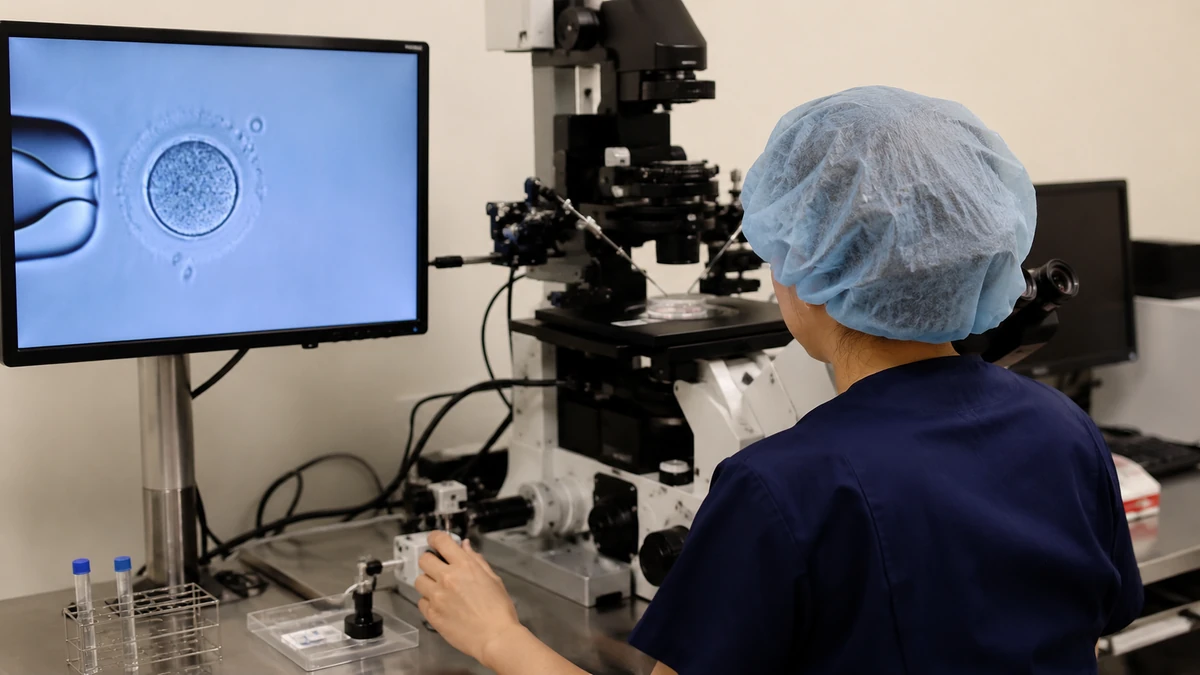
Egg freezing is not a single event like getting a vaccine or filling a prescription. It typically involves consultations, hormone testing, ultrasound monitoring, injectable medications to stimulate the ovaries, and finally a retrieval procedure in which eggs are collected and frozen for possible future use. In other words, the sticker shock comes from a series of medical steps, not just one appointment. By naming consultations, tests and injections as reimbursable categories, the program appears to target the real burden patients feel over the course of treatment.
That burden can be substantial. In the United States, a single cycle of egg freezing can cost thousands of dollars before storage fees, and often far more depending on the clinic and medications required. Costs in South Korea differ, but the underlying issue is similar: fertility preservation can be prohibitively expensive even for middle-class patients. Public assistance covering half the cost will not make the process free, but it could lower the barrier enough for some women to act sooner or recover part of what they already spent.
It is also notable that the program does not impose an income test. Many public health programs, in the United States and elsewhere, are means-tested, targeted chiefly to low-income households. North Chungcheong’s policy appears to reject the idea that fertility preservation is only a hardship for the poor. Instead, it treats egg freezing as a broader reproductive health issue that can affect women across income groups.
That framing is significant because fertility care often falls into an awkward policy gap. It is not always treated as routine preventive care, yet it can be deeply tied to long-term health planning. When governments choose not to cover it, the result is often a highly stratified system in which only people with strong finances or generous employer benefits can preserve reproductive options. In that sense, the new Korean program can be read not just as a subsidy, but as a statement about who should have access to medical choice.
Why egg freezing is about more than delaying motherhood
Popular culture often reduces egg freezing to a familiar storyline: the ambitious professional who wants to postpone motherhood while building a career. That image exists in South Korea just as it does in the United States, but it captures only part of the picture. Women consider egg freezing for many reasons, including upcoming medical treatment, uncertainty about future fertility, the absence of a current partner, educational plans, financial instability or simply the desire for more time.
That is why the North Chungcheong program is drawing attention as a health policy story rather than just a family policy story. By centering ovarian function and preserving future possibility, the province is implicitly recognizing that reproductive health is not limited to pregnancy itself. It includes the period long before someone decides whether or when to have children. It also includes the fact that a person may want to keep options open even if she does not know what her life will look like in a few years.
In the American context, this may resemble the broader shift from talking about women’s health only in terms of childbirth to talking about bodily autonomy, preventive care and life planning. The cultural context in Korea is different, but the underlying issue is familiar. Women are often expected to make major family-related decisions while navigating work demands, housing costs, caregiving obligations and social expectations that do not always line up neatly with biological timelines.
South Korea’s age structure and work culture intensify those pressures. The country is known for long work hours, fierce educational competition and a housing market that has made family formation difficult for many young adults. Marriage tends to happen later than it did for earlier generations, and some people do not marry at all. Against that backdrop, fertility preservation can be understood less as a luxury and more as one tool for managing uncertainty.
That does not mean egg freezing guarantees future success. Like IVF and other fertility treatments, it comes with no promise. Success rates vary by age, egg quantity, egg quality and clinic practices. But from a public policy standpoint, the procedure can still be meaningful as a way to expand choice. The North Chungcheong program appears to be leaning into that concept: not promising outcomes, but helping residents retain a measure of control.
A different message in a country obsessed with its birthrate
To understand why this policy has resonated, it helps to understand the backdrop. South Korea has one of the lowest fertility rates in the world, and the issue has become a national fixation. Politicians, economists and demographers have warned for years about the long-term consequences of a shrinking and aging population, including labor shortages, school closures and strains on the pension system. Government spending aimed at reversing the decline has run into the billions.
Yet many women in South Korea have expressed frustration that pronatalist policies, meaning policies intended to encourage births, often fail to address the structural reasons people delay or avoid having children in the first place. Those reasons include punishing work cultures, unequal burdens of housework and child care, gender discrimination in the labor market and the enormous cost of raising children in a hypercompetitive society. In that environment, a policy that seems to focus on women’s health choices rather than on boosting birth numbers can carry symbolic weight far beyond its budget size.
Even the language matters. If a government says, in effect, “We want you to have babies,” some people hear pressure. If it says, “We want to help you manage your reproductive health based on medical need,” the relationship changes. The first message can feel ideological. The second sounds more like health care.
That distinction does not erase the demographic context. The province itself reportedly described the program as part of a response to low birthrates and support for women who may face difficulty with pregnancy and childbirth. But what is striking is that the actual design of the benefit does not condition support on getting married, becoming pregnant or promising to use those eggs later. Instead, it supports the present-tense medical decision. In public policy terms, that is a meaningful shift.
For readers in the United States, it may recall debates over whether reproductive policy should be built around outcomes governments want or around choices individuals want to preserve. That tension animates controversies over contraception, abortion access, fertility coverage and parental leave. South Korea’s new provincial program does not settle those questions, but it does show how a local government is trying to navigate them.
A regional program with national implications
Because the initiative is being launched by a provincial government, its reach is limited. Women who live outside North Chungcheong province are not automatically covered, and that fact highlights another important feature of Korean social policy: where you live can shape what support you receive. Much as certain U.S. states or cities offer benefits that neighboring jurisdictions do not, local governments in South Korea sometimes experiment with targeted programs before broader national adoption.
That can create uneven access, but it can also turn provinces and municipalities into testing grounds. If North Chungcheong’s program proves popular or politically successful, other regions may feel pressure to create similar assistance. If it runs into administrative obstacles or criticism, policymakers elsewhere may refine the model. Either way, the program is likely to be watched closely beyond provincial borders.
The province said it is working with Hanwha General Insurance and the Chungbuk-Sejong branch of the Korea Population, Health and Welfare Association, suggesting a cooperative model that involves local government, a private insurer and a health-related institution. The exact division of responsibilities was not fully detailed in the summary provided, but the structure itself is notable. Reproductive health support often requires more than just a line item in a budget. Patients need information, referrals, documentation, reimbursement processing and clinical coordination. Multi-institution partnerships can make those systems more workable, especially for services that are medically complex and emotionally sensitive.
That cooperative structure may also reflect a practical recognition: fertility policy works best when it is not just announced, but implemented in ways patients can actually navigate. A subsidy no one understands or can access does little good. The more government can connect financial help to real clinical pathways, the more meaningful the policy becomes.
There is also a political lesson here. In countries where national debates about reproduction can become highly polarized, local governments sometimes move first because they can design more specific, less ideological interventions. A province can focus on a narrow problem, define eligibility carefully and present the program as public health management rather than cultural warfare. That seems to be part of what North Chungcheong is attempting.
What this means for women watching from afar
For women in South Korea, the immediate takeaway is practical: if they live in North Chungcheong province, meet the AMH threshold and paid for egg freezing after Jan. 1, they may be eligible to recover half of certain costs. But for international readers, the larger significance lies in what this case reveals about reproductive policy in a rapidly changing society.
It shows that fertility-related support does not have to begin and end with childbirth incentives. It can also address the earlier, quieter stages of reproductive life: testing, consultation, uncertainty and preservation. It suggests that governments can choose medical criteria over moral criteria, and can treat unmarried women as legitimate participants in reproductive health policy rather than as exceptions to it. And it demonstrates that financial support can be structured not only to reward a future outcome, like having a baby, but also to reduce the cost of a present health decision.
That may sound obvious to some American readers, especially in a country where conversations about reproductive rights and assisted reproduction have become mainstream. But in much of the world, including parts of East Asia, fertility policy still carries strong assumptions about marriage, motherhood and the social purpose of women’s bodies. A provincial Korean program that intentionally loosens some of those assumptions is worth noticing.
It is also worth noting what the policy does not do. It does not make egg freezing universally available. It does not solve the broader inequalities that shape family formation. It does not eliminate the physical demands or emotional uncertainty of fertility treatment. And because it is local rather than national, it leaves many Korean women outside its reach. Still, public policy often changes incrementally. A carefully targeted regional program can serve as an early sign of a broader philosophical shift.
At a moment when many governments are wrestling with population decline, women’s health and the economics of family life, North Chungcheong’s program offers a case study in a different way of talking about reproduction. Not as a duty. Not solely as a demographic imperative. But as an area of health where preserving choice can itself be a legitimate public goal.
That is a message likely to resonate well beyond one province in South Korea.
Comments
Post a Comment