A wedding that means more than celebrity news
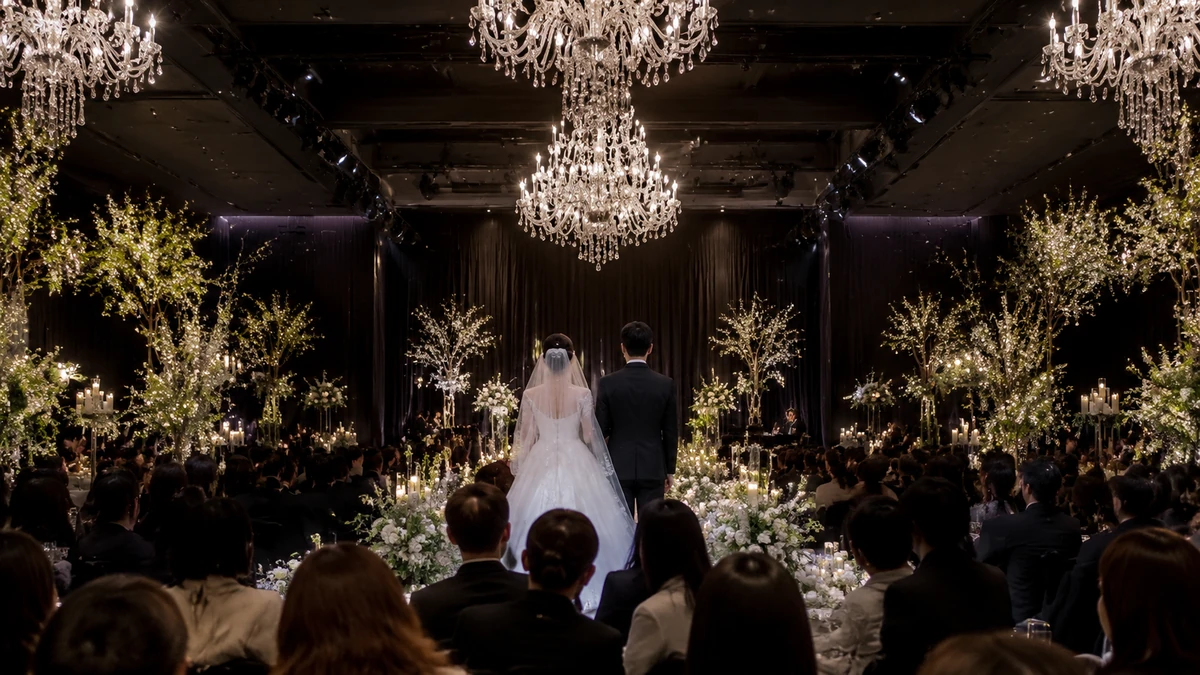
In South Korea’s entertainment industry, where public attention often fixates on comeback schedules, chart rankings and meticulously staged performances, the wedding of singer Yoon Bomi and producer Rado lands as something more textured than a routine celebrity headline. On Wednesday, according to South Korean reports, Yoon, 33, a member of the veteran girl group Apink, married Rado, 42, the songwriter and producer born Song Joo-young, at a hotel in Seoul in a ceremony attended by family members and fellow entertainers.
For American readers who may know K-pop mostly through its polished music videos and arena tours, the significance here goes beyond the familiar appeal of a star wedding. Yoon represents one side of the Korean pop machine that international audiences see most clearly: the performer onstage, the face fans recognize, the artist whose personality and charisma help build years of loyalty. Rado represents the other side, less visible but hugely influential: the producer in the studio, the architect behind hit songs, the person shaping the sound that fans hum long after the spotlight fades.
That is what makes this marriage notable in the context of K-pop’s global rise. It is not simply the story of two well-known figures saying their vows. It is also a rare public moment when the industry’s two engines, performance and production, celebrity and craft, are seen standing side by side in a way even casual fans can understand. In an entertainment system often discussed in terms of branding and spectacle, the wedding offers a reminder that K-pop is also built through enduring personal relationships and creative partnerships.
South Korean coverage described the ceremony as warm and intimate rather than extravagantly showy. That distinction matters. In a media environment where weddings can become exercises in image management, the details emerging from this event suggest a gathering shaped less by glamour than by connection. The people chosen to host, sing and celebrate say as much about the couple’s place in the industry as any formal announcement could.
For fans, the wedding may feel like a milestone in the life of a beloved idol. For the industry, it reads as a visible joining of networks that have long overlapped behind the scenes. And for an international audience, it offers a useful window into how Korean pop music really works: not only through stars and singles, but through webs of trust, collaboration and history.
The guest list doubled as a map of the K-pop industry
One of the most striking elements of the wedding was the lineup of people involved in the ceremony itself. Broadcaster and entertainer Kim Ki-ri served as host. Members of Apink sang in celebration of Yoon. STAYC and another act from Rado’s company also performed congratulatory songs. To someone unfamiliar with Korean celebrity culture, that might sound like standard wedding pageantry. In Korea, however, these details can carry special symbolic weight.
Wedding performances by friends and colleagues are common in the entertainment world, but here the arrangement effectively illustrated the two communities the couple belongs to. On one side were Yoon’s longtime teammates in Apink, a group that debuted in 2011 and helped define a softer, more melodic era of girl-group pop before K-pop’s current global boom. Their participation signaled continuity, loyalty and a kind of emotional history that many fans of idol groups care about deeply. In K-pop, fans often invest not only in songs but in the relationships among members, following a group’s evolution the way American sports fans might follow a franchise across generations.
On the other side were artists linked to Rado’s work as a producer, including STAYC, the girl group he is widely known for helping build. Their presence highlighted another truth about K-pop: producers in South Korea are often not just hired hands. They can become central creative figures who define an act’s identity, sound and public trajectory. If American audiences are used to thinking of someone like Max Martin, Jack Antonoff or Pharrell Williams as a force behind major pop stars, Rado occupies a similar lane within K-pop, though often with even deeper ties to the structure and concept of the acts he works with.
Put together, the performance lineup turned the wedding into a subtle industry portrait. It showed how deeply K-pop relies on networks of collaboration. The songs that fans stream by the millions do not appear out of nowhere. They come from ecosystems of songwriters, producers, managers, vocal directors, choreographers and performers who may work together for years across multiple projects. What was moving about this ceremony, at least as described in local coverage, was that it made that ecosystem visible in a celebratory way rather than a corporate one.
That matters because K-pop is often discussed abroad as if it were driven entirely by competition. There is plenty of competition, of course, just as there is in Hollywood or Nashville. But this wedding underscored the communal side of the business. Different groups and colleagues came together not to promote a release or award show appearance, but to mark a private life event. In an industry known for high pressure and constant public scrutiny, that gesture of collective support left a warm impression.
Why Rado’s name carries unusual weight
To understand why this wedding drew more than passing interest, it helps to know who Rado is in K-pop. While casual international listeners may not immediately recognize his face, they are likely familiar with the kind of music he has helped create. He is best known as a main producer behind STAYC, one of the girl groups that found success by blending catchy hooks with a polished yet energetic style that stands out in a crowded market. But his résumé stretches far beyond one act.
Rado has also been associated with hit songs for major K-pop names including TWICE and Chungha, two artists whose careers have reached well beyond South Korea. In the K-pop industry, where songs can make or break a comeback and where a group’s sonic identity is central to its brand, a producer with a strong track record is not a background extra. He is part strategist, part composer, part image shaper.
That producer role can be easy to overlook for overseas fans, especially because K-pop’s export model foregrounds visuals and performance. American audiences often encounter songs through viral clips, music videos and concert footage rather than liner notes or production credits. But if there is a lesson in this moment, it is that the people behind the console matter as much as the faces on the screen. K-pop’s appeal depends on choreography and charisma, yes, but it also depends on hooks, arrangements and the ability to build a musical identity that feels distinct in an intensely competitive field.
Rado’s connection to Yoon was not incidental, either. According to the Korean summary, he previously worked on Apink songs including “Only One” and “Hush,” meaning the couple’s story is rooted in music itself. That makes their marriage feel less like a collision of separate worlds than the continuation of a relationship that had already been shaped by shared professional experience. In other words, this was not a singer marrying a producer she happened to meet through fame. It was a partnership that grew inside the creative environment both of them knew well.
For international readers, that point helps explain why this story resonates. It invites attention not just to celebrity romance but to authorship in K-pop. The wedding naturally places a spotlight on a creator who has often been known mainly through credits. In an industry where producers can be both central and invisible, this kind of public milestone can briefly pull back the curtain and remind fans how much of their favorite music is the result of long-term creative labor.
Yoon Bomi’s statement offered a different kind of celebrity language
South Korean stars operate within a different set of expectations around privacy, fandom and public image than most American celebrities do. Dating news can still spark intense debate, particularly in the idol world, where fans have historically been encouraged to view stars as emotionally available, if not literally attainable. That culture has changed over time, especially as idols age and fans mature with them, but relationships remain sensitive terrain.
That is part of why Yoon’s earlier statement about marriage, released in December, stood out. She said she had decided to share her life with someone who had spent a long time by her side, sharing everyday life with her and staying with her through both joyful and shaky moments. It was the kind of message that avoided oversharing while still offering emotional clarity. Rather than frame the relationship as a fairy tale, she framed it as the result of time, steadiness and mutual support.
That distinction may sound small, but in celebrity culture it matters. American audiences are used to highly choreographed relationship announcements, from glossy magazine exclusives to Instagram confessionals. Yoon’s language, at least as summarized in Korean reports, landed differently. It emphasized the ordinary rather than the spectacular. It suggested that beneath the public image of an idol, there is still a person whose life is built through routine, vulnerability and trust.
For fans, that kind of statement can shape how a wedding is received. The most successful celebrity announcements are often the ones that feel calm and grounded rather than defensive or dramatic. Yoon’s message appears to have done that by explaining the decision without inviting invasive attention. She offered just enough to make the news legible and human, while still preserving the couple’s private life.
It also spoke to something larger about K-pop’s maturation. The first generations of idol culture often maintained a stricter divide between public fantasy and private adulthood. But many of the artists who debuted in the early 2010s are now in their 30s, and their fan bases have grown older with them. A marriage announcement from a veteran idol like Yoon can therefore become a marker of generational change. It signals that fans are not only following an artist’s next album or variety-show appearance. They are also witnessing the broader arc of a life.
What Apink’s role says about fandom and longevity
For many K-pop followers, one of the most affecting details of the wedding will be that Apink members sang for Yoon. To American readers, the emotional logic may be comparable to bandmates from a long-running group showing up not out of obligation, but out of genuine affection and shared history. Yet in K-pop, that symbolism can be even stronger because the bond among members is so central to a group’s public identity.
Apink debuted more than a decade ago and has survived longer than many idol groups do. Longevity in K-pop is not automatic. The industry moves fast, newer acts debut constantly, and sustaining a group identity over many years requires both commercial viability and interpersonal durability. Fans know that. They pay attention not only to albums and performances, but to the signs that a group’s relationships remain intact across time, contract changes and individual careers.
So when Apink members reportedly took part in the wedding as singers, it functioned as more than a ceremonial flourish. It was a public affirmation that the group’s shared story remains alive. For longtime fans, those gestures carry real emotional weight. They validate years of attachment and memory, confirming that the relationships audiences have rooted for on screen and onstage still have substance offstage as well.
This dynamic is one reason K-pop fandom can look unusually immersive to outsiders. Fans are not simply consumers of singles. They are participants in an unfolding narrative, one that includes debuts, setbacks, friendships, hiatuses, reunions and, sometimes, major life events like marriage. A wedding can therefore become part of a group’s broader story rather than a separate private chapter disconnected from the music.
That does not mean every fan reacts the same way. K-pop fandoms, like all fandoms, are diverse, emotional and sometimes divided. But in this case, the tone of the coverage suggests a largely celebratory reception, in part because the event was framed through support and community rather than scandal or conflict. That distinction is important. In pop culture, news becomes easier to embrace when it arrives with grace, context and visible goodwill from the people closest to the artist.
A softer image of K-pop for a global audience
To many Americans, K-pop still carries a highly stylized image: precision choreography, immaculate fashion, rapid-fire fan engagement and a relentless output of content. None of that is false. But it is incomplete. Stories like Yoon and Rado’s wedding reveal a softer and perhaps more durable picture of the business, one grounded in creative continuity and human ties.
That image matters because K-pop’s global reputation often swings between two extremes. Admirers focus on the polish, innovation and dedication. Critics focus on the system’s intensity, its competition and the pressures placed on artists. Both perspectives contain truth. What this wedding adds is another layer: a glimpse of an industry that is also held together by long-term professional relationships, mutual respect and a culture of showing up for one another.
The ceremony in Seoul, as described in Korean reporting, brought together a comic host, veteran group members, younger label-linked artists and a producer with a broad cross-generational track record. That kind of cross-section tells its own story. It suggests that the Korean music scene is not just a conveyor belt of interchangeable acts. It is a connected ecosystem where people move between roles, generations and projects while maintaining ties that can outlast a single album cycle.
For international readers, that may be one of the more revealing aspects of the news. Fans abroad usually encounter K-pop through finished products: a streaming hit, a concert, a reality clip, a dance challenge. Weddings, by contrast, are social events. They show who an artist’s people are. They reveal which relationships matter when there is nothing to sell. In that sense, this wedding offered an unusually clear snapshot of K-pop’s internal structure, not as a business plan but as a community.
It also reflects the way the industry is evolving as its stars get older and its international audience becomes more sophisticated. Global fans increasingly want to understand not just the product, but the context: who writes the music, how companies shape careers, what group loyalty looks like over time, and how stars navigate adulthood under public scrutiny. The marriage of Yoon and Rado touches all of those questions at once.
Why this moment will resonate beyond Seoul
In the end, the appeal of this story is not hard to understand. A singer known for years of public performances marries a producer known for crafting some of the sounds that helped define modern K-pop. Friends and colleagues from both sides gather to celebrate. The mood, by all appearances, is affectionate rather than extravagant. There is no manufactured controversy, only the kind of shared joy that fans can recognize even across cultural lines.
That universality is part of why the news will travel. Every music industry has its high-profile marriages and its symbolic unions. But in K-pop, where the line between stage persona and private life can be particularly delicate, a wedding like this carries extra meaning. It tells fans that an idol they have watched for years is entering a new chapter. It reminds them that the songs they love come from collaborative worlds, not isolated stars. And it underscores that behind one of the most globalized pop industries on Earth are still very human bonds.
For American audiences, perhaps the easiest reference point is to think of this as a marriage that connects the frontwoman of a beloved long-running pop act with a major songwriter-producer whose influence stretches across the genre. But even that comparison does not fully capture the K-pop dimension, where group identity, fan culture and production networks are unusually intertwined. The wedding becomes meaningful not simply because two famous people got married, but because the people around them made visible the architecture of an entire scene.
That is why this was more than celebrity gossip. It was a small but telling cultural event inside one of the world’s most watched music industries. It showed the endurance of Apink’s bond, the stature of Rado’s creative career and the increasingly mature way veteran K-pop artists can share life milestones with the public. In a business often defined by speed, novelty and performance metrics, Yoon Bomi and Rado’s wedding offered something slower and more reassuring: evidence that the music world many fans admire is also sustained by trust, gratitude and long memory.
For those who follow Korean pop only from a distance, that may be the most valuable takeaway. Beyond the lights and choreography, K-pop is a network of people. On one day in Seoul, that network came together not for a comeback or an awards show, but for a marriage. And in doing so, it revealed a fuller picture of the culture behind the global phenomenon.
Comments
Post a Comment