A call that matters beyond diplomatic choreography
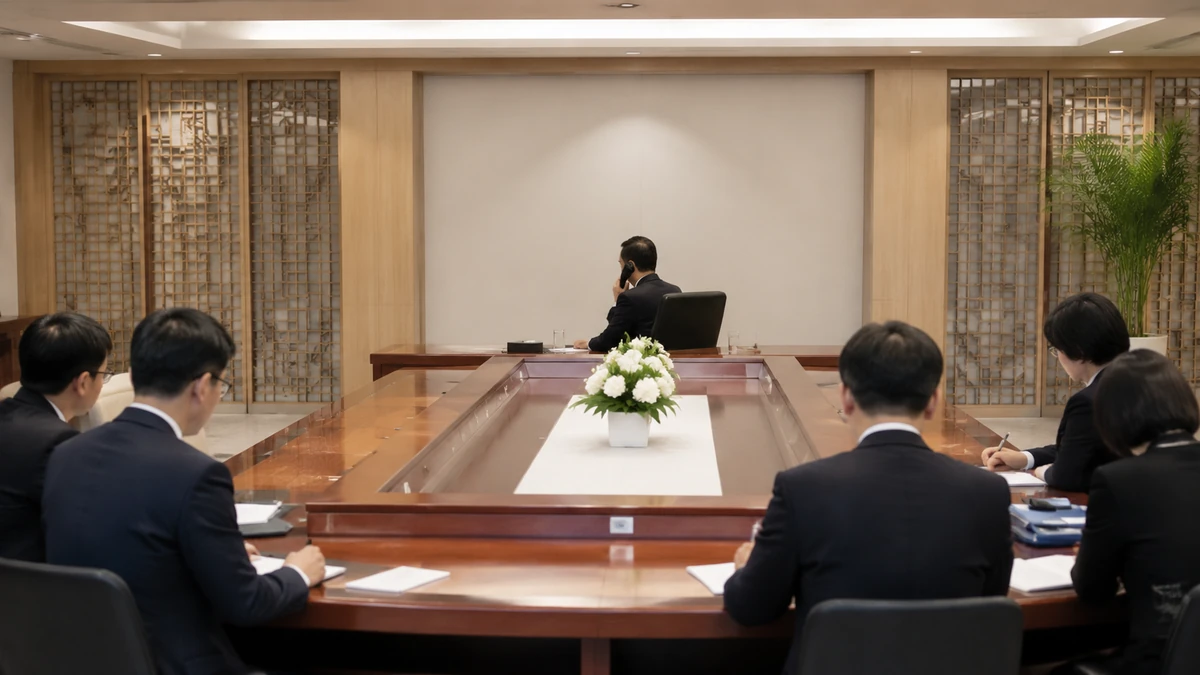
South Korean President Lee Jae-myung and President Donald Trump spoke for about 30 minutes on Sunday in a call that, on its face, might look like a routine piece of alliance management. It was not. Coming immediately after a U.S.-China leaders meeting, the conversation carried a larger signal: Seoul wanted to hear directly from Washington about what was said between Trump and Chinese President Xi Jinping, especially on the future of the Korean Peninsula, and the White House was prepared to provide that readout at the highest level.
That sequence matters. For American readers, one way to think about it is this: if Washington had just finished a major strategic meeting with Beijing on an issue as sensitive as Taiwan or trade, U.S. allies in the region would want to know whether their interests were discussed and how. South Korea, which lives under the shadow of North Korea’s military threat and sits at the fault line of U.S.-China rivalry, has even more reason to seek immediate clarification. The peninsula is not an abstract foreign-policy talking point in Seoul. It is a daily security concern, a political issue and, often, a test of how much room middle powers have to act while larger ones compete.
According to the South Korean account cited by Yonhap, Lee and Trump discussed the results of the recent U.S.-China summit, peace and stability on the Korean Peninsula, and the faithful implementation of a joint U.S.-South Korea fact sheet. Those three topics are connected. The first concerns the global balance of power. The second gets at the immediate risk of conflict or escalation involving North Korea. The third is about whether U.S.-South Korea policy can move beyond broad declarations and into concrete follow-through.
In American political coverage, summit diplomacy is often framed around optics, chemistry and whether a breakthrough occurred. But in Northeast Asia, the more consequential question is often whether governments are keeping communication channels active when no breakthrough is available. By that measure, this call was significant precisely because it did not announce a dramatic new deal. Instead, it suggested that Seoul and Washington are trying to ensure that events involving Beijing do not leave South Korea reacting from the sidelines.
The call was arranged at Seoul’s request, according to the summary, which is also telling. It suggests urgency on the South Korean side and underscores how carefully Seoul monitors great-power conversations that might affect North Korea, deterrence, sanctions enforcement or the broader regional security picture. In diplomacy, timing is often substance. A call placed right after a U.S.-China summit says that South Korea sees linkage between those talks and the future of its own security environment.
Why the timing is so politically charged
The South Korean summary emphasizes the gap since the two leaders last spoke directly: 345 days since their previous phone call and 200 days since their last face-to-face communication following a summit in Gyeongju. Those numbers are not important as trivia. They matter because they illustrate the rhythm of alliance diplomacy at a volatile moment. This was not the kind of constant, low-level check-in that happens when relations are on autopilot. It was a leader-level conversation activated after a long pause because the regional environment had shifted.
For an American audience, it may help to compare this to the way Washington sometimes treats presidential calls with NATO allies after a major crisis or a consequential meeting with Russia. Even when there is no immediate military decision to announce, the act of consultation itself sends a message: allies are being brought into the loop, and policy will not be improvised in a vacuum. In East Asia, where historical mistrust runs deep and where misreading another capital’s intentions can have outsized consequences, that reassurance matters.
The U.S.-China summit looms especially large for South Korea because nearly every strategic issue in the region eventually touches the peninsula. U.S.-China relations shape the enforcement of sanctions on North Korea, the diplomatic space available for denuclearization talks, the military posture of the United States in the region and the strategic calculations of Seoul, Tokyo and Pyongyang. So when Washington and Beijing speak, Seoul listens closely, not out of diplomatic vanity but because the consequences can be direct.
The South Korean account says Lee positively assessed what it called “constructive discussions” between Trump and Xi on Korean Peninsula issues. That phrase deserves attention. Diplomatic language is rarely accidental. Calling something “constructive” does not mean a breakthrough occurred, and it does not mean Seoul agrees with every element of what Washington and Beijing discussed. It usually means the South Korean government believes the subject was handled in a way that might preserve options rather than close them off.
That is a modest but meaningful distinction. On the Korean Peninsula, deadlock is common and maximalist expectations often collapse under political reality. Under those conditions, even a conversation that prevents deterioration can count as progress. If Washington and Beijing are at least discussing the peninsula in terms that Seoul views as constructive, South Korean officials may see that as a better starting point than silence, escalation or public disagreement among the major players.
South Korea’s balancing act in a U.S.-China era
One of the most revealing aspects of the episode is what it says about South Korea’s place in the broader contest between the United States and China. American coverage sometimes treats allies in Asia as passive participants in a competition defined almost entirely by Washington and Beijing. That can flatten the reality. South Korea is a treaty ally of the United States, but it is also a country with deep economic exposure to China, immediate geographic exposure to North Korea and strong incentives to maintain strategic flexibility wherever possible.
This is where the Korean Peninsula becomes more than just a bilateral issue between North and South. It is, at the same time, an alliance issue, a nuclear issue, a regional security issue and a great-power issue. North Korea’s weapons programs cannot be discussed apart from U.S. extended deterrence. Denuclearization cannot be discussed apart from China’s leverage. Inter-Korean stability cannot be discussed apart from the military posture of the United States and the diplomatic calculations of Japan, Russia and others. The peninsula is a layered geopolitical problem, and this call reflected that complexity.
The South Korean summary notes that a surprise U.S.-North Korea summit did not materialize during Trump’s trip to China. Even so, it says the parties exchanged views on how to advance denuclearization and what role China might play in that process. That detail is crucial. In Washington, summit politics around North Korea have often been judged by whether a dramatic leader-to-leader meeting happens, as if diplomacy exists only when television cameras are present. But the more durable work often happens in the background: shaping expectations, clarifying what major powers will support and determining how much leverage each side is willing to use.
China’s role remains central whether Americans like that reality or not. Beijing shares a border with North Korea, has historically been the North’s most important economic lifeline and has the capacity to tighten or loosen pressure in ways that can affect Pyongyang’s calculations. South Korea understands that any sustainable strategy toward North Korea must account for Chinese interests, even when Seoul and Washington would prefer not to give Beijing that much relevance. In practice, that means alliance coordination with the U.S. and careful management of China’s influence are not competing tracks. They are parallel requirements.
That is one reason the call matters. It showed South Korea not simply waiting to see what the U.S. and China decide, but actively seeking to interpret and shape the diplomatic environment from inside the alliance. That may sound subtle, but for middle powers living next to larger rivals, subtlety is often strategy. Seoul cannot dictate the terms of U.S.-China competition, but it can insist on being consulted when its core interests are implicated.
The alliance message to Washington — and to the region
Trump, according to the South Korean account, told Lee that the United States would do what is necessary for peace and stability on the Korean Peninsula based on close coordination between the two allies. That line serves several audiences at once. It reassures Seoul that U.S.-China engagement does not replace the alliance. It signals to Beijing that Washington still treats South Korea as a central partner on peninsula matters. And it reminds Pyongyang that even when larger diplomatic currents shift, U.S.-South Korea coordination remains the backbone of deterrence.
There is also an information-politics dimension here that should not be overlooked. South Korea’s senior presidential spokesperson said Trump shared the results of the U.S.-China summit with Lee “as an ally.” That phrase matters in diplomatic practice. It means South Korea did not have to learn about discussions affecting the peninsula solely through media reports, leaks or public statements crafted for other audiences. Instead, it received a leader-level account through alliance channels. In foreign policy, the speed and quality of information can shape decision-making just as much as formal agreements do.
For Americans, this can sound procedural, but procedure is often policy. A country that hears about consequential regional discussions directly from the U.S. president is in a different position from one that must piece together developments from press conferences and secondary sources. It can calibrate its own messaging more quickly, reduce the risk of public misunderstanding and prepare its bureaucracy for whatever comes next. In other words, direct consultation is not just symbolism; it is a practical mechanism of alliance trust.
This is particularly relevant because Northeast Asia is a region where signaling failures can have serious consequences. North Korea pays attention not only to military exercises and sanctions, but also to whether Seoul and Washington appear aligned. China watches for signs of divergence inside U.S. alliances. Japan monitors whether developments on the peninsula might reshape regional security planning. Even domestic audiences in South Korea and the U.S. parse these exchanges for signs of steadiness or drift. A simple phone call can therefore operate as a stabilizing tool, provided both sides treat it as more than a photo-op substitute.
The longer gap since the last direct conversation also gives this call added weight. It suggests that when the two leaders do speak, it is because officials believe a moment of decision, or at least a moment of strategic interpretation, has arrived. That should caution against reading the exchange as mere ceremonial upkeep. It appears better understood as a reset of top-level coordination after a period in which other forces — great-power rivalry, summit diplomacy and the persistent uncertainty around North Korea — were moving quickly.
What the joint fact sheet tells us about the alliance now
One of the more intriguing elements in the South Korean summary is the emphasis on implementing the joint U.S.-South Korea fact sheet, which both leaders reportedly described as a “historic agreement.” The document’s contents were not restated in the summary, but the very fact that it came up in a conversation otherwise dominated by the U.S.-China summit is revealing. It indicates that both governments want to connect big-picture geopolitics to already-established bilateral commitments.
That is an important development in its own right. In alliance politics, leaders often announce principles, issue warm communiques and speak broadly of shared values. The harder test comes later: whether the governments involved carry out what they already agreed to do. By revisiting the fact sheet in the same call where they discussed U.S.-China diplomacy and the Korean Peninsula, Lee and Trump appeared to be signaling that alliance credibility depends not only on new statements but on execution.
Americans are familiar with this logic in domestic politics. A president can unveil a high-profile initiative, but eventually voters and institutions judge whether the administration followed through. Alliances work similarly. The measure of trust is not only how leaders speak in public, but whether bureaucracies align budgets, defense postures, diplomatic initiatives and policy timelines with the commitments their leaders endorsed. When Seoul and Washington call a document “historic,” they are raising the political cost of failing to implement it.
That matters even more in a period of international uncertainty. When the surrounding environment becomes unstable, countries often cling more tightly to existing frameworks because those frameworks offer predictability. A fact sheet may sound dry compared with summit theatrics, but in practice it can function as a roadmap, a benchmark and a reassurance device all at once. If the U.S.-China relationship becomes more volatile, and if North Korea remains unpredictable, then steady implementation of bilateral agreements becomes a way to prevent alliance drift.
There is also a domestic political angle in South Korea. Presidential offices there, much like the White House, operate under intense scrutiny, and foreign policy can quickly become entangled with partisan battles. By framing the fact sheet as something both leaders remain committed to implementing, Seoul’s presidential office can present the alliance as grounded in institutional continuity rather than personal improvisation. That is a useful message at a time when many democracies, including the U.S., are grappling with polarization and doubts about the durability of long-term strategy.
What this does — and does not — mean for the Korean Peninsula
It is important not to oversell the call. The summary does not describe a new agreement, a scheduled summit, a breakthrough with North Korea or a concrete change in military posture. There is no indication that a fresh negotiating track has been launched or that Pyongyang is preparing to return to serious talks. Anyone looking for a dramatic turn in Korean Peninsula diplomacy will not find it here.
But dismissing the conversation because it lacked fireworks would miss the point. The clearest takeaway is that Seoul and Washington are reactivating leader-level coordination at a time when the peninsula is being discussed not only in bilateral alliance terms but also in the context of U.S.-China diplomacy. That is a meaningful fact. It shows that South Korea is still determined to keep its voice in any wider regional conversation touching its core security interests.
The call also reinforces a basic reality that can get lost in American debates: the Korean Peninsula does not disappear as a strategic issue simply because headlines move elsewhere. Even when there is no missile launch, no summit spectacle and no sudden crisis, the underlying questions remain unresolved. How can North Korea’s nuclear threat be contained or rolled back? What role should China play? How can the U.S. reassure its ally without provoking unnecessary escalation? And how can South Korea preserve room to maneuver while remaining anchored to its alliance commitments?
Those questions were not answered in one 30-minute phone call. But they were clearly present in it. That is why the exchange deserves attention. It reflected a region where diplomacy does not move in a straight line, where symbolism and substance often overlap, and where even small acts of consultation can shape the broader strategic climate.
For American readers, the broader lesson is straightforward. In Northeast Asia, the most consequential stories are not always the loudest ones. Sometimes the real story is a quiet but carefully timed conversation after another summit elsewhere — a reminder that alliances are maintained through constant interpretation, not just occasional spectacle. South Korea’s message in seeking this call was that it does not intend to be a passive observer while larger powers discuss the future of its neighborhood. Washington’s message, at least for now, was that it is still prepared to treat Seoul as a central partner in that conversation.
That may not qualify as a diplomatic breakthrough. But in a region where mistrust is high, stakes are nuclear and the margin for error is thin, keeping that line open is itself a form of strategy.
Comments
Post a Comment