At 102, Japanese Author Aiko Sato Leaves Behind a Fierce Late-Life Voice That Reached Readers Across Asia
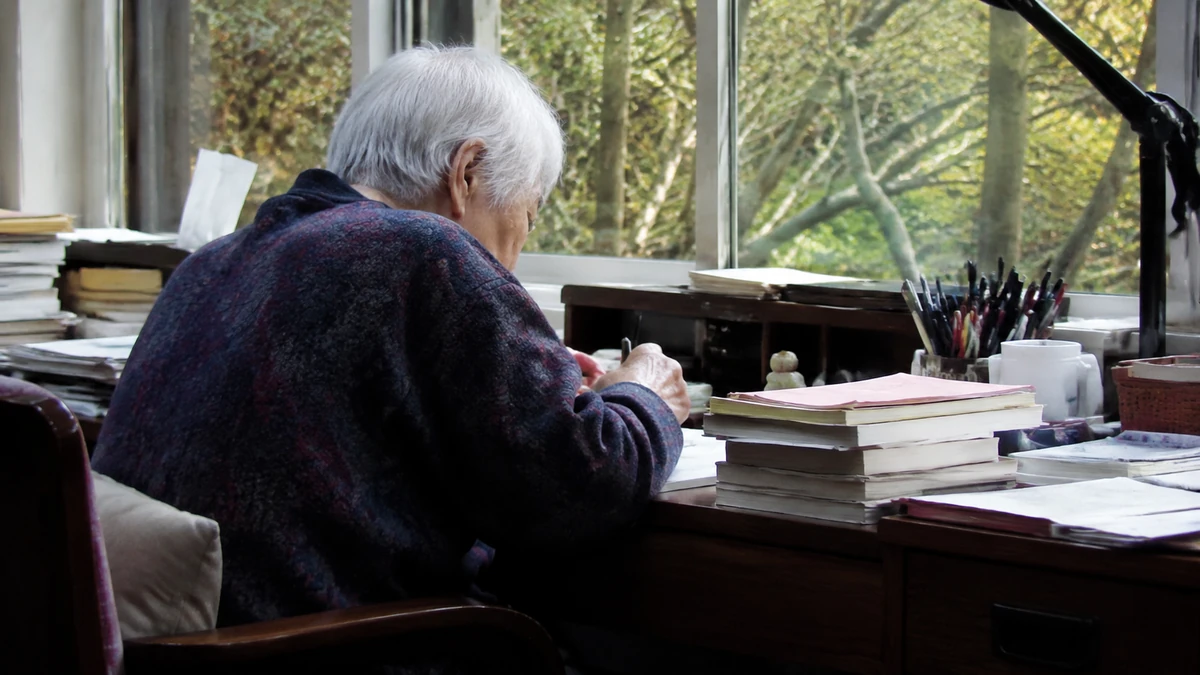
A late-life literary force remembered across borders
Japanese author Aiko Sato, whose sharp, unsentimental writing about aging, marriage and everyday survival found a surprisingly broad readership well into her 90s and beyond, has died at 102. According to Japanese media reports carried widely on May 16, 2026, Sato died April 29 at a care facility in Tokyo.
In Japan, her death marks the passing of a writer who did something rare in any literary culture: She remained not just alive into extreme old age, but vividly current. Even after turning 100, she was still associated with new books, fresh arguments and the kind of blunt public commentary that cut through euphemism. For readers in South Korea, where one of her books was translated and newly embraced last year, the news landed as more than an obituary from a neighboring country. It felt like the interruption of a conversation that had only recently begun.
That cross-border response says something important about how books travel in East Asia today. Americans often encounter Asian cultural exchange through the biggest exports — K-pop, anime, Netflix dramas or Oscar-winning films. But the region’s cultural ties are also built through quieter channels: translated essays, rediscovered backlist titles and the sudden realization that a writer who spent decades speaking to one national audience has, late in life, found another abroad. Sato’s career became a striking example of that process.
She was not simply admired because she lived a long life. Longevity alone does not make a writer relevant. What distinguished Sato was that old age did not soften her prose into nostalgia or inspirational uplift. She wrote about growing older in a way that resisted the pieties many societies attach to old age. There was no soft-focus wisdom, no tidy life lessons, no insistence that hardship inevitably produces serenity. Instead, she wrote with irritation, wit, candor and a stubborn attentiveness to the daily indignities of being human. That honesty made her feel contemporary not despite her age, but because of it.
For English-speaking readers unfamiliar with her work, Sato may be best understood as a public intellectual of lived experience rather than abstraction — a writer whose authority came less from theory than from endurance. Her essays did not ask to be admired from a distance. They asked to be recognized. In an era when public discourse often rewards polish, branding and self-improvement rhetoric, Sato’s voice carried the opposite charge: unsparing, plainspoken and deeply skeptical of social performance.
Why her death resonated in South Korea
The South Korean response to Sato’s death is especially revealing. There, she had recently been introduced to a wider reading public through a translated edition of a later work published under the Korean title roughly meaning, “If You’re Going to Live, Live With Spirit.” The phrase captures why she resonated. It does not present old age as graceful retirement from the world, but as a continued act of will — messy, imperfect and sometimes bad-tempered.
That message found fertile ground in South Korea, a society where readers, like many in the United States, are navigating burnout, economic pressure and relentless expectations of self-management. Korean readers are well acquainted with literature and essays that explore emotional exhaustion, status anxiety and the burdens of social conformity. Sato’s work entered that conversation from outside, but not from so far outside that it felt foreign. Her themes — the fatigue of keeping up appearances, the irritation of dealing with society’s hypocrisies, the insistence on continuing anyway — translated with unusual force.
For American readers, there is a useful parallel in the way certain older writers or cultural figures suddenly gain new relevance when a younger generation discovers that their supposed “outdatedness” is actually freedom from current fashions. In the United States, readers sometimes rediscover essayists, memoirists or public voices from earlier eras because they seem less rehearsed than the present. Sato’s Korean reception appears to have worked in a similar way. She was a Japanese elder stateswoman of letters, but she was also read as someone refreshingly unafraid to sound impolite, impatient or unvarnished.
There is another layer here. South Korea and Japan share a deeply intertwined but politically fraught history, and cultural exchange between the two countries can never be reduced to simple neighborly borrowing. Yet books often move in ways politics cannot fully control. A translated work by an older Japanese writer finding renewed life in Korea suggests that readers are often less interested in national prestige than in emotional truth. Sato’s rediscovery there was not a diplomatic event or a trend manufactured by mass entertainment. It was a quieter act of literary recognition.
The timing made her death all the more striking. She had not been remembered in Korea as a distant historical figure. She was in the middle of being read again, introduced to a new audience as if in the present tense. That is one reason the news felt immediate. Her career illustrates how translation can reshape the final chapter of a writer’s life, creating an afterlife before death — a second readership, in another language, that reframes what a career means.
A life marked by hardship, not literary romance
Sato was born in Osaka on Nov. 5, 1923, the daughter of a novelist. At first glance, that biographical detail might suggest an orderly literary inheritance: a child of letters who simply stepped into an established tradition. But accounts of her life point to something rougher and less romantic. Her authority as a writer did not come from pedigree alone. It came from catastrophe, debt, disappointment and the stubborn practical intelligence required to survive all three.
She married at 20, but her first husband later died after becoming addicted to morphine during medical treatment. It was around that period, according to reports about her life, that she began writing fiction. She later remarried a writer associated with a literary coterie, but after his business failure led to bankruptcy, she reportedly repaid the debts herself and divorced him. These details are not merely colorful biographical material. They help explain the emotional grain of her work.
Many writers transform private suffering into literature, but not all do so with the same degree of resistance to self-pity. Sato’s work appears to have been shaped by an unwillingness to convert pain into moral uplift. Loss, failed relationships and financial pressure were not, in her telling, noble trials on the road to enlightenment. They were bruising facts. That distinction matters. It is part of why her essays are often described less as polished reflections than as testimony from inside a life still being wrestled with.
That attitude also set her apart from conventional images of the “elder writer.” American readers are familiar with the marketable version of old age: the wise grandparent voice, dispensing perspective with warmth and detachment. Sato offered something more unruly. She did not seem especially interested in playing the sage. If anything, she remained suspicious of the social expectation that older women, especially, should become soft, self-effacing and reassuring.
In that sense, her public image carried a quiet feminist force, even when it was not packaged in contemporary ideological language. She spoke about marriage, domestic strain and social expectations from the position of someone who had lived their consequences. Rather than presenting herself as a model of elegant resilience, she often sounded like a witness refusing to prettify the evidence. That refusal gave her work credibility. It also made her difficult to domesticate, which may be another reason readers kept coming back.
The breakthrough that came after 90
Sato had long been respected in Japanese literary circles. She won the Naoki Prize, one of Japan’s best-known literary awards, in 1969 for a work based on her experiences. In another career, that might have been the peak: prize recognition, establishment approval, a secure place in postwar letters. But Sato’s broadest popular impact came much later, after an age when most writers have either become canonized, forgotten or safely settled into retrospective appreciation.
Her 2016 essay collection, whose Japanese title is often rendered as “At 90, So What’s There to Celebrate?” became a sensation and topped annual bestseller rankings in Japan in 2017. The title itself explains much of its appeal. Japan is the world’s most aged major society, and public discussion there often treats longevity as both demographic challenge and moral triumph. Governments worry about pensions and caregiving, while media narratives frequently package centenarians as emblems of national health, perseverance or quaint inspiration.
Sato pushed back against that sentimental framing. Her question — what, exactly, is so celebratory about reaching 90? — punctured the ritual cheeriness that often surrounds old age. She was not denying the value of life. She was denying the obligation to call every extension of it a blessing in easy slogans. That distinction resonated in Japan because it spoke to realities many people know but are discouraged from saying aloud: aging can be painful, lonely, frustrating and physically humiliating, even when one remains mentally alert.
American readers may hear an echo of debates in the United States over “positive aging” culture, wellness marketing and the pressure to treat every life stage as a branding opportunity. Sato’s appeal was, in part, that she refused such packaging. Her candor challenged the idea that the elderly owe society gratitude, composure or uplift. She allowed old age to be contradictory — survivable, even meaningful, but also exasperating and unglamorous.
That late-life bestseller did more than revive her profile. It recast her. She was no longer only a prize-winning author from decades earlier; she became a public voice for a society trying to think honestly about what it means to grow very old. In 2024, the book was adapted into a film, extending her reach beyond the literary world. That is a notable measure of cultural impact. A writer’s themes had migrated into broader popular conversation, suggesting that what she captured was not a niche concern of seniors but a social mood.
In an age when audiences increasingly look for authenticity yet are often served performance, Sato’s late surge felt almost paradoxical. The older she became, the less filtered she sounded, and the more people listened.
“Angry Aiko” and the politics of blunt speech
Part of Sato’s public identity came through television, where she reportedly appeared as a talk-show commentator while working to pay off debt. There she earned the nickname “Angry Aiko,” a label that could sound dismissive at first glance but also captured her defining refusal: She would not smooth over discomfort for the sake of manners.
That bluntness carried into her comments on modern life. She criticized smartphone dependency and complained about a world in which trivial matters quickly become online uproars. To some readers, especially in an American media environment saturated with hot takes, that may sound like standard generational grumbling. But her comments seem to have landed differently because they were rooted in a broader worldview rather than a reactive anti-tech posture.
Sato’s grievance was not simply that society was changing. All older commentators say that. Her deeper concern appears to have been that people were becoming less capable of tolerating ordinary friction — less able to sit with boredom, ambiguity or discomfort without immediately amplifying it. That diagnosis feels familiar far beyond Japan. In the United States, too, public life is shaped by hyperconnectivity, performative outrage and the pressure to produce instant moral clarity on demand.
Her remarks also worked because they were not delivered in the managerial language of experts. They sounded like the verdict of someone who had lived long enough to recognize recurring patterns beneath new devices. Technology changes. Vanity, panic and conformity do not. Sato spoke to that continuity. She was often described as sharp-tongued, but the sharpness served a literary function: It cleared away euphemism. What remained was not always comforting, but it was legible.
This helps explain why readers who might not agree with every statement still found her compelling. The attraction was not ideological alignment. It was the sensation of hearing someone who had not outsourced judgment to consensus language. In a period when public speech often arrives pre-softened by institutions, publicists or social media caution, Sato’s voice could feel almost shockingly unprocessed.
That is especially significant coming from an older woman in East Asia, where conventional expectations around age and gender have often rewarded restraint, deference and social harmony. Her outspokenness challenged those conventions without needing to announce itself as rebellion. She simply acted as if truth, or at least her truth, mattered more than good form.
What her rediscovery says about East Asia’s reading culture
Sato’s renewed visibility in South Korea also points to a larger story about publishing in East Asia. International coverage of Asian culture often narrows attention to blockbuster exports and geopolitical flashpoints. But beneath that headline layer is a dense, dynamic ecosystem of translation among Japan, South Korea, Taiwan and mainland China. Books circulate not only because they are globally famous, but because they answer local anxieties in unexpectedly precise ways.
Sato’s work seems to have crossed into Korea at a moment when readers were especially receptive to writing that rejects self-optimization. Her appeal there suggests that literary translation is not just about importing prestige. It is about timing, mood and the subtle affinities among societies that are aging rapidly, living online and struggling with social pressure. In that sense, her Korean afterlife was not incidental. It was diagnostic.
For American readers, one useful comparison might be the way translated works by European or Latin American writers sometimes break through in the United States not because of diplomatic interest, but because they speak directly to concerns Americans already feel — loneliness, economic precarity, family strain, political disillusionment. Sato’s Korean reception appears to follow that logic. She was translated not as a cultural monument, but as a living voice useful to the present.
There is also something poignant in the fact that her most visible transnational moment came so late. We often imagine literary careers as moving from youth to recognition to legacy in a smooth arc. Sato’s arc was more jagged. Hardship fed her material. Respect came early, mass popularity much later, and cross-border rediscovery later still. That sequence matters because it reminds us that readers do not always arrive when institutions expect them to. Sometimes a writer’s truest audience is waiting in another decade — or another language.
Her death, then, closes more than one chapter. It ends the life of a Japanese author who wrote to the edge of 103. It also freezes a rare moment of literary circulation in which late-life work traveled beyond its original setting and took root elsewhere in Asia. For Korea, she had become newly readable. For Japan, she had become emblematic of a generation aging in public. For the rest of us, she offers a case study in how literature outlives categories.
An unsentimental legacy
It would be easy, and perhaps tempting, to turn Sato into exactly the sort of inspirational symbol she spent so much time resisting: the plucky centenarian, the wise elder, the proof that creativity conquers all. But that would flatten what made her distinct. Her achievement was not that she made aging look noble. It was that she made it look real.
She wrote from inside inconvenience. She made space for resentment without turning it into nihilism, and for endurance without dressing it up as grace. That balance is harder to achieve than it sounds. Much writing about later life slips toward either reverence or despair. Sato seems to have occupied a more difficult middle ground: life is often irritating, people are often foolish, society is often exhausting — and still, one goes on.
That sensibility may be why she now reads as unexpectedly contemporary across national boundaries. In the United States, where conversations about aging are increasingly urgent as the population grows older, her work offers a useful corrective to both denial and sentimentality. She reminds readers that longevity is not a moral achievement and that truthfulness about growing old is not ingratitude. It is clarity.
For South Korean readers, her translated return demonstrated how a writer from elsewhere can suddenly feel intimate. For Japanese readers, her death marks the loss of a national literary figure who remained stubbornly alive to the irritations of her time. For English-speaking audiences only now encountering her, she arrives as a voice from another language and another century who nevertheless speaks to anxieties that feel entirely current.
There are authors whose reputations rest on elegance, others on innovation, others on historical importance. Sato’s place may rest on something less fashionable but more durable: nerve. She kept writing. She kept noticing. She kept refusing the consolations that make difficult truths easier to market. That made her, to the end, not just an old writer, but an active one — still pressing on the nerves of the present.
At 102, Aiko Sato did not stand outside modern life looking back fondly. She stood inside it, still arguing. That may be the clearest measure of what she leaves behind.
Comments
Post a Comment