K-pop’s global footprint is getting harder to define
For years, the shorthand for South Korea’s cultural rise abroad has been simple: K-pop. The term conjures stadium tours, impeccably choreographed idol groups, screaming fans with light sticks and a digital fandom that can push songs to the top of charts from Seoul to Chicago. But at KCON Japan this week, the scene on the ground suggested something larger is happening. What once looked mainly like a music export now increasingly resembles a broader lifestyle ecosystem — one that includes food, beauty products, fan experiences and a highly portable idea of modern Korean culture.
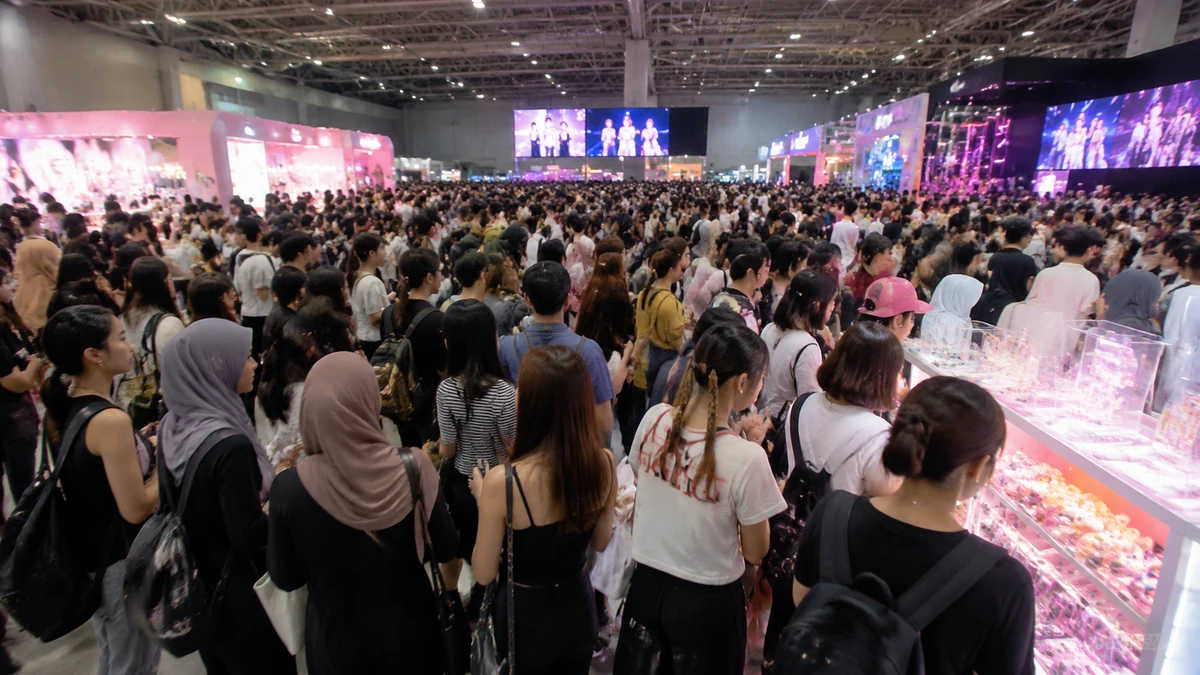
That shift was on display at Makuhari Messe in Chiba, near Tokyo, where KCON Japan ran from May 8 to May 10. According to accounts from the event, the convention halls were packed even on a weekday, and the crowd was not only larger than in previous years but more varied. Fans came not just to see performances, but to browse booths, sample products and immerse themselves in a curated version of Korean everyday culture. In other words, this was not just a concert with merchandise tables. It increasingly functioned like a hybrid of a music festival, consumer expo and cultural showcase.
For American readers, one way to understand KCON is to imagine if Coachella, Comic-Con and a Korean food and beauty fair were folded into one event, then centered on fan participation rather than passive attendance. That has long been part of KCON’s DNA. Since launching in 2012, the festival has traveled to markets including the United States and Japan, promoting Korean entertainment to international audiences. What stands out now is not simply that K-pop remains popular overseas, but that it is serving as a gateway into a much wider set of Korean products, tastes and habits.
The development matters because it says something about how cultural influence works in 2025. Countries do not just export songs, movies or TV dramas anymore; they export experiences and aspirations. South Korea appears increasingly adept at doing just that. The image of Korea circulating abroad is no longer limited to hit singles or red-carpet stars. It is also conveyed through skincare routines, convenience foods, fashion aesthetics, exhibition design and the social rituals of fandom itself.
KCON Japan offered a vivid snapshot of that transformation. And because it unfolded in Japan — a neighboring country with a long, complicated and deeply intertwined relationship with Korea — it also showed how the Korean Wave continues to evolve even in markets where it is hardly new.
From music festival to lifestyle fair
The most striking detail from the event was not the lineup on stage but what happened offstage. Organizers from CJ ENM, the South Korean entertainment company behind KCON, described the festival as combining K-pop performances with a range of interactive programs. That phrase can sound like marketing jargon, but in practice it points to a meaningful change in how Korean culture is being consumed abroad.
Fans were not merely showing up, watching a set and leaving. They were moving through exhibitions, seeking out Korean food and beauty displays, and engaging with experiences that invited them to touch, taste and try rather than simply observe. In the language of business, K-pop is becoming a powerful entry point for adjacent industries. In the language of culture, it means Korean identity abroad is being felt as something more sensory and immersive.
This helps explain why the atmosphere at KCON can feel different from that of a typical pop concert in the United States. At a major American arena show, fans might buy a T-shirt, take a photo and head to their seats. At KCON, the event space itself is part of the attraction. The crowd circulates through booths and installations in a way that turns fandom into an all-day experience. The performance is still central, but it is no longer the whole story.
That distinction matters because it broadens the economic and cultural impact of Korean entertainment. A fan who comes for an idol group may leave with a newfound interest in Korean cosmetics, snacks or travel. That interest can outlast the promotional cycle of any one act. It creates a deeper relationship with the country’s cultural image, one less dependent on a single hit song or celebrity moment.
American consumers have seen similar patterns elsewhere. Japanese anime conventions long ago became marketplaces for fashion, food and gaming culture. The Marvel universe expanded from movies into theme park rides, merchandise, streaming series and fan events. KCON shows how Korea is building a similarly expansive system — not around superheroes or a single franchise, but around an interconnected cultural brand.
That brand has been shaped over decades by investment in entertainment, digital platforms and design-savvy consumer industries. What KCON Japan highlighted is how naturally those pieces can now be bundled together for global audiences. Music brings people in, but what keeps them engaged may be the wider promise of Korean lifestyle itself.
A more international fan base is part of the story
Another notable feature of the event was who showed up. Reports from the venue described not only Japanese fans but also foreign attendees from other regions, including women wearing hijabs, a visible sign that the audience now extends far beyond the East Asian markets most commonly associated with the Korean Wave’s early expansion.
That may sound like a small observational detail, but culturally it is significant. It reflects a fan base that is no longer easily described by geography, ethnicity or language. Korean pop culture has moved into a space occupied by truly global entertainment brands, where audiences with very different backgrounds can share a common vocabulary of artists, aesthetics and online community.
For American readers, the point is not that K-pop has suddenly “gone global” — that happened years ago. BTS and Blackpink already proved Korean acts could dominate charts, headline festivals and build massive U.S. fan bases. The more interesting question now is what kind of global culture K-pop has created around itself. KCON Japan suggests it is increasingly one in which fans do not simply consume Korean content; they use it as a space for identity, community and participation.
That helps explain why diverse crowds matter. When fans from different religious, linguistic and cultural backgrounds gather in the same hall and find points of connection through Korean music and cultural products, the appeal cannot be dismissed as a niche regional fad. It points instead to a style of cultural production that travels well because it is emotionally legible across borders. The songs may be in Korean. The choreography, visuals and fandom structures, however, communicate in ways that do not require fluency.
This has been one of the Korean Wave’s underrated strengths. Its appeal has never depended entirely on lyrics. It also rests on performance precision, serialized storytelling around idol groups, strong digital engagement and a fan culture that invites participation. In a fragmented media environment, that combination is potent. It gives people multiple ways in.
At KCON Japan, that translated into an event where international fans were not anomalies but part of the core atmosphere. They were not just receiving Korean culture from afar, as if it were a finished package shipped overseas. They were actively reshaping it through their own presence, tastes and interactions. In that sense, the Korean Wave today is less a one-way export than an evolving global conversation.
Food and beauty show where the next phase may be headed
One attendee quoted in coverage of the event, a fan of the idol group INI, said she found not only the K-pop performances but also the Korean food and cosmetics exhibits interesting. That comment may be the clearest summary of KCON Japan’s larger meaning.
The fascination with Korean beauty products, often referred to in English as K-beauty, has already become familiar in the United States. Sheet masks, cushion foundations and multi-step skincare routines have moved from specialty stores into mainstream retail and social media culture. Korean food has followed a similar path. Korean fried chicken, kimchi and instant ramyeon — often rendered in English as ramen’s Korean cousin, though distinct in style and branding — are much easier to find in American cities than they were a decade ago.
What KCON demonstrates is how these categories reinforce one another. A fan who first encounters Korea through an idol group may come to associate Korean culture with a certain kind of style: polished, trend-aware, visually expressive and emotionally accessible. That impression can make Korean skincare or food feel like natural extensions of the same world rather than separate products demanding a new introduction.
That is an important competitive advantage. In global markets, consumer interest is often strongest when products arrive with a story and an atmosphere attached to them. Korean pop culture supplies both. It gives beauty and food brands a ready-made emotional context. They are not just selling moisturizer or snacks; they are selling a piece of a larger cultural experience that audiences already find compelling.
Crucially, the interest appears to be organic rather than forced. Fans at KCON were not being told they had to care about cosmetics or food in order to prove their loyalty to K-pop. They were gravitating toward those categories because they felt connected to the same cultural universe. That kind of crossover is much more durable than a one-off marketing push.
For South Korea, this is the kind of development policymakers and business leaders pay attention to. Cultural influence can open doors for consumer industries in ways traditional advertising often cannot. Hollywood did this for American fashion, fast food and lifestyle branding for generations. Japan did it with anime, design and gaming. Korea is now showing it can do something similar, with music operating as the front door to a multi-industry platform.
That does not mean every K-pop fan will become a regular buyer of Korean products. But it does mean the emotional halo around Korean culture is broadening. And once that happens, the country’s global image becomes less dependent on any single song, group or trend cycle.
Why Japan is an especially revealing place to watch this
KCON Japan might have taken place near Tokyo, but its implications reach well beyond one weekend in Chiba. Japan is a particularly revealing market for Korean cultural trends because it is both familiar and dynamic. The two countries are geographically close, their entertainment industries have long watched and influenced each other, and their political relationship has at times been tense. That makes sustained cultural enthusiasm especially notable.
In some ways, Japan is an ideal testing ground for whether the Korean Wave can keep renewing itself. K-pop is not novel there. Korean dramas and musicians have cycled through periods of popularity for years. If crowds are still getting larger and more varied in a mature neighboring market, that suggests something deeper than a passing craze.
The reports that this year’s event drew more and more diverse attendees than in previous years are therefore meaningful. They indicate not merely repeat consumption by an established fan base, but ongoing expansion. New people are still entering the ecosystem. Existing fans are finding new reasons to remain engaged. And the event format itself appears increasingly capable of accommodating both.
The weekday congestion at exhibition areas matters, too. Numbers are useful, but they are not the only measure of cultural momentum. Anyone who has covered conventions, state fairs or major fan gatherings knows that traffic patterns and dwell time tell their own story. When people linger, browse and move between categories of experience, it suggests curiosity deeper than simple celebrity worship.
For Americans, there is another reason Japan matters here. U.S. audiences often interpret Asian pop culture through national silos — K-pop as Korean, anime as Japanese, dramas as belonging to one market or another. But on the ground in Asia, the flow is often more fluid, layered and interactive. A Korean festival in Japan drawing fans from multiple regions underlines how porous those cultural boundaries have become. Consumers are increasingly building their own cross-border cultural diets, unconcerned with the neat categories outsiders may prefer.
That makes KCON Japan more than a niche entertainment event. It serves as a real-time indicator of how soft power works in the region. And at the moment, Korea’s soft power appears not only resilient but adaptable.
South Korea is exporting an experience, not just content
The broader lesson from KCON Japan is that South Korea’s international appeal is changing in character. In earlier phases of the Korean Wave, global discussion often centered on star power and breakout hits: which group topped the charts, which drama landed on Netflix, which Oscar-winning filmmaker shattered expectations. Those milestones still matter. But they do not fully capture what Korea is becoming in the global imagination.
What events like KCON reveal is a shift from content export to experience design. Korea is not only producing songs, shows and celebrities. It is building environments in which audiences can feel Korean culture as a lifestyle — stylized, participatory and easy to carry into daily consumption.
That is a more sophisticated form of influence. It is also potentially more durable. A viral song can come and go. A fully developed cultural ecosystem is harder to dislodge. If fans associate Korea with a whole set of pleasurable rituals — music discovery, beauty routines, food exploration, community events and digital belonging — then the relationship becomes much stickier than conventional entertainment fandom.
This may also help explain why the Korean Wave has proven so resilient in the age of algorithmic overload. Global audiences are bombarded with content. What cuts through is not just quality but coherence. Korean cultural industries have become unusually skilled at creating coherent worlds. The styling, marketing, storytelling and fan engagement often feel integrated. KCON turns that integration into a physical space.
There is a larger geopolitical subtext here as well. When a country is increasingly recognized not just for what it makes but for how it makes people feel, that is a form of national branding with real consequences. It can influence tourism, consumer trust, language learning and perceptions of modernity. It can make a middle power punch above its weight in global cultural conversations.
None of this means Korea’s cultural rise is guaranteed to move in one direction forever. Pop culture remains volatile. Trends shift. Fans age. New competitors emerge. But the picture from KCON Japan suggests that South Korea has already moved beyond dependence on a single genre’s novelty. It has built enough connective tissue between entertainment and everyday life to keep broadening its appeal.
Perhaps the clearest takeaway is this: the Korean Wave is no longer best understood as a wave at all, with a crest that rises and falls around one sensational trend. It looks more like an infrastructure — flexible, commercial, emotional and increasingly global. At KCON Japan, that infrastructure was visible in the crowd, in the booths, in the food displays, in the cosmetics exhibits and in the easy movement of fans between all of them.
That is why the story matters beyond Japan and beyond K-pop. It shows South Korea being recognized not only as a country that produces popular entertainment, but as one that has learned how to package culture into a lived, exportable experience. In the crowded global marketplace of attention, that may be the Korean Wave’s most important evolution yet.
Comments
Post a Comment