Ra Mi-ran steps into fantasy with ‘The Strange Snack Shop Jeoncheondang,’ signaling a warmer kind of Korean family film
A beloved Korean actress takes an unexpected turn
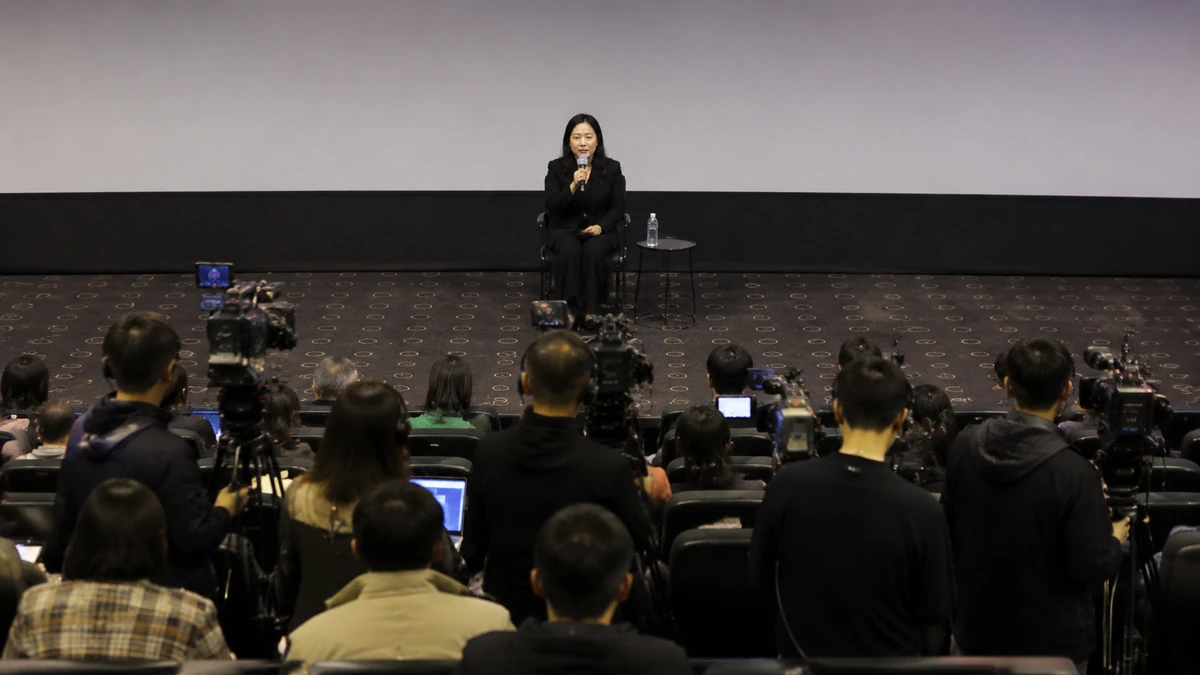
In South Korea, actor Ra Mi-ran has built a reputation the way some of America’s most trusted character actors have: by making ordinary people feel vividly real. Whether playing tough, funny, wounded or quietly resilient women, she has long been associated with stories grounded in everyday life. That is precisely why her next move is drawing attention. At a press screening and news conference in Seoul on June 13, Ra said she chose the film “The Strange Snack Shop Jeoncheondang” because she had been eager to do fantasy.
That may sound like a routine promotional line, but in the Korean film industry, casting can signal a lot about a movie’s intentions. When an actor known for emotional realism steps into a magical setting, the message is often that the filmmakers are not chasing spectacle alone. They are trying to make the unbelievable feel emotionally credible. In this case, Ra framed the project not as a special-effects showcase, but as a “beautiful and warm story,” a phrase that suggests the movie is aiming for comfort, healing and intergenerational appeal rather than the darker, high-stakes fantasy audiences often associate with Hollywood franchises.
For English-speaking readers unfamiliar with Ra, she is one of those performers whose presence can change the temperature of a scene. She has the kind of broad recognition in Korea that comes from years of reliable work across film and television, and she often plays women who feel lived-in rather than idealized. In American terms, imagine a performer with the trust factor of Allison Janney or Octavia Spencer in family drama spaces, combined with the earthy comedic timing of a veteran ensemble actor. That trust matters in a film like this, where the premise involves wishes, magic and moral choices.
Her remarks also point to a broader shift worth watching in Korean cinema. South Korea is globally known for sharp thrillers, socially observant dramas and prestige television that moves easily between romance and suspense. But family fantasy, especially live-action family fantasy designed to be watched across age groups, has not been as defining a national export. If “Jeoncheondang” works, it could help expand the image of what commercial Korean film can look like, especially for families seeking something gentler than a crime drama and more emotionally textured than standard children’s fare.
The significance of the June 13 event is also telling. This was not just an announcement that the movie exists. It was a screening and press conference, meaning the film had reached a stage where its tone and execution could be judged directly, rather than sold through teasers and promises. In an entertainment market crowded with recognizable intellectual property, that matters. It suggests confidence that the movie’s emotional texture, not just the brand name behind it, can carry interest.
From a bestselling Japanese children’s series to a Korean live-action adaptation
“The Strange Snack Shop Jeoncheondang” is based on a children’s fantasy series by Japanese author Reiko Hiroshima, a property that comes to the screen with substantial built-in recognition. According to the film’s promotional background, the books have sold about 11 million copies worldwide, including more than 2 million in South Korea. Those are the kind of numbers that change the conversation from niche adaptation to mainstream opportunity.
For American readers, the easiest comparison may be the way a well-known middle-grade book series can become a launchpad for cross-generational filmgoing. When a property has already been embraced by children, parents, teachers and librarians, a screen adaptation begins with an emotional foundation already in place. People know the premise, understand the tone and often bring a sense of trust to the story. That does not guarantee a successful movie, but it does give filmmakers a tested narrative engine.
The engine here is simple and potent: a mysterious snack shop that offers magical treats tied to people’s wishes. It is the kind of premise that travels well across borders because it combines fantasy with a moral fable. People come with longing. A product promises to answer that longing. A choice follows. So does a consequence. That structure is familiar not just in East Asian storytelling, but in Western traditions too, from fairy tales and cautionary tales to films built around temptation, transformation and second chances.
In Korea, the property has already proven that it can resonate locally, which is crucial because adaptations do not succeed on name recognition alone. They succeed when a country’s audience feels the story has been translated not just linguistically, but emotionally. A Korean version of a Japanese children’s novel comes with certain sensitivities, especially given the long and often painful historical relationship between the two countries. But contemporary popular culture also moves fluidly across those borders, and Korean audiences have shown a willingness to embrace Japanese-origin stories when they are meaningfully localized.
That localization is the real test. A live-action adaptation asks viewers to accept a concrete world, not just imagine one. Costumes, production design, facial expressions, comic timing and emotional pacing all become part of the translation process. If the source material supplies the skeleton, the adaptation’s nationality often lives in the body language. In that sense, this movie is not merely reproducing a successful children’s brand. It is experimenting with how Korean actors and Korean emotional rhythms can reinterpret a fantasy that already has international appeal.
Why the wish-fulfillment structure has broad appeal
At the center of the film is an omnibus-style setup: different customers arrive at Jeoncheondang carrying urgent wishes, and the magical store offers them a chance at change. Among the stories introduced in coverage of the film are a student who wants to heal a sick mother, a child who wants relief from bullying, and a piano student facing pressure to improve. Those scenarios are specific enough to feel personal and broad enough to be understood almost anywhere.
That is one reason the material has commercial promise beyond Korea. It does not depend heavily on local slang, insider references or political context. It depends on feelings that translate readily: fear for a parent’s health, anxiety about social exclusion, the pressure to perform and the desperate hope that one shortcut, one miracle, one lucky break might make life bearable. In an era when so much entertainment competes through scale, noise and lore, there is still enormous power in stories about small but deeply human wishes.
The omnibus format also offers strategic advantages. Instead of asking one protagonist to carry every emotional burden, the film can move among several kinds of longing. That widens the number of possible points of identification. A child may respond to the school-related story. A teenager may connect to performance anxiety. An adult may be hit hardest by the storyline involving a mother’s illness. In practical terms, that makes the movie easier to market as a family title because different viewers can each find an entry point.
At the same time, omnibus storytelling creates risks. Episodic films can feel fragmented if the individual stories do not build toward a coherent emotional whole. The connective tissue has to come from somewhere: a location, a recurring moral idea, a tonal consistency or a central performer with enough gravity to hold the separate pieces together. That is where Ra’s casting becomes especially significant. If Jeoncheondang itself is the physical anchor, then Ra may be the emotional anchor, the person who makes each story feel part of the same moral universe.
There is also something culturally resonant about the notion of a shop that quietly dispenses not just goods but possibility. In South Korea, as in many urban societies, stores can function as highly localized community spaces, especially in neighborhoods where daily life remains dense and interpersonal. A magical shopkeeper is a familiar fairy-tale archetype, but in a Korean context the retail setting can feel especially intimate. It places fantasy not in a distant kingdom but in a place that resembles everyday life: a storefront, a transaction, a choice made over the counter.
Ra Mi-ran’s casting could be the film’s biggest advantage
If the premise makes the movie accessible, Ra’s image may be what gives it staying power. Her public persona is not built on ethereal glamour or aloof mystery. It is built on familiarity, sincerity and range. That matters because fantasy succeeds when audiences believe the emotions even if they cannot believe the mechanics. A magical candy or snack can seem silly in the wrong hands. In the right hands, it becomes a device for exposing fear, hope, selfishness and tenderness.
In recent years, Ra has continued to leave a strong impression in commercial Korean films, reinforcing her status as an actor audiences can trust. That trust is valuable in a movie that might otherwise risk being dismissed as children’s content. Her involvement signals that the material likely aims to operate on more than one level. Kids can enjoy the wonder, the strange products and the moral suspense. Adults can watch for the emotional shading, the performance details and the quieter observations about what people want when they feel cornered.
Her emphasis on warmth is especially notable at a time when fantasy content globally is often framed as a competition in world-building. The dominant question around many studio projects is how large the mythology is, how striking the visuals are and how expandable the universe might become. “Jeoncheondang” appears to be taking a different route. Instead of asking viewers to marvel at the size of the world, it asks them to care about the size of a wish. That is a subtler bet, but it can also be a smarter one in a crowded market.
There is a long tradition, in both Asian and Western storytelling, of using magical premises to talk about ordinary pain. The wish, after all, is rarely just about the wish. A child who wants better grades may really want security. A teenager who wants to play piano well may really want dignity or love. A family member seeking healing may be trying to bargain with helplessness. Actors with strong grounding in realism are often best positioned to surface those layers. Ra’s history suggests she knows how to locate the bruise beneath the plot.
That, in turn, could help the film appeal to adult moviegoers who might otherwise skip a family fantasy. In the United States, some of the most durable all-ages films are not the ones that simply entertain children, but the ones that let adults feel seen as well. Think of the difference between a movie that merely distracts and one that leaves parents unexpectedly emotional in the theater. If Ra and the filmmakers can deliver that second kind of experience, the movie may find a longer life through word of mouth.
A rare opening for Korean live-action family fantasy
The movie arrives in a space that has often felt underdeveloped in Korean commercial cinema. South Korea has excelled at tense thrillers, procedurals, historical dramas, romantic comedies and socially pointed storytelling. Animation has its own place, and television fantasy has done well. But the live-action family fantasy film — the kind of movie grandparents, parents and children might all reasonably attend together — has been less central to the industry’s identity.
That makes “Jeoncheondang” more than a one-off adaptation. It serves as a test case. Can a Korean film rooted in gentleness, moral fable and emotional reassurance compete in a market where attention is often won by urgency, danger and spectacle? Can warmth itself become a marketable distinction? In a climate saturated with intensity, there is reason to think the answer could be yes.
The film’s apparent focus on personal stories rather than apocalyptic stakes may also be part of its advantage. Hollywood often defaults to saving the world because big budgets tend to demand big consequences. But not every fantasy benefits from inflation. Some of the genre’s most affecting stories turn on intimate problems: wanting to belong, wanting to protect a loved one, wanting to stop being afraid. By following separate customers with separate forms of pain, “Jeoncheondang” seems positioned to magnify emotion rather than scale.
That could resonate especially well in Korea, where education pressure, family obligation and social comparison often shape everyday experience in intense ways. A story about wanting to excel at piano, for example, lands differently in a society where after-school training and performance standards can feel relentless. Likewise, a story involving bullying is not culturally unique, but it carries real emotional currency in a country where school life is frequently dramatized as a key site of identity formation and social stress. The film can therefore speak locally while remaining legible internationally.
For global audiences, that balance is crucial. Too much localization and a movie may feel inaccessible abroad. Too little, and it loses the specific flavor that makes international cinema worth watching in the first place. The best adaptations tend to preserve universal feelings while embedding them in recognizable local textures. If “Jeoncheondang” gets that balance right, it could offer something Korean entertainment increasingly does well: exportable emotion anchored in distinctly Korean performance style.
What this says about the Korean Wave now
For more than a decade, the Korean Wave, or Hallyu, has been associated internationally with K-pop, prestige dramas, beauty culture and, after “Parasite” and “Squid Game,” a sharpened awareness of South Korea’s ability to turn local stories into global cultural events. But Hallyu’s next phase may depend less on producing singular worldwide sensations and more on filling out a fuller ecosystem of genres.
That includes children’s and family entertainment. If Korean creators want to become a truly habitual part of global viewing across generations, it is not enough to excel only at thrillers, melodramas and breakout series for adults. There also has to be a pipeline of stories parents can watch with children, stories schools and libraries recognize, stories that enter everyday family media habits rather than simply dominating headline cycles. A movie like “The Strange Snack Shop Jeoncheondang” fits into that larger industrial picture.
It also reflects another trend in Asian entertainment: the circulation of stories across borders within the region before they are repositioned for global audiences. Here, a Japanese literary property with established readership in Korea becomes a Korean live-action film with potential international visibility. That pathway matters because it shows how Asian pop culture does not move only through Western approval or adaptation. It is increasingly building its own regional routes of validation and reinvention.
None of this means the movie is guaranteed to be a breakout. Adaptations can falter. Warmth can be mistaken for softness. Episodic narratives can feel uneven. Family films often face the toughest standard of all: they must satisfy viewers with very different expectations at the same time. Children need enchantment. Adults need emotional logic. Fans of the books want fidelity, while newcomers need clarity. Meeting all those demands at once is difficult.
Still, the project is worth watching precisely because of the ambition tucked inside its modesty. It is not trying to become Korea’s answer to a superhero franchise. It is trying to turn a popular children’s concept into a specifically Korean live-action experience that feels restorative rather than overwhelming. In a moment when many entertainment industries are trapped in escalation, that may be its sharpest commercial idea.
For American and other English-speaking audiences, the broader takeaway is simple: not every notable Korean release has to be edgy, violent, romantic or relentlessly twist-driven. Sometimes the story South Korea wants to tell is about a magical shop, an impossible wish and the quiet hope that being understood might change a life. If Ra Mi-ran can bring her hard-earned realism into that kind of fantasy, “The Strange Snack Shop Jeoncheondang” may offer something increasingly rare in global cinema: a family movie whose greatest special effect is emotional trust.
Comments
Post a Comment