Expert Testimony in South Korea Sexual Assault Trial Puts Focus on How Courts Hear Victims With Severe Disabilities
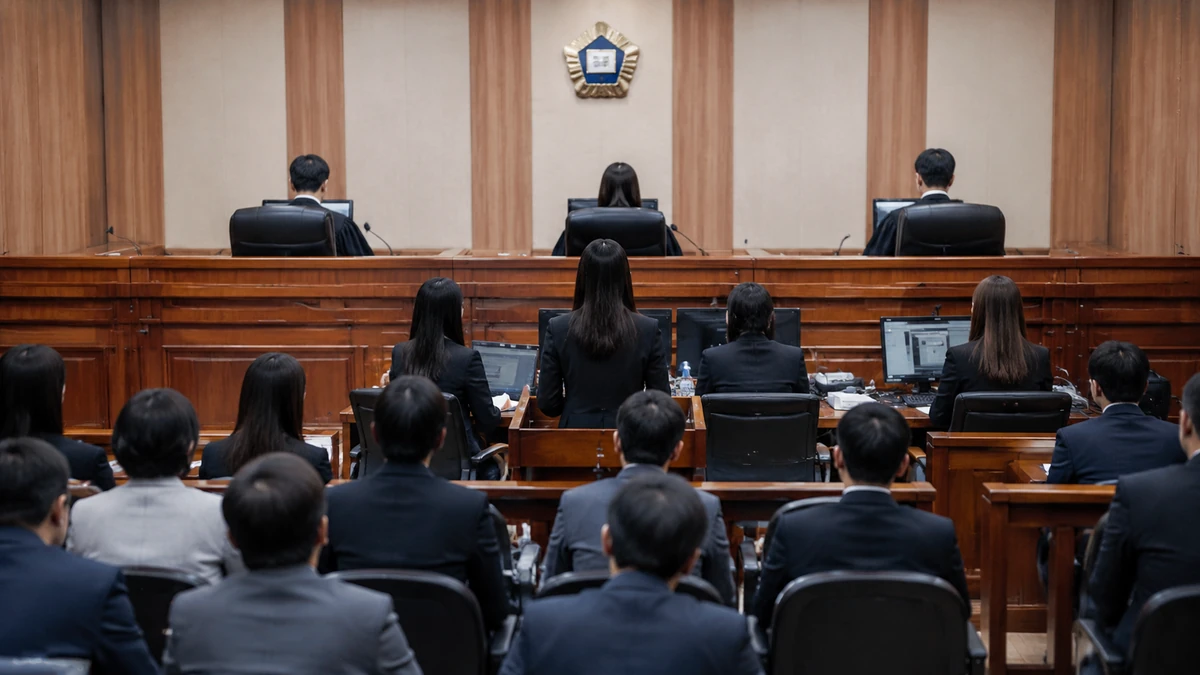
A Seoul courtroom weighs more than one defendant’s fate
A South Korean criminal trial centered on allegations of sexual violence at a residential facility for people with severe developmental disabilities is drawing national attention, not only because of the charges themselves, but because of a harder question beneath them: How should a court evaluate testimony from victims who may struggle to describe abuse in conventional, detailed ways?
That question came into sharp focus Thursday at the Seoul Central District Court, where an expert witness told the court that statements made by the alleged victims were unlikely to have been fabricated, according to the Yonhap News Agency. The hearing was part of an ongoing trial involving Saekdongwon, a residential institution in Ganghwa County, west of Seoul, and its director, identified by South Korean media as Kim, who is on trial on charges including rape and other violations under South Korea’s sexual violence and disability welfare laws.
For American readers, the broad outlines may sound familiar. Cases involving alleged abuse inside closed or semi-closed care settings — nursing homes, juvenile facilities, psychiatric institutions, group homes and residential schools — often hinge on victims whose ability to report harm is limited by age, disability, fear, dependence on caregivers or all of the above. In those cases, a polished, linear account is often impossible. Yet the legal system still has to decide what happened, whether the testimony is credible and whether the state can meet its burden of proof.
That is why the expert testimony in Seoul matters beyond this single proceeding. It does not decide guilt or innocence on its own. Judges, not expert witnesses, will ultimately weigh the evidence. But it highlights a fundamental issue in sexual assault cases involving vulnerable victims: inconsistent wording, fragmented memory or difficulty speaking clearly are not automatically signs of dishonesty. Sometimes they are signs of trauma, disability or both.
In South Korea, where public debate over institutional abuse, disability rights and sexual violence has intensified in recent years, the case has become a test of how carefully the justice system can listen when victims communicate differently from what courts have historically expected.
What happened in court
The latest hearing was what South Korean courts call a continued trial session, meaning it was one step in an already ongoing case rather than a final ruling or the start of proceedings. According to Yonhap, the key development was testimony from a statement analysis expert — someone whose work involves examining how children, people with disabilities and others who may have difficulty expressing themselves describe alleged victimization.
Asked by prosecutors about the alleged victims’ statements in the Saekdongwon case, the expert said the possibility that the statements had been falsely concocted was low. That wording matters. The expert did not declare the defendant guilty, and did not offer the court a substitute for its own judgment. Instead, the testimony addressed credibility, a central issue in many sexual violence trials, especially when physical evidence may be limited or delayed and when victims’ accounts are among the most important pieces of evidence.
In legal systems across democracies, credibility assessments tend to turn on several familiar factors: consistency over time, level of detail, the circumstances in which a statement was made, whether the account reflects lived experience rather than coaching, and whether there are corroborating facts. But those tools can become complicated when a victim has severe developmental disabilities. A person may communicate in short phrases, leave out chronology, repeat certain sensory details while omitting others, or struggle to answer open-ended questions in ways that satisfy a courtroom’s demand for narrative clarity.
The significance of Thursday’s testimony, then, lies in its insistence that the court account for those limitations instead of mistaking them for proof of unreliability. Put another way: the issue is not whether the victims told their stories in a way that sounds familiar to judges, lawyers or the general public. The issue is whether, given their condition and the circumstances, their statements bear the hallmarks of authenticity rather than fabrication.
That distinction can be easy to miss in public conversation, where skepticism often attaches quickly to any account that is partial, emotionally flat, repetitive or hard to follow. Experts in trauma and disability have long argued that such expectations can unfairly penalize people who are least able to meet them.
Why the setting matters: a residential facility and the power imbalance inside it
The allegations in this case emerged from Saekdongwon, a residential institution in Incheon’s Ganghwa County for people with severe developmental disabilities. Even without a verdict, the allegations are serious because of where they allegedly occurred. Residential facilities are places where people may depend on staff not just for shelter, but for food, hygiene, medication, mobility, communication support and access to the outside world. That dependence can create an extreme power imbalance.
For U.S. readers, the closest comparisons may be group homes for adults with intellectual or developmental disabilities, long-term care institutions or other congregate settings where residents rely on administrators and caregivers for nearly every aspect of daily life. In those environments, abuse can be especially difficult to detect. Residents may not have privacy, easy access to outside advocates, or the language needed to report what happened. Families and regulators may see only fragments of institutional life. And when the alleged abuser is someone in authority, victims may fear retaliation or simply believe no one will understand them.
That is part of why cases from institutional settings can reverberate so widely. They are never only about the alleged acts themselves. They also raise questions about supervision, safeguards, complaint channels, inspections and whether the broader protection system functioned at all. If abuse is alleged in a place designed to care for people who need the most protection, the public naturally asks: Who was watching? Who could residents turn to? How long did warning signs go unnoticed? Were there outside checks strong enough to prevent isolation from becoming impunity?
South Korea, like many countries, has spent years wrestling with how to balance institutional care, community-based support and the rights of disabled people to safety and autonomy. Disability advocates in many nations, including the United States, have long argued that large or closed residential systems can heighten vulnerability when oversight is weak. The Saekdongwon case lands squarely in that global debate.
According to the Korean summary of the case, the defendant faces allegations not only under the law punishing sexual violence, but also under the disability welfare law. That combination underscores that the case is being treated not merely as an accusation of private misconduct, but as a matter with implications for the duties owed to protected residents in a care setting.
How disability can change the way testimony looks — and why that matters
One of the most important points to emerge from the hearing is also one that often requires explanation for general audiences: truthful testimony does not always look smooth.
That is true in many sexual assault cases, where trauma can affect memory, sequencing and emotional expression. It becomes even more important when the witness is a person with severe developmental disabilities. A victim may know something harmful happened, know who did it and remember key parts of the experience, but still be unable to provide a neat beginning-middle-end account. They may use limited vocabulary, communicate nonverbally, answer concretely rather than abstractly, or need repeated prompts to clarify what they mean. None of that automatically makes a statement false.
In the United States, jurors and judges are sometimes instructed not to expect victims of traumatic crimes to behave in a single “normal” way. Advocacy groups and prosecutors have pushed for more training on how trauma, disability and child development affect disclosures of abuse. South Korea has been moving through a similar conversation, particularly in high-profile cases involving women, children and disabled victims. The testimony in the Saekdongwon trial suggests the Seoul court is confronting that issue directly.
The expert’s role, at least as described in the Korean report, was not to vouch emotionally for the alleged victims, but to provide a framework for analyzing statements made by people who are hard to interview in standard ways. That framework matters because many legal systems were built around an ideal witness: articulate, consistent, composed, chronological and able to withstand aggressive cross-examination. People with severe disabilities may not fit that model even when they are telling the truth.
There is a broader social lesson here. When a person with communication difficulties speaks up — whether in court, at a hospital, in a school setting or in a social service office — institutions face a choice. They can dismiss the account because it arrives imperfectly, or they can develop methods to hear it accurately and responsibly. Thursday’s testimony points toward the second approach.
That does not mean all accusations should be accepted uncritically. Due process still matters. The defense has the right to challenge testimony, question methods and contest the prosecution’s case. But skepticism should be evidence-based, not rooted in assumptions that a disabled victim is inherently unreliable because they do not communicate in the style that non-disabled adults do.
A case with echoes far beyond South Korea
Although this is a South Korean trial, the issues at stake are not uniquely Korean. They touch on universal questions in democratic societies: how to protect vulnerable people in custodial environments, how to investigate abuse behind institutional walls, and how to ensure courts do not exclude truth simply because it arrives in an unfamiliar form.
In the U.S., scandals in nursing homes, disability care programs, juvenile detention centers and church- or school-run residential institutions have repeatedly shown how abuse can persist when victims are isolated and dependent. In many of those cases, the hardest part is not just proving that harm occurred, but getting institutions and authorities to take early reports seriously. Survivors who are children, disabled, nonverbal or socially marginalized are often doubted first and heard later — if at all.
The Korean court’s willingness to hear specialized testimony reflects a recognition that ordinary assumptions about witness credibility may not be enough in such cases. That is a lesson American readers will recognize. Over the last two decades, U.S. courts, police departments and child advocacy centers have increasingly relied on forensic interview specialists, trauma-informed practices and expert explanations to understand why victims may delay reporting, omit details or describe abuse in nonlinear ways. The same basic need appears to be present here: a justice system trying to adapt its listening tools to fit the realities of vulnerable witnesses.
There is also a human rights dimension. Around the world, disability advocates have argued that safety cannot depend on a victim’s ability to speak fluently, independently and immediately after abuse. If legal protection is strongest only for those who can narrate harm in socially approved ways, then the people with the greatest need for protection may receive the least. The Saekdongwon case, at least at this stage, puts that problem in plain view.
For global readers, then, this is not simply a distant court story from Seoul. It is a window into how one advanced democracy is grappling with a challenge that exists almost everywhere: the gap between formal equality under the law and the practical barriers some victims face in being believed.
The legal caution: what this testimony does — and does not — prove
It is important to be precise about what happened Thursday. An expert witness said the alleged victims’ statements were unlikely to be false. That is significant, but it is not the same thing as a conviction, and it is not the same thing as a final judicial finding that every factual allegation in the case has been proven.
South Korean judges, like judges elsewhere, are expected to review the totality of the evidence: the charges, the statements, any corroborating material, the defense’s objections and the credibility of witnesses across the case. The defendant remains on trial, not convicted. The court will decide whether prosecutors have established guilt under the law.
That caution matters especially in high-profile or emotionally charged cases. Responsible reporting requires avoiding the rush to treat a notable moment in court as the whole case. Still, some moments matter because they reveal the terms on which a court is evaluating the evidence. Thursday’s hearing appears to be one of those moments. It signals that the judges are not looking at the alleged victims’ statements through a simplistic lens that would automatically discount testimony because it is incomplete or difficult to deliver.
In practical terms, that could influence how the rest of the trial is understood. It may shape how other evidence is weighed, how lawyers frame their arguments and how the public interprets the significance of testimony from people whose communication abilities are limited. Even if the expert’s conclusion is only one part of the evidentiary picture, it carries weight because it addresses a central vulnerability in many such prosecutions: the assumption that a statement that is not polished cannot be trusted.
For readers accustomed to adversarial courtroom dramas on American television, it may be tempting to search for a single decisive turning point. Real trials rarely work that way. More often, meaning accumulates through a series of narrower decisions about what kinds of evidence count, how witnesses are understood and what standards the court applies. By that measure, Thursday’s testimony may prove important even if the final ruling comes later and rests on a broader record.
What South Korean society is really debating
At one level, the Saekdongwon case is about alleged criminal conduct at a specific institution in Ganghwa County. At another, it is about something larger: whether society is prepared to hear vulnerable people on their own terms.
South Korea has undergone major public conversations in recent years about sexual violence, abuse of power and the treatment of people with disabilities. As in the United States, those conversations have often exposed a gap between legal rights on paper and lived protections in practice. Disability rights groups have pushed for stronger oversight, less institutional isolation and greater respect for the dignity and agency of disabled people. Women’s rights advocates have likewise argued that skepticism toward victims too often begins from stereotypes about how a “real” victim should act or speak.
This case sits where those concerns intersect. The alleged victims, according to the court discussion summarized by Yonhap, were in conditions that made it difficult for them to explain what happened with precision. That does not only create a legal challenge. It creates a moral and civic one. A society’s commitment to equal justice is tested most clearly when those who need protection cannot easily demand it.
There is, too, a deeper question about institutions. Care facilities are built on trust — trust from families, trust from regulators and trust from the public that the people inside are being protected, not endangered. When that trust is shaken by allegations of sexual violence, the damage extends beyond one defendant and one set of charges. It reaches into the legitimacy of the care system itself.
That is why this trial has become more than a routine court report in South Korea’s domestic news. It asks whether the systems surrounding vulnerable residents — care providers, administrators, investigators, prosecutors and judges — can work together to uncover truth even when the victims are least equipped to fit the system’s expectations.
Why international readers should pay attention
There are many reasons news from South Korea captures global interest: the country’s cultural influence through K-pop and film, its strategic role in East Asia, its technology giants and its vibrant democracy. But some of the most revealing stories are quieter. They are found in courtrooms, welfare systems and debates over who gets heard.
The Saekdongwon trial is one of those stories. It may not have the immediate international visibility of a summit meeting or a celebrity scandal, but it speaks to a basic democratic measure: how a nation treats people at the margins of power. The alleged victims in this case are not public figures. They are residents of a care facility for people with severe developmental disabilities, a population that in any country can be rendered socially invisible. The fact that their statements are now being carefully examined in a major court, with expert input tailored to their communication challenges, is itself significant.
For readers outside Korea, the case also offers a reminder that the struggle over disability rights and institutional accountability is not settled anywhere. Wealthy, developed societies often pride themselves on formal protections while failing to ensure that the most vulnerable can use them. Courts can become the place where those failures are finally exposed — but only if the system knows how to hear from the people most affected.
That is why Thursday’s testimony resonated beyond the immediate legal question. It suggested that in this courtroom, at least, the possibility is being taken seriously that a victim can be both hard to understand and fundamentally credible. That may sound like a modest insight. In practice, it can be the difference between a system that protects the powerful and one that is capable of protecting those who depend on it most.
The trial is continuing. The final judgment will come later, after the court reviews the broader evidence and the defense has its opportunity to challenge the prosecution’s case. But the hearing underscored something larger than any single day in court: when alleged victims cannot easily speak in the language institutions prefer, justice depends on whether institutions are willing to learn how to listen.
Comments
Post a Comment