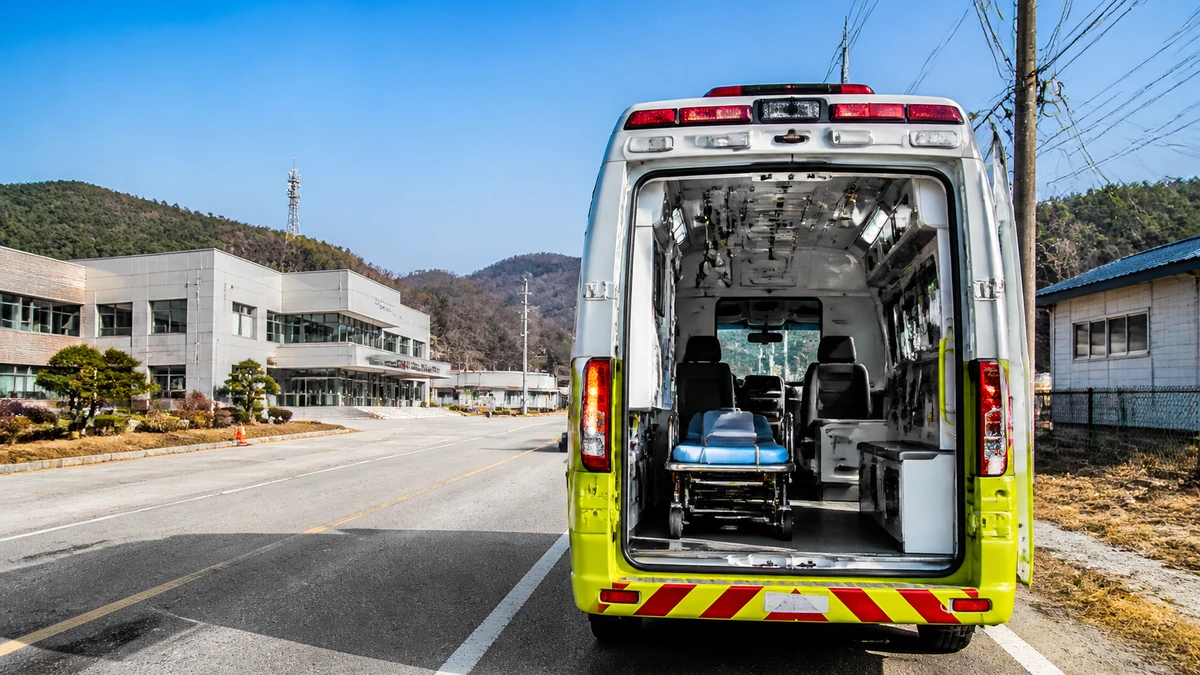
A local race with life-and-death stakes
As South Korea heads into local elections, one issue is rising above the usual promises about roads, business development and housing: whether people can get emergency medical care fast enough to survive.
In South Gyeongsang province, known in Korean as Gyeongnam, a regional branch of the Korean Health and Medical Workers’ Union on June 7 publicly urged candidates for governor to adopt concrete pledges aimed at narrowing medical inequality across the province. The union’s message, delivered at a news conference at the provincial government press center, was blunt. Health care disparities are not only widening between the Seoul metropolitan area and the rest of the country, it said, but also within Gyeongnam itself.
That distinction matters. For Americans, the most familiar comparison might be the gap between a major medical hub like Boston or Houston and a sparsely populated rural county hours away from a trauma center. But the problem being described in Gyeongnam is more layered. It is not only that South Korea’s capital region has more resources, specialists and top-tier hospitals than the provinces. It is also that within one province, residents’ chances of timely treatment can depend heavily on whether they live in one of a few larger cities or in a smaller county.
In political terms, that makes health care access a particularly potent election issue. Local elections in South Korea do not simply decide symbolic offices. Governors and mayors help shape budgets, infrastructure priorities and the public services residents encounter in everyday life. When the issue is emergency medicine, the stakes move beyond convenience or quality-of-life debates. The question becomes whether geography is quietly determining who lives and who dies.
The union framed the election as a chance to interrupt what it called a chain of tragedy. That language underscores how this debate has moved beyond bureaucratic planning and into the realm of public anxiety. A shortage of nearby emergency facilities is not experienced as an abstract policy failure. It is experienced as fear: fear that an ambulance ride will take too long, that a specialist will be too far away, or that a family member in crisis will have to be transferred from one hospital to another before receiving definitive care.
The numbers behind the alarm
The figure at the center of the union’s case is striking. Of Gyeongnam’s 18 cities and counties, the union says 14 are considered vulnerable areas for emergency medical care. Only Jinju, Changwon, Gimhae and Yangsan were excluded from that description.
Even without knowing every contour of South Korea’s health system, that number tells a clear story. Most of the province falls outside the circle of stronger emergency access. In other words, the places with relative stability are the exceptions, not the rule.
For English-speaking readers, it helps to understand how South Korean geography and governance work. Provinces such as South Gyeongsang are made up of both cities and counties, and the differences between them can be substantial. A resident of Changwon, a major urban center, does not encounter the same health infrastructure as someone living in a more rural or coastal part of the province. Roads, ambulance routes, specialist availability and hospital capacity all shape what “access” really means.
The term “vulnerable area” is also more significant than it may first appear. It does not simply mean a place has fewer clinics or older facilities. In the context of emergency care, it points to the possibility that residents cannot reliably receive treatment within the critical window that many acute conditions demand. Heart attacks, strokes, traumatic injuries and severe infections are not problems that wait patiently for regional planning to catch up.
South Korea is often described abroad as a country with world-class health care, and in many respects that reputation is deserved. It has highly trained physicians, advanced hospitals and a national health insurance system that provides broad coverage. But a strong national system can still contain sharp local inequalities. Americans may recognize the pattern. The United States has some of the best hospitals in the world, yet millions of people live in places where obstetric units have closed, primary care is scarce, or emergency transport times are long. High national averages can conceal deep local vulnerability.
That is part of what makes the Gyeongnam debate so resonant. It challenges the comforting assumption that universal coverage alone resolves regional inequality. Coverage is not the same as access. A health card does not substitute for a nearby emergency department, an available bed, a staffed operating room or a viable transfer network.
Why the fight is about more than building one hospital
The union’s demands were not vague calls for officials to “do better.” It laid out specific proposals it wants gubernatorial candidates to adopt as campaign pledges: establish a Western Gyeongnam Medical Center, accelerate completion of an expansion at Masan Medical Center, and finalize plans this year to relocate and newly build Red Cross hospitals in Geochang and Tongyeong.
Taken together, those proposals reveal something important about how the problem is being defined. This is not being presented as a one-size-fits-all crisis with a single universal fix. Instead, the union is arguing for a mix of strategies tailored to different local conditions.
The call for a new medical center in the western part of the province suggests that some areas lack sufficient institutional presence altogether. The demand to speed up the Masan Medical Center expansion points to a different kind of issue: not total absence, but insufficient scale or slow implementation of already discussed projects. Meanwhile, the push to confirm relocation and new construction for Red Cross hospitals in Geochang and Tongyeong indicates concern not just with whether a hospital exists, but whether it is in the right place, configured effectively and capable of serving current population needs.
That distinction is critical in public health policy. Infrastructure debates often get reduced to ribbon-cutting politics, where a new building becomes shorthand for progress. But residents do not experience health care through architecture. They experience it through travel time, wait time, staffing, services offered and whether care is available at the hour of crisis. A hospital in the wrong place or with insufficient capacity may do little to solve the problem it was supposed to address.
There is also a larger philosophical debate embedded in these requests. In South Korea, as in the United States and many other countries, public health care infrastructure is often discussed alongside market-based delivery systems. The union’s proposals center public medical institutions and publicly oriented capacity. That reflects a view that health care, especially emergency care, cannot be left entirely to market logic. Areas with older populations, lower incomes or thinner patient volumes may be less attractive for private investment, even though the public need is profound.
Americans have seen similar tensions in their own system. Rural hospitals across the United States have struggled or closed in part because revenue models do not always sustain facilities in low-density areas. Yet the disappearance of those facilities can devastate communities, not only medically but economically and psychologically. A hospital is more than a service provider. It is part of a region’s survival infrastructure.
Why this election matters in Korea’s local political system
The timing of the union’s intervention is not incidental. It comes ahead of local elections, when candidates are under pressure to translate general values into specific promises. In South Korea, campaign platforms often function as a public ledger. Civil society groups, business organizations and professional associations use election season to force candidates to state what they will prioritize and what they will not.
That is what appears to be happening in Gyeongnam. According to the summary of local reporting, the Changwon Chamber of Commerce and Industry also planned to deliver policy tasks to mayoral candidates in Changwon the same day. In other words, multiple sectors of local society are attempting to shape the election agenda. But health care carries a particular moral weight because it is inseparable from basic safety and dignity.
For readers unfamiliar with South Korean politics, the June local elections are not equivalent to a single national showdown like a presidential race. They are distributed contests that determine leadership across provinces and municipalities. Yet these races can have an outsized effect on daily life because they influence how national goals are translated into local execution. A province may not control every aspect of the health system, but provincial leadership can affect public investment, coordination, planning pressure and the political urgency assigned to underserved areas.
The union’s strategy also reflects a practical understanding of accountability. It is easier to judge elected officials when demands are concrete. “Support better health care” is an aspiration. “Commit to establishing a Western Gyeongnam Medical Center” is a promise that can later be measured, delayed, amended or abandoned in plain view. By spelling out discrete projects, the union is trying to convert diffuse anxiety into verifiable campaign obligations.
At the same time, the limits of what is known remain important. The source summary indicates that candidates’ responses were not yet included. That means the current confirmed facts are the union’s public appeal and the substance of its requests, not any accepted agreement or policy commitment from the candidates themselves. Responsible reporting requires keeping that distinction clear. The issue has been put at the center of debate, but the political answer is still pending.
The bigger story: inequality inside the provinces, not just between Seoul and everyone else
Much of the conversation about South Korea’s regional imbalance tends to focus on the gravitational pull of Seoul and the surrounding capital area. That is understandable. The Seoul metropolitan region dominates politics, media, education and high-end medical care in ways that are familiar to anyone who has watched how capitals concentrate resources around the world.
But the Gyeongnam case points to a subtler and, in some ways, sharper problem: inequality within the provinces themselves. It is one thing to say that non-capital regions lag behind Seoul. It is another to acknowledge that within a province already outside the capital’s orbit, some communities are still left behind by their own regional centers.
That distinction matters because it changes where responsibility is assigned. If every shortfall is attributed solely to the supremacy of Seoul, local inequality can be treated as inevitable fallout from a centralized national system. But when disparities within one province become severe, the debate shifts toward provincial planning, resource distribution and administrative capacity. It asks not only whether the provinces are underserved compared with the capital, but also which residents inside the provinces are most exposed.
That is a politically uncomfortable question in any country. It forces local leaders to confront internal hierarchies. Some places become hubs, while others become peripheries even within already peripheral regions. In Gyeongnam, the contrast between four comparatively stronger cities and the remaining 14 vulnerable jurisdictions illustrates how uneven that map may be.
There is a demographic angle here as well. Many rural or semi-rural regions in South Korea, like those in Japan, Italy and parts of the United States, are aging rapidly. Older populations tend to require more frequent medical care and are more vulnerable to emergencies in which time matters enormously. At the same time, those same areas may struggle to attract physicians, nurses and specialists, particularly if younger professionals prefer metropolitan centers with larger hospitals, more training opportunities and broader lifestyle options.
That combination can create a self-reinforcing cycle. Limited services push residents to seek care elsewhere when they can. Lower patient volume weakens local institutions. Staffing becomes harder. Investment slows. Then, in the moments when local care is most urgently needed, the system is already thin. Breaking that cycle typically requires public intervention rather than passive reliance on market trends.
What voters will be listening for now
As the campaign moves forward, the key question for voters may not be whether candidates say health care is important. In modern politics, nearly every candidate says that. The more revealing test is how they rank the issue against competing priorities and whether they attach timelines, budgets and governing responsibility to their promises.
In that sense, the union’s pressure campaign is forcing a more useful conversation. If a candidate supports reducing health inequality, does that mean backing a new public hospital in western Gyeongnam? Does it mean accelerating an existing expansion project? Does it mean endorsing the relocation and reconstruction of Red Cross hospitals in specific communities this year? Or does it mean offering only general sympathy without committing to the hard choices that public infrastructure requires?
For American readers, the scene may sound familiar. Candidates everywhere like the language of fairness. What separates rhetoric from policy is usually specificity. Which county gets the new facility? What gets funded first? Who is expected to run it? How quickly can staffing be secured? What happens if the central government and local government disagree over cost or jurisdiction? Those are the questions that turn moral concern into actual governance.
There is also a broader civic lesson in the way the issue has surfaced. A public news conference at the provincial press center is not simply an administrative ritual. It is a demand that inequality be discussed in the open, as a matter for democratic contest rather than private complaint. By urging candidates to adopt these measures as campaign pledges, the union is making a claim about what belongs at the center of local politics.
That claim is difficult to dismiss. Emergency care is one of the clearest measures of whether a state or local government is meeting its most basic obligation to residents. Economic development may shape prosperity over time. Cultural projects may build civic pride. But the ability to reach treatment in a crisis speaks directly to whether public systems treat residents’ lives as equally valuable regardless of ZIP code, or in this case, regardless of which city or county they call home.
South Korea is often admired internationally for its speed, density and institutional competence. The debate unfolding in Gyeongnam is a reminder that even highly developed systems have edges where people feel exposed. Elections can sometimes flatten complicated problems into slogans. But at their best, they force officials to answer a simple and profound question: Who gets protected first?
In Gyeongnam, voters are being asked to consider that question in the most concrete terms possible. Not in theory, but in ambulance routes, hospital maps and emergency room doors. The outcome of the election will not solve the problem overnight. Still, the campaign may determine whether medical inequality remains a chronic background condition or becomes a governing priority with deadlines, money and political consequences attached.
That is why this local Korean story deserves wider attention. It is about more than one province and more than one election. It is about a challenge that democracies across the developed world increasingly face: how to ensure that people outside the biggest and wealthiest centers are not forced to accept a thinner version of public safety. In Gyeongnam, that challenge now sits squarely on the ballot.
Comments
Post a Comment