South Korea Signals New Approach to Boost Domestic Production
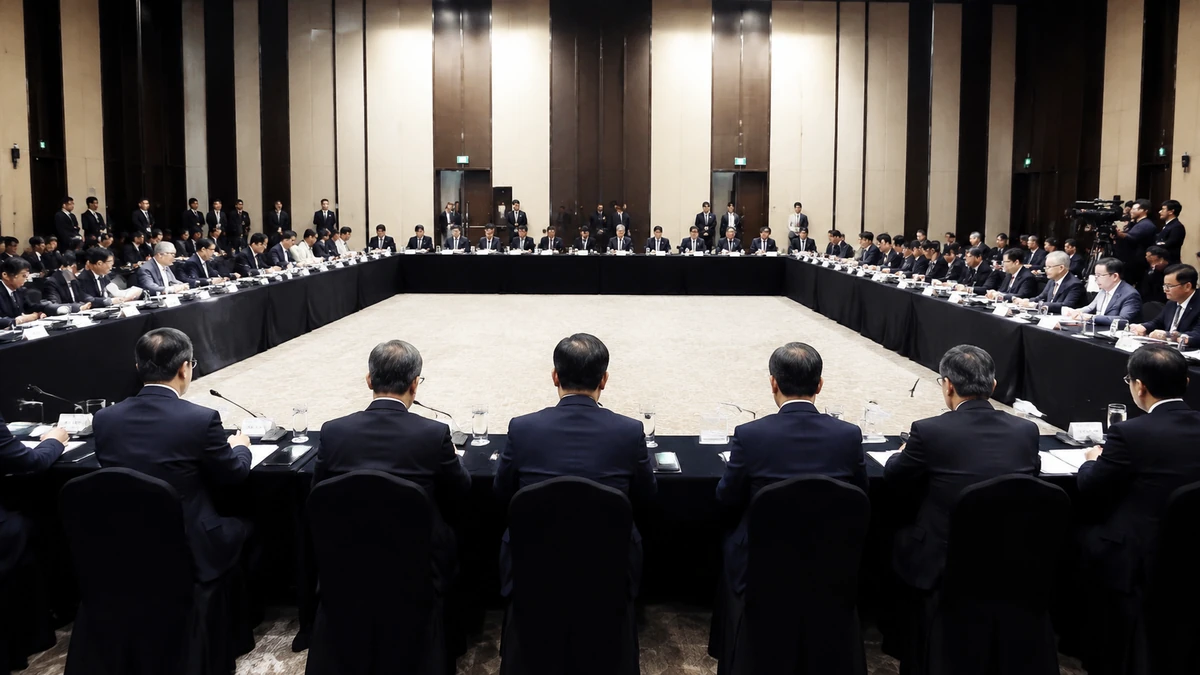
In a strategic move to strengthen its domestic manufacturing base, South Korea's Deputy Prime Minister and Finance Minister, Koo Yun-cheol, revealed on May 13 that the government is reviewing subsidies for early-stage companies that are not yet profitable. The announcement came during a high-profile "K-Ship Future Vision" forum in Ulsan, an industrial hub in the southeast of the country, attended by President Lee Jae-myung. The forum, focused on the shipbuilding industry, served as a platform to outline the government’s plan to reinforce domestic production through a combination of tax incentives and direct financial support.
The proposed program, referred to as the "Domestic Production Promotion Tax Incentive" or colloquially as Korea's version of the U.S. Inflation Reduction Act, is designed to encourage companies to keep production within South Korea. Unlike traditional tax incentives, which are often only beneficial once a company is profitable, the government recognizes that early-stage or loss-making companies need more immediate support. This could include direct grants or subsidies during the initial investment phase, signaling a pragmatic shift in policy from mere tax relief to active facilitation of production.
The Logic Behind Subsidies for Early-Stage Companies
Minister Koo emphasized that tax reductions alone are insufficient for companies operating at a loss. In traditional tax credit schemes, the benefit is realized only against profits, making it ineffective for start-ups or businesses in early production stages. By considering direct subsidies, the government aims to bridge this gap, ensuring that firms can invest in infrastructure, hire staff, and initiate operations without being hampered by immediate cash-flow constraints.
This approach acknowledges a common challenge in industrial policy: stimulating domestic production is not just about promising future benefits but providing tangible, timely support that affects real investment decisions. The strategy aligns incentives with the operational realities of manufacturers, particularly in capital-intensive sectors like shipbuilding, where infrastructure and long lead times significantly affect profitability.
Context: Global Manufacturing Competition and Protectionism
The timing of South Korea's initiative is not coincidental. Worldwide, industrial policy is being reshaped by the rise of protectionist measures. The United States and Japan have implemented tax incentives tied to domestic production, aiming to secure supply chains and maintain industrial competitiveness. South Korea's proposed measures are part of a broader trend in which nations actively intervene to retain production within national borders and safeguard critical industries.
Labeling the program as Korea's "Inflation Reduction Act" analog underscores the policy’s dual focus: not only promoting domestic output but also stabilizing supply chains and reinforcing manufacturing resilience. This marks a departure from policies relying solely on market forces, reflecting a global shift where governments proactively align financial tools with strategic industrial objectives.
The Road to the July Tax Reform
The government plans to finalize the program’s details in the July tax code revision. Minister Koo’s recent statements serve as a midpoint in the policy formulation process, clarifying the intended beneficiaries and mechanisms without locking in specifics. Companies and investors are closely monitoring whether the subsidies will be industry-specific, contingent on production output, or broader in scope.
The forthcoming tax law amendment will codify these incentives, translating policy intent into enforceable regulations. Market observers note that clarity in execution—eligibility criteria, subsidy amounts, and administration—will ultimately determine the program's effectiveness in steering investment decisions toward domestic production.
Symbolism of Ulsan and Shipbuilding
Holding the forum in Ulsan, South Korea's shipbuilding capital, was a deliberate choice. The shipbuilding sector exemplifies the challenges of domestic manufacturing: large-scale investment, extended project cycles, global competition, and complex supply chains. Announcing potential subsidies for early-stage firms in this context highlights the government’s recognition that industrial policy must consider real-world operational challenges, not just macroeconomic targets.
For international observers, this indicates that South Korea is taking a hands-on approach to industrial competitiveness. Rather than relying solely on patriotic consumption incentives or abstract tax credits, policymakers are connecting fiscal tools directly to operational realities, encouraging companies to maintain and expand production domestically.
Market Implications and Signals to Investors
The government’s dual approach of tax incentives and potential subsidies sends a clear signal to domestic and foreign investors: South Korea intends to make early-stage production investment more viable. Start-ups and capital-intensive manufacturers now have a framework that could alleviate initial cash-flow constraints, making domestic projects financially more feasible.
Analysts note that this policy direction, coupled with international developments in production-linked incentives, positions South Korea to retain manufacturing competitiveness amid global supply chain uncertainties. The key takeaway for businesses is that the government is moving beyond declarative support and considering mechanisms that directly impact financial feasibility and operational viability. Investors should watch the July tax reform closely, as the exact design and execution of these incentives will be decisive in shaping industrial investment decisions in the coming years.
Comments
Post a Comment