Samsung faces a labor test with global implications
South Korea’s labor minister has stepped directly into a fast-escalating dispute at Samsung Electronics, signaling that what might look like an internal fight over bonuses has become something much bigger: a test of how the country manages conflict between workers and one of its most powerful corporations.
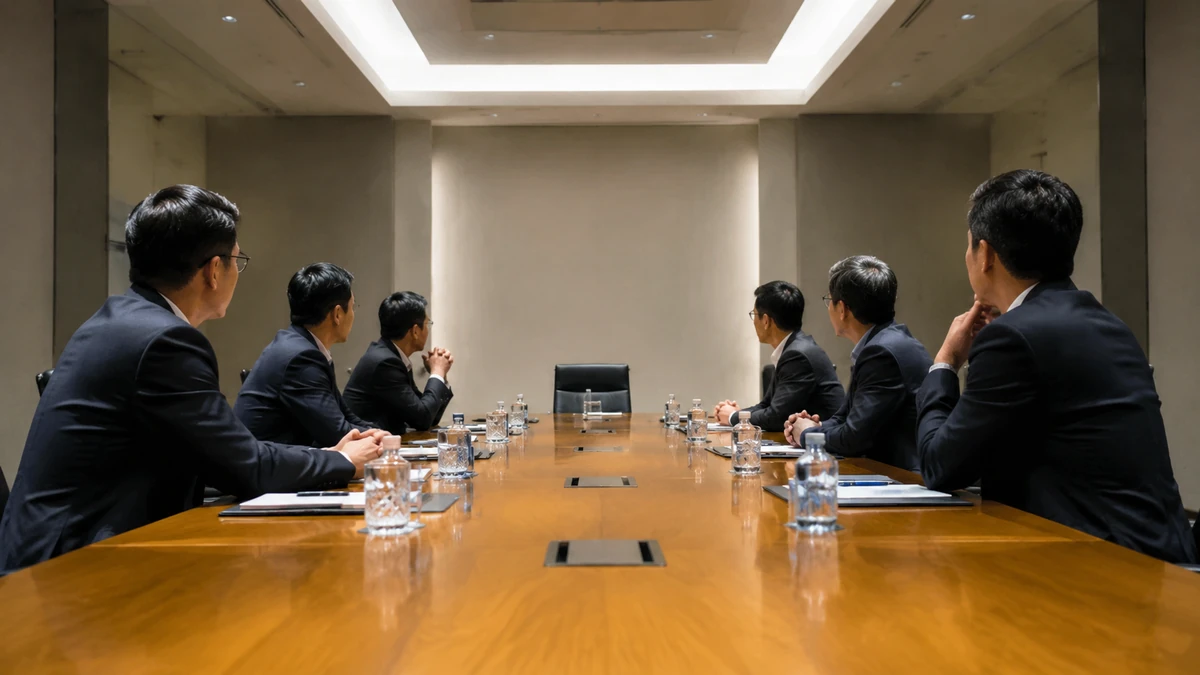
With a general strike planned by Samsung Electronics’ union from May 21 through June 7, Employment and Labor Minister Kim Young-hoon met with company executives on May 16 and urged them to engage more actively in talks, according to Yonhap News. The meeting came just one day after he sat down with union representatives, a sequence that underscores how closely the government is watching the standoff.
For American readers, it may help to think of Samsung not simply as a major tech company, but as something closer to a hybrid of Apple, Intel and General Electric in terms of its symbolic weight in its home country. Samsung is South Korea’s best-known corporate name abroad and a pillar of the national economy. A labor confrontation there is never just about one workplace. It becomes a referendum on wages, corporate governance, economic anxiety and the social compact between management and workers.
That is why the minister’s back-to-back meetings matter. In the United States, a Cabinet official shuttling between a union and a flagship private employer days before a strike would immediately be read as a sign that Washington sees broader economic or political risk. The same is true here. South Korea’s government is not formally taking over the negotiations, but it is making clear that a breakdown at Samsung could reverberate far beyond the factory floor or office campus.
The immediate dispute centers on the company’s bonus structure. But underneath that argument lies a deeper and more familiar question, one workers and corporations are wrestling with from Detroit to Silicon Valley: Who gets to define performance, and who controls the rules for sharing profits when a company succeeds?
The fight is about more than paychecks
At the center of the clash is the union’s demand for a more predictable and institutionalized bonus system. The union is calling for fixed incentive payments equivalent to 15% of operating profit and for the removal of any cap on those payouts. Samsung management, by contrast, has argued for keeping the current framework while allowing for flexible, uncapped special rewards when circumstances warrant.
At first glance, the two positions can sound closer than they really are. Both sides are talking about compensation tied to performance. Both appear open, at least in principle, to large payouts when business conditions are strong. But in labor negotiations, details are everything, and the real divide is over whether bonuses should be guaranteed by a clear formula or remain largely at management’s discretion.
That distinction is crucial. Workers are not only asking for more money; they are asking for rules they can predict. In practical terms, they want a system that does not depend on executive judgment from year to year. Management, on the other hand, appears to want to preserve flexibility, which companies often frame as essential in a cyclical, intensely competitive industry like semiconductors and consumer electronics.
Americans have seen versions of this argument before. It echoes disputes in industries where workers say “profit-sharing” means too little if the company alone decides the formula, the timing and the exceptions. Employers, meanwhile, often insist they need room to respond to market shocks, investment demands and uneven earnings. What sounds like a debate over compensation levels is often really a power struggle over who sets the terms of fairness.
That appears to be the case at Samsung. The union’s language emphasizes fixed payments and formalized rules. The company’s language emphasizes preserving the current system while creating room for special awards. One side is asking for a redesigned principle. The other is offering adjustments within the existing structure. Those are fundamentally different approaches, even if both invoke the idea of rewarding performance.
In that sense, the dispute reflects a broader shift in workplaces around the world. Employees increasingly want transparency, especially in high-profit sectors where they believe their labor underwrites corporate success. Employers increasingly defend agility, particularly in industries vulnerable to swings in global demand. Samsung now sits squarely at that crossroads.
Why the labor minister’s intervention matters
Kim’s decision to meet the union first and management the next day is more than a scheduling detail. It sends a message that the government sees urgency and wants to keep the two sides talking before the strike begins. Officials have framed their role around encouraging dialogue rather than choosing sides, but even that posture carries weight in South Korea, where labor disputes at major conglomerates can quickly become national political issues.
South Korea’s economic system has long been shaped by giant family-controlled conglomerates known as chaebol, a Korean term unfamiliar to many Americans but central to understanding the country’s corporate landscape. Chaebol such as Samsung, Hyundai and SK are sprawling business groups that often dominate multiple industries and wield enormous influence over jobs, exports and investment. When labor tensions flare at a chaebol flagship, the stakes are often national.
That helps explain why the labor ministry’s role here is so notable. This is not simply a government office waiting to enforce labor law after the fact. By meeting both sides in rapid succession, the ministry is signaling that labor peace itself is a public concern. Officials appear to be trying to restore the bargaining process before the dispute hardens into a prolonged confrontation.
That approach also reflects a specifically Korean political reality. Labor disputes in South Korea are often watched not only as economic events but as indicators of social cohesion and institutional trust. A strike can become a proxy battle over whether workers feel respected in a society known for intense work culture, long hours and sharp competition. It can also raise broader concerns about national competitiveness, especially when the company involved is a leading exporter in a strategically important industry.
For U.S. audiences, the closest analogy may be the way a potential walkout at a major automaker or a nationwide port strike can pull elected officials, regulators and business leaders into the same orbit. The government may not dictate terms, but it often tries to prevent a rupture that could damage confidence and disrupt supply chains. In Samsung’s case, that concern is amplified by the company’s role in semiconductors, smartphones and advanced technology manufacturing at a time when global supply resilience is already a sensitive topic.
The minister’s message, as reported, has been simple: Keep talking. That may sound modest, but with only days left before the strike deadline, it is also a sign that the window for a negotiated off-ramp is narrowing fast.
A planned 18-day strike raises pressure on all sides
The union’s coalition has said it plans a general strike lasting 18 days, from May 21 to June 7. The timeline is a major reason the situation has become so tense. A strike notice is always a bargaining tool, but as the deadline approaches, it also becomes a test of credibility. Workers must show they are prepared to follow through. Management must decide whether to compromise, hold firm or try to outlast the pressure. The government must assess whether the dispute could spill into a broader social or economic problem.
Even before any picket lines form, a strike threat can alter the balance of negotiations. It changes the mood from abstract disagreement to countdown. Every public statement is weighed for signs of movement or defiance. Investors, suppliers and employees who are not directly involved begin watching for clues about what comes next.
That is especially true at Samsung Electronics. The company occupies an unusual place in South Korean life, where corporate identity and national identity can sometimes overlap. Many South Koreans take pride in Samsung’s global stature, just as many Americans might view iconic homegrown companies as symbols of national innovation. At the same time, that prominence can intensify public scrutiny when conflicts erupt. Expectations run high not only for commercial performance, but for how the company treats workers and responds to social pressure.
The symbolism of a general strike at Samsung is therefore hard to overstate. South Korea’s labor movement has a long, often contentious history, shaped by rapid industrialization, authoritarian rule in earlier decades and hard-fought battles for collective bargaining rights. Any large-scale walkout at a company once associated with a strongly management-driven culture carries echoes of that history.
In recent years, labor activism in South Korea has been evolving, particularly in white-collar and high-tech environments once considered less unionized than heavy industry. A strike at Samsung would fit into that broader trend: employees at elite global firms seeking not just higher compensation but a greater voice in how workplace rules are structured.
That is one reason this dispute is drawing such attention. It touches not only on economics, but on the changing identity of labor in one of Asia’s most advanced economies. It also challenges the old assumption that workers at prestigious technology companies are too well compensated or too professionally fragmented to organize around structural demands.
Lee Jae-yong’s return adds symbolism, not necessarily solutions
The drama intensified further when Samsung Electronics Chairman Lee Jae-yong reportedly cut short an overseas trip and returned to South Korea. Upon arrival, he delivered a message urging unity, saying, “Now is the time to wisely combine our strength and move in one direction.” He also addressed union members and what he called the Samsung family, invoking the language of togetherness.
In corporate America, executives often reach for the rhetoric of family during periods of stress. The phrase is familiar, and it is usually meant to calm nerves, project solidarity and remind employees of shared purpose. In South Korea, that language can carry even more cultural weight. Large companies have historically emphasized collective identity, loyalty and harmony, values that overlap with broader social traditions shaped in part by Confucian ideas about hierarchy and group cohesion.
But symbolism can only go so far. Lee’s remarks may reassure some stakeholders that top leadership recognizes the seriousness of the moment. His sudden return certainly suggests the company does not view the dispute as routine. Still, calls for unity do not resolve the substantive issue in front of negotiators: whether Samsung’s bonus system should be restructured around fixed, institutionalized rules or preserved with management discretion intact.
This is where cultural messaging meets modern labor politics. Appeals to solidarity can shape the tone of a dispute, but they cannot replace bargaining over concrete terms. Workers demanding structural guarantees are likely to judge management not by its words alone, but by whether those words translate into changes at the negotiating table.
There is also a deeper tension embedded in the chairman’s message. The idea that workers and management are “one family” can be comforting in prosperous times. During labor disputes, however, unions often push back on exactly that framing, arguing that family language can blur the reality of unequal power. If employees are fighting for enforceable rules rather than discretionary rewards, then the debate has already moved beyond sentiment and into governance.
That does not make Lee’s intervention irrelevant. High-level attention can create momentum, unlock concessions or at least prevent talks from collapsing entirely. But unless that symbolism becomes policy, it is unlikely by itself to bridge the central divide.
What this dispute says about South Korea’s workplace future
In many ways, the Samsung standoff captures a larger transition underway in South Korean labor relations. The old question in industrial disputes was often how much workers would be paid. The newer question is increasingly how compensation systems are designed, who gets transparency and whether management’s discretion should have clearer limits.
That shift mirrors broader anxieties inside advanced economies. Workers want stability in an era of volatility. Employers want flexibility in an era of disruption. Governments want social peace without appearing to dictate private-sector outcomes. Samsung’s current conflict places all three of those impulses on the same stage.
The dispute also highlights the limits of headline numbers. A demand tied to 15% of operating profit may sound, to outsiders, like a straightforward fight over a large sum. But the sharper issue is predictability. For the union, a formal rule appears to matter as much as the payout itself. For management, preserving room for case-by-case judgment may matter as much as controlling labor costs. That is why the two sides can sound as if they are discussing similar goals while remaining far apart in practice.
It also speaks to a broader reckoning in South Korea’s white-collar and tech workplaces. As employees in highly profitable sectors become more organized, they are pressing for the kind of procedural clarity that unions in manufacturing have long sought. That includes formulas, caps, criteria and mechanisms that reduce ambiguity. In other words, they are not only bargaining over outcomes. They are bargaining over the architecture of decision-making.
For a country that has built much of its economic success on speed, discipline and corporate coordination, this matters. It suggests a workforce increasingly unwilling to leave key questions of reward and recognition entirely to management’s internal judgment. It also suggests that labor politics in South Korea are moving beyond older stereotypes of militant factory-floor disputes into boardroom-adjacent arguments about systems, metrics and institutional trust.
That evolution is important for international observers as well. Samsung is deeply enmeshed in global technology supply chains. The way it handles labor relations sends signals not only to domestic workers but to investors, business partners and foreign governments that depend on the company’s stability. A messy confrontation could feed concerns about governance and workforce morale. A negotiated resolution could instead become a case study in how mature economies adapt labor practices to new expectations.
The next few days may determine more than one contract
What happens before May 21 now carries outsized importance. The labor minister’s shuttle diplomacy, the union’s strike timetable and the chairman’s sudden return all point to the same reality: the dispute has entered a decisive phase. If talks produce even a partial breakthrough, both sides may be able to claim they defended principle while averting a damaging showdown. If they do not, the strike could become a defining moment in South Korea’s debate over labor, corporate power and the meaning of fairness in a high-tech economy.
There is a temptation in stories like this to frame the outcome in binary terms: strike or no strike, victory or defeat. But the more revealing measure may be what kind of bargaining culture emerges afterward. Will Samsung and its union move toward clearer, more institutionalized rules? Or will the company preserve a model built around managerial flexibility, even at the cost of recurring conflict? The answer could shape expectations well beyond a single negotiation cycle.
For American readers, the significance is not hard to grasp. This is, at heart, a story about workers demanding not just compensation but a say in the system that determines it. It is a story about a government trying to prevent a private labor dispute from becoming a public crisis. And it is a story about a corporate giant discovering that in a changed labor environment, symbolic appeals to unity may no longer be enough.
That is why the Samsung dispute deserves attention beyond South Korea. It reflects pressures seen across advanced economies, where workers are asking tougher questions about profit-sharing, transparency and the rules of modern employment. The specific language may be Korean, and the corporate setting distinctly shaped by the chaebol system, but the underlying conflict is instantly legible to anyone watching labor politics in the United States, Europe or elsewhere in Asia.
In the days ahead, the most important question may be the simplest one: Can both sides return to a negotiation table that still functions? South Korea’s labor ministry is clearly betting that they can. The broader public, and much of the business world, will soon find out whether that bet was made in time.
Comments
Post a Comment