Son Heung-min says a fourth World Cup feels like the first, offering South Korea a leader focused on team, joy and the fans
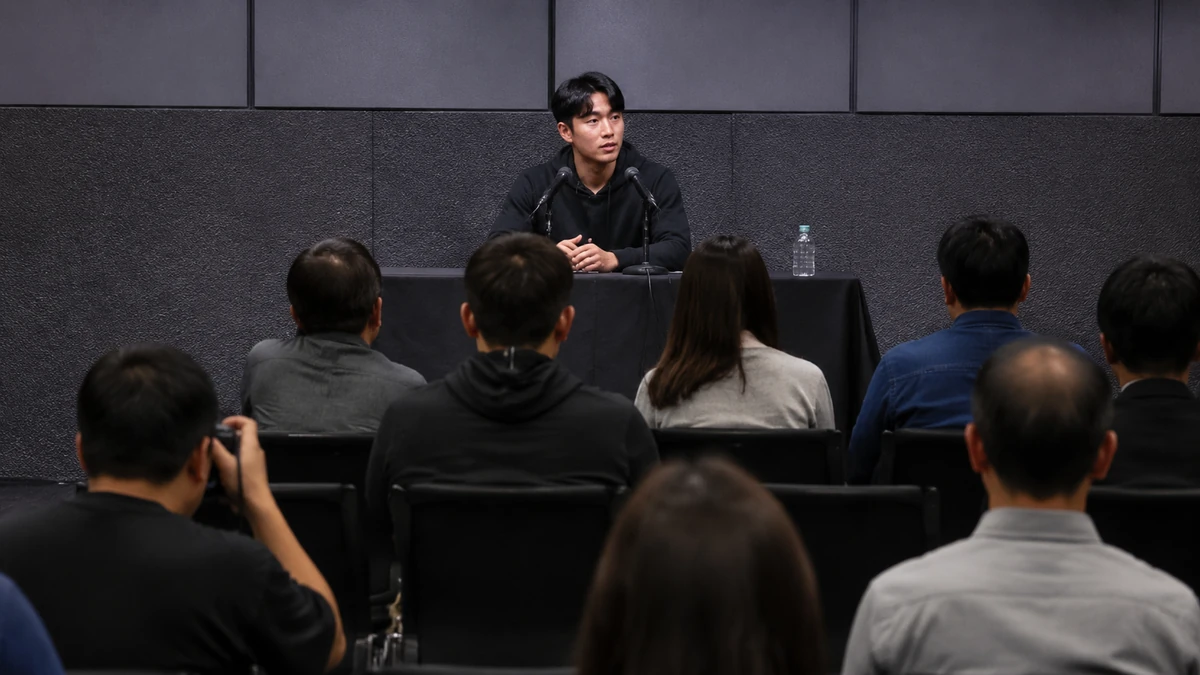
A global star still talking like a kid before the biggest tournament
For many American sports fans, the familiar script for a superstar entering his fourth major tournament is easy to imagine: talk about legacy, numbers, records, or one last big run. Son Heung-min, the face of South Korean soccer for nearly a decade, offered something notably different this week. Asked about captaining South Korea at the 2026 World Cup — which would be his fourth — Son said the feeling is essentially the same as it was the first time. He spoke about returning to his original mindset, about doing his best with the same energy and passion, and about the World Cup still making him feel like a child.
That answer may sound simple, even obvious, in the way athletes often reach for humility in public. But in Son’s case, it carries unusual weight. He is not a fringe player hoping to make a roster or a veteran clinging to relevance. He is South Korea’s captain, its most recognizable active player, and one of Asia’s most accomplished modern footballers. He has played at the top levels of European club soccer, built a global following, and spent years carrying the expectations of a country where the men’s national team remains one of the most emotionally watched institutions in sports.
So when Son says a fourth World Cup still feels pure, still feels thrilling, it says something meaningful about how he sees the sport and the role he occupies within it. He is not framing the tournament as a burden, even though South Korean stars often enter the World Cup under intense scrutiny. He is not treating it like a coronation or a farewell tour. Instead, he is describing it as a dream stage — the kind of phrase that can sound cliché until it comes from someone who has already lived the dream several times over and still insists the wonder has not faded.
For American readers, it may help to think of the World Cup in the emotional space the Olympics can occupy for some athletes, or the way March Madness still captures even seasoned college coaches, or the way the Super Bowl can turn hardened pros sentimental. But even those comparisons only go so far. In much of the world, and especially in soccer-mad countries, the World Cup exists above almost every other sporting event. It is part championship, part national ceremony, part cultural theater. When Son says it makes him feel like a kid, he is speaking to the scale of that feeling.
His remarks came in the United States, where he now plays club soccer for Los Angeles FC, and that setting adds another layer. The 2026 World Cup will be co-hosted by the United States, Canada and Mexico, a tri-national tournament expected to be the largest in the competition’s history. For Son, now based in Los Angeles and already one of the most recognizable Asian athletes in North America, the buildup is not just about another competition. It is about helping lead South Korea into a World Cup that will unfold in front of a massive Korean diaspora, a growing American soccer audience, and a commercial sports environment unlike anything the men’s game has seen on this continent.
Why his words matter more in South Korea than they might in the United States
To understand why Son’s comments resonated in South Korea, it helps to understand what the national team captain represents there. In American sports, leadership is often spread across coaches, quarterbacks, veteran locker-room voices and franchise brands. In international soccer, especially for countries with a deep emotional investment in the national team, the captain often becomes a kind of public steward. He is expected to perform, of course, but also to embody the values fans want to see: composure, sacrifice, seriousness and loyalty to the badge.
In South Korea, that expectation can be especially intense. The men’s national team is not just another team on a crowded sports calendar. It is a source of collective memory and national emotion. Anyone who remembers the 2002 World Cup, when South Korea made a stunning run to the semifinals as co-host, understands the outsized cultural place soccer can hold in the country. That tournament was not merely a sports story. It was a national moment, remembered in packed city streets, the sea of red shirts, and the sense that a global event had become a vehicle for identity and pride.
That helps explain why Son’s emphasis on attitude over statistics matters. He did not talk first about goals, awards or how many World Cups he has played. He stressed mindset. He said his effort and passion would be the same whether it was his first tournament or his fourth. In a sports culture where star narratives can easily drift toward individual achievements, his message pointed in the opposite direction. It reminded supporters that the person carrying South Korea’s highest-profile jersey is still publicly centering duty, humility and collective purpose.
There is also a specifically Korean cultural layer to this. The concept Son invoked is often described in Korean as returning to one’s first heart, or original mind — a renewed commitment to the sincerity and hunger one had at the beginning. It is not simply nostalgia. It implies discipline, modesty and a refusal to let success dull effort. For American audiences, a rough equivalent might be a veteran player saying he wants to keep the chip-on-the-shoulder mentality of a rookie. But the Korean idea carries a stronger moral and emotional charge. It is about staying grounded even after fame.
That is one reason Son’s phrasing landed so strongly. He is already secure in his standing. He does not need to perform humility to protect a fragile reputation. Yet he is still describing the World Cup in terms of innocence, gratitude and responsibility. In a moment when many elite athletes are carefully managed brands, that kind of message can feel refreshingly direct.
From scorer to connector, Son’s recent season underscores the point
There is another reason Son’s comments ring true: they match the soccer he has been playing. With LAFC this season, he has not piled up goals, but he has recorded nine assists. For casual American fans, assists can sometimes be treated as the secondary statistic, especially for an attacking player known for scoring. In soccer, though, assists often reveal something important about how a player is reading the game, where he is choosing to influence it, and what kind of role he is willing to embrace.
Son’s profile was built in large part on finishing. At his best, he has been one of the game’s most clinical attackers, a player capable of changing matches with speed, timing and ruthless precision in front of goal. That is still part of who he is. But the current numbers suggest a player operating as a connector as much as a finisher — someone shaping the flow of attacks, putting teammates into better positions and elevating the collective structure of the team.
That matters because World Cups are rarely won on star power alone. National teams have limited time together. Systems must be absorbed quickly. Chemistry matters. So do rhythm, trust and the ability of key players to make everyone around them calmer and better. A forward who can both threaten defenses and knit together the team’s attacking patterns becomes especially valuable in that setting.
When Son said his goal is to give everything he has both on and off the field, that phrase carried more than a motivational sound bite. On the field, it suggests a veteran who understands that creating the right sequences can be as important as finishing them. Off the field, it points to the less visible work of a captain: managing emotions, setting a tone, stabilizing younger players and serving as the bridge between fans, media and the locker room.
For American readers, there are echoes here of the veteran point guard who no longer has to lead the league in scoring to dominate a game, or the NFL receiver who draws defenders and creates openings that never appear on the stat sheet. Son is still the headline name, but his recent numbers and his public comments both suggest a broader self-understanding. He is not just trying to be South Korea’s hero in isolated moments. He is trying to be the axis around which the team functions.
The World Cup as celebration, not just pressure cooker
One of the most striking parts of Son’s remarks was not about tactics or legacy at all. He described the World Cup as enjoyable soccer and said he wants to help create a culture in which fans can enjoy the tournament like a festival. That choice of language matters, because it shifts the conversation away from sports as pure result and toward sports as shared experience.
Americans are familiar with this idea in certain contexts. The Super Bowl is a game, but it is also a national event. The Final Four can feel like a traveling carnival. Baseball’s opening day carries a kind of civic ritual. The World Cup, however, is something even more expansive. It is a monthlong transnational spectacle in which the boundaries between sport, identity and celebration blur. Streets fill. Public squares become viewing parties. Families schedule their days around kickoff times. Supporters cry, sing, dance, argue and remember.
South Korea knows this well. During past World Cups, especially in 2002, massive outdoor watch parties became central images of the tournament. The term often used in Korea for that communal excitement is tied to the idea of cheering together, not simply as fans of a team but as participants in a public emotional event. Son’s comments suggest he understands that his job as captain is not limited to what happens during the 90 minutes. He is also one of the people shaping how the tournament feels for millions watching.
That perspective is notable in a global sports culture that can become relentlessly transactional. Players are reduced to transfer fees, salary figures, expected goals, social media metrics and debate-show talking points. Son’s message pushed back, at least a little, against that flattening. He was talking about joy. He was talking about the atmosphere supporters experience. He was talking about making room for the event to be remembered as more than a table of results.
That does not mean he is soft on competition. If anything, athletes who are secure enough to speak about joy often understand the demands of elite sport more clearly than anyone. They know pressure is unavoidable. They also know pressure can become destructive when it consumes the whole environment. Son appears to be arguing for balance: seriousness without suffocation, ambition without dread, celebration without losing focus. For a captain, that is a sophisticated message.
A joke about Mexico, and what it revealed about his temperament
Son also made a lighter comment that was easy to miss but telling in its own way. He joked that because the World Cup is being held in the United States, that was part of why he came to America, only to find himself opening in Mexico first. It was a small line, offered with a laugh. But it revealed something useful about his frame of mind.
Major tournaments can make athletes sound heavy, rehearsed or grim. Every answer becomes a referendum on expectations. Every word is parsed for confidence or doubt. Son’s aside hinted at a different emotional register. He sounded like someone who is aware of the enormity of the event but not crushed by it. He can laugh at the logistics. He can acknowledge the oddity of a tri-country World Cup. He can be serious without becoming solemn.
That kind of emotional balance is not trivial. In soccer, especially at the World Cup, tension can become contagious. A captain who looks burdened can transmit that feeling. A captain who looks loose but focused can steady a room. Son’s tone suggests a player trying to keep that equilibrium — not denying the pressure, but refusing to let it harden into fear.
There is an American sports parallel here, too. The best postseason leaders often have a way of shrinking the moment without disrespecting it. They can crack a joke in the dugout, smile at a media scrum, or speak casually in the middle of chaos, not because the stakes are low but because panic helps no one. Son’s comment about Mexico felt like that kind of signal. He knows what is coming. He just does not intend to be consumed by it.
Given the geography of 2026, his comfort with the setting matters. This will not be a World Cup centered in a single nation, and teams will deal with complicated travel, varied climates and different fan environments. The United States brings scale, commercial polish and sprawling distances. Mexico brings some of the most passionate soccer culture on the planet. Canada adds its own rapidly evolving football landscape. Navigating that complexity will require mental flexibility, and Son appears prepared to meet it with both realism and ease.
Health, readiness and the signal South Korea wanted to hear
Perhaps the most immediately reassuring part of Son’s comments concerned his physical condition. He said he is preparing well without pain and that he wants to go to the World Cup, play well and enjoy it. That may sound routine, but for a national team built around a marquee player, health updates are never routine.
Every fan base understands this. Before a major tournament, supporters do not just want soaring rhetoric. They want to know whether the star can run freely, recover quickly, train consistently and trust his body. In soccer, where tournament margins are thin and a slight physical limitation can change everything, fitness is often the real subtext of every hopeful quote.
Son’s message was measured rather than boastful. He did not promise anything extravagant. He did not guarantee goals or make bold predictions. What he offered was something more credible: calm confidence. He said he is healthy. He said he is readying himself well. He linked that readiness not only to performance but to enjoyment, suggesting his body and mind are moving in the same direction.
That alignment matters. A player can be medically available and still not feel fully free. What came through in Son’s remarks was a sense of internal readiness — the kind that allows players to trust their instincts, make bolder decisions and play with less hesitation. For South Korea, that is meaningful news. The team needs not just Son’s presence, but Son operating with clarity and conviction.
And if his recent club form as a creator is any indication, the version of Son heading toward 2026 may be particularly well suited to tournament soccer. He does not have to score every goal to shape every game. He can lead through tempo, movement, example and emotional intelligence. Those qualities rarely dominate highlight reels, but they often define how far teams go.
What South Korea is really asking of him in 2026
Ultimately, the story here is not simply that Son Heung-min still wants another World Cup. Of course he does. It is that, at a stage when many stars become preoccupied with legacy, he is presenting himself as a guardian of something larger: the team’s balance, the fans’ experience and the spirit with which South Korea enters the tournament.
That does not eliminate the usual expectations. South Korean supporters will still want production. They will still look to him in decisive moments. If the team struggles, the spotlight on the captain will intensify. That is part of the job, and no one in Korean soccer knows that better than Son. But his latest comments suggest he is trying to define leadership in wider terms.
The message can be distilled into three ideas. First, he is insisting that repetition has not dulled his hunger. Four World Cups do not make the event ordinary. Second, he is placing the team ahead of personal accumulation, a theme reinforced by a season in which his influence has often been measured by the chances he creates rather than the goals he finishes. Third, he is arguing that the World Cup should be experienced as a festival as well as a competition, and that players have some responsibility for shaping that environment.
For American readers still getting used to soccer’s emotional vocabulary, this may be one of the more revealing things about global football culture. The sport’s biggest figures are not judged only on trophies or individual stats. They are judged on whether they can carry meaning for the public: whether they can symbolize resolve, humility, joy and belonging all at once. Son has long occupied that space for South Korea. His comments this week showed he understands the assignment as clearly as ever.
In a World Cup that will unfold partly on American soil, that makes him a compelling figure well beyond Korean communities or dedicated soccer circles. He is a world-class athlete entering a familiar arena but talking about it with undimmed wonder. He is a veteran who still sounds like a beginner in the best sense — eager, grounded and alert to what the moment means to everyone around him. In an era when stars are often asked to be louder, sharper and more self-mythologizing, Son is offering something rarer: steadiness, sincerity and a reminder that even the biggest stages are worth approaching with fresh eyes.
If South Korea makes noise in 2026, it will not be because one quote predicted it. Tournaments are too unpredictable for that. But if the team arrives with the right emotional center, one that combines urgency with joy and ambition with perspective, these comments may be remembered as an early clue. Son Heung-min is heading toward his fourth World Cup. He is also, somehow, sounding like he is about to step into his first. For South Korea, that may be exactly the kind of captain it needs.
Comments
Post a Comment