South Korea Expands Safety Inspection Beyond Flawed Seoul Rail Site, Turning a Construction Error Into a Test of Public Trust
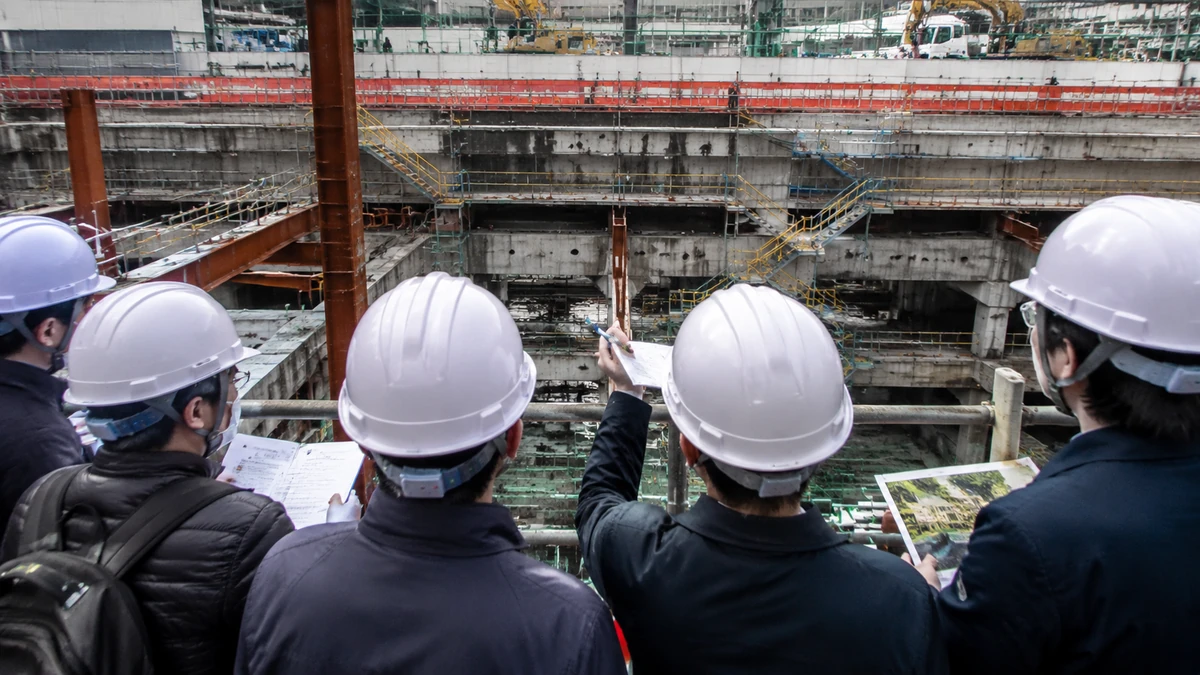
A construction flaw beneath one of Seoul’s busiest districts becomes a national safety question
South Korea’s government is widening an emergency safety inspection at a major underground construction site in Seoul after officials confirmed that reinforcing steel, or rebar, was omitted in part of the future GTX station area near Samseong Station, a high-traffic transit hub in the capital’s affluent Gangnam district. The decision, announced May 21, signals that authorities are treating the problem as more than a localized building mistake. Instead, they are framing it as a broader public safety issue tied to one of the country’s most ambitious urban infrastructure projects.
For American readers, the easiest comparison may be to discovering a structural defect during construction at a large-scale transit expansion in Midtown Manhattan, downtown Los Angeles or beneath Chicago’s Loop — not in an isolated field, but in a dense commercial core where commuters, shoppers, office workers and nearby residents all depend on the surrounding infrastructure every day. In Seoul, that is the scale of concern attached to the Samseong Station area, where major rail, road and underground redevelopment projects intersect in one of the city’s busiest business districts.
The newly expanded inspection will no longer focus only on the specific underground level where the construction error was identified. South Korea’s Ministry of Land, Infrastructure and Transport and the Ministry of the Interior and Safety said the review will now cover all facilities under construction across the broader Yeongdong-daero work zone, a major corridor in southern Seoul where multiple large infrastructure elements are being built simultaneously.
That shift matters. In any major city, once a defect is found in a structural component, the public’s first question is rarely limited to the damaged spot. It is usually much more basic and much more unsettling: Is this the only place it happened? By expanding the inspection beyond the originally identified problem area, the government appears to be responding directly to that fear.
The episode is also revealing something larger about how South Korea now handles infrastructure risk. In a country where public memory still holds several high-profile safety failures — from building collapses to transportation disasters — authorities understand that technical fixes alone are not enough. The government must also show that it is taking the concern seriously, widening scrutiny where necessary and building a process that can persuade a skeptical public.
What the government says it is doing now
According to details released Wednesday, the government’s response is being upgraded both in scale and in structure. A special on-site inspection team organized by the transport ministry on May 18 is being converted into a formal joint government inspection team beginning May 21. That may sound like bureaucratic reshuffling, but in South Korea’s administrative culture, those distinctions often signal a real escalation in response.
The transport ministry, which oversees construction and transportation infrastructure, is now working alongside the interior and safety ministry, the agency responsible for disaster management and public safety administration. In practical terms, that means the issue is no longer being handled simply as a quality-control problem on a construction project. It is being treated as a matter of public risk management.
The inspection team is also drawing in a broad lineup of specialist institutions: the Korea Occupational Safety and Health Agency, the Korea Electrical Safety Corporation, the Korea Gas Safety Corporation, the Korea Authority of Land and Infrastructure Safety, the Korea Railroad Research Institute and the National Railway Authority, along with outside experts. Each of those bodies brings a different technical lens — worker safety, utilities safety, structural integrity, rail systems and project management.
That multidisciplinary approach reflects the reality of modern underground construction. A major urban transit site is not just concrete and steel. It is a layered system where structural elements, electrical systems, gas lines, ventilation, excavation safety, rail engineering and long-term facility maintenance all overlap. A problem that begins with one omitted structural component can raise questions about inspection routines, subcontracting practices, documentation, supervision and whether similar lapses may exist elsewhere within the same project ecosystem.
Perhaps most notably, the government said a private-sector expert, rather than a government official, will lead the joint inspection team. That choice appears aimed squarely at credibility. In the United States, public officials under pressure often bring in an outside engineering firm, inspector general or independent commission to reassure residents that the review is not simply the government grading its own homework. South Korea is making a similar move here. The message is clear: It is not enough to say the site is safe; the process of reaching that conclusion must also appear neutral and convincing.
Why Samseong Station and Yeongdong-daero matter so much
To understand why this story has drawn national attention, it helps to know what kind of place Samseong Station is. Located in Gangnam — the Seoul district internationally associated with wealth, high-end commercial development and, thanks to the 2012 global hit “Gangnam Style,” a certain pop-culture shorthand for modern South Korean urban life — the station sits in a part of the city packed with office towers, convention facilities, department stores, hotels and heavy foot traffic.
Yeongdong-daero, the boulevard running through the area, is more than just another city street. It is one of Seoul’s key urban corridors and the site of an enormous redevelopment effort involving transportation integration and underground expansion. That means any structural concern there lands differently than it would at a small or obscure project. This is not peripheral infrastructure. It is central-city infrastructure, tied to mobility, commerce and the image of Seoul itself.
The GTX project is especially significant. GTX, short for Great Train eXpress, is South Korea’s high-speed regional commuter rail network designed to connect Seoul with surrounding metropolitan areas more quickly than existing subway lines. For U.S. readers, it may be helpful to think of it as part commuter rail modernization, part regional transit megaproject — an effort to shrink travel times and ease congestion in one of the most densely populated urban regions in the world. The project has drawn intense public attention because it promises to reshape how people commute across the capital region, where long travel times and crowded transit are a daily reality for many workers.
That is why a construction defect in the GTX Samseong Station section carries implications beyond engineering. It touches politics, urban planning and public confidence in the state’s ability to build safely at scale. When governments promote megaprojects as symbols of national modernization, problems at those sites can quickly become symbols too — of oversight gaps, contractor failures or institutional complacency.
And because much of the work is underground, the issue can feel especially unnerving to the public. People can see a crane above street level and judge, however imperfectly, what appears stable. But subterranean infrastructure is different. Most residents cannot directly observe the work. They rely almost entirely on official assurances, technical inspections and media reporting. That dependency makes trust more fragile once doubts emerge.
Why expanding the inspection zone sends a message
The government’s most important decision may not be the inspection itself, but its scope. Officials said they will not limit their review to the underground fifth basement level in Zone 3 of the Yeongdong-daero construction area, where the missing rebar was identified. Instead, they will inspect all facilities currently under construction across the full Yeongdong-daero site.
That broader sweep suggests authorities are trying to answer the systemic question, not just the immediate one. In engineering terms, a defect may be isolated. In governance terms, it rarely stays that way. If a construction error occurred once, investigators must ask whether it reflects a one-off lapse, a repeatable process failure or a deeper weakness in supervision. Did the problem originate in design documents? In field execution? In inspection and signoff? In subcontracting chains? In communication between engineers, builders and supervisors? Those are the questions that can determine whether a defect is repaired and forgotten, or becomes evidence of a much bigger breakdown.
For the public, the expansion of the inspection serves another purpose: reassurance through seriousness. Residents living near major works, commuters passing through the district and office workers in the area are unlikely to be comforted by a narrowly tailored response that examines only the exact spot where a flaw was already found. Broadening the inspection allows officials to say, in effect, that they are not assuming the problem ends where it was first detected.
In public policy, that kind of move can be as important as the technical findings themselves. Americans have seen similar dynamics after bridge failures, pipeline leaks, apartment collapses and subway incidents. Once a highly visible flaw emerges, political leaders must decide whether to present it as an exception or a warning sign. South Korea’s response here suggests officials understand that the public increasingly expects the latter approach — especially when the project sits under one of the nation’s busiest urban districts.
It is also a sign of how infrastructure governance has evolved in South Korea. The country is globally admired for its fast development, advanced transit systems and ability to execute large public works. But that reputation comes with pressure. Every major project is also a test of whether speed, complexity and density are being matched by equally rigorous oversight. An expanded inspection tells the public that officials recognize safety must be demonstrated across the system, not merely asserted at a single point of failure.
The role of outside experts in a country sensitive to safety accountability
The choice to place a private expert at the head of the inspection team may end up being one of the most politically significant parts of the response. In South Korea, as in many democracies, public trust in official investigations often depends not only on what investigators conclude but on who leads the process and how transparently it is carried out.
That sensitivity did not emerge in a vacuum. Over the past several decades, South Korea has undergone intense public debates over regulatory oversight, corporate responsibility and government accountability after a series of national tragedies and preventable accidents. Those episodes have shaped a political culture in which procedural fairness and outside scrutiny matter deeply, particularly when lives or essential public systems may be at stake.
In that context, appointing a civilian expert is more than symbolic. It is an attempt to address a specific credibility problem that often appears after infrastructure failures: the suspicion that ministries and project operators may be too invested in defending their own prior decisions. By putting an external specialist in charge, the government appears to be trying to create some distance between the institutions that approved or managed the project and the team now evaluating its safety.
Whether that move succeeds will depend on what happens next. A credible investigation usually requires more than a respected leader. It also requires clear disclosure of methods, prompt release of findings, explanation of any corrective actions and transparency about whether the defect affected only a portion of the project or exposed weaknesses in the broader oversight chain. If the government provides that kind of detail, the outside-led structure may help rebuild confidence. If it does not, the appointment could be dismissed as cosmetic.
Still, the signal itself is important. It shows officials understand that modern infrastructure crises are judged in two arenas at once: engineering and public legitimacy. The beams, columns and inspection reports matter. So do the optics of independence, the clarity of communication and the willingness to answer uncomfortable questions about how the flaw was missed in the first place.
What this reveals about Seoul’s invisible infrastructure challenge
The images released Wednesday of workers examining a column with missing rebar at the GTX Samseong Station construction site underscore a simple but powerful truth about urban life: Some of the systems that matter most are the ones the public rarely sees. Beneath the roads, sidewalks and office towers of a modern city lies a second city of tunnels, platforms, utility corridors, support columns and safety systems that must work flawlessly long before the first train arrives.
That hidden landscape creates a special challenge for governments. Unlike a delayed bus route or a pothole, underground construction problems are difficult for ordinary citizens to observe or interpret. That can leave room for rumor, anxiety and mistrust once a defect becomes public. In dense urban cores, where thousands or even hundreds of thousands of people may move through an area daily, the psychological impact of a reported structural flaw can extend far beyond the engineering facts.
Seoul, like New York, Tokyo or London, is constantly rebuilding itself while people continue to live and work around the construction. That balancing act requires more than technical precision. It demands public communication that is fast, plainspoken and credible. People want to know not just whether there is danger today, but whether the institutions in charge are capable of finding problems before they become disasters.
That is why this case resonates beyond Korea’s borders. Cities around the world are pushing aging or overloaded infrastructure systems toward larger, more complex upgrades — new rail tunnels, expanded stations, utility rerouting, deep excavation and mixed-use redevelopment. As those projects multiply, so do the stakes when even a seemingly narrow construction error is uncovered. The lesson is universal: In megaprojects, defects are rarely interpreted as merely technical.
For Seoul, the challenge is compounded by the symbolism of Gangnam and the prominence of the GTX network. This is a district associated with South Korea’s modern success story and a rail project sold in part as a solution to the daily frustrations of metropolitan commuting. That makes any sign of structural weakness particularly sensitive. It turns what might otherwise be a contractor-level problem into a national conversation about whether the systems behind the country’s urban ambitions are being checked with enough rigor.
What comes next — and why the outcome could shape future oversight
For now, the known facts remain limited. Officials have identified a rebar omission in a portion of the GTX Samseong Station area under construction, expanded the inspection across the entire Yeongdong-daero work zone and assembled an interagency team backed by specialist institutions and outside experts. What the public does not yet know is whether the flaw was isolated, how it occurred, whether similar defects exist elsewhere and what corrective actions may ultimately be required.
Those unanswered questions will determine whether this becomes a contained construction incident or a turning point in South Korean infrastructure oversight. If investigators conclude the problem was narrow and promptly fixed, the story may soon fade from headlines. But if the inspection uncovers repeated quality-control failures or deeper supervisory gaps, the implications could stretch much further — affecting contractor accountability, project timelines, inspection standards and political pressure on ministries overseeing future megaprojects.
There is also a more subtle institutional legacy at stake. The government’s decision to widen the inspection rather than confine it to the original defect could become a model for how South Korea handles similar cases going forward. In that sense, this episode may help establish a new administrative expectation: that when structural doubts arise in high-impact public projects, the default response should be broader, multiagency and externally scrutinized.
That would mark an important shift away from the instinct, common in many countries, to isolate problems as quickly as possible in order to protect schedules and limit public alarm. The alternative approach — treating one flaw as a prompt to investigate the system around it — is slower, more expensive and more politically risky in the short term. But it can also be the approach that prevents future catastrophe and preserves long-term confidence in public works.
For American audiences, the core significance of this story is not that South Korea found a construction mistake. Large infrastructure projects everywhere encounter defects, delays and redesigns. The more important question is how institutions respond once a flaw surfaces in a place that matters to millions of people. In Seoul, under one of the city’s most visible redevelopment corridors, the government is making a public case that the right response is to look wider, bring in more experts and put independence at the center of the process.
Whether that strategy restores confidence will depend on what inspectors find and how candidly the results are shared. But even before those answers arrive, the message is already clear: In modern cities, the safety of underground infrastructure is not just an engineering issue. It is a public trust issue. And when that trust is shaken, governments are judged not only by the strength of the concrete, but by the strength of the scrutiny they are willing to apply.
Comments
Post a Comment