
A local school decision with national meaning
In the southeastern South Korean city of Yangsan, education officials have made what might sound like a technical planning change: They moved the proposed site of a second special education school and said the campus will now open sooner than originally planned. But behind that bureaucratic update is a much bigger story, one that will feel familiar to many American families and school districts: what happens when the need for specialized services rises faster than public systems can keep up.
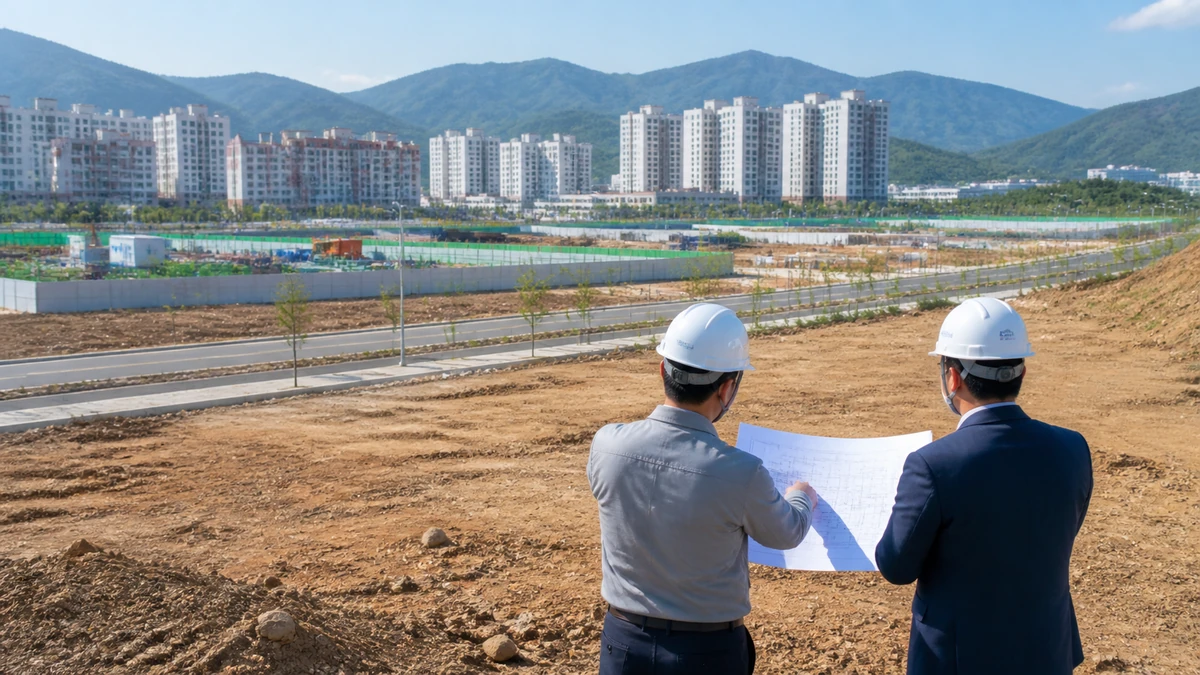
The South Gyeongsang Provincial Office of Education announced that the planned site for Yangsan’s second special school will be relocated to Sasong-ri in Dong-myeon, an area tied to a Korea Land and Housing Corp. development zone. Just as important, officials said they are moving up the opening date to September 2030, roughly a year and a half earlier than first planned.
That may seem far off to readers used to the annual churn of school calendars, but in the world of public construction and local government approvals, shaving 18 months off a project timeline is no small thing. In practical terms, it could mean earlier relief for students with disabilities, earlier support for parents and caregivers, and less crowding at the city’s only existing special education school.
In South Korea, as in the United States, the phrase “special education” covers a wide range of student needs, from intellectual and developmental disabilities to autism spectrum disorders and physical disabilities requiring tailored instruction, therapy and transportation support. The details of each child’s educational plan vary, but the broader policy challenge is universal: specialized education is not simply a matter of assigning students to classrooms. It requires trained staff, adapted facilities, transportation systems, therapy spaces and a school community built around individualized learning.
That is why the Yangsan announcement matters beyond one city. It offers a window into how local governments respond when demographic pressure collides with the slow machinery of public planning. It is also a reminder that access to education is not only about legal rights on paper. It is about whether the school building actually exists, whether there is room inside it, and whether families can realistically reach it.
The numbers show a system already under strain
The clearest reason officials are accelerating the project is the sharp increase in the number of students requiring special education services in Yangsan. According to the provincial education office, the number rose from 799 in 2021 to 1,082 this year. That is not a marginal uptick. It is a jump of more than 35% in just a few years, and it signals that the issue is not a distant concern but a current and growing pressure on the school system.
For American readers, a useful comparison might be a fast-growing suburban district where enrollment in specialized programs outpaces campus construction. The pressure does not stay confined to one spreadsheet or one school board presentation. It spills into transportation routes, teacher staffing, classroom ratios, therapy scheduling, and the daily routines of parents trying to piece together school, work and caregiving.
In Yangsan, that pressure is especially visible because the city currently has only one special school, Yangsan Huimang School, with capacity for 360 students. Officials have described that school as oversized and overcrowded, a blunt acknowledgment that the existing infrastructure is no longer aligned with local demand.
That gap matters. When a school designed for specialized education becomes overburdened, the consequences are not abstract. Overcrowding can mean less individualized attention, more strain on teachers and staff, and more logistical stress for families. It may also mean longer commutes if students are assigned farther from home, or fewer options for placement that match a child’s specific needs.
South Korea’s education system is often discussed abroad through the lens of academic pressure, test performance and elite college admissions. Those issues are real and shape national debate. But stories like this one reveal another side of the system, one less visible in international headlines: the challenge of making education inclusive and sustainable for students whose needs do not fit a one-size-fits-all model. In that sense, Yangsan is dealing with a problem many wealthy democracies are wrestling with: how to expand support services quickly enough to match changing realities on the ground.
Why the new site matters more than it sounds
The most important part of the announcement may not be the school itself, but the land beneath it.
Officials said the new site, located within an LH self-sufficiency facilities area in Sasong-ri, does not require separate administrative steps such as lifting greenbelt restrictions or changing urban management plans. In plain English, that means the land is easier to build on from a regulatory standpoint. And in public projects, avoiding extra layers of approval can be the difference between momentum and years of delay.
Anyone who has followed school construction, affordable housing or transit expansion in the United States will recognize the pattern. Governments often agree that a project is necessary. The real bottleneck comes later, in rezoning fights, environmental reviews, neighborhood opposition, permit revisions and procedural dead ends. By the time construction begins, the original need may have intensified, costs may have risen and public trust may have eroded.
The Yangsan decision suggests that local officials are trying to attack the problem at that level: not merely by affirming the need for more special education capacity, but by identifying a site where fewer legal and planning hurdles stand in the way. That is a small but telling distinction. Policy goals are easy to announce. Implementation depends on the often unglamorous details of land use, jurisdiction and permitting.
In that sense, the site change is not a side note. It is the mechanism that makes the accelerated timeline possible. Education authorities are effectively saying that if the existing process is too slow for the urgency of the problem, then the practical answer is to choose a pathway with fewer procedural obstacles. That is the kind of administrative decision that rarely produces dramatic headlines, but it can have an outsized effect on real families.
It also underscores something public officials in many countries know but do not always say plainly: the quality of social services often hinges on how well agencies navigate bureaucracy. A society can broadly agree that children with disabilities deserve better support. Yet if the necessary buildings remain trapped in planning limbo, those values do not translate into lived reality. Yangsan’s revised plan appears to be an effort to close that gap.
What special schools represent in South Korea
To understand why this issue carries weight in South Korea, it helps to understand what special schools represent there. These institutions have long existed alongside mainstream schools, but their role has often been shaped by broader debates over disability rights, inclusion, local acceptance and public investment.
In the American context, readers may think of the long-running discussion around mainstreaming, individualized education programs, district-level services and whether students are best served in dedicated settings or inclusive classrooms with additional support. South Korea has its own version of these debates. Families, educators and disability advocates have pushed for stronger educational access and more realistic support systems, while local governments have had to balance land, budgets and neighborhood concerns.
Special schools in South Korea can become flashpoints because they are never just about education. They touch transportation, caregiving, urban planning and community attitudes toward disability. For some families, the presence or absence of an appropriate school shapes nearly every part of daily life: when a parent can work, how long a child spends commuting, whether siblings’ routines are disrupted, and how much stress accumulates around what should be ordinary school attendance.
That is why the Yangsan case has broader social meaning. Officials are not simply adding another school building to a city map. They are responding to a form of time pressure that families raising children with disabilities often know intimately. When appropriate services are scarce, every delayed semester matters. A postponed opening date is not just a scheduling issue; it can translate into years of added burden for households already stretched by care responsibilities.
The timing of the announcement, made on Children’s Day in South Korea, also adds symbolic resonance. Celebrated on May 5, Children’s Day is a major national holiday devoted to children’s well-being, family outings and the idea that young people deserve social care and public attention. In that context, an announcement about special education infrastructure carries a message beyond paperwork. It suggests that children with disabilities are being included in the broader public conversation about whose needs count and how governments should respond.
None of this means the project resolves the larger questions surrounding special education in South Korea. One new campus cannot singlehandedly solve workforce challenges, service quality disparities or debates over inclusive education. But it does signal that local authorities are treating special education demand as central, not peripheral, to the city’s future.
The family burden behind the policy language
Government statements tend to emphasize enrollment figures, capacity limits and target dates. Families experience the issue differently. They feel it in commuting time, in waiting lists, in missed work hours and in the emotional labor of navigating systems that are often not built for ease.
Even though the official summary of the Yangsan plan focuses on infrastructure, the human stakes are easy to read between the lines. When a city’s only special school is already overcrowded and the number of students needing services is climbing, parents are left to absorb the strain. That might mean longer daily travel for school attendance, added uncertainty over placement, or fewer opportunities for the customized educational environment many students need.
In South Korea, where long work hours, intense educational expectations and high costs of child care already place pressure on households, those burdens can become especially heavy. Parents of children with disabilities often must coordinate not only school attendance but also therapy schedules, medical appointments and transportation arrangements. If a school is far away or at capacity, the entire family’s schedule can be disrupted.
American readers may think of the patchwork systems many parents navigate at home, whether under the Individuals with Disabilities Education Act, local district services or a combination of school-based and private support. The policy frameworks differ, but the daily reality can look similar. When support systems fall short, families often become the backup infrastructure, filling the gaps with time, money and endurance.
That is one reason school construction decisions matter so much. A new special school is not just a capital project. It is a public service intervention with ripple effects across household stability, employment and mental health. Bringing a school online sooner can ease pressure not only in classrooms but also in kitchens, carpools and caregiving routines.
For local officials, this is also a political test. Education policy can become abstract very quickly, especially when wrapped in administrative language. But voters and residents understand congestion, distance and delay. They know what it means when a service is technically available yet functionally out of reach. By moving up the timeline, the provincial education office is making an implicit acknowledgment: waiting longer carries real social costs.
Why readers outside Korea should pay attention
On one level, this is a local South Korean story about one city, one school and one revised opening date. On another, it speaks to a broader international challenge: how societies expand disability-related public services in a way that matches rising need.
Across the developed world, aging infrastructure, uneven regional growth and administrative delays have complicated efforts to deliver education and care services equitably. The specifics vary from country to country, but the pattern is recognizable. Demand rises. Public awareness grows. Political support often exists in principle. Yet progress slows at the point of implementation, where land constraints, permitting rules and fragmented agencies can make even widely supported projects move at a crawl.
Yangsan’s case is notable because the key breakthrough appears to have come not from a new ideological debate or a dramatic funding overhaul, but from a more targeted administrative choice: selecting a site that reduces procedural delay. That may sound modest, but it points to an important lesson. Expanding social services is not always only about spending more money or winning bigger arguments. Sometimes it is about designing a path that can actually be executed.
There is also a deeper message here about what counts as urgency in public life. South Korea is often portrayed internationally as a technologically advanced, highly urbanized society that moves quickly. In some ways that reputation is deserved. But stories like this one show that even efficient states face the same friction points as others when public infrastructure meets planning law. What matters is whether institutions treat those bottlenecks as inevitable or as problems to be solved.
For readers in the United States, the story lands at a time when school systems are also confronting growing demand for mental health support, disability accommodations and specialized instruction. The terminology, legal framework and public culture may differ, but the central question is shared: Can governments move fast enough to meet the needs of families who cannot afford endless delay?
What comes next
For now, the facts are straightforward. South Gyeongsang education officials have changed the proposed site for Yangsan’s second special school, and they are now targeting an opening in September 2030 instead of the later date previously on the table. The revision cuts about 18 months from the schedule and reflects an effort to avoid additional land-use and planning procedures.
Whether the project stays on track will depend on what happens after the announcement. Public construction timelines are rarely linear. Even a site chosen for procedural efficiency can encounter setbacks tied to budgeting, design, contracting or shifting local conditions. As with any major public project, the test is not the press release but the follow-through.
Still, it would be a mistake to dismiss this as a routine bureaucratic adjustment. In the language of government administration, accelerated timelines and site changes can sound dry. In the lives of affected families, they can mean the difference between prolonged strain and a measure of relief.
The larger importance of the Yangsan decision is that it frames special education demand as a present-tense issue requiring concrete action. Officials are not describing a hypothetical future need. They are responding to a system already under pressure, with enrollment growth already visible and existing capacity already stretched. That shift matters because public institutions often move only after a problem becomes impossible to ignore.
In that sense, this is a story about speed, but also about recognition. A city and its education authorities are acknowledging that students with disabilities and their families do not experience delays as abstractions. They experience them as additional years of crowding, commuting and uncertainty. Moving faster will not solve everything. But in public education, especially in special education, time itself is a form of service.
That is why this local story from South Korea deserves attention abroad. It captures a question that resonates far beyond one province or one school district: When the need for care and accommodation is already here, how quickly can the state respond? Yangsan’s answer, at least for now, is that faster is possible — if officials are willing to redesign the path, not just restate the goal.



0 Comments