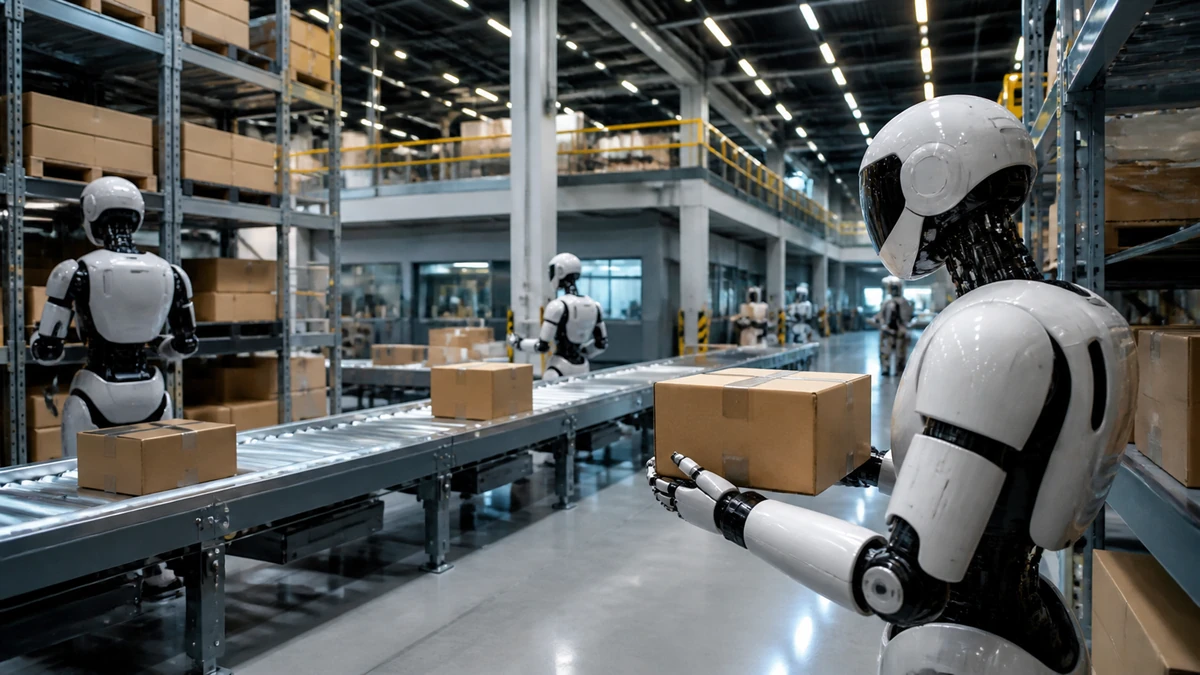
A new phase in online shopping is taking shape in South Korea
For years, artificial intelligence in consumer commerce has mostly played the role of helper. It suggested what to watch, recommended which shoes to buy, answered customer-service questions and nudged people toward the checkout page. The final act, however — actually authorizing payment — has generally remained a human decision. A shopper still clicks the last button, approves the charge, or confirms the transaction with a face scan, password or fingerprint.
South Korea now says it wants to test what comes next: a payments system designed specifically for AI agents that can act on a consumer’s behalf, not just to search and compare products, but to complete purchases directly.
According to remarks reported by Yonhap News Agency, Chey Byung-deuk, president of the Korea Financial Telecommunications and Clearings Institute, said this week that the organization plans to conduct a technical verification this year for a dedicated payment platform that would allow so-called “action-oriented” AI agents to buy and pay for goods for consumers. The comments came during a press briefing in Samarkand, Uzbekistan, where Chey was attending the Asian Development Bank’s annual meeting.
That may sound abstract, but the shift is potentially significant. It suggests South Korea is beginning to treat AI not simply as a digital assistant inside the shopping process, but as a transactional actor that may eventually operate inside the payments system itself. In practical terms, the vision is an AI service that does more than say, “Here are the best prices for a flight to Tokyo.” It could be authorized to choose one, book it, pay for it, and perhaps even adjust the reservation later if the fare drops or the traveler’s plans change.
For American readers, imagine the difference between asking ChatGPT or Siri to help plan your grocery order and allowing an AI system to actually place the Costco, Instacart or Amazon order within spending limits you’ve already set. The technology industry has been moving in that direction conceptually for some time. South Korea is now signaling that it wants to test the plumbing required to make that possible at the payments level.
That matters because payments are the most sensitive part of digital commerce. Search is easy to experiment with. Recommendations can be tweaked endlessly. But once money moves, questions of trust, fraud, responsibility and regulation become unavoidable. By putting a public-interest payment infrastructure institution at the center of the conversation, South Korea is framing AI commerce not as a flashy consumer demo but as a serious economic and financial systems issue.
What makes this different from today’s digital payments
The crucial point in the South Korean announcement is not merely that AI will be used more in finance. That is already happening everywhere. Banks use AI for fraud monitoring. Retailers use it for personalized offers. Fintech firms use it for customer support, credit analysis and automated budgeting. None of that is especially new.
What is new here is the idea of a payment layer built for AI agents themselves.
In today’s online shopping model, even highly automated transactions still tend to revolve around a human customer as the final decision-maker. Consumers may save cards on file, subscribe to recurring shipments, or let one-click purchasing speed up checkout. But those systems are based on consent structures designed for a person acting directly, even if only once at the front end.
An AI agent payment model imagines something more independent. The user delegates a goal or a set of rules — buy office supplies under a certain budget, rebook the cheapest acceptable flight if weather changes, replenish dog food when the price dips below a threshold — and the AI executes the task with minimal or no step-by-step human intervention.
That creates an entirely different set of design and security questions. Who exactly instructed the purchase? Under what conditions was the transaction supposed to occur? How much discretion does the AI have to substitute brands, prices or timing? If the AI makes a poor decision, who bears responsibility: the consumer, the merchant, the AI service provider or the payment network? If a transaction is challenged, what kind of audit trail should exist? If a malicious actor hijacks an AI agent, what safeguards stop it from making unauthorized purchases at scale?
Those are not minor technical details. They go to the heart of how commerce works in a world where software may increasingly act as a shopper, negotiator and checkout clerk all at once.
That is why the word “dedicated” is so important in the South Korean proposal. Officials are not talking about lightly modifying an existing card network or digital wallet. They are talking about testing whether AI-agent transactions require their own verification logic, accountability rules and infrastructure assumptions. In other words, this is not just a new app feature. It is an early attempt to design a framework for machine-driven commerce before that commerce becomes commonplace.
Why South Korea is a plausible place for this experiment
If there is a country likely to test this kind of infrastructure early, South Korea makes sense.
South Korea has long been one of the world’s most connected economies, with fast broadband, high smartphone penetration and consumers accustomed to doing nearly everything digitally, from banking and food delivery to messaging and shopping. It is also a country where public institutions and private technology firms often move in close parallel when building new digital systems. That does not mean every innovation succeeds or that concerns about surveillance and corporate power disappear. But it does mean South Korea frequently serves as a real-world laboratory for what a highly networked consumer economy might look like a few years ahead of others.
For Americans, one rough analogy is to think of South Korea as a market where adoption curves for mobile payments, super-app style services and online-to-offline integration can be compressed. Consumer behavior that might emerge gradually in the United States, fragmented across Apple, Google, Amazon, banks, merchants and regulators, can sometimes be tested more coherently in South Korea because the ecosystem is denser and more centralized.
The institution involved is also noteworthy. The Korea Financial Telecommunications and Clearings Institute is not simply another startup chasing hype. It plays a core role in the country’s payments and settlement infrastructure — the connective tissue that helps banks and financial institutions move money reliably. To a global audience, that means the announcement came from an organization closer to the backbone of the financial system than to the marketing department of a tech platform.
That distinction matters. The statement does not amount to a product launch, a change in law or proof that AI shopping agents will soon be making routine purchases for millions of Koreans. What it does show is that a central player in the nation’s financial plumbing believes the issue has become important enough to justify formal technical verification with interested institutions such as fintech companies.
In journalism, especially on fast-moving technology stories, that line matters. There is a difference between “South Korea is launching AI-powered payments” and “South Korea plans to test the infrastructure that might eventually support AI-powered payments.” The latter is what is known so far, and it is significant enough on its own.
Why payments are the real battleground for AI commerce
The technology industry has a habit of focusing public attention on the most visible parts of innovation: dazzling demos, conversational interfaces, humanoid assistants, or viral examples of software completing tasks. But in commerce, the less glamorous systems often matter more. The winners are not always the companies with the slickest interface. They are often the ones that control identity, trust, payments and settlement.
That is why South Korea’s move deserves attention beyond the Korean market. If AI agents become common consumer tools, they will need a way to spend money safely and in accordance with a user’s intentions. That means the “last mile” of commerce could become the most strategically valuable piece of the puzzle.
Consider how previous technology shifts changed payments. The rise of e-commerce elevated payment gateways and anti-fraud systems. Smartphones brought mobile wallets and app-store billing. Ride-hailing normalized invisible payments in which the transaction happens in the background rather than at a cash register. Subscription streaming made recurring charges routine. Every new interface changed what consumers expected from payment systems.
AI agents could be the next interface shift after mobile. If so, they may also require a new payment logic. A merchant website built for human browsing may no longer be the central point of competition. Instead, businesses may need to make themselves legible to AI systems that compare quality, price, delivery speed and trustworthiness on behalf of users. The checkout process itself may have to be rebuilt so that machines can execute it while preserving consumer protection.
That has broad implications for merchants, banks, card networks, wallet providers and fintech firms. If consumers rely on AI agents to make routine purchases, brand loyalty could be reshaped. Advertising strategies may shift if AI systems prioritize objective price-performance data over emotional persuasion. Loyalty programs, promotions and product rankings might be designed not only to influence humans but also to be interpreted by software agents.
And because the payment layer is where the transaction becomes legally and financially real, the organizations that help define the rules there may end up shaping the entire market. South Korea appears to understand that point. Rather than waiting for foreign platforms to dictate the practical terms of AI buying behavior, it is exploring how to build domestic infrastructure for that possibility.
Why the announcement came in Samarkand, and why that setting matters
The location of the announcement also offers clues about how South Korea sees the issue. Chey made the comments while attending the Asian Development Bank annual meeting in Samarkand, not at a glitzy consumer electronics conference or a startup demo day in Seoul.
That setting matters because it places the discussion inside a broader regional and economic context. The annual meeting is where policymakers, central bankers, development officials and financial leaders gather to discuss growth, infrastructure, stability and cross-border cooperation. In that environment, digital payments are not just a matter of convenience. They are part of larger conversations about competitiveness, productivity and how countries position themselves in a changing global economy.
Asia’s economies are facing pressures that will sound familiar to American readers: geopolitical instability, supply chain vulnerability, inflation concerns, energy security worries and uneven growth prospects. In that kind of climate, governments and financial institutions often pay more attention to infrastructure that can improve efficiency and reduce friction. Faster, safer, more intelligent commerce systems can be framed not only as technology upgrades but as part of a long-term growth strategy.
That does not mean an AI-agent payment platform is a macroeconomic policy tool in the same sense as interest rates or fiscal stimulus. It is not. But it does mean the infrastructure of commerce is increasingly viewed as a strategic asset. Countries that help define the standards for the next generation of transactions may gain influence far beyond their domestic markets.
For South Korea, there is also a familiar pattern at work. The country has often tried to move early in sectors where technical standards and infrastructure shape future advantage, from semiconductors and mobile connectivity to batteries and digital platforms. Getting ahead on AI-agent payments would fit that playbook, especially if the country believes this is the next layer in digital trade.
The promise is efficiency. The risks are trust and control.
There is an obvious appeal to AI agents handling purchases. Anyone who has spent time comparing hotel rooms, insurance options, household essentials or plane tickets can imagine the convenience. A reliable software agent could search faster, monitor price changes continuously, make purchases at optimal moments and execute repetitive tasks without constant human attention.
For businesses, the benefits could also be substantial. Procurement systems could become more automated. Small retailers could gain access to smarter demand forecasting and replenishment. Financial services might become more embedded into day-to-day software tools rather than remaining separate moments of friction.
But the risks are just as obvious, and in some cases more profound.
First is consent. It is one thing to authorize a monthly streaming fee. It is another to authorize an AI to make judgment calls. Consumers may not fully understand how much discretion they are granting, especially if systems become more complex than simple “yes/no” instructions. Regulators and infrastructure designers will have to think carefully about what meaningful permission looks like when authority is delegated to software.
Second is accountability. Americans are already familiar with frustrating automated systems that deny claims, misclassify transactions or trap users in customer-service loops. Now imagine those frustrations attached to a shopping agent that bought the wrong medication refill, chose a nonrefundable airfare, or accepted a poor substitute for a product the consumer specifically wanted. The more autonomy AI agents gain, the more important clear liability rules become.
Third is fraud and abuse. A compromised AI shopping agent could become a powerful tool for scammers, especially if it has standing payment authority. The traditional signs consumers watch for — suspicious websites, strange checkout pages, unfamiliar merchants — may be less visible if the transaction happens in the background. That raises the stakes for authentication, transaction monitoring and revocation controls.
Fourth is market power. If a handful of AI platforms become the primary interface through which consumers shop, those platforms could gain enormous leverage over merchants and payment providers. The United States has already lived through debates over the power of app stores, search engines and e-commerce marketplaces. AI commerce could create a new version of those disputes, only with even more authority concentrated in the recommendation-and-purchase layer.
All of that helps explain why South Korea’s emphasis on “verification” deserves attention. In finance, trust is rarely built through promises alone. It is built through testing, rule-setting and institutional credibility. The more autonomous the transaction, the more important that groundwork becomes.
What this means for the United States and the broader global race
Even though the announcement is rooted in South Korea’s domestic payments infrastructure, its implications are international.
American technology companies are among the global leaders in developing AI assistants and agent-style services. U.S. consumers are also deeply embedded in digital commerce. But the American system is fragmented: banks, card networks, merchants, fintech apps, regulators and Big Tech firms each control different pieces of the puzzle. That can foster innovation, but it can also slow coordination on foundational rules.
South Korea’s approach suggests another model: begin testing the infrastructure question before the mass-market AI commerce boom fully arrives. In effect, it is asking what rails are needed before autonomous purchasing becomes normal behavior. That could eventually influence how other markets think about similar systems, particularly in Asia, where digital payment adoption has often moved quickly and cross-border commerce is increasingly important.
The move may also put pressure on policymakers elsewhere. If AI agents become capable of making real purchases across borders, then interoperability, security standards and dispute resolution may not remain purely domestic concerns. Questions that start in Seoul or Samarkand could easily end up before regulators in Washington, Brussels or Singapore.
For now, caution is warranted. The known facts are limited. South Korea has not announced a commercial launch date, named participating companies, or released a full regulatory framework. There is no public evidence yet that consumers will soon hand over routine spending decisions to AI shopping agents at scale. Anyone claiming that this is the immediate end of human checkout is getting ahead of the available reporting.
Still, the significance of the moment lies elsewhere. South Korea is treating AI purchasing not as science fiction and not merely as a private-sector experiment, but as an infrastructure problem worthy of formal technical examination. That is a meaningful shift in how the future of commerce is being discussed.
In the long run, the most important AI breakthroughs may not be the ones that talk the most impressively. They may be the ones that quietly integrate into the systems that move money, assign responsibility and make transactions dependable. South Korea’s planned test points to that quieter, more consequential frontier.
For consumers, the prospect is both enticing and unsettling: software that can remove friction from daily life, but only if people trust it with one of the most intimate forms of control — the power to spend on their behalf. For financial institutions, the challenge is to build systems where that trust can be earned rather than assumed. For the rest of the world, South Korea’s experiment is an early sign that the next contest in AI may not be over which chatbot sounds smartest, but over which country and which institutions build the safest rails for machine-made commerce.
Comments
Post a Comment