
A familiar entertainment fight, with distinctly Korean stakes
South Korea is opening a formal debate over one of the most important and least visible questions in the modern movie business: How long should a film play exclusively in theaters before it moves to streaming, IPTV or other at-home platforms?
The issue, known in industry jargon as a “holdback,” may sound technical. But it gets at a bigger question American moviegoers will recognize immediately from their own post-pandemic viewing habits. If a movie reaches the couch too quickly, theaters worry audiences will stop buying tickets. If it stays exclusive to theaters too long, producers, distributors and digital platforms argue they lose precious time to recover costs and reach viewers who now expect entertainment on demand.
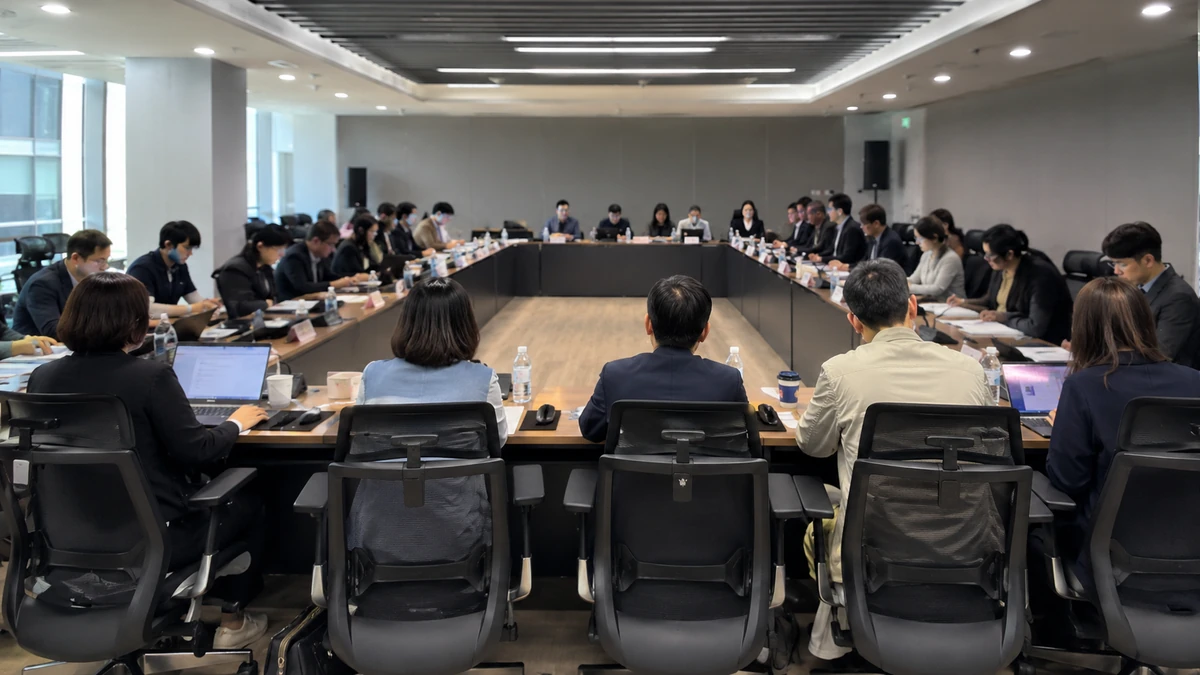
On Tuesday, South Korea’s Ministry of Culture, Sports and Tourism and the Korean Film Council convened the first meeting of a new public-private consultative body in Seoul to take up that question in earnest. The gathering brings together 22 people from across the film business, including representatives from production, distribution, theater chains and IPTV services, along with senior government officials. Their goal is not simply to decide whether a holdback system should exist, but to figure out what kind of release window, if any, could stabilize the economics of Korean filmmaking without cutting off audiences.
That balancing act is becoming more urgent in South Korea, one of the world’s most sophisticated media markets and one of the most globally influential exporters of film and television. To many Americans, Korean entertainment may be best known through “Parasite,” Netflix’s “Squid Game,” K-pop or the wave of Korean dramas that have found devoted fans overseas. But behind the global success stories is a domestic industry wrestling with the same structural changes that have disrupted Hollywood: shrinking theatrical attendance, the rise of streaming and a struggle to divide revenue fairly across platforms.
In that sense, the debate now unfolding in Seoul is not just a Korean business story. It is part of a much wider fight over who gets paid, when they get paid and how the moviegoing experience survives in an era when audiences have grown used to watching almost everything at home.
What makes the Korean discussion especially notable is that it is happening through a formal process involving both government and industry players. In the United States, theatrical windows are typically shaped by studio strategy and private negotiations, not by a ministry-led consultative body. South Korea’s approach reflects the country’s long-standing view that film is not only a commercial product but also a strategic cultural industry — one tied to national influence, export growth and artistic prestige.
What “holdback” means, and why it matters
At its core, a holdback is the waiting period between a movie’s theatrical release and its availability on other services such as streaming platforms, video-on-demand outlets or subscription television. For decades, versions of this model helped structure the business of film worldwide. The big-screen debut came first, then home video, pay TV and later broadcast television. Each stage had its place in the revenue chain.
That sequence has been steadily eroding. In the United States, studios dramatically shortened theatrical windows during the pandemic, and some experimented with same-day streaming releases. Even after theaters reopened, the old 90-day exclusive run largely gave way to a more flexible system, often around 30 to 45 days for many titles, though blockbuster releases sometimes stay exclusive longer. The result has been a continuing tug-of-war between theater owners and studios over whether shorter windows help the overall market or weaken the theater business.
South Korea is now confronting a version of that same dilemma, but under conditions shaped by its own market. The country has a dense multiplex culture, highly connected digital consumers and a media environment where local films compete both with Hollywood imports and with powerful domestic and global streaming players. For Korean filmmakers, the release window is not an abstract scheduling matter. It affects how quickly investors can recoup their money, how aggressively distributors market films and whether theaters remain viable as the symbolic first stop in a movie’s life.
Theaters argue that the exclusive run is not just about protecting ticket sales. It is about preserving the social event of cinema itself. A theatrical opening can turn a movie into a public conversation, create urgency and build a title’s reputation before it disperses across smaller screens. That logic is familiar to any American who has seen how a major Marvel release, a summer horror hit or an Oscar contender gains cultural momentum when audiences feel they need to see it now, not eventually.
Opponents of stricter holdbacks see it differently. They contend that in a market where many films struggle to make back their production and marketing costs from theaters alone, forcing a longer wait before digital release could choke off revenue and reduce access. A movie that underperforms on opening weekend may benefit from moving quickly to IPTV or streaming, where it can still find an audience and generate income. A rigid rule, critics say, might protect exhibitors at the expense of producers, distributors and viewers.
That is why the Korean debate is not merely about a calendar. It is about the entire life cycle of a film — how it premieres, how it makes money and how long it remains visible in an increasingly fragmented marketplace.
Why South Korea’s government is involved
The new consultative body’s launch says something important about how South Korea views its film industry. In the American context, readers might think of entertainment policy mostly in terms of antitrust disputes, labor strikes or tax incentives for production. In South Korea, the state has often played a more direct role in nurturing cultural industries, especially as Korean music, film and television became major export assets under the broader phenomenon known as the Korean Wave, or “Hallyu.”
Hallyu refers to the international rise of South Korean popular culture, from K-pop acts filling stadiums in Los Angeles to Korean dramas topping global streaming charts. It is not just a pop-culture buzzword inside Korea; it also carries economic and political weight. Cultural success can boost tourism, consumer brands and the country’s global image. That helps explain why questions about the structure of the film market can draw government attention in a way that might surprise some American readers.
Officials say the discussions are about improving the distribution structure of Korean film more broadly, not simply imposing a single rule. Alongside holdback policy, participants are expected to discuss how to normalize revenue structures and build what the government describes as a “mutually beneficial ecosystem” between theaters and platforms such as OTT services. In Korea, as elsewhere, OTT stands for “over-the-top” streaming services — essentially the same concept Americans associate with Netflix, Disney+, Hulu or Max, though the Korean market also includes local heavyweights.
The meeting’s participant list underscores the competing interests in the room. Representatives from film producers, distributors, theater operators and IPTV groups are all taking part. That matters because each segment of the business experiences release timing differently. Theater owners want enough exclusivity to justify the cost of keeping screens available. Distributors want flexibility to respond to box office performance. Producers need to recover investment in a market where financing can be fragile. Digital platforms want timely access to films that can attract subscribers or paid viewers.
By gathering those groups under a government-backed framework, officials appear to be signaling two things at once: first, that the conflict has become too important to leave entirely to piecemeal market negotiations; and second, that a workable solution is more likely to emerge through consensus than through blunt regulation. That second point may prove decisive.
The fault line: protecting theaters vs. preserving flexibility
The arguments on both sides are easy to understand, which is exactly why the issue has become so contentious.
Supporters of a stronger holdback say theaters need protection because they remain the first and most visible marketplace for movies. If audiences know a title will be available at home almost immediately, many will simply wait — especially for midbudget dramas, comedies or specialty films that do not depend on giant screens or spoiler-sensitive spectacle. That dynamic can become self-reinforcing: weaker attendance means fewer screens, shorter runs and less confidence in financing future films for theatrical release.
American theater owners have made similar arguments for years. In the U.S., exhibitors pushed back hard when studios experimented with simultaneous streaming releases during the pandemic. Their concern was not only lost ticket sales, but also the erosion of the habit of going to the movies. Once people are trained to expect home access right away, it becomes harder to persuade them to leave the house except for the biggest event pictures.
Korean exhibitors fear much the same thing. The theater is still the place where a film can become a social event, generate reviews, build buzz and establish a cultural footprint. If that stage weakens too much, the entire prestige and marketing function of a theatrical opening could weaken with it.
But the other side of the argument is equally powerful. Korea’s film industry, like Hollywood, does not operate on sentiment alone. It operates on financing, cash flow and risk. Many films do not become box office sensations. For those titles, a faster move to digital can be the difference between partial recovery and deeper losses. Producers and distributors who oppose mandatory holdbacks say delaying downstream release could trap films in an underperforming theatrical run while postponing revenue from other channels.
They also argue that audience behavior has changed. Viewers no longer consume films in a single way, and many expect access across multiple devices and platforms. From that perspective, holdbacks can look less like protection and more like restriction — a rule that asks consumers to adapt to an older business model when their habits have already moved on.
That tension between “theater protection” and “distribution flexibility” is the central fault line of the Korean talks. It is not a morality play with obvious heroes and villains. Theaters are not wrong to defend their role, and streaming-era advocates are not wrong to demand a system that reflects how people watch now. The challenge is that any rule helping one side tends to impose costs on the other.
Why this matters beyond one release window
What happens in these negotiations could shape far more than the timing of a handful of releases. It could influence what kinds of Korean films get made, how they are financed and whether the industry can sustain a middle class of movies between microbudget independents and top-tier commercial hits.
That middle ground has become precarious in many countries. In the United States, superhero franchises, animated tentpoles and franchise horror have often dominated theatrical space, while many adult dramas migrated toward streaming. South Korea’s market is different, but it faces a related structural pressure: if only the largest, safest titles can justify a theatrical-first strategy, then the diversity of films made for cinemas may shrink over time.
Release windows affect investor confidence because they affect the path to recoupment. If the window is too long, financiers may worry about delayed returns. If it is too short, exhibitors may scale back support, reducing the impact of a theatrical launch. Those pressures shape development decisions long before a movie reaches audiences. A producer deciding whether to back a genre thriller, a historical drama or a modest character piece must calculate not just artistic value, but the likely route through theaters, IPTV and streaming.
That is one reason the government and industry are framing this as a discussion about the overall distribution structure of Korean film rather than a narrow procedural fight. The holdback issue sits at the intersection of multiple concerns: theatrical survival, platform competition, audience convenience and investment recovery. Pull one lever, and the others move too.
There is also an international dimension. Korean films and series now travel farther than ever, but overseas viewers often see only the final product on a streamer or at a film festival. They do not always see the domestic market rules that determine which projects get greenlit and how long they remain economically viable. The Seoul talks offer a rare window into the infrastructure behind one of the world’s most influential entertainment industries.
For Americans, there is a useful analogy in the ongoing debate over the future of the movie theater after COVID-19. Even as box office rebounds for major titles, the broader ecosystem remains unsettled. Midrange films have struggled. Streaming companies are reevaluating spending. Studios are trying to rebuild the value of theatrical openings without surrendering the convenience and data advantages of direct-to-home distribution. South Korea is asking many of the same questions — just through a more formal, collective process.
The significance of an August deadline
One of the most consequential details in the Korean discussions is the timeline. The consultative body is expected to work through disagreements and aim for an August agreement on a voluntary holdback pact designed to support coexistence in the Korean film market.
The phrase “voluntary agreement” is doing a lot of work here. It suggests the government is not, at least for now, moving straight to a binding legal mandate. Instead, the strategy appears to be to establish shared principles that industry participants can accept and apply. That may sound softer than regulation, but in a market as interconnected as film, voluntary frameworks can carry real weight if major players buy in.
There are obvious advantages to this approach. A self-regulatory agreement can be more adaptable than a rigid law. It can account for the fact that not every movie is the same. A giant commercial action film, an art-house title and a low-budget independent feature may not need identical release windows. A voluntary system also reduces the political risk of imposing a one-size-fits-all formula on an industry that is already under strain.
But voluntary agreements also have limits. If the parties remain far apart, the final consensus may be vague, leaving crucial details unresolved. And even if broad principles are agreed upon, disputes can reappear in implementation: How long is long enough? Will there be exceptions? Who monitors compliance? What happens when market conditions change or a particular release strategy proves unusually successful?
Still, the August target matters because it signals urgency. Holdbacks have been debated for years in Korean film circles. By setting a near-term deadline, officials are indicating they do not want the conversation to drift indefinitely. Even if the final pact falls short of a comprehensive settlement, simply establishing common language and a formal mechanism for coordination could mark a meaningful shift.
In practical terms, the August outcome will serve as a test of whether the Korean film industry can design its own rules of coexistence in the streaming era. If the stakeholders can forge credible common ground, they may strengthen trust across a business that increasingly depends on interdependence. If they cannot, pressure could grow for a more directive intervention later.
A global industry problem with no easy answer
The Seoul negotiations are a reminder that the streaming revolution did not erase old entertainment economics so much as scramble them. Audiences gained convenience, but the industry lost some of the orderly sequence that once separated theatrical, home and television revenue. Rebuilding that order without turning back the clock is now one of the central problems of the film business, in Korea as in the United States.
There is no perfect solution. Too much protection for theaters can make the industry less responsive and less accessible. Too little protection can hollow out the big-screen marketplace until only mega-hits remain viable there. The right answer is likely to be neither a rigid wall nor a free-for-all, but a calibrated system that recognizes different films have different needs while still preserving the value of a theatrical debut.
South Korea’s importance in global entertainment makes the stakes especially high. This is the country that produced the first non-English-language film to win the Academy Award for best picture, the nation whose dramas and thrillers have become staples of worldwide streaming catalogs and a market whose cultural exports now shape trends far beyond Asia. How it decides to manage the passage from cinema to streaming could offer lessons for other countries facing the same pressure.
For now, the key question is whether trust can be built across sectors that often see the same transaction from opposite ends. Theater operators view the exclusive window as a lifeline. Producers and distributors may see it as a bottleneck. Streaming and IPTV services see opportunity in faster availability. Audiences, meanwhile, want both access and excitement — the convenience of home viewing and the communal thrill of a premiere that feels like an event.
That is why the holdback fight matters. It is not really about delay for delay’s sake. It is about deciding what role each platform should play in the life of a movie and how the revenue from that journey should be shared. In a media culture increasingly built on immediacy, South Korea is asking whether some forms of waiting still have value — and if so, how much.
The answer, if one comes by August, will not settle the future of film on its own. But it will reveal how one of the world’s most closely watched entertainment industries is trying to navigate the same question confronting Hollywood and beyond: In the age of streaming, what is a theater-first movie still worth?


0 Comments