Seoul signals a broader diplomatic play
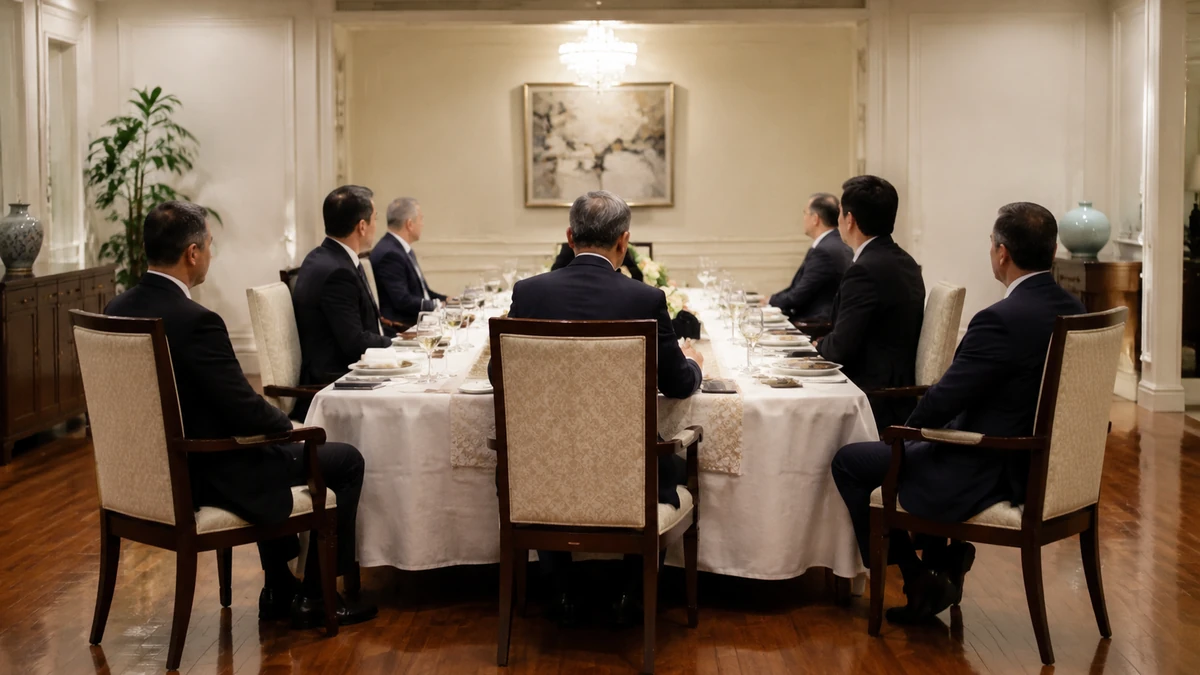
South Korea is making a quiet but notable diplomatic move toward Central Asia, a region that rarely dominates headlines in the United States but is becoming increasingly important in global politics. South Korean Foreign Minister Cho Hyun met with envoys from the five Central Asian countries at his official residence in Seoul on May 11 to discuss cooperation ahead of a planned South Korea-Central Asia summit in September, according to South Korea’s Foreign Ministry and Yonhap News Agency.
On the surface, the event was a dinner. In diplomatic terms, it was much more than that. Gathered were the ambassadors of Kyrgyzstan, Turkmenistan, Tajikistan and Uzbekistan, along with the ambassador-designate of Kazakhstan. Taken together, the guest list mattered as much as the menu. Instead of handling the countries one by one through separate bilateral meetings, Seoul brought representatives of all five Central Asian states into the same room. That signals South Korea is increasingly viewing Central Asia not simply as a collection of distant individual partners, but as a strategic region that deserves a more coherent policy.
For American readers, this may sound a little like the difference between meeting with Canada, Mexico and the United States separately versus trying to build a North American framework. The countries are distinct, with different interests and political systems, but grouping them together can signal that a government is thinking at the regional level rather than reacting country by country. That appears to be what Seoul is trying to do.
The coming summit, described as the first South Korea-Central Asia summit, is especially significant because first meetings often matter less for dramatic announcements than for the architecture they create. In diplomacy, establishing a recurring format can be as meaningful as any single agreement. A first summit suggests not a one-off photo opportunity, but the possible beginning of a standing channel for political, economic and strategic coordination.
That matters for South Korea, which has spent much of the past two decades expanding its diplomatic profile beyond its immediate neighborhood. Long defined internationally by its relationship with the United States, its rivalry and intermittent diplomacy with North Korea, and its complex ties with China and Japan, South Korea has increasingly tried to present itself as a middle power with interests and influence stretching well beyond East Asia. The Central Asia outreach fits squarely into that broader effort.
Cho reportedly described Central Asia as a “core partner region” for South Korea. Diplomatic language is often deliberately bland, but phrases like that are rarely accidental. In foreign policy, calling a region a key partner is a way of assigning priority without spelling out every tactical reason. It tells foreign governments, investors and domestic bureaucrats alike that this is a relationship Seoul wants to deepen over time.
Why Central Asia matters now
To many Americans, Central Asia can feel remote and vaguely defined, a place often mentioned only in connection with the old Silk Road, Soviet history, or the U.S. war in Afghanistan. But the region, made up of Kazakhstan, Kyrgyzstan, Tajikistan, Turkmenistan and Uzbekistan, sits at a crossroads of some of the world’s biggest geopolitical pressures. It lies between Russia and China, borders or neighbors instability-prone areas, and holds major energy, transit and mineral potential. In a century increasingly shaped by supply chains, energy routes and strategic competition, geography is destiny again, and Central Asia has plenty of it.
The region is also becoming more important as countries seek alternatives and redundancies in trade, logistics and strategic partnerships. Russia’s war in Ukraine has scrambled established political and economic assumptions across Eurasia. China continues to invest heavily in cross-border infrastructure under its Belt and Road Initiative. Europe is looking for new energy and transport links. Turkey has cultivated linguistic and cultural ties across parts of the Turkic world. The United States, though less deeply engaged than at some earlier moments, still has an interest in regional stability and in preventing any one power from dominating the space.
South Korea’s interest fits into this larger picture. Seoul is not entering Central Asia as a military power or a former colonial actor. It comes instead with a different portfolio: technology, manufacturing, infrastructure expertise, development cooperation and a reputation for rapid modernization. For countries in Central Asia trying to diversify their own external relationships, that can be attractive. South Korea offers access to investment, industrial know-how and political partnership without the same historical baggage that attaches to some larger powers.
There is also a human connection. Ethnic Koreans, known in Korea as Koryo-saram, have communities across parts of the former Soviet Union, especially in Uzbekistan and Kazakhstan. Their history dates back to the Stalin-era forced deportation of Koreans from the Russian Far East to Central Asia in the 1930s. While that community is not the sole driver of Seoul’s foreign policy, it provides a social and historical bridge that gives the relationship more texture than a purely transactional partnership.
In recent years, South Korea has tried to widen its diplomatic map. Different administrations have used different labels and emphasis, but the underlying pattern has been consistent: diversify partnerships, reduce overdependence on a handful of major powers, and build influence in regions where South Korea can be seen as a useful, pragmatic partner. Central Asia, with its need for infrastructure, energy cooperation, digital development and educational exchange, fits that model well.
The timing is also notable because South Korea, like many export-driven economies, is living through a period when economic security and foreign policy have become inseparable. Critical minerals, transport corridors, semiconductor supply chains and energy resilience are no longer niche policy issues. They are central to national strategy. Central Asia’s role in several of those areas gives it a relevance that goes beyond old stereotypes of the region as a remote geopolitical buffer zone.
The meaning behind dinner diplomacy
The setting of the meeting matters. Cho hosted the envoys not in a ministry conference room but at the foreign minister’s official residence over dinner. In many diplomatic cultures, including South Korea’s, such settings can be more revealing than formal podium events. They allow a government to signal seriousness while keeping the tone relaxed enough for candid conversation.
For readers unfamiliar with how political signaling often works in Seoul, this type of engagement is less flashy than a summit or a treaty signing, but it can be more useful. Formal meetings produce prepared statements. Private dinners often produce alignment. Officials can test ideas, gauge sensitivities and settle expectations before leaders ever step in front of cameras. In that sense, the dinner appears to have been a piece of advance choreography for September’s summit.
That pre-summit coordination is standard in effective diplomacy. By the time leaders meet, much of the real work has usually already happened. Agendas have been narrowed, wording has been negotiated, and potential disagreements have been managed or at least identified. If a summit goes well, it is often because diplomats quietly removed surprises beforehand. Seen that way, Cho’s dinner was not ceremonial filler. It was part of the machinery that makes top-level diplomacy function.
The format also reflects a style of Korean diplomacy that often places high value on personal rapport, careful phrasing and incremental consensus-building. That should not be mistaken for passivity. In many Asian diplomatic settings, what is left unsaid can matter nearly as much as what is declared publicly. Bringing all five Central Asian representatives together in a semi-formal environment allows South Korea to send a message without overdramatizing it: Seoul is ready to treat this region as a strategic grouping, and it wants the countries involved to begin thinking in those terms as well.
Cho’s reported emphasis on “mutually beneficial” and “practical” cooperation is also telling. Those words may sound generic, but in diplomatic practice they draw a line between symbolic outreach and policy meant to produce concrete results. “Mutually beneficial” suggests Seoul is keen to avoid any appearance of paternalism or one-sided assistance. “Practical” suggests a focus on deliverables, whether in trade, infrastructure, energy, education, labor mobility, public health or other areas that produce visible gains.
For an American comparison, think of the difference between a mayor announcing a “friendship city” relationship and a governor negotiating specific manufacturing investment, logistics links and workforce programs. Both have diplomatic value, but the second has clearer policy substance. South Korea appears intent on presenting its Central Asia strategy in the latter mold.
What Seoul may be seeking from the region
The Korean summary of the meeting did not detail a full policy agenda, and that is typical at an early stage. But the likely areas of interest are not hard to identify. Energy is one. Central Asia includes major oil and gas producers, especially Kazakhstan and Turkmenistan, and energy diversification remains a constant concern for import-dependent economies like South Korea. Even where immediate energy deals are not in play, building stronger political ties can open future options.
Critical minerals are another likely area. As countries race to secure the raw materials needed for batteries, electric vehicles, clean energy technology and advanced manufacturing, Central Asia’s resource base has gained new strategic weight. South Korea, home to globally competitive battery and electronics industries, has every incentive to cultivate relationships in regions that can influence future supply chains.
Infrastructure and construction are also logical fields for cooperation. South Korean companies have long pursued overseas projects in transportation, urban development, industrial facilities and power generation. Central Asian governments, for their part, are interested in modernizing aging infrastructure and improving regional connectivity. That creates space for partnerships that are commercial but also geopolitical, especially when infrastructure links are increasingly viewed through the lens of strategic influence.
Digital development and education are possible pillars as well. South Korea has marketed itself internationally as a model of rapid technological modernization, from broadband networks to e-government systems. For countries seeking to upgrade public services and diversify beyond commodity dependence, that expertise can be appealing. Scholarships, university partnerships, technical training and cultural exchange may not grab headlines, but they often form the durable social infrastructure of long-term ties.
There is a labor dimension too. South Korea has relied on foreign workers in certain sectors, and migration channels with parts of Asia and Eurasia have expanded over time. Although labor policy can be politically sensitive, people-to-people ties frequently become part of broader diplomatic relationships, especially when governments want to deepen everyday contact beyond state-to-state diplomacy.
Just as important, Seoul may be seeking strategic flexibility. South Korea’s foreign policy has often been constrained by the gravitational pull of the Korean Peninsula and the major powers around it. Expanding ties with Central Asia does not change that geography, but it can broaden the country’s room to maneuver. A wider network of partnerships can strengthen South Korea’s profile as a state that is not merely reacting to North Korea or navigating between Washington and Beijing, but actively shaping its own external agenda.
What Central Asia may want from South Korea
The relationship is not one-sided, and that is precisely why Seoul’s language about reciprocity matters. Central Asian governments have strong reasons of their own to welcome deeper ties with South Korea. Most of them practice some version of so-called multi-vector diplomacy, a term often used in the region to describe balancing among larger powers while avoiding excessive dependence on any single one. In practical terms, that means seeking diversified economic and political relationships with countries beyond Russia and China.
South Korea is well positioned to fit into that strategy. It is a major industrial economy with advanced technology, deep manufacturing capacity and a global corporate presence, but it is not usually perceived as threatening. It can offer investment and development expertise while remaining politically less intrusive than some rivals. That makes it a useful partner for governments trying to modernize without becoming overly beholden to one external patron.
Kazakhstan and Uzbekistan, the region’s two largest economies, have spent years courting outside investment and presenting themselves as hubs for transport and industry. Kyrgyzstan and Tajikistan, while economically smaller and facing different domestic pressures, also have an interest in diversified partnerships, infrastructure development and educational exchange. Turkmenistan, which remains more closed than its neighbors, still holds major energy significance and can benefit from selective international engagement.
South Korea also brings a powerful soft-power brand. The Korean Wave, or Hallyu, includes K-pop, Korean dramas, beauty products, food and fashion, all of which have expanded South Korea’s cultural reach across much of the world. For American audiences, this is the same broad cultural phenomenon that helped make acts like BTS and series like “Squid Game” globally recognizable. Cultural popularity does not substitute for policy, but it creates familiarity and goodwill that can smooth official engagement.
That matters because modern diplomacy is not just about summits and communiques. It is also about educational aspirations, consumer tastes and the image a country projects abroad. South Korea’s image as a technologically advanced, culturally dynamic and economically successful democracy can be a meaningful asset in regions looking for development models beyond the usual great-power templates.
The summit’s symbolism and its limits
The planned September summit carries both promise and uncertainty. On one hand, the fact that it is being framed as the first South Korea-Central Asia summit gives it symbolic heft. Firsts matter in foreign policy because they establish precedent. If the meeting produces a joint framework, recurring schedule or working-level mechanisms, it could mark the beginning of a more institutionalized relationship.
On the other hand, first summits are often judged too quickly by whether they yield dramatic breakthroughs. That can be the wrong standard. In diplomacy, the most important outcome is sometimes the creation of process: a habit of consultation, a framework for cooperation, a shared vocabulary of priorities. Those things can sound abstract, but they are what allow later agreements to happen.
There are also practical limits. Central Asia is not a monolith. The five states have different political systems, foreign policy instincts, economic structures and external dependencies. Kazakhstan’s international posture is not the same as Turkmenistan’s. Uzbekistan’s ambitions are not identical to Tajikistan’s. Grouping them together may make diplomatic sense for Seoul, but any regional framework will still have to accommodate national differences.
There is another challenge: competition. South Korea is not the only country interested in deepening ties with Central Asia. China, Russia, Turkey, the European Union and others all have active stakes in the region. That does not mean Seoul is arriving too late, but it does mean its strategy will have to be clear about what unique value it brings. Technology partnerships, industrial cooperation and practical development projects may be where South Korea can distinguish itself most effectively.
Still, the significance of Cho’s meeting lies precisely in its quiet realism. There was no sweeping declaration of alliance, no grand ideological packaging, no made-for-television confrontation. Instead, there was a carefully staged dinner, a set of diplomatic signals and preparation for a summit that may help define a new line of engagement. In an era when politics often rewards spectacle, this was a reminder that much of foreign policy is built through patient, understated groundwork.
A wider lesson about South Korea’s global role
For American and other English-speaking readers, this story is worth watching not because it signals a sudden geopolitical revolution, but because it reveals something important about how South Korea sees itself. The country is no longer content to be viewed only through the familiar lenses of North Korea tensions, alliance politics with Washington, or trade disputes with its larger neighbors. It is acting more clearly like a middle power that wants a voice in shaping wider regional networks.
That shift has been building for years, but moments like this make it visible. The language Cho used, the regional scope of the invitations and the focus on a first summit all suggest a foreign policy that is trying to move from reactive crisis management toward long-term strategic positioning. In plain terms, South Korea is not just responding to the world. It is trying to arrange parts of it.
That does not mean Seoul can transform Central Asia’s geopolitical landscape on its own, nor does it guarantee that September’s summit will produce major deliverables. But it does show a government investing in the slow construction of diplomatic relevance. For a country whose global reputation has often been tied either to security threats or to pop culture exports, that matters. It suggests a broader ambition: to be known not only for the crises around it or the entertainment it produces, but also for the partnerships it builds.
In the American news cycle, stories like this can easily be overlooked because they lack immediate drama. Yet they often provide the clearest clues about where international politics is headed. Before there are major agreements, there are working dinners. Before there are strategic blocs, there are tentative frameworks. Before a region becomes central to a country’s foreign policy, someone has to say so out loud in a room full of diplomats.
That appears to be what happened in Seoul this month. South Korea gathered the five Central Asian states at one table and, with an eye toward September, signaled that it wants a deeper relationship with the region. Whether the resulting framework proves durable will depend on what follows: the agenda set in the coming months, the seriousness of the summit and the ability of both sides to turn diplomatic language into concrete cooperation. But as a marker of where South Korean diplomacy is headed, the message was clear. Central Asia is no longer a peripheral interest. It is moving closer to the center of Seoul’s strategic map.
Comments
Post a Comment