South Korean education office vows tougher response to abusive parent complaints, shifting burden away from teachers
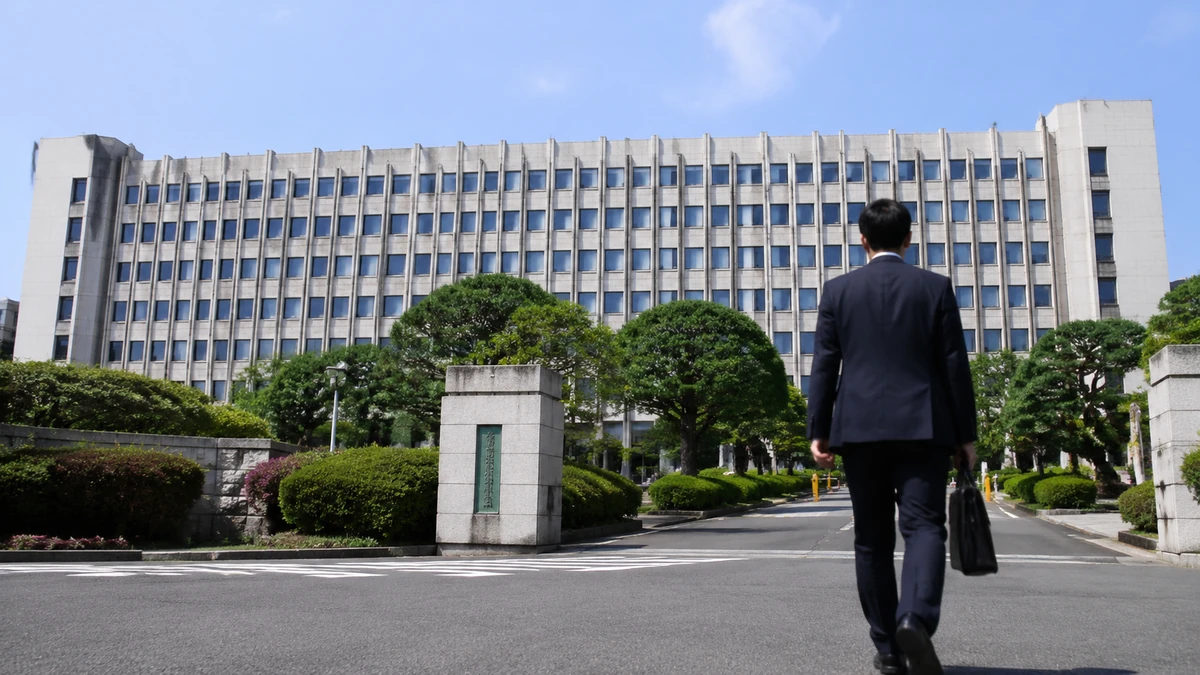
A turning point in how South Korean schools handle harassment
South Korea’s education authorities in South Gyeongsang province are signaling a major shift in how they plan to deal with what officials describe as abusive and repetitive complaints from parents, a problem that has become a flashpoint in the country’s broader debate over teacher protections, parental rights and the pressures facing public schools.
The South Gyeongsang Provincial Office of Education said this week it will move to a far more aggressive, institution-led response in a long-running case involving the parent of an elementary school student receiving special education services. According to the office, the parent repeatedly filed what it called malicious complaints and criminal accusations against teachers over a period of years. In a sign of how seriously officials now want to frame such cases, the provincial superintendent said he would personally take part in legal action, including filing a complaint on behalf of the institution.
That may sound procedural, but in the South Korean school system it carries heavy symbolic weight. For years, one of the biggest frustrations voiced by teachers has been that when conflicts with parents escalate, the frontline burden often falls on individual educators and school administrators. Teachers are expected not only to teach, manage classrooms and communicate with families, but also to defend themselves against repeated complaints, document every interaction and, in some cases, respond to legal threats that stretch on for months or years.
The new posture from South Gyeongsang suggests that at least one major education office is no longer willing to leave teachers to absorb that pressure alone. Instead, it is trying to recast the problem as one of institutional responsibility. In American terms, it is somewhat akin to a public school district deciding that when harassment of staff crosses a certain threshold, the district central office — not the individual teacher or even the principal — becomes the primary point of response, documentation and legal defense.
The announcement also lands at a particularly sensitive moment in South Korea, where concerns about teacher burnout, declining classroom authority and increasingly combative parent-school relations have been building for years. The issue is no longer viewed as a series of isolated disputes. It has become a national conversation about whether the public education system can function if teachers feel constantly vulnerable to personal attack.
Why this case drew attention beyond one school
The immediate catalyst for the policy shift was a public disclosure by the Gyeongnam Teachers’ Union, which on Aug. 6 alleged that the parent of a student in special education had, over several years, repeatedly targeted teachers with excessive complaints and legal filings. Two days later, the provincial education office released its statement announcing a tougher response.
The speed of that response matters. It suggests that education officials recognized not only the seriousness of the specific allegations but also the public anger they could trigger among teachers already on edge. In South Korea, teacher unions and teacher advocacy groups have become increasingly vocal about what they describe as a climate of fear in schools, where even routine disciplinary decisions or classroom management issues can spiral into formal complaints.
As described by officials and union representatives, the core issue is not a single disagreement between a parent and a school. It is repetition and duration. A one-time complaint from a parent, even a sharp one, is generally considered part of the accountability structure of public education. Parents everywhere — in the United States, South Korea or elsewhere — have the right to challenge school decisions, ask questions or raise concerns about their child’s treatment.
What changes the equation, South Korean officials say, is when complaints become constant, punitive or weaponized through repeated legal action. In such cases, the educational cost can spread far beyond the individuals directly involved. Teachers may grow reluctant to intervene in difficult situations, schools may become more defensive in their decision-making and the entire environment can tilt toward risk avoidance rather than student-centered judgment.
That concern is especially acute in elementary schools, where the relationship between families and educators tends to be close and frequent. It becomes even more delicate when special education is involved, because discussions about accommodations, classroom support, behavioral strategies and safety often require unusually detailed communication and a high degree of trust.
In that sense, the South Gyeongsang case has resonated because it touches one of the most emotionally charged areas of schooling: what happens when the rights of a child and family, the professional judgment of teachers and the legal obligations of the school all collide over an extended period.
The Korean context: teacher authority under pressure
For American readers, some cultural context is essential. South Korea is often admired abroad for its intense educational achievement, high test scores and fierce family investment in schooling. But beneath that reputation lies a system under extraordinary pressure. Education is deeply competitive, social expectations are high and parents often view school outcomes as closely tied to long-term economic security and social mobility.
That pressure does not stay confined to test preparation or college admissions. It often shapes how families interact with schools from the earliest grades. Teachers in South Korea have long held respected social standing, but many say that respect has eroded in practice as parents have become more assertive and more willing to challenge educators through formal complaints, social media campaigns or legal avenues.
Over the past several years, the issue of “gyogwon,” or teacher authority and rights, has become a major topic in Korea. The term does not translate neatly into American English. It refers not only to classroom control, but to the broader professional standing and protection teachers need in order to carry out their work. After several highly publicized incidents involving teachers under severe stress, public concern about teacher well-being has intensified.
To an American audience, the debate may sound familiar in some ways. U.S. schools have also wrestled with parent outrage, public distrust, culture-war conflicts and the expectation that teachers serve as educators, social workers, crisis managers and public-facing customer service representatives all at once. But the Korean conversation has its own distinct texture. Because schools in South Korea are highly centralized and closely tied to provincial education offices, a declaration from a provincial office of education can carry systemwide significance, not just local administrative importance.
That is part of what makes the South Gyeongsang announcement notable. Officials are not simply saying they sympathize with teachers. They are proposing to redesign the chain of response. Instead of asking teachers to handle the first wave of conflict and then calling in higher authorities only after damage has been done, the office says it wants the central administration to assume primary responsibility sooner and more directly.
If that change takes hold, it could alter the culture of school conflict in meaningful ways. Teachers may feel less isolated. Schools may build more consistent records. And parents may find that once a complaint crosses into harassment, they are no longer dealing with a single exhausted educator but with a government institution prepared to defend its employees.
Special education makes the issue more sensitive, not less
The fact that this case involves the parent of a child receiving special education services adds another layer of complexity — and one that demands careful handling. In both the United States and South Korea, disputes involving children with disabilities or special education needs are among the most sensitive a school can face. They involve not just academics, but daily care, safety, communication, developmental support and sometimes disagreements over what appropriate education should look like in practice.
American readers may think of the legal and emotional stakes around Individualized Education Programs, or IEPs, in U.S. public schools. South Korea’s system is different, but the underlying dynamic is comparable: parents often become strong advocates because they believe their child’s needs are not fully understood or adequately met, while schools must balance individualized support with staffing, training, resources and professional judgment.
That is why education officials must walk a narrow line. A strong response to abusive behavior cannot become a signal that parents of children with disabilities should stay quiet or fear retaliation for legitimate advocacy. If anything, the opposite must be true. Families need clear, accessible and trustworthy channels to raise concerns, especially in special education, where miscommunication can have serious consequences for a child’s daily life.
The challenge, then, is distinguishing between advocacy and abuse. A parent pressing hard for services, documentation or accommodations is not necessarily acting in bad faith. But when the same dispute turns into years of repeated allegations, serial complaints or legal threats aimed at multiple teachers, education officials argue that the system must recognize the pattern for what it is and intervene before more damage is done.
South Gyeongsang’s announcement appears to be trying to make precisely that distinction. The message is not, at least on its face, that conflict in special education should be suppressed. It is that support requests and grievance procedures must be separated from conduct that education authorities believe undermines the ability of schools to function.
Whether the province can uphold that distinction in practice will be crucial. A policy that protects teachers but chills legitimate parent concerns would create a new problem even as it tries to solve an old one. A policy that is too cautious, meanwhile, risks leaving teachers exposed despite the tougher rhetoric. The test will be whether the new central-office-led framework can do both: respond firmly to harassment while preserving due process and transparency for families.
From individual endurance to institutional responsibility
The most important aspect of the South Gyeongsang decision may be the administrative philosophy behind it. For years, critics of the existing system have argued that South Korean teachers have been forced into a model of individual endurance. When complaints pile up, the teacher documents, explains, defends and emotionally absorbs the fallout. The school may try to help, but the basic structure still treats the teacher as the primary shock absorber.
The provincial office now says it wants to replace that with what it calls a headquarters-centered response. In practical terms, that suggests a model in which the central education office becomes the official channel for recurring or extreme disputes, gathers records across incidents, coordinates legal and administrative responses and relieves teachers of the expectation that they personally manage every stage of confrontation.
That may sound like bureaucratic reshuffling, but it has real implications. First, it can reduce the chance that a parent will repeatedly target one teacher in isolation. Second, it can improve consistency: instead of each school improvising its own response, the office can establish shared standards for documentation, escalation and legal review. Third, it can help prevent the psychological wear that comes from feeling personally cornered in a public dispute.
There is also a broader labor issue here. In South Korea, as in the United States, many public-facing workers say they are expected to absorb escalating abuse because the culture of service too often assumes that the customer — or in this case, the parent — must always be accommodated. But schools are not retail counters, and educators are not simply service agents. They operate in a public institution with obligations to all students, not just the loudest or most aggressive adult in the room.
By promising institutional backing, the South Gyeongsang office is effectively saying that some conflicts should no longer be framed as personal disputes between an unhappy parent and an individual teacher. They should instead be treated as challenges to the functioning of the public education system itself. That is a significant change in framing, and framing often shapes policy.
Still, the new approach will only matter if it becomes more than a statement. Teachers will be watching to see whether the central office really steps in early, provides legal support and sets enforceable boundaries. Parents and disability advocates, meanwhile, will be watching for signs that the policy is applied fairly and not used to dismiss inconvenient criticism.
A broader warning sign for Korea’s public sector
This story is also about more than schools. In South Korea, the phrase often translated as “malicious civil complaints” has become part of a wider discussion about abuse directed at public servants, health care workers and other frontline employees. As in many countries, the people who interact most directly with the public are often the ones least protected from repeated hostility.
Schools are especially vulnerable because they sit at the intersection of public service and private emotion. Parents are not neutral consumers. They are deeply invested in their children, and that investment can fuel constructive advocacy or destructive confrontation. When systems are clear, responsive and trusted, conflict can often be managed. When they are opaque or inconsistent, resentment can harden and everyone involved may begin acting defensively.
South Korea has spent years trying to calibrate that balance. The country prides itself on educational seriousness, but it is now wrestling with a difficult question: how do you preserve accountability to families without making the profession so exposed that teachers burn out or withdraw from essential judgment calls?
That question is not uniquely Korean. American readers can see echoes in debates over teacher retention, classroom authority, school board tensions and the social expectation that public institutions absorb unlimited anger while continuing to function normally. The Korean version of the problem is shaped by its own legal structures and educational culture, but the underlying tension is widely recognizable.
What makes the South Gyeongsang case important is that it turns an abstract concern into an administrative test. If a provincial education office can build a system that protects teachers from targeted harassment while preserving legitimate complaint channels for parents, it could become a model for other jurisdictions. If it fails, the episode may instead reinforce cynicism on all sides — among teachers who feel unprotected and among parents who fear that institutions close ranks too quickly.
What comes next
For now, South Gyeongsang’s move is best understood as both a response to a specific case and a public declaration of intent. It says, in effect, that the old model — in which teachers often bore the brunt of prolonged complaint campaigns personally — is no longer acceptable. Whether that becomes a durable policy shift will depend on implementation: who decides when a complaint becomes abusive, what legal standards are used, how records are kept and how families can still pursue valid grievances without being dismissed or intimidated.
Those details matter because the stakes are high on both sides. Teachers need protection from harassment that can distort classrooms, damage morale and drive experienced educators from the profession. Families, especially those navigating special education, need confidence that raising concerns will not be treated as disloyalty or aggression. A functioning school system requires both professional authority and public accountability.
In the United States, school districts often talk about supporting teachers, but they sometimes struggle to back those promises with coherent legal and administrative systems. South Korea now appears to be confronting a similar reality in a more centralized way. The South Gyeongsang office’s announcement does not resolve the underlying tensions, but it does mark a meaningful shift in who is expected to carry them.
If the change endures, the message will be clear: a teacher facing years of repeated complaints and legal threats should not be left to fight alone. In a public education system, the institution itself must decide when defense of its employees becomes part of its duty to students. South Gyeongsang’s leaders are now saying that line has been crossed — and that they intend to respond not with quiet sympathy, but with the full weight of the office.
Comments
Post a Comment