Why Taiwan’s Chip Factories Matter So Much to the AI Boom — and Why South Korea Is Paying Close Attention
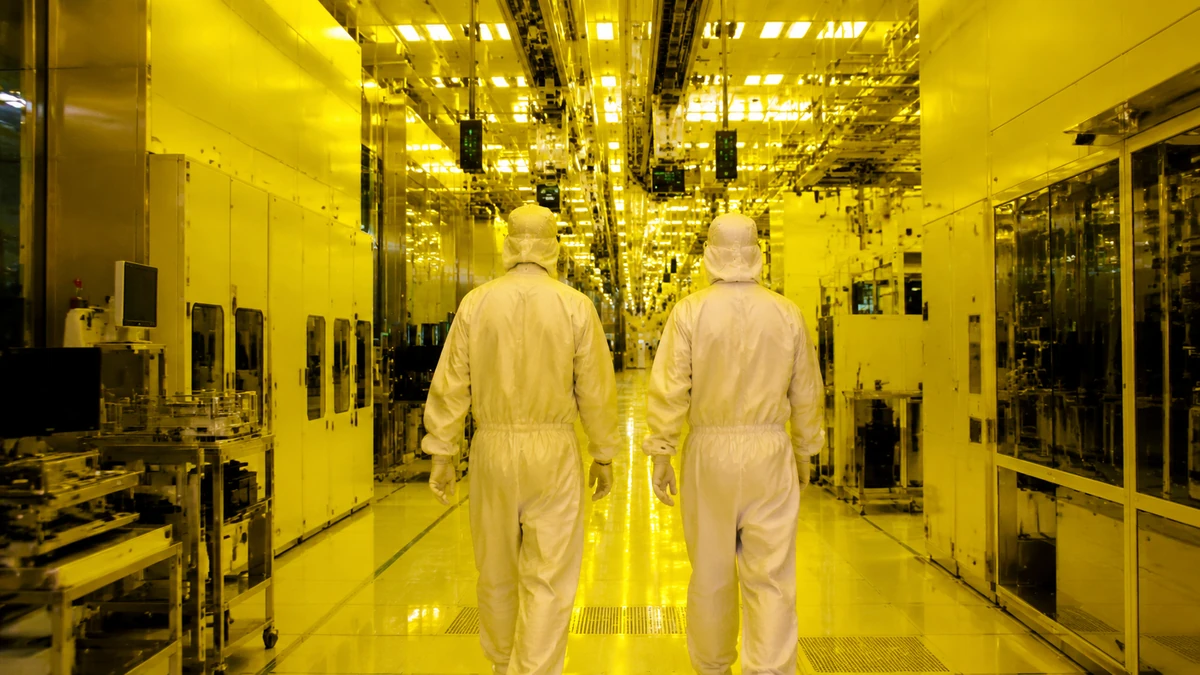
The next phase of the AI race may be about factories, not just futuristic ideas
For the past two years, the global artificial intelligence boom has been told largely as a story about dazzling software, giant data centers and the companies designing the world’s most powerful chips. Nvidia became a household name on Wall Street. Microsoft, Google and Meta poured billions into AI infrastructure. And consumers, from San Francisco to Seoul, were introduced to a future shaped by chatbots, image generators and increasingly capable digital assistants.
But there is another, less glamorous contest underway — one that could determine which countries and companies hold the strongest cards in the next stage of the AI economy. It is not just about who invents the best chip. It is about who can actually make those chips at scale, on time, with high yields and at profits that justify the staggering investment required.
That is why a fresh wave of attention has turned toward Taiwan Semiconductor Manufacturing Co., or TSMC, the Taiwanese giant that has become indispensable to much of the modern technology industry. According to recent reporting highlighted in South Korea, investors and industry observers increasingly see TSMC, the world’s top foundry company, as one of the biggest long-term winners of the AI era — even as South Korean memory-chip makers such as Samsung Electronics post eye-popping gains from the current surge in demand.
For American readers, the distinction matters. A foundry is a contract manufacturer for chips. In simple terms, companies like Nvidia, Apple and many others design semiconductors, but often rely on a specialized manufacturer to produce them. If chip design is like drawing the blueprint for a skyscraper, the foundry is the construction firm that can actually build it — with precision measured in nanometers.
For South Korea, the shift in attention is especially important because it underscores a harder truth about the semiconductor industry: the companies benefiting the most from today’s AI demand may not be the same ones best positioned to dominate tomorrow’s manufacturing bottlenecks. Korea remains a global powerhouse in memory chips, the components that store and move data. But if the next phase of AI growth is driven more by cutting-edge fabrication capacity, then the center of gravity may tilt toward Taiwan’s manufacturing dominance rather than Korea’s traditional strength.
That makes this more than a business story. It is a window into how the global balance of technological power is being redrawn — and how one of America’s most important allies in Asia, South Korea, is reassessing where it leads and where it faces a more difficult climb.
South Korea’s chip strength has been real — especially in memory
To understand why this debate matters in Seoul, it helps to understand how South Korea became such a force in the first place. For decades, South Korea has been one of the world’s semiconductor heavyweights, largely because of its dominance in memory chips, especially DRAM and NAND flash. These are not the brain of a device in the way a central processor is, but they are essential to storing and moving the enormous amounts of data modern computing requires.
That advantage has become even more valuable in the AI age. Training and running advanced AI systems demands huge amounts of high-bandwidth memory, or HBM, a premium product category in which Korean companies, especially Samsung Electronics and SK hynix, have emerged as critical players. If Nvidia’s graphics processing units are the engines driving AI, then high-performance memory is closer to the fuel system that keeps those engines running.
In recent quarters, the AI boom has translated into extraordinary earnings for memory-focused chipmakers. South Korea has had every reason to celebrate that success. In a country where semiconductors are not just another export but a pillar of the national economy, strong chip profits are watched with the kind of attention Americans might reserve for jobs numbers, oil prices or the Federal Reserve.
There is also a deeper cultural and political layer in South Korea’s reaction. The country’s rise as a technology power is part of a broader national story, much like the Korean Wave, or Hallyu, helped turn K-pop, film and television into global cultural forces. Samsung’s brand, much like BTS or “Parasite,” carries symbolic weight beyond pure business performance. It represents South Korea’s claim to global relevance in a fiercely competitive system often dominated by the United States and China.
So when South Korean industry observers zero in on reports about TSMC’s growing advantage, they are not doing so from the sidelines. They are reading those developments as a kind of strategic report card. The question is not whether Korea matters in semiconductors — it clearly does. The question is whether its strongest advantage today will be enough in the next round of competition.
What makes TSMC different is not just scale — it is trust
TSMC’s rise can look abstract from a distance, especially to readers more familiar with flashy consumer brands than with semiconductor supply chains. But its importance becomes clearer when you look at the customer list. TSMC manufactures advanced chips for many of the world’s most influential tech companies, including Nvidia’s AI chips and Apple’s smartphone processors. That means TSMC sits at the center of products Americans use every day, from iPhones to AI services running in cloud data centers.
The company’s edge is not simply that it is large. It is that many customers view it as uniquely reliable at the cutting edge. In semiconductors, being “indispensable” does not just mean having capacity. It means convincing customers that you can deliver advanced chips in volume, with minimal defects, while constantly pushing the technical frontier forward. That kind of trust is earned over many years, across many product cycles.
TSMC also appears to be demonstrating a quality investors especially like: growth that improves profitability rather than straining it. As some recent coverage has noted, the company’s revenue is rising faster than its costs, helping to widen margins. That matters because semiconductor manufacturing is one of the most capital-intensive businesses in the world. Building and upgrading fabs — the massive plants where chips are produced — costs tens of billions of dollars. A company that can expand while becoming more profitable is not simply riding a boom. It is showing unusual operational discipline and pricing power.
For Americans, there is a familiar parallel in how investors once talked about Amazon Web Services or how people now talk about Nvidia: not just as successful companies, but as companies occupying bottleneck positions in a fast-growing ecosystem. TSMC is not the consumer-facing star of the AI era. It is more like the invisible infrastructure that makes the stars possible.
That invisible role is precisely why the company commands so much attention. In an industry where the most advanced designs are useless if they cannot be manufactured at scale, TSMC’s foundry leadership gives it leverage far beyond market share tables. It helps shape the tempo of the entire tech economy.
Why Samsung’s comparison with TSMC is so sensitive in Seoul
The South Korean interest in this story becomes sharper because the comparison is not theoretical. Samsung Electronics is widely recognized as the world’s No. 2 foundry player, placing it directly behind TSMC in one of the most strategically important segments of the chip industry. Yet recent coverage has also stressed that the revenue gap between the two remains substantial.
That is a crucial point. In competitive markets, being second can still be powerful. But in industries driven by trust, scale and technological compounding, a large gap between No. 1 and No. 2 can change how customers behave. Clients may prefer the market leader because it has a stronger track record, deeper engineering relationships, more predictable yields or a perception of lower risk. Once that dynamic takes hold, the leader starts to look less like one competitor among several and more like the default choice.
That is the pressure Samsung faces in foundry, even as it remains formidable in other parts of the semiconductor business. Samsung is not a weak player. It is one of the world’s most sophisticated technology companies, with capabilities spanning smartphones, displays, consumer electronics, memory and advanced manufacturing. But foundry leadership requires a specific kind of ecosystem strength, one built around being the trusted producer for outside customers who may also be betting their own product road maps on your execution.
There is another complication. The competitive field is not limited to Taiwan and South Korea. Intel is trying to rebuild its own manufacturing credentials and expand its foundry ambitions. Japan’s Rapidus, backed by the Japanese government and major corporations, is attempting to establish a foothold in advanced logic manufacturing. The United States, Europe and Japan have all become more aggressive about semiconductor policy, partly out of national security concerns and partly out of fear that too much production is concentrated in too few places.
In other words, Samsung is competing not only against an entrenched leader, but in a strategic environment crowded with governments and companies determined to secure a bigger share of next-generation chip manufacturing. That makes the Korean reaction to TSMC’s momentum more understandable. The issue is not simply wounded pride. It is recognition that the foundry race may be where future industrial advantage is decided.
From the age of memory to the age of manufacturing power
One of the most important ideas emerging from this debate is that the AI boom may be moving from what could be called the “memory phase” into the “manufacturing phase.” During the first wave of AI expansion, attention naturally focused on the components that were in immediate short supply and essential to scaling computation — especially advanced memory and the processors paired with it. That trend strongly benefited South Korean firms.
But as the AI ecosystem matures, the emphasis may shift. The next question is not just which chips are needed, but who can produce increasingly complex chips consistently, affordably and in massive volume. Once AI moves from breakthrough novelty to industrial infrastructure, manufacturing reliability becomes even more central. Businesses, cloud providers and device makers cannot build long-term product strategies around supply chains they do not trust.
That is why foundries loom so large in the next stage of the story. A foundry is where design becomes reality. It is where the promise of an AI chip must survive the hard physics and economics of advanced manufacturing. It is also where the global tech hierarchy becomes tangible: who gets priority capacity, who can command better terms and who becomes indispensable to the world’s most important product launches.
For South Korea, this shift is both a warning and an opportunity. The warning is clear: success in memory does not automatically translate into foundry leadership. These are connected businesses, but they are not identical. The opportunity is also clear: Korea already has the industrial base, talent pool and corporate scale to remain central to the semiconductor map, if it can sharpen its foundry competitiveness and win deeper customer confidence.
This is why many Korean analysts are reading the current moment less as a verdict than as a challenge. The message is not that South Korea is losing relevance. Far from it. The message is that the standards by which the market will judge the next round of winners may be changing.
Why this is international news — and also a Korean national story
At first glance, a report about a Taiwanese chipmaker gaining favor with investors through the AI boom looks like a classic international business story. It involves global supply chains, corporate earnings and the technology that powers the modern economy. But in South Korea, it lands much closer to home.
That is because semiconductors occupy a place in South Korea’s national identity that can be hard for outsiders to appreciate without context. In the United States, Americans may debate whether Hollywood, Silicon Valley, Detroit or Wall Street best symbolizes the country’s economic influence. In South Korea, semiconductors are much more clearly one of the crown jewels — a sector where the nation is not just competitive, but essential.
That makes external assessments of Korea’s semiconductor position especially significant. When foreign media or global investors highlight a shift from memory strength toward foundry dominance, Koreans hear more than a market trend. They hear a question about the country’s future role in the world’s most strategic industry.
There is also a geopolitical angle that American readers should not miss. Semiconductors are no longer just commercial products. They sit at the center of U.S.-China competition, industrial policy and national security planning across the Indo-Pacific. Taiwan’s manufacturing power carries enormous strategic significance. South Korea’s chip capabilities do, too. So when the market revalues one segment of the chip business over another, it can ripple outward into alliance planning, capital investment and debates over supply chain resilience.
In that sense, this is not merely a story about whether Samsung can narrow the gap with TSMC. It is a story about how allied economies in Asia are positioned inside a technology system the United States increasingly sees as vital to its own security and prosperity. If the 20th century had oil chokepoints, the 21st century may have semiconductor chokepoints. And foundries are near the top of that list.
The bigger lesson is to read the structure, not just the score
One reason this story deserves close attention is that it is not fundamentally about a single quarter’s revenue or a passing stock move. It is about structure. The broad outline is straightforward but powerful. First, the AI boom has already delivered huge gains to memory-chip companies, confirming that South Korea’s strengths remain highly relevant. Second, the next center of gravity may shift toward foundries, where the ability to manufacture advanced chips at scale becomes the defining advantage. Third, in that environment, TSMC is being treated by many investors and customers as something close to irreplaceable.
That structural reading matters more than any one data point because the semiconductor industry rewards deep capabilities that compound over time. A good quarter can be cyclical. A durable reputation for manufacturing excellence is harder to build and harder to disrupt. The market is not just asking who sells a lot of chips this year. It is asking who controls the most critical links in the chain as AI becomes embedded in everything from cloud computing and autonomous systems to smartphones and medical devices.
For South Korea, the answer is not complacency. The country can take real pride in the fact that its chipmakers are already among the defining players of the AI era. But the lesson from the current discussion around TSMC is that today’s strength does not guarantee tomorrow’s premium. If memory was the first great beneficiary of the AI buildout, manufacturing leadership may become the next decisive battleground.
That is why this conversation resonates so strongly in Seoul. It confirms Korea’s importance while also sharpening the challenge ahead. In the language of sports that many Americans would recognize, South Korea is not being told it is out of contention. It is being reminded that the rules of the game may be changing in the middle of the season.
And for the rest of the world, that shift matters, too. The future of AI will not be determined only by the brightest algorithms or the biggest tech valuations. It will also be determined in the places where silicon is etched, tested and turned into the physical hardware that makes the digital future possible. In that next contest, the spotlight is moving from memory to manufacturing — and South Korea is watching closely for good reason.
Comments
Post a Comment