A familiar rule of thumb meets a very modern challenge
For years, Americans have heard some version of the same advice from doctors, wellness apps and public health campaigns: Aim for seven to eight hours of sleep a night. It is simple, memorable and easy to turn into a personal goal. Like the old guidance to drink eight glasses of water a day or walk 10,000 steps, it has become part of everyday health language.
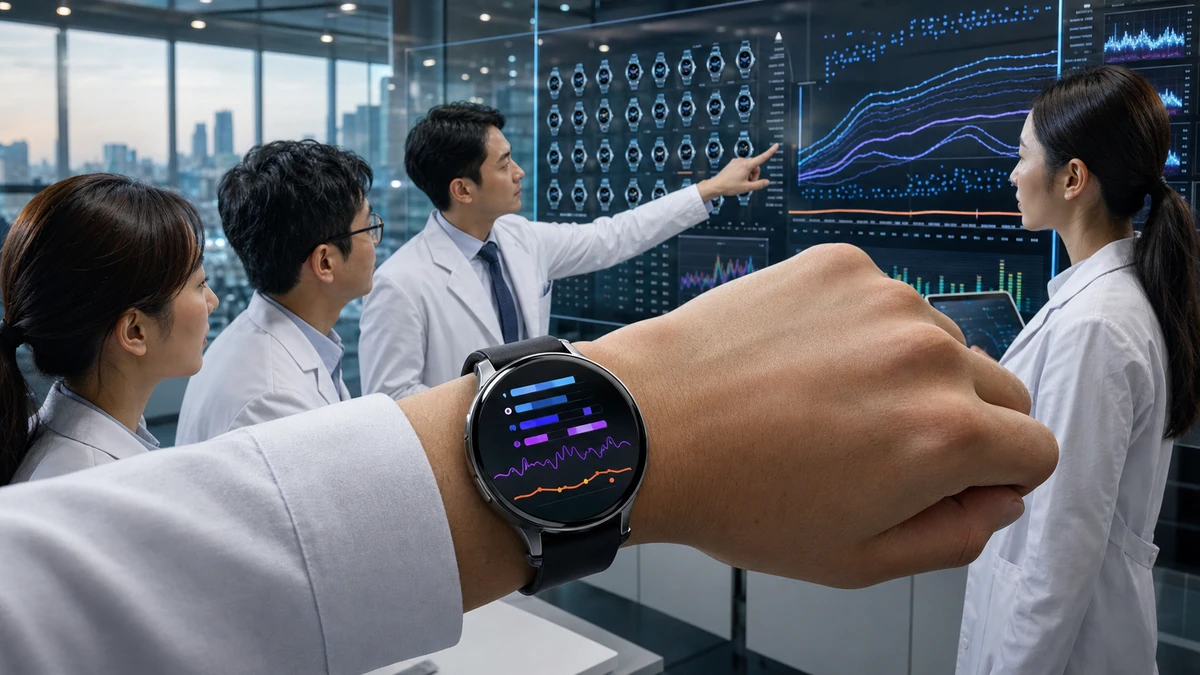
But a new large-scale study built from real-world smartwatch data is challenging the idea that one number can define healthy sleep for everyone. In research published in the journal Sleep, a joint team from South Korea and the United States analyzed sleep data from 274,128 healthy adults in the U.S. who wore Samsung Galaxy Watches. Their conclusion was not that sleep matters less than experts thought. If anything, it suggests the opposite: sleep is important enough that we should measure it more carefully, and more personally, than a one-size-fits-all rule allows.
The study stands out not just because of its size, though data from more than 274,000 adults is striking on its own. It also reflects a broader shift in how medicine is beginning to understand everyday health. Instead of relying only on sleep measured in a lab, or on people trying to remember how long they slept, researchers increasingly can look at patterns captured night after night in ordinary life. In this case, the information came from wearables people were already using on their wrists as they went about work, family life, commuting, exercise and late-night screen time.
That matters in the U.S., where sleep is often caught between aspiration and reality. Americans talk about “getting a full eight hours” the way they talk about eating better or exercising more: as something they know they should do, but often struggle to fit into a busy life. Parents of young children, nurses on rotating shifts, college students, gig workers, office employees answering email after dark and people juggling second jobs all live on schedules that do not always line up neatly with textbook advice.
The new research does not give those groups permission to ignore sleep. It does, however, raise a provocative possibility: what if the healthiest amount of sleep is not exactly the same for everyone? What if the more useful question is not simply, “Did you hit seven or eight hours?” but, “What amount of sleep reliably leaves your body functioning well?”
What the study found — and what it did not
According to the research team, the analysis of Galaxy Watch users in the U.S. found substantial individual variation in sleep need. In plain English, that means different people may require meaningfully different amounts of sleep to function at their best. Some may naturally do well close to the standard public-health range. Others may need somewhat more. Some may feel restored with somewhat less, at least under certain conditions and if their broader sleep pattern is stable.
That conclusion may sound intuitive. Most Americans probably know someone who swears they can thrive on six and a half hours, and someone else who feels wrecked without at least eight and a half. The challenge is that sleep advice for the public is usually built around averages, because averages are easier to communicate. They can be useful starting points. But an average is not the same thing as a prescription.
The study’s importance lies in pushing that distinction into the spotlight. Rather than framing sleep health solely through a single benchmark, the researchers argue for paying closer attention to personal patterns and physical response. In other words, the number on the clock matters, but it may not tell the whole story by itself.
It is also important to be clear about what the research does not say. It does not mean chronic sleep deprivation is harmless. It does not mean people can brush off fatigue, brain fog or poor sleep habits by claiming they are “just different.” And it does not replace a doctor’s evaluation when someone has symptoms such as loud snoring, repeated nighttime waking, excessive daytime sleepiness or suspected insomnia or sleep apnea.
The participants in the analysis were healthy adults, and the data came from consumer wearables, not from overnight clinical sleep studies with electrodes and direct medical supervision. That makes the findings powerful in one way and limited in another. They are powerful because they capture real life on a huge scale. They are limited because a smartwatch, however sophisticated, is not the same as a comprehensive diagnosis from a sleep specialist.
Still, for a public used to hearing rigid sleep targets repeated as fact, the study offers a more nuanced message: healthy sleep may be less about conforming to a universal nightly total and more about understanding whether your recurring sleep pattern actually supports alertness, recovery and long-term well-being.
Why wearable data is changing sleep research
For decades, much of sleep science depended on relatively small samples or controlled settings. Those methods remain crucial. Sleep labs can identify disorders, track sleep stages with precision and help physicians treat serious problems. But they also have built-in limits. They are expensive, time-intensive and often removed from the messy reality of everyday life. People do not always sleep in a lab the way they sleep at home, and a short clinical window may miss the ebb and flow of real schedules.
Wearables have opened a different lane. A smartwatch can log when a user appears to fall asleep and wake up across weeks or months. It can reveal bedtime drift, weekday-weekend differences, irregular routines and patterns that would be easy to forget if someone were relying on memory alone. At scale, those devices can generate a portrait of sleep behavior that is less polished and more realistic than the idealized version people report when asked, “How much sleep do you usually get?”
That is one reason this research is getting attention. More than 274,000 participants is the kind of sample size that can reveal patterns too subtle or varied to stand out in a much smaller study. It allows researchers to move beyond a narrow average and ask how widely sleep needs may differ across a large population.
Americans have already seen a similar trend in other areas of health. Fitness trackers have changed how people think about movement, heart rate and exercise recovery. Continuous glucose monitors, once largely associated with diabetes care, are now part of broader conversations about metabolism. Blood pressure cuffs that sync with apps have made at-home monitoring routine for many patients. Sleep appears to be heading in the same direction: from a vague lifestyle topic to a stream of measurable, if imperfect, personal health data.
There is, however, a cultural catch. In the U.S., people often respond to health tracking in one of two ways: they either become obsessed with the numbers or dismiss them as gadget noise. The more useful middle ground is to treat wearable data as a clue, not a verdict. A watch can help identify trends. It cannot fully explain why you feel exhausted, anxious, energized or unrested. Those answers still require context, and sometimes medical care.
That context is exactly what makes this latest study so compelling. It suggests that when enough everyday data is assembled, researchers can begin to see the diversity of normal sleep more clearly. That could eventually reshape how doctors, public health officials and technology companies talk to people about rest.
A Korean-led collaboration with global implications
This research also says something about South Korea’s growing role in digital health and medical technology. The study was conducted by a joint team from Sungshin Women’s University, Samsung Medical Center, Samsung Electronics and Harvard Medical School. For American readers unfamiliar with those institutions, the lineup is notable.
Sungshin Women’s University is a private university in South Korea. Samsung Medical Center is one of the country’s major hospitals, part of a health care system that has become increasingly active in advanced research. Samsung Electronics, best known globally for smartphones, TVs and consumer electronics, has in recent years also become a major player in health-related devices and platforms through its wearable technology. And Harvard Medical School, of course, carries significant weight in U.S. academic medicine.
That partnership reflects something larger than a single sleep paper. It shows how the “Korean Wave” — better known to many Americans through K-pop, K-dramas, Korean beauty products and Oscar-winning films like Parasite — has a less glamorous but increasingly influential counterpart in science and technology. South Korea is not just exporting culture. It is also exporting research capacity, digital infrastructure and consumer tech ecosystems that feed into global conversations about health.
In the American imagination, Samsung is often understood primarily as a rival to Apple in the smartphone and smartwatch market. But in South Korea, Samsung occupies a much broader place in the economy and public life. It is one of the country’s signature conglomerates, part of a business structure known as a chaebol — large family-controlled corporate groups that have long played an outsized role in Korea’s industrial development. To American readers, the closest comparison might be imagining if one company had the cultural visibility of Apple, the industrial footprint of General Electric at its peak and a deeper integration into national economic identity.
That context helps explain why a sleep study tied to Galaxy Watch data carries significance beyond product branding. It illustrates how consumer technology, medical institutions and academic researchers are increasingly working together across borders. In a world where health data is constantly generated outside clinics, the most influential studies may come not only from hospitals and universities, but from collaborations that include the devices people actually wear every day.
It also underlines how health research has become transnational. The data set involved healthy adults in the U.S. The device platform came from a South Korean technology giant. The research partnership bridged Korean and American institutions. The result is a study that emerged from Korean news coverage but speaks directly to sleep habits in the United States and to a global audience struggling with the same basic question: How much sleep do I really need?
Why the seven-to-eight-hour message took hold in the first place
If the old rule is imperfect, why did it become so dominant? The answer is that public health messaging often depends on simplification. Most people do not want a lecture on population distributions, individual variability and confidence intervals when they are trying to live healthier lives. They want a number they can remember.
That is how broad recommendations are born. They condense a body of research into a target that is practical enough to stick. In that sense, the seven-to-eight-hour framework has been useful. It gave people a benchmark and helped counter a culture that too often treated sleep as negotiable. In the U.S., where hustle culture has long rewarded long hours and treated exhaustion almost like a badge of ambition, simple sleep guidance has had a public service function.
Anyone who has spent time in American offices, hospitals, law firms, college campuses or startup culture knows the script. People brag, half-jokingly, about surviving on coffee and four hours of sleep. New parents are expected to run on fumes. Shift workers are told to adapt. Teenagers stay up late on homework and devices, then wake early for school. The ideal of productivity often crowds out the reality that sleep is not dead time. It is biological maintenance.
That broader cultural problem has not disappeared. If anything, it may be deepening in an era when work messages follow people onto their phones and streaming platforms make it easier to sacrifice bedtime for “just one more episode.” In that environment, experts have had good reason to repeat a simple baseline message: most adults should not skimp on sleep.
The new study does not undo that. What it does is refine it. Averages remain useful at the population level. But they become less reliable when turned into a strict nightly pass-fail test for individuals. If someone sleeps a little less than the textbook number yet consistently feels restored, functions well and maintains stable health, that may not look the same as someone who gets the identical number of hours and still feels depleted.
That is not a license for self-diagnosis based on wishful thinking. Americans are especially skilled at telling themselves they are doing fine while running on stress, caffeine and habit. But it is a reminder that the public conversation around sleep may need to mature. The point is not to abandon standards. It is to recognize that standards should guide inquiry, not end it.
What this means for ordinary readers trying to sleep better
For people reading headlines about this study and wondering what to do tonight, the practical takeaway is less dramatic than the science headline might suggest. The first step is not to throw out all sleep guidance. It is to stop treating a universal number as the only measure that matters.
If you use a smartwatch or sleep tracker, the most helpful habit may be to look for patterns rather than obsess over any single night. One bad night of sleep after a late dinner, a delayed flight or a stressful work deadline usually does not define your health. What matters more is whether fatigue, irregular bedtimes or poor recovery keep showing up week after week.
Pay attention to how you feel during the day. Do you wake up and become reasonably alert without feeling crushed by midafternoon? Are you relying on escalating amounts of caffeine to stay functional? Do you feel restored after what your watch labels a “good” night, or does the number look fine while your body says otherwise? The mismatch between data and experience can itself be useful information.
People who do not own a wearable can still borrow the same logic. A simple sleep journal — bedtime, wake time, perceived sleep quality, energy level and any major disruptions such as alcohol, illness, stress or a very late workout — can reveal more than many realize. Even a couple of weeks of notes can expose patterns, especially differences between weekdays and weekends.
And there are red flags that should not be explained away by talk of “individual variation.” If someone is regularly exhausted, falls asleep unintentionally, snores heavily, gasps during sleep, struggles with chronic insomnia or experiences a dramatic decline in concentration or mood, that is not just a data puzzle. It is a reason to talk with a medical professional.
In other words, personalization works best when paired with honesty. The goal is not to find a convenient excuse for sleeping less. The goal is to better understand your own rhythm and whether it actually supports your health.
The bigger shift: from average sleep to personalized sleep
The most important idea in this research may be philosophical rather than technical. It reflects a larger transformation in medicine from generalized advice to individualized interpretation. Nutrition, exercise and mental health have all moved in that direction. Sleep appears to be following.
That does not mean every person needs a bespoke algorithm to live well. But it does mean population averages are increasingly being treated as starting points rather than final answers. As more people generate long-term health data through watches, rings, phones and home monitors, the central question changes. It is no longer only, “What is the average healthy person supposed to do?” It becomes, “What patterns in this person’s real life are associated with better outcomes?”
That shift could be especially meaningful in sleep, where individual differences have always been obvious in daily life but harder to quantify at scale. One person rebounds quickly from a short night. Another does not. One thrives on consistent early bedtimes. Another works best on a later schedule when life allows it. Public health campaigns can acknowledge those differences without abandoning the broader warning that chronic sleep loss remains harmful.
The Galaxy Watch study points in that direction. It does not destroy the old rule so much as put it in context. The familiar recommendation remains useful as a benchmark, much the way body mass index or standard calorie estimates can be useful benchmarks. But benchmarks are blunt instruments. Real people are more complicated.
That may be the clearest message for American readers. At a time when health advice is often reduced to catchy slogans, this study argues for something both more scientific and more humane: paying attention to patterns, variation and the body’s repeated signals. It suggests that sleep health should be understood not as a rigid nightly quota but as a living relationship between routine, recovery and individual need.
And that, ultimately, is why this research resonates beyond South Korea, beyond Samsung and beyond the smartwatch market itself. Everybody sleeps, or tries to. Everybody has felt the difference between waking up restored and waking up drained. If this study holds up as part of a growing body of evidence, the future of sleep advice may sound less like a commandment — get exactly this many hours — and more like a question worth answering carefully: What kind of sleep actually helps you live well?
Comments
Post a Comment