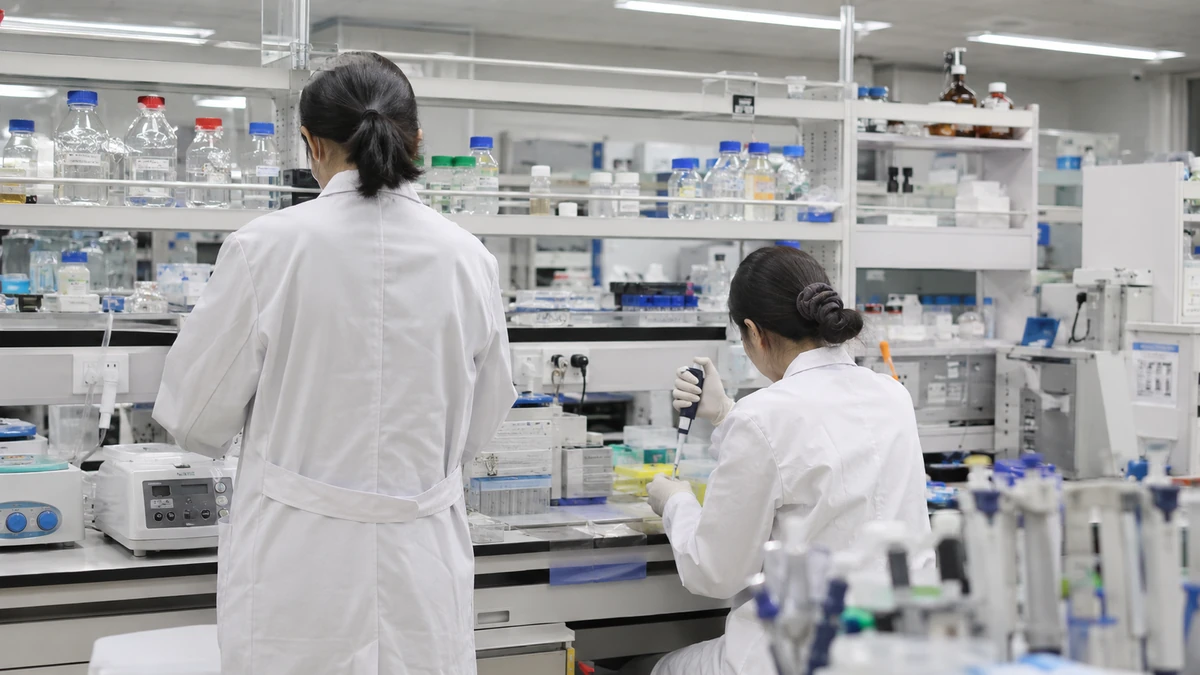
A Korean research team points to an unexpected lead
A research finding out of South Korea is drawing attention in cancer science for a reason that goes beyond the usual headline about a possible new anti-cancer compound. Scientists at the Korea Advanced Institute of Science and Technology, or KAIST, working with researchers at Korea University, say they have identified a naturally occurring metabolic molecule in the human body that appears to suppress a major growth signal used by cancer cells.
The molecule is called 13-HODE, short for 13-hydroxyoctadecadienoic acid. It is a lipid metabolite, meaning it is produced as the body processes fats. According to the research team, 13-HODE can directly inhibit mTOR, a protein long regarded as one of the central control hubs for cell growth, metabolism and survival. When mTOR becomes abnormally active, it can help fuel cancer cell proliferation and spread.
That makes the finding notable in a crowded field. Researchers around the world, including in the United States, have spent years trying to block mTOR because it plays such an important role in how tumors grow. Some drugs already target the mTOR pathway, but the search continues for more precise, effective and potentially less toxic ways to influence it. What makes the Korean study stand out is not that it identified mTOR as important; that has been clear for years. The novelty lies in the idea that the body may already produce a molecule capable of directly hitting that target.
In other words, instead of starting with a synthetic drug designed from scratch, the researchers began with the body’s own chemistry. That distinction matters. It suggests that answers to some of medicine’s hardest problems may not come only from inventing entirely new compounds in a lab, but also from taking a closer look at the molecules already circulating inside us.
For American readers used to seeing breakthrough stories framed as miracle cures or near-term treatments, this is not that kind of development. The research does not mean cancer patients can change their diet, take a supplement or otherwise boost 13-HODE on their own to stop tumors. It does mean scientists may have found a clearer mechanistic clue about how the body’s own metabolic processes intersect with cancer biology, and that is often how important drug discoveries begin.
What mTOR is, and why cancer researchers care so much about it
To understand why this finding matters, it helps to understand the role of mTOR. The name stands for mechanistic target of rapamycin, and while that may sound technical, the concept is fairly straightforward. mTOR acts like a master regulator inside cells, helping decide when they should grow, divide and use energy. In healthy tissue, that process is tightly controlled. In cancer, it often is not.
When mTOR signaling becomes overactive, cells can receive a constant message to keep growing. That is one reason it has been a major target in oncology research for years. Scientists have linked abnormal mTOR activity to a range of cancers, and drug developers have pursued ways to shut down or dampen that signal in hopes of slowing tumors.
An easy way to think about it is as a biological accelerator pedal. Normal cells tap it when growth is needed. Cancer cells often stomp on it. If researchers can find safe and reliable ways to ease off that pedal, they may be able to limit tumor growth or make cancer cells more vulnerable to other treatments.
That broader context is important because it places the Korean study within a much larger global effort. The team at KAIST and Korea University is not introducing a completely new cancer pathway. Rather, it is offering a potentially new way to intervene in one of the best-known pathways in cancer biology. For the scientific community, that can be just as meaningful as identifying a new target altogether.
The appeal of mTOR as a target also reflects a broader trend in modern cancer treatment. Oncology has moved steadily toward therapies that focus on particular molecular mechanisms rather than treating all rapidly dividing cells the same way. The success of certain targeted therapies in breast cancer, lung cancer and leukemia has changed expectations across medicine. But targeted treatment works only when researchers can identify a vulnerable point in the machinery. This study suggests 13-HODE may interact with one such point in a direct way.
What the Korean scientists say they found
According to the announcement, the research team used large-scale metabolomic screening to search for molecules that could bind to mTOR. Metabolomics is the study of small molecules produced by cellular activity. If genetics tells scientists what could happen in a cell, and proteins show what is carrying out the work, metabolites can reveal what is actually happening on the ground in real time. They are not just waste products. Many of them act as signals, regulators or indicators of disease.
In this case, the researchers focused specifically on naturally produced metabolites already found in the body. That is a narrower and more biologically grounded approach than simply screening vast libraries of artificial compounds with no known role in human metabolism. Out of that process, the team identified 13-HODE as a molecule that appears to bind directly to the active site of the mTOR protein.
That detail is one of the most important parts of the report. In molecular biology, there is a big difference between saying two things are associated and saying one physically attaches to the other at a functional site. The latter offers a stronger mechanistic explanation. It suggests that 13-HODE is not just present when mTOR activity changes, but may actually be participating in the process that turns that activity down.
The researchers said that by binding to mTOR’s active site, 13-HODE suppressed the protein’s activity in cancer cells. Put more simply, the molecule appears to interfere directly with one of the switches that helps cancer cells grow and consume energy. For scientists, that kind of direct interaction is especially valuable because it gives them a concrete starting point for designing follow-up experiments, refining compounds or building future therapies around a known mechanism.
In the world of biomedical research, that is often where a discovery begins to move from an interesting observation to a more actionable idea. If a team can show not just that a molecule matters, but where it binds, how it binds and what effect that binding has, the path toward drug development becomes easier to map, even if it remains long and uncertain.
Why a body-made metabolite changes the conversation
The phrase “naturally occurring metabolite” can sound benign, even ordinary, but it carries major implications in drug discovery. Many medicines used today were either derived from natural substances or inspired by them. Penicillin came from mold. Aspirin traces its roots to willow bark. Some of the best-known cancer drugs originated in plants, bacteria or marine organisms. The idea that the human body itself might produce molecules with therapeutically useful properties is not far-fetched, but it remains a particularly intriguing frontier.
That is because metabolites occupy a special place in biology. They reflect the body’s internal state and can also shape it. They sit at the intersection of diet, energy use, inflammation, hormone balance and disease. A discovery involving a metabolite can therefore open doors not just in pharmacology, but also in diagnostics and precision medicine.
Still, this is exactly where nuance matters. The Korean researchers did not say that eating a certain food or following a particular wellness routine will raise 13-HODE enough to fight cancer. They did not present this as a nutrition story, and it should not be read that way. In the United States, health findings are often quickly absorbed into a supplement culture that races ahead of the evidence. This is not evidence that consumers should self-medicate with fatty acid products or assume “natural” equals safe or effective in cancer care.
What the study does suggest is more foundational. It indicates that lipid metabolism, the body’s processing of fats and fat-derived molecules, may contain useful clues about how to regulate cancer growth signals. For researchers, that is a valuable shift in emphasis. Instead of viewing metabolites mainly as markers that show disease is present, scientists may increasingly treat them as active players that can be harnessed or mimicked.
That kind of thinking fits with a larger turn in medicine toward more biologically compatible strategies. The ideal therapy is not merely strong; it is selective. It hits diseased cells or pathways while sparing healthy ones as much as possible. Whether 13-HODE itself could ever become a drug is still unknown. But if it shows scientists how to modulate mTOR in a more precise way, it could influence the design of future therapies even if the final medicine looks quite different from the original molecule.
How this fits into South Korea’s growing biomedical profile
For readers in the United States, South Korea may be most familiar as the home of K-pop, Oscar-winning film director Bong Joon Ho, blockbuster TV dramas and beauty brands that have gone global. But the country has also spent years building a serious reputation in advanced research, including semiconductors, artificial intelligence and biotechnology. KAIST, one of the institutions behind this study, is often compared to top-tier science and engineering schools in the United States for its role in training researchers and pushing high-level basic science.
This matters because strong cancer research ecosystems are built on more than hospital trials alone. They depend on basic science laboratories that can identify molecular targets, decode cellular pathways and generate the early-stage discoveries that later become drug candidates. That is the stage at which this Korean finding belongs.
The study also highlights how international cancer research increasingly works: a globally recognized target, such as mTOR, investigated through a locally led project that could feed into the broader scientific pipeline. In that sense, the discovery is both Korean and international. It comes from South Korean labs, but it addresses a question of interest to cancer researchers everywhere.
South Korea’s biomedical sector has been trying to expand its footprint not only in publishing basic research but also in translating that work into therapies, diagnostics and clinical applications. The broader research climate in the country includes universities, startup companies, major hospitals and biopharma firms all trying to move from discovery to treatment. Reports from the same day in Korea pointed to clinical efforts in cancer therapy as well, underscoring that basic mechanism studies and patient-focused trials are progressing side by side.
For American audiences, there is a familiar parallel here. In cities like Boston, San Diego and the San Francisco Bay Area, breakthroughs often emerge not from a single laboratory working in isolation, but from dense ecosystems where universities, hospitals and biotech companies reinforce one another. South Korea is cultivating a version of that model, and findings like this one help explain why global investors and researchers are paying attention.
What patients and families should, and should not, take from this
Cancer news can create a difficult emotional whiplash. Patients and families want hope, and headlines about molecules that suppress tumor growth can sound immediately personal. But responsible reporting requires keeping the science in proportion.
This finding is best understood as an early but meaningful research development, not a treatment option now available to patients. The summary released in Korea describes a mechanism by which 13-HODE inhibits mTOR activity in cancer cells. That is important. It is also a long distance from proving that a therapy based on this molecule will work in people, at the right dose, in the right cancers, with manageable side effects.
There are several questions that would need to be answered before any clinical use becomes realistic. Does the effect hold up across multiple tumor types? Can researchers deliver or modulate the molecule effectively in the body? Will it affect healthy tissues in unwanted ways? Is 13-HODE itself stable and usable as a drug, or is it better viewed as a template for a more drug-like compound? Can it work alongside existing treatments such as chemotherapy, immunotherapy or radiation?
Those are not minor hurdles. They are standard steps in moving from a laboratory insight to a medicine that oncologists can prescribe. Many promising findings never make it through that pipeline. That does not make the work unimportant. On the contrary, drug development depends on exactly these kinds of mechanistic discoveries, most of which are invisible to the public until years later, if they succeed.
There is also a broader lesson here about how to read health news. The most useful cancer stories are rarely the ones that imply a cure is just around the corner. They are the ones that show how scientists are gradually mapping the disease in greater detail, identifying its weak points and improving the odds that future therapies will be smarter than those that came before. By that standard, the Korean study deserves attention.
Why this could matter well beyond a single molecule
Even if 13-HODE never becomes a drug in its current form, the discovery could still shape cancer research in at least three important ways. First, it strengthens the case for mining the body’s own metabolic landscape for therapeutic leads. That approach could reveal other naturally occurring molecules that regulate disease pathways in ways scientists have not yet appreciated.
Second, it underscores the importance of metabolomic screening as a research tool. Cancer is not driven by genes alone. It is sustained by a network that includes proteins, signaling pathways, nutrient sensing and energy balance. Metabolomics offers a way to capture that complexity. In an era when precision medicine is a dominant goal, understanding those small-molecule networks may prove increasingly essential.
Third, the finding could help refine how scientists think about the connection between metabolism and cancer. For years, researchers have known that tumors rewire the way cells use energy and nutrients. This study adds to that conversation by suggesting that fat-derived metabolites are not just passive reflections of that rewiring, but possible control points within it.
That is a meaningful conceptual shift. It opens the possibility that future anti-cancer strategies may rely not only on attacking tumors from the outside, but also on selectively engaging internal biochemical pathways that already exist within the body. In practical terms, that could lead to new drug candidates, better biomarker discovery or more personalized ways of predicting which cancers depend most heavily on the mTOR pathway.
For now, the immediate takeaway is more modest and more scientifically honest. A South Korean research team has identified a naturally produced metabolite that appears to directly inhibit one of cancer biology’s most important growth regulators. That does not change patient care overnight. But it gives the field a fresh lead, rooted not in science fiction or hype, but in the chemistry of the human body itself.
And in cancer research, where progress is often measured not by sudden leaps but by carefully verified clues, that kind of lead can matter a great deal.
Comments
Post a Comment